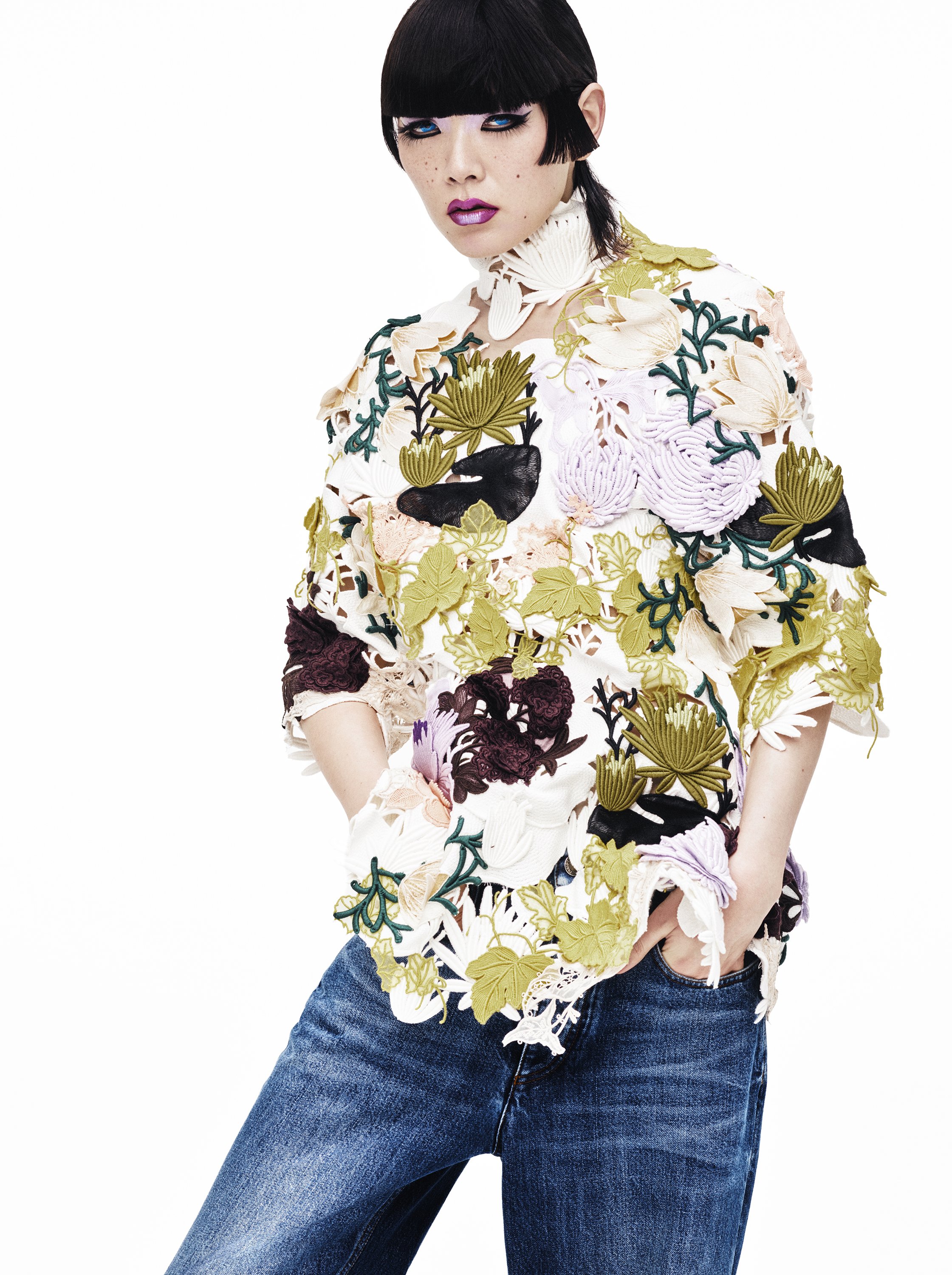
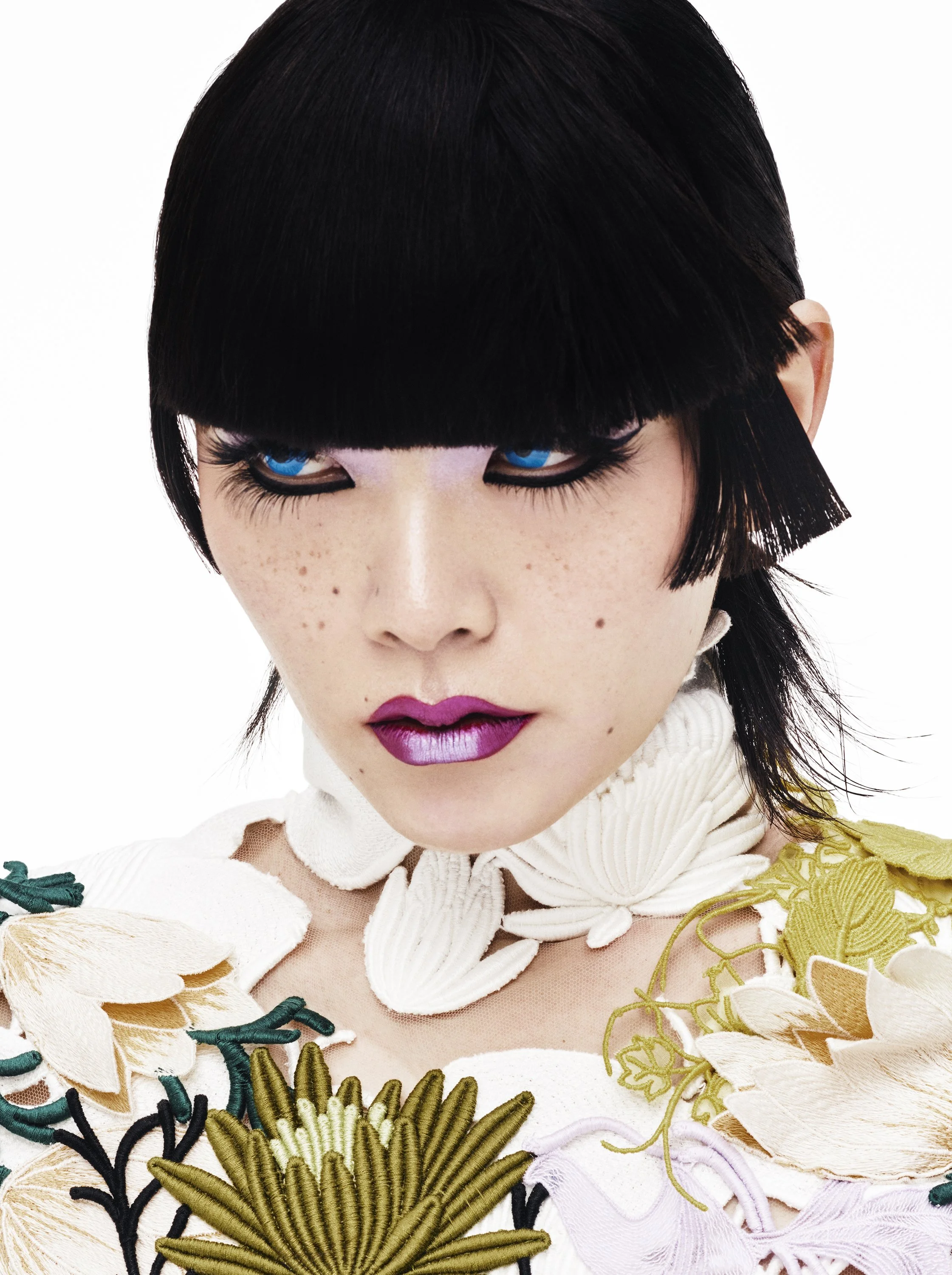
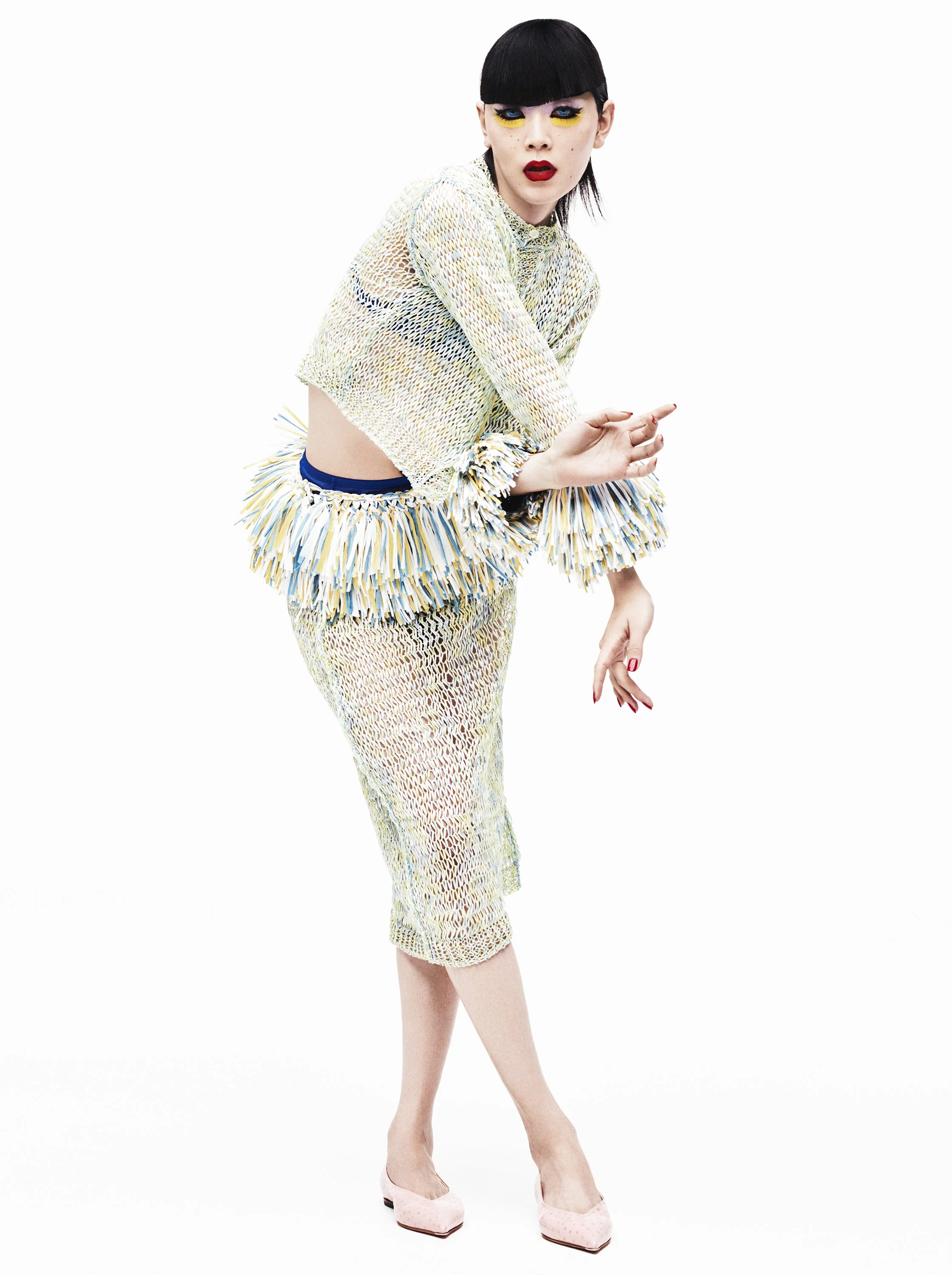
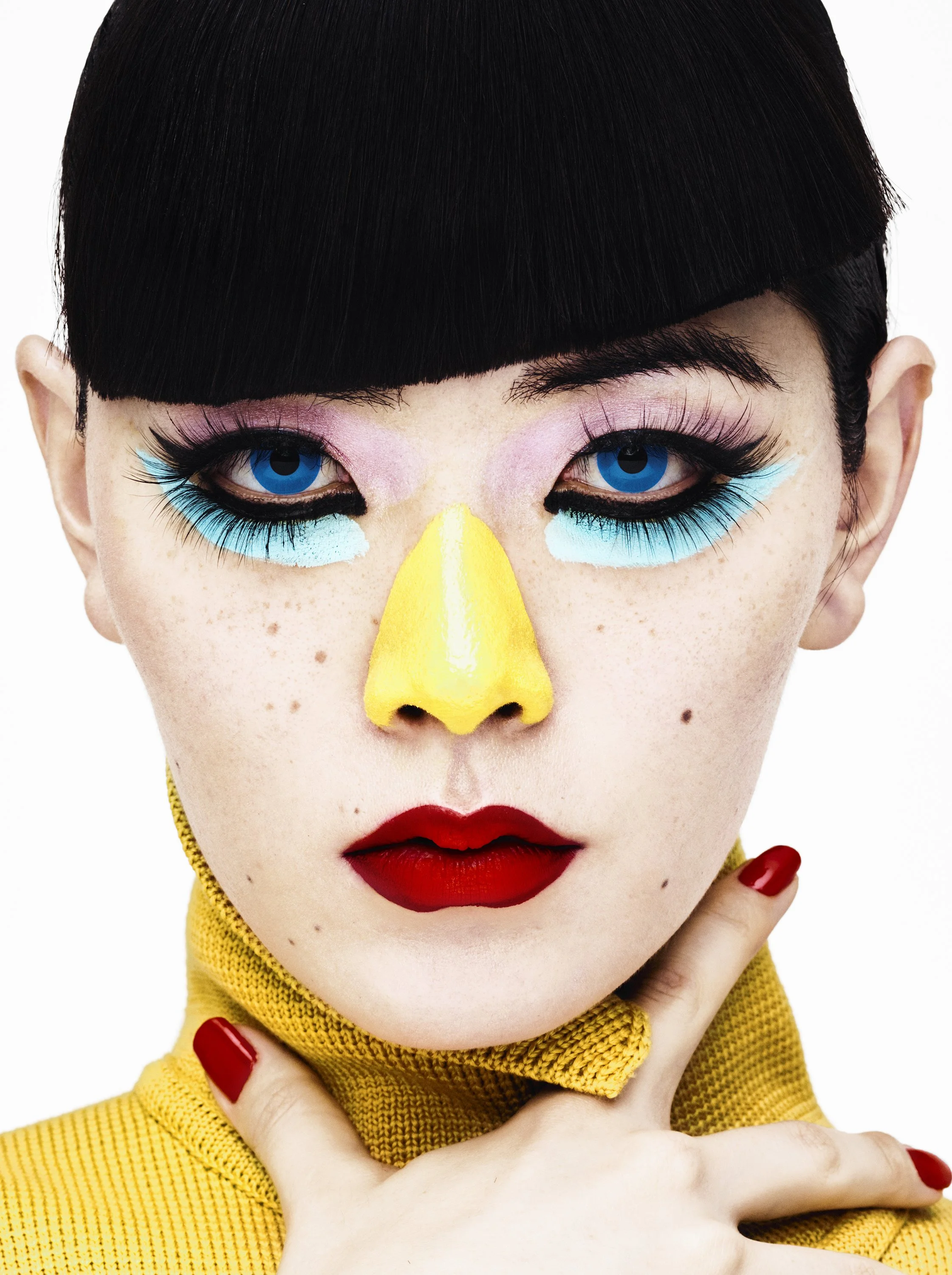
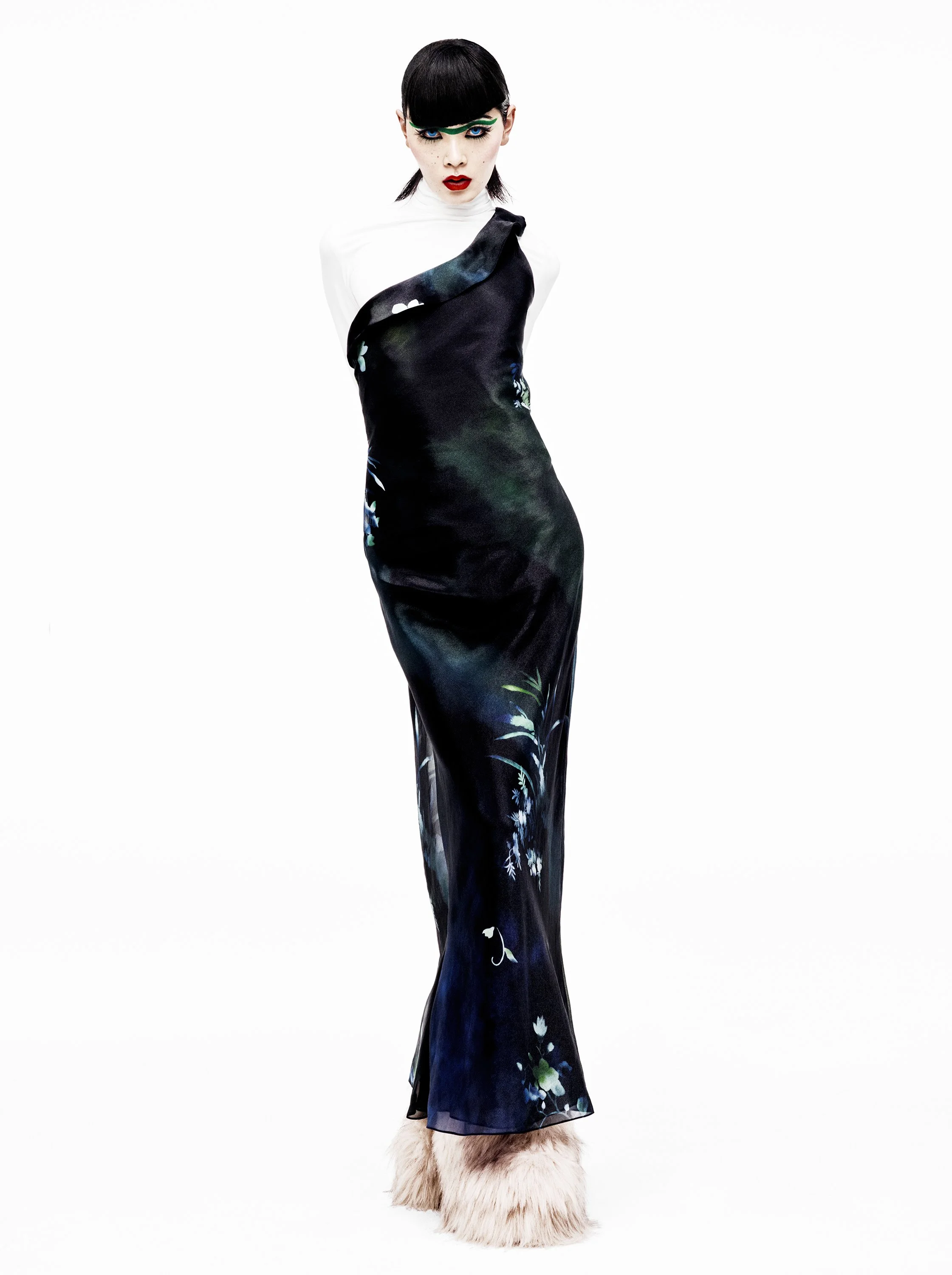
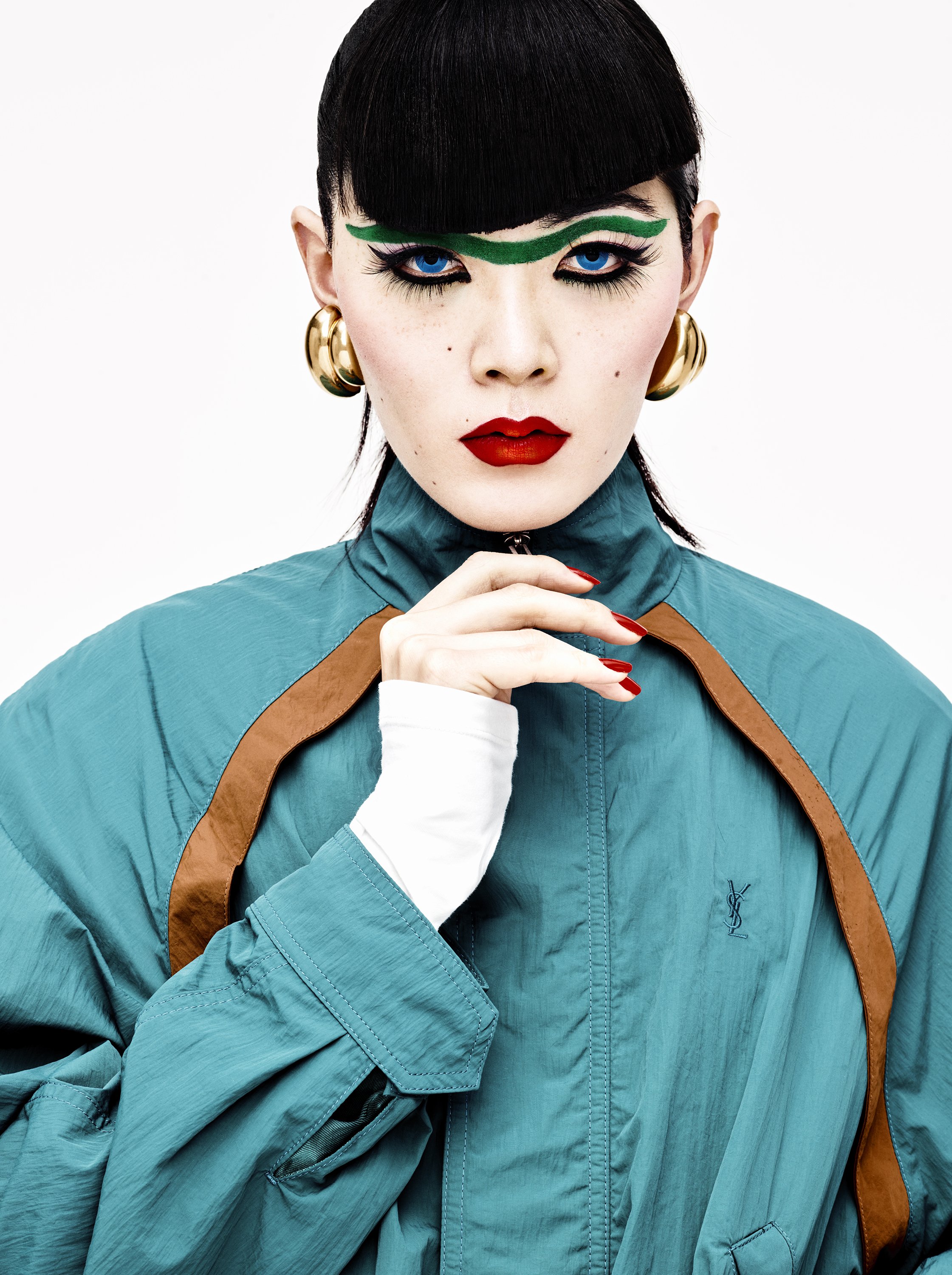
Always Now: Taira interviewed by Amber Later for Perfect Issue 10.

Taira for Perfect Issue 10
Photographer: Rafael Pavarotti
Fashion Editor: Katie Grand
Interview: Amber Later
Most models are intimately familiar with the complex pressures of being the face of an industry equally known for breaking boundaries as it is for reinforcing norms, but few are able to explore the contradictions of their role with as great eloquence and as broad a perspective as Taira. In addition to modelling for brands including Prada, Lemaire and Alexander McQueen, Taira is also a recurring columnist for Vogue Japan, where she pens essays on the nature of beauty, culture, queerness and more. Through striking visual imagery, critical cultural insight and an earnest desire to see society become ever more open and inclusive, Taira is changing how the world sees fashion as much as they are changing how fashion sees the world. Here, we discuss queer theory, labels, the relationship between gender and modelling, and the transformative power of images and representation.
AL: How would you describe your own writing?
T: My writing tends to be quite academic in general, because initially I was more focused on queer theory and gender studies-related subjects. But there’s a danger in academic writing because it can exclude people. It only reaches people who have access to those jargons and difficult terminologies. I’d like to use my platform to stimulate more discourse and conversation, so I’ve been trying to ease up my writing style by combining personal anecdotes.
What first made you interested in queer theory?
Growing up, I didn’t know anything about cultural studies or queer theory at all. But there were so many things that didn’t sit right with me, especially in Japan, which can be quite conservative and traditional. I couldn’t fit in conforming to the norms, and I felt a bit left out. But encountering queer theory my first year of university gave me a way, at least my own way, to explain those things that didn’t sit right with me.
Now, having lived and worked as a model in both Japan and England, how have your experiences compared between the two? Did you continue to face different or similar issues?
I started modelling in London, so my initial exposure to it was in a Western context. But I still felt it was quite challenging. To clarify, I don’t identify myself with anything, so I don’t see myself as a woman or man or neither or anything. Without having realised it, it was hard for me to perform as a woman for womenswear. It was my first experience performing fully as a woman, with those expectations from society. It can confuse you. Sometimes I find myself thinking, ‘Is this who I am? Is this something I wanted to be?’ I think many models can relate to this regardless of gender identity, not knowing if a true identity ever exists. How much of me is the legacy or product of the repeated performance that I’ve done for my modelling that’s made me who I am right now?
You mentioned how the terminology of queer theory helped you express aspects of your experience that had felt difficult to communicate. But you also mention your disidentification with any particular gendered category. I think this points to an interesting tension between queerness and language, in that the latter can be both liberating and inhibiting to the former. Being able to give a name to your identity can be empowering, but it can also be confining. Is that a tension that you personally wrestle with?
That’s the main reason why I tell people that I choose not to identify myself with anything. But it’s a double-edged sword because that itself can be seen as a statement about identity, when I’m not trying to make a statement. It’s just my personal point of view. I’m not going to lie, it would be so much easier if I could just live like the so-called ‘majority’, but that’s not who I am.
What are some future writing projects or topics that you’ve been thinking about lately?
I’m such a curious person, so what I most enjoy about modelling is we get to meet so many people on set. I love chatting with people who normally don’t get the spotlight, the people who do nails and lighting and everything else. So many people are involved in creating one shoot, and so much of it inspires me. I’ve always wanted to use my platform to showcase their voice as well, because more people should know them. I’d love to invite them into my platform for interviews and dialogues. I’m interested in creating my own things, but I love to collaborate as well.
Regardless of what you’d end up discussing, the ethos of that idea feels, abstractly, queer to me in the sense that you’re refocusing the spotlight on people who are less frequently seen and listened to. That reminds me: another debate I frequently see pop up in queer circles is this question of whether or not ‘queer’ can be extended to describe things that aren’t explicitly related to LGBT+ experiences. Some people think about it very concretely in terms of life experiences, while for others it’s more abstract. I’m wondering, what does queerness mean to you in your own life and relationship with the world?
OK. I’ve got a mixed feeling about the term, because, in my opinion, the word ‘queer’ should be open for everybody if they feel they are queer. I know it’s controversial, but I think the purpose of reclaiming that word was to be inclusive. But in the current social and political climate, it’s become a community with its own policing, where some people say others aren’t queer enough. But I think the door should be kept open rather than shut. At the end of the day we are all human, and we want to live with dignity and respect. In an ideal world, we would all see and treat each other this way. I think the terminology of ‘queerness’ can be empowering and has helped so many people, but I wish that it didn’t even need to exist.
Do you believe that fashion and visual culture can contribute towards advancing society in the direction you’re describing, where these words and distinctions aren’t as relevant any more?
Absolutely. I think representation and diversity and inclusion are so important, because for the next generation, what they see as normal is what will become normal. It takes time for sure, but I think it’s important to make queer imagery and to keep scratching the surface of established beauty standards. I hope that the content we create can change the norms we have.
Were there any images, whether from fashion or cinema or art, that you remember from early on in your life that had a profound impact on how you understood yourself, or the world?
Well, nudity, for example. When I first saw nudity in an art and fashion context as a kid, it was quite shocking, because I had only understood nudity as having sexual connotations. But seeing it in art gave me the opportunity to reflect on why that was the case, because the naked body doesn’t have to be sexual. Seeing art that was controversial gave me opportunities to unpack what I’d been taught was ‘common sense’, to explore the idea of what is allowed and not allowed within me. And that’s the case with gender as well.
Maybe this is too broad a question, but what would you say are among the biggest concerns related to gender and sexuality in the world today? What are the central issues that need to be addressed?
Especially in the UK, there’s definitely pressure towards the trans community. I hate that minorities are always being used as scapegoats to distract the public’s eye from what’s actually happening in politics. Right now in the UK and the States as well, it’s disheartening and scary. We all just want to live our lives, and we’re not threatening people by existing.