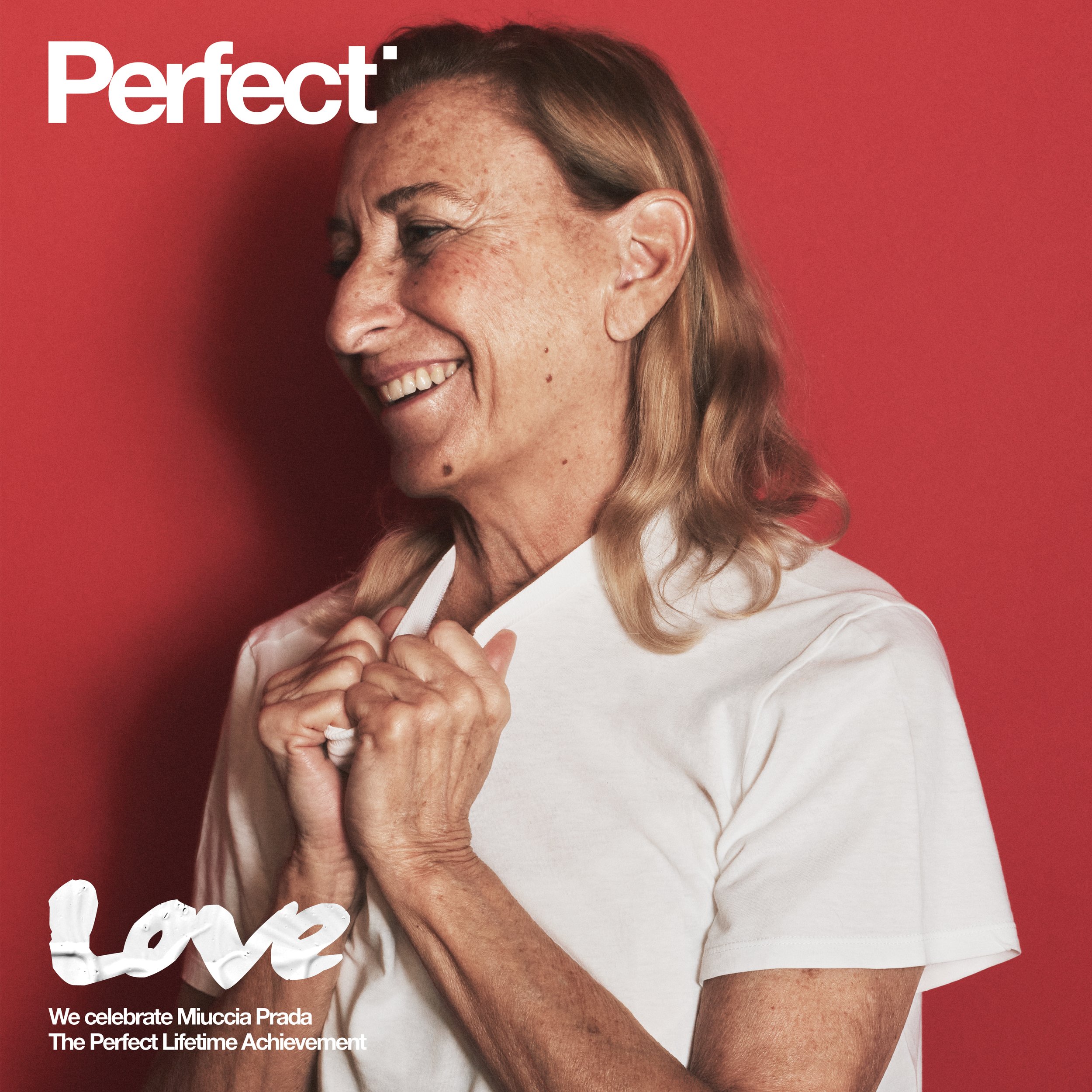
Miuccia Prada for Perfect Issue 3
Photographer: David Sims
Fashion Editor: Katie Grand
Writer: Amber Later
When I asked Miuccia Prada if she felt like she had a personality as a child, she told me no, she did not. In contrast to her current day reputation as a once-in-a-generation iconoclast, she describes her childhood as ‘kind of neutral, not exciting, but good. My family was Catholic, so I had a strict education, but not so severe. I don’t remember problems, but for sure it was not open.’ As for the way she dressed, ‘it was so serious. My friends were wearing dresses, but my mother hated that, so I’d wear straight, classic camel, while I was dreaming of a red shoe and a pink dress.’ The only hint of personality, the only sign of imagination and whimsy in her childhood, may have been her family nickname: Miu Miu.
Miu Miu the label, then, is a reclamation of sorts: ‘I always relate to, if I were young, what would I wear?’ Despite her conservative upbringing, she ‘had a very strong sense of fashion since the beginning. I was fixated on fashion. I love fashion for myself. And I wanted to be the most new, the most inventive, different from all the others.’ Since launching in 1992, Miu Miu has served as an outlet for Mrs Prada’s most playful, idiosyncratic ideas. In recent years, it has catapulted from an in-the-know favourite to one of the most desired and admired brands among fashion obsessives and dilettantes alike.
The desire to be ‘different from all the others’ might initially scan as hubris, but the way Mrs Prada explains it, it’s the opposite. Hunger for the future is only sated by knowledge of the past. Iconoclasm begins with humility. How can you hope to usher in the new if you don’t know and understand what’s already been done? ‘Already, life is difficult, but once you have to face difficult moments and problems, if you know all the other people in history who had it, how they solved it in different ways, all the possibilities, you feel like you have some instruments, some support in your hands.’ In an era where freedom is popularly defined as a life with no one above you, the suggestion that there is freedom in humility can be read as controversial. ‘Without teachers of lessons, you are alone. People think that I am wrong, because they think my opinion about teachers and masters and ideology is wrong, but it gives you a way of reading reality. If you’re left alone, it’s difficult to comment on reality without a mental structure to read it. It seems a very old-fashioned point of view, but sincerely, how else do you make up your opinion?’ The first law of cosmology according to Miuccia Prada: something cannot come from nothing.
Her first period of being truly unhappy in life was tied to a sense of paralysis caused by a lack of focus, directly preceding the beginning of her career as a designer in the Eighties. Until then, she’d spent her youth divided between a variety of artistic hobbies and social movements, ballet, feminism, mime and communism among them. These disparate threads of interest gradually unwound and she was left untethered from any identity at all. ‘For one year I didn’t know who I was, and I remember it as the worst nightmare.’ In a world without direction, where is there to go? She needed a role to give her life meaning, and she found that role in fashion, where she could channel her vast cultural knowledge into a creative project that tested her eye for design as well as business acumen. ‘If you live a life without a point of view, without knowledge, it’s not a happy life. I tend to know who I am, what I like, what I don’t, what I’m interested in. I know my life; I know, more or less, myself, and that’s always consoling. Because then you can choose good choices, wrong choices, but you know why you did it.’ Self-knowledge and clarity of purpose are, for her, ultimate virtues. ‘The principle problems of people are always the same: to develop your own opinion, to be free, to be independent, whatever you choose. The problems of people are always there, and how to solve them, that’s what one wants to dedicate their own life to. Bring on your ideas, your opinion, your passion – if you're lucky to have some, because many people, when told “do what you want”, don’t know what they want. That, I think, is difficult.’
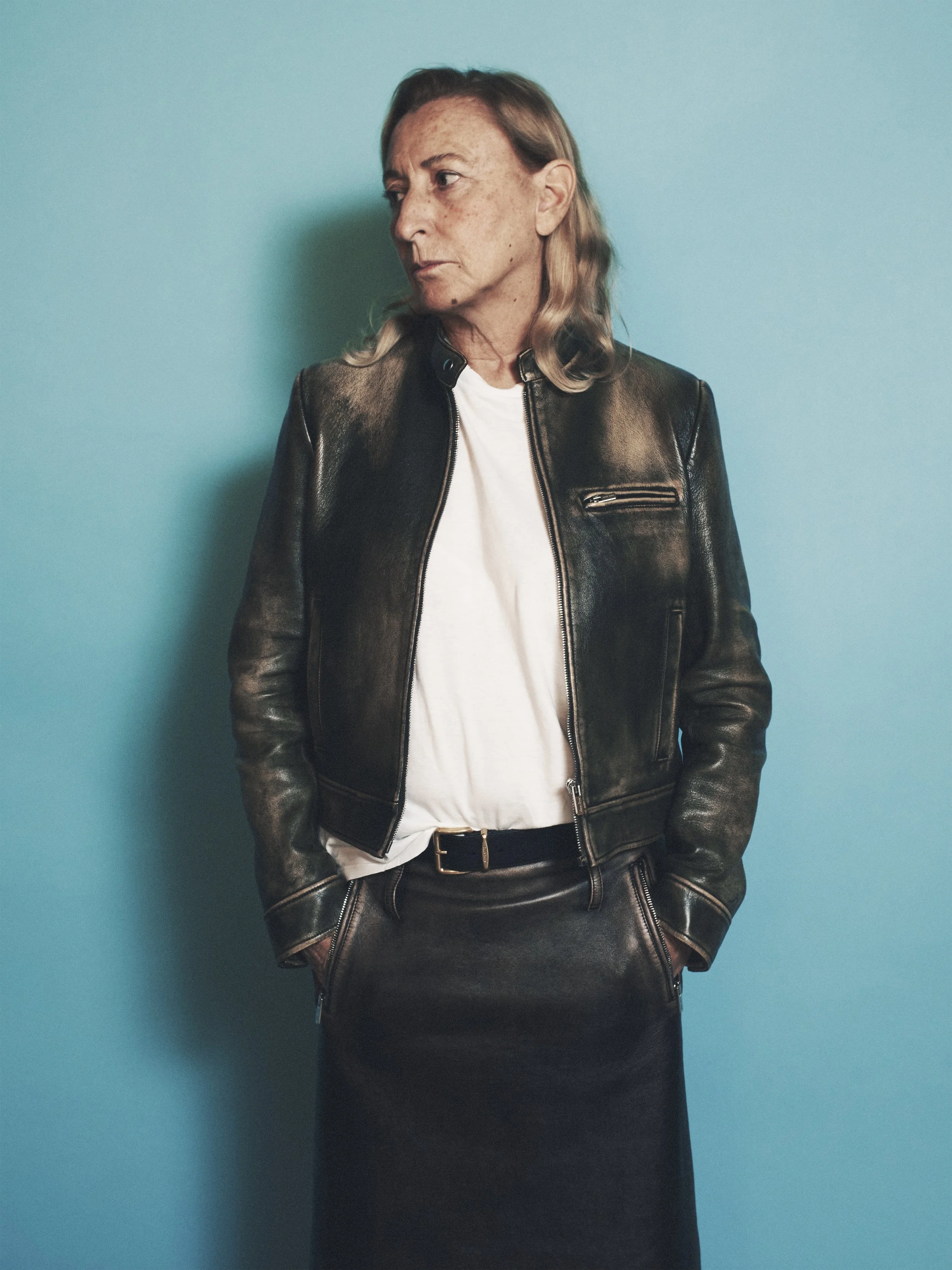
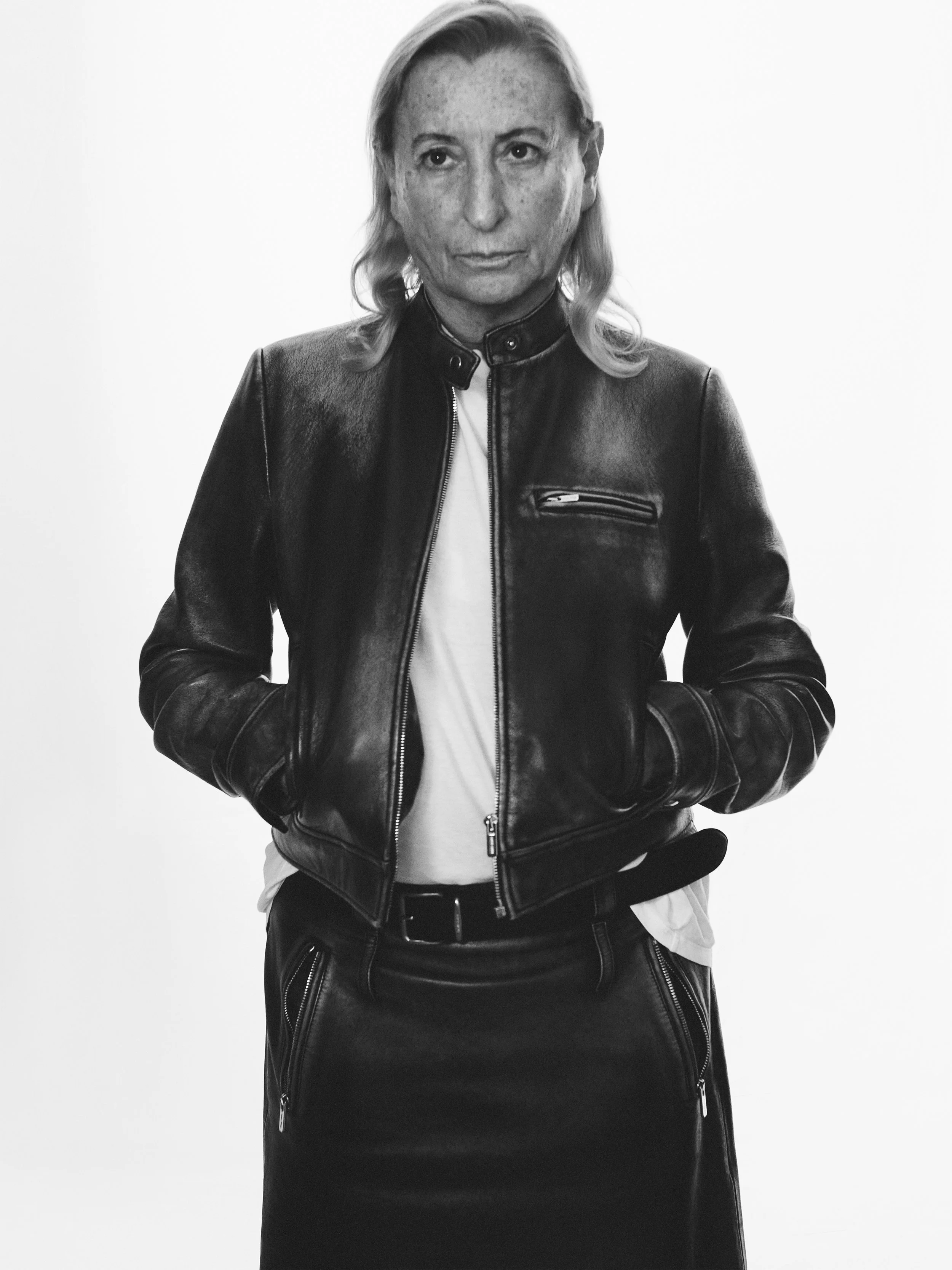
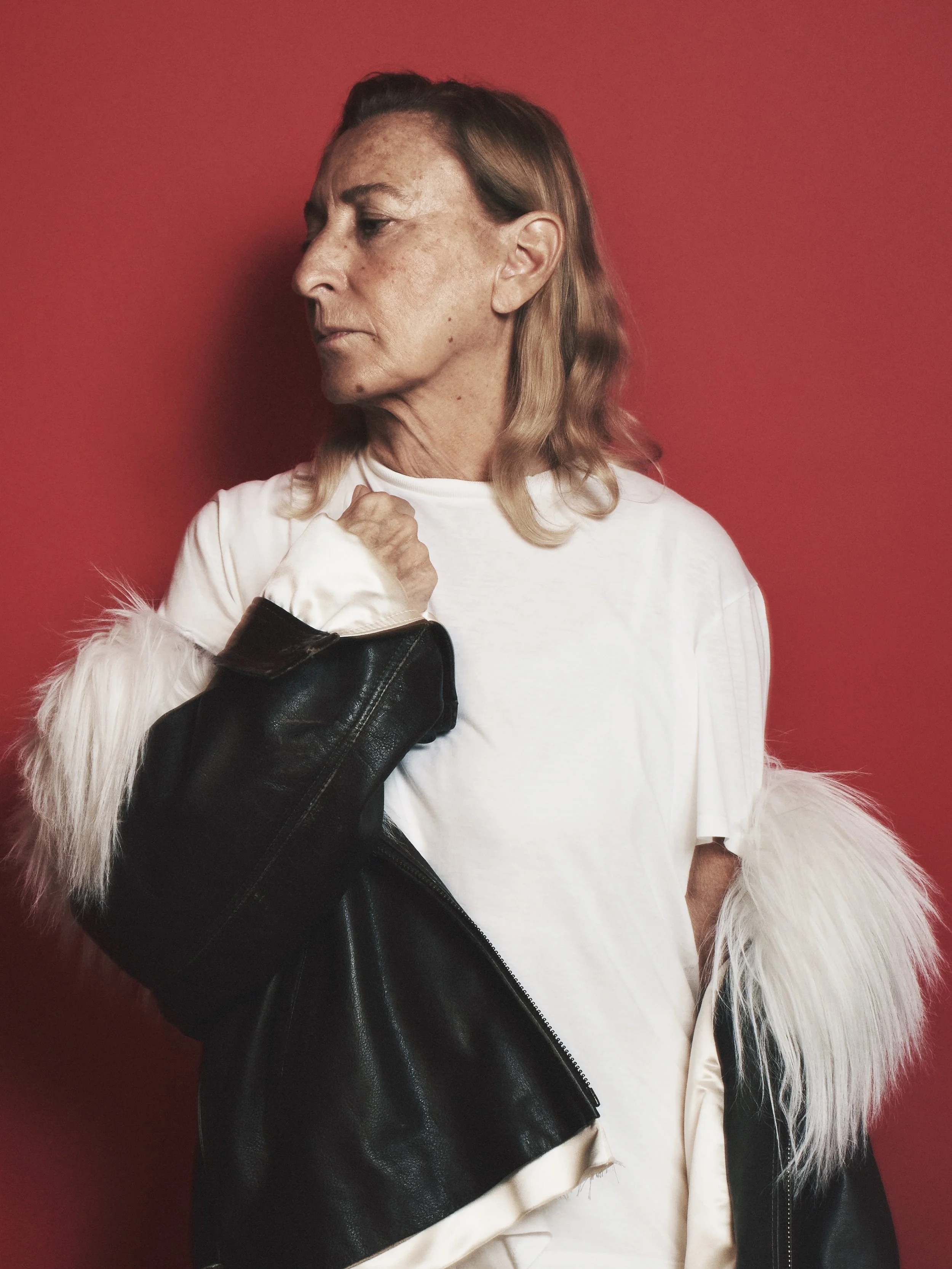
“If you live a life without a point of view, without knowledge, it’s not a happy life. I tend to know who I am, what I like, what I don’t, what I’m interested in. I know my life; I know, more or less, myself, and that’s always consoling.”
So why does Mrs Prada make the choices that she does? Her sources of inspiration are often unconventional (she once cited serial killer Aileen Wuornos as a reference for a show’s hair and make-up), but always clear and self-assured. I asked what her intentions were behind the Miu Miu spring/summer 2022 skirt set, a fashion item so ubiquitous it’s been canonised in the pop culture lexicon less than a year since its debut. Ultra revealing miniskirts and tops cropped off even higher than the midriff, the design has dominated the fashion landscape of the past 12 months.
‘I know why I did it, and I’ll tell you. First, I wanted to work on something classic, something so normal, but after, to break it, to cut it. What made it interesting is, for me, it was a joke on fashion. All the time there is a new sexy area, sometimes it’s the leg and after (gesturing at her midriff) it’s from here to here, and after it’s the back. So there are fashion clichés of what is sexy on the body. So I said, listen, this (gesturing at the area above her midriff) is not trendy at all. It was a comment on erogenous zones of the body.’ A satire of how fashion and advertising trends inform sexual appetites, the humour of the outfit lies in how its sexiness is ‘straightforward in an object that, in theory, is not a sexy object. It was a pleated skirt and canvas, camel, the most non-erotic object. It was the opposite of a sexy outfit.’
Despite a superficially sex-positive culture and media, numerous recent sociological surveys show steeply declining rates of sexual activity in wealthy countries such as the US, France and Japan. I asked if she agreed this current era is oddly chaste in comparison to what came before. ‘In another period, it was more sexy. Right? I totally agree. Because everything was forbidden. And by definition, forbidden is…’ She trailed off into laughter.
This led us to the obvious topic of the relationship between sexuality and fashion, which Mrs Prada seemed exasperated by. ‘Of course, everybody would say that it’s very important. I don’t think so. I think that sexuality is in your mind. If you’re sexy, however you dress, even in the most serious way, you are sexy. And if you are not, you can go naked and you’re not sexy.’ People see sex where they want to, and don’t where they don’t. In 2015, a Miu Miu ad that ran in British Vogue featuring then 22-year-old model Mia Goth was banned by the UK’s Advertising Standards Authority for its allegedly ‘irresponsible’ evocation of pederasty. The advertisement shows the model fully clothed, sitting on a bed or table, as the camera peers in through a half open door. The ASA’s accusation was unfounded, even sexist in the way that it infantilised Goth, an adult woman.
Perhaps, then, the ultimate punchline of the skirt set is that our society is more frightened by the possibility of sexuality where we don’t expect it than a clearly delineated, cordoned-off presentation of it. So long as something is presented to us as being explicitly sexy, we are able to approach it with confidence and enthusiasm. When something is ambiguously sexual, or suggests that every aspect of our social existence is imbued with an erotic tint, our culture shirks away in nervous anxiety. The skirt set is popular, in part, because it delivers an uncomplicated promise of sex. Instead of merely hinting that there might be a sexual undercurrent present even in our most pedestrian workwear and sportswear (Miu Miu autumn/winter 2022 expanded the design to include tennis inspired outfits), it makes that claim exceedingly obvious, so a squeamish audience isn’t haunted by the spectral possibility of sex. Crucially, the skirts are torn short as opposed to neatly trimmed. Subtlety is in the lack of subtlety. Subtext becomes text.
We began to talk about how eroticism is communicated in certain films, how one small hole in a stocking can sometimes do the work of a hundred bare midriffs. ‘If you go naked in a bikini with a string and everything that is obviously sexy, no one gets excited.’ In order to perceive and appreciate this sort of subtext, Mrs Prada believes one requires a certain sensibility, gifted by nature and cultivated by conscious effort. ‘Probably it begins with something that you have inside, but if you don't educate it, if you don’t work on it, you lose it.’
Her own cultural education began with literature, and branched off from there into other mediums. ‘I started reading and I discovered paradise. All the big literature of the 18th century through to the 1960s. I learned my life through the lives of others that I saw reading, watching movies, studying history. I am fixated with culture in the sense of knowing things. Because if you don’t know, if you don’t read, if you don’t see, if you don’t speak, how can you know how life is? How can you know the life of the other, the problems of the other, and recognise in them your own? For me it’s impossible to separate my life from my reading, my movies, my knowledge.’ If her initial interest in fashion stemmed from a daydream of ‘a red shoe and a pink dress’, it soon evolved into a question of how to integrate those daydreams with reality. In art, she ‘saw the life of people, of people from all over different countries, poor people, people in any kind of personal problem. So those were my interests. I tried to introduce those feelings in my job. What I think I did was introduce fashion to real life.’ Designing for her own self could only go so far. ‘When I started, it was really what I wanted to wear because I was younger. After more shows, I had to enlarge my imagination.’
A week before I flew to Milan to interview Mrs Prada, I had the good fortune of modelling for the Miu Miu autumn/winter 2022 campaign. As preparation, I looked through digital Miu Miu archives to better understand what sort of persona I would need to embody on set. When I met Mrs Prada in person, I asked if she had in mind an idea of the archetypal Miu Miu girl. ‘We are always trying to have this answer, because people are always in search of a definition. But I’m not used to thinking about it. When I design I have no one in mind, I think in abstract and vaguely in reference to myself. I used to never see anything on people, because that was enough. But at the show at the end, the right person would make the whole difference.’ We talked for a while about modelling as a profession and how it relates to her vision as a designer. ‘When I started my job I used so few people because there were only a few I really liked. Now it’s like a different moment in history. But back then, Kate Moss came out five times in a show. Now, one look, one person.’
“When I design I have no one in mind, I think in abstract and vaguely in reference to myself. I used to never see anything on people, because that was enough. But at the show at the end, the right person would make the whole difference.”
Because her name came up multiple times in our conversation, I contacted Moss later on to ask about her relationship with Mrs Prada: ‘I love Miuccia and admire her greatly. I immediately connected with her, I felt she saw me as a person, not just a model. Her style and sensibility for simplicity, fantasy and luxury is always so inspirational.’ Indeed, Mrs Prada sees her models as complicated human beings, representations of the wide variety of human experience that she first discovered in literature and cinema. ‘Now it’s kind of trendy,’ she told me, ‘the fact that you have many different people, the variety of people, the richness of people, which is good. So now I embrace this new point of view.’ Expanding the diversity of models used in shows is simply a matter of reflecting the society and world she observes around her, a logical outcome of her commitment to reality as she sees it. In recent Miu Miu shows, male models have walked the runway wearing the same clothing as their female counterparts. ‘I liked that because it was a way of accepting realities and putting together different realities, not as a political declaration, but as a real acceptance of life.’
When I entered her office for this interview, Mrs Prada told me she’d been reviewing the photos of me that were to be used in the upcoming campaign. As a transgender woman, a demographic that, when she began her career, was rarely represented in fashion, I wondered how she might perceive me and other trans models being photographed as some of the faces of her recent collections. A personal grievance of mine is designers who treat gender as a purely aesthetic category instead of a political one, as though a man wearing a dress might solve misogyny or that gender is only about self expression and appearance as opposed to a deeper understanding of how one’s body and psyche relate to sociopolitical norms and ordinances. Unlike those designers, Mrs Prada insists on womanhood as a political category and rightly sees the struggles of cis and trans women as unified in the fight for bodily autonomy. ‘I believe that each one should be free to do whatever they want with their body, their sex, in principle. I believe that people who want to change sex have problems in society, so I don’t want to be superficial. I really believe in freedom.’
Like me before the shoot, Mrs Prada had also been consulting the archives of her own work. The recent surge in Miu Miu’s popularity inspired her to reflect on the history of the brand. ‘Now suddenly people see Miu Miu differently. Why? I don’t know. That’s why I wanted to look a bit at my past shows. Before, I went after my own fantasy, my own passion. Each show is a movie or a book or a mix of them, or a group of people, a group of women. It’s like telling a story, putting out personalities connected through… One show was about nuns, another about sexiness, so any subject was possible.’
Maybe that sense of play and exploration is why she struggles with defining the essential ‘Miu Miu girl’. ‘I hate the idea of “muse”, the limitation of one person representing the whole thing. For me it’s the opposite. I like so many different things that, at least, I would have one thousand muses.’ This interest in difference and in contrast, in a panoramic understanding of humanity’s parallels and perpendiculars, forms the cornerstone of her approach to thought and creativity. Once, a model described to me an experience he had at a fitting where the designer positioned himself in the centre of a room and commanded the models to continually circle around him as he evaluated their styling. Mrs Prada is the opposite, preferring to circle around a situation or idea until she understands it from every conceivable angle or perspective. ‘Anything I know, I can say the opposite ten minutes after.’ True to her word, she tells me that the result of her examining her past was an abrupt turn away from her prior approach. ‘Now I want to put my fantasy at the service of reality.’ What is realistic fashion to her? ‘Things that you want to wear. Not a fantasy. Not a story.’
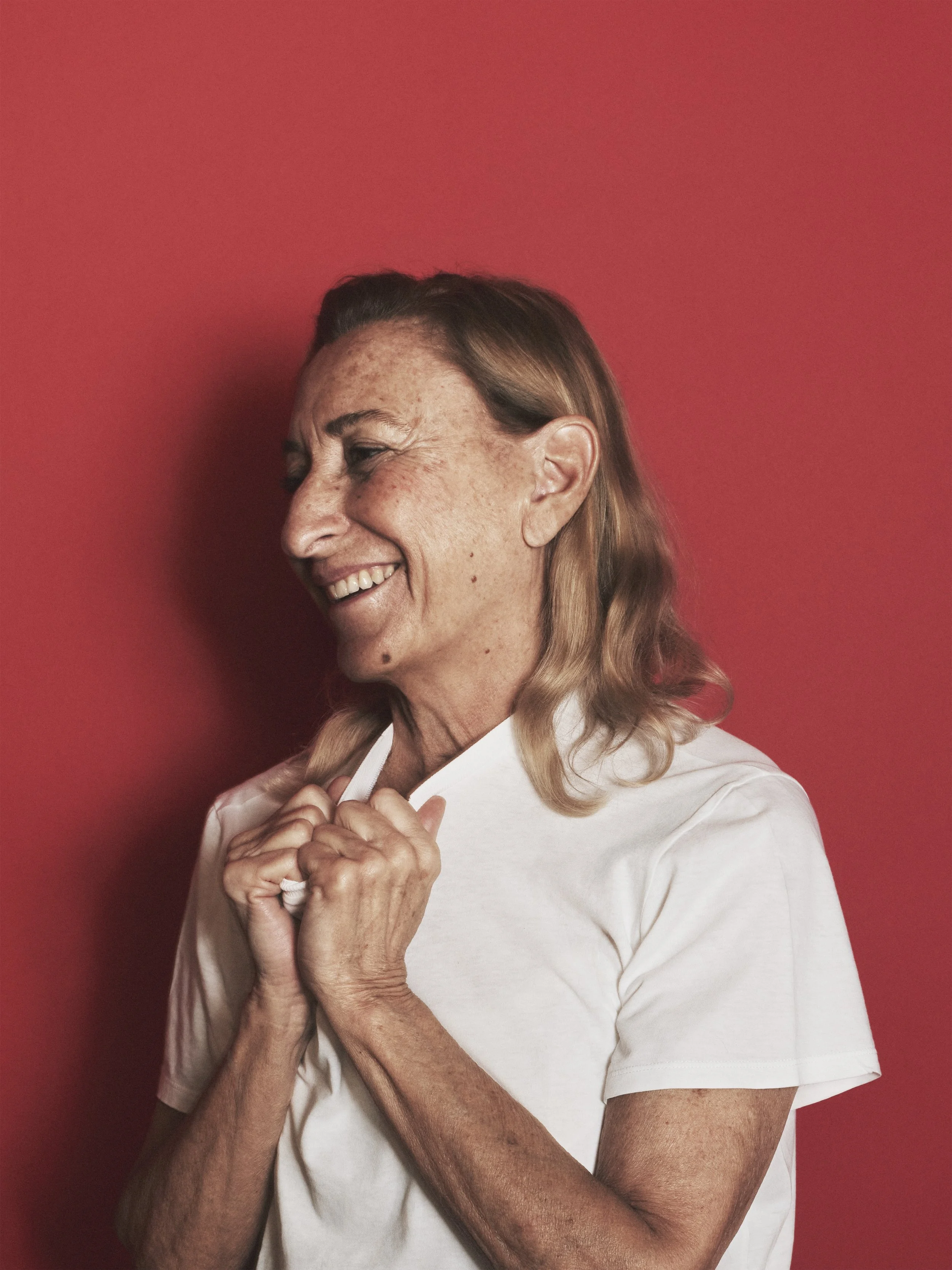
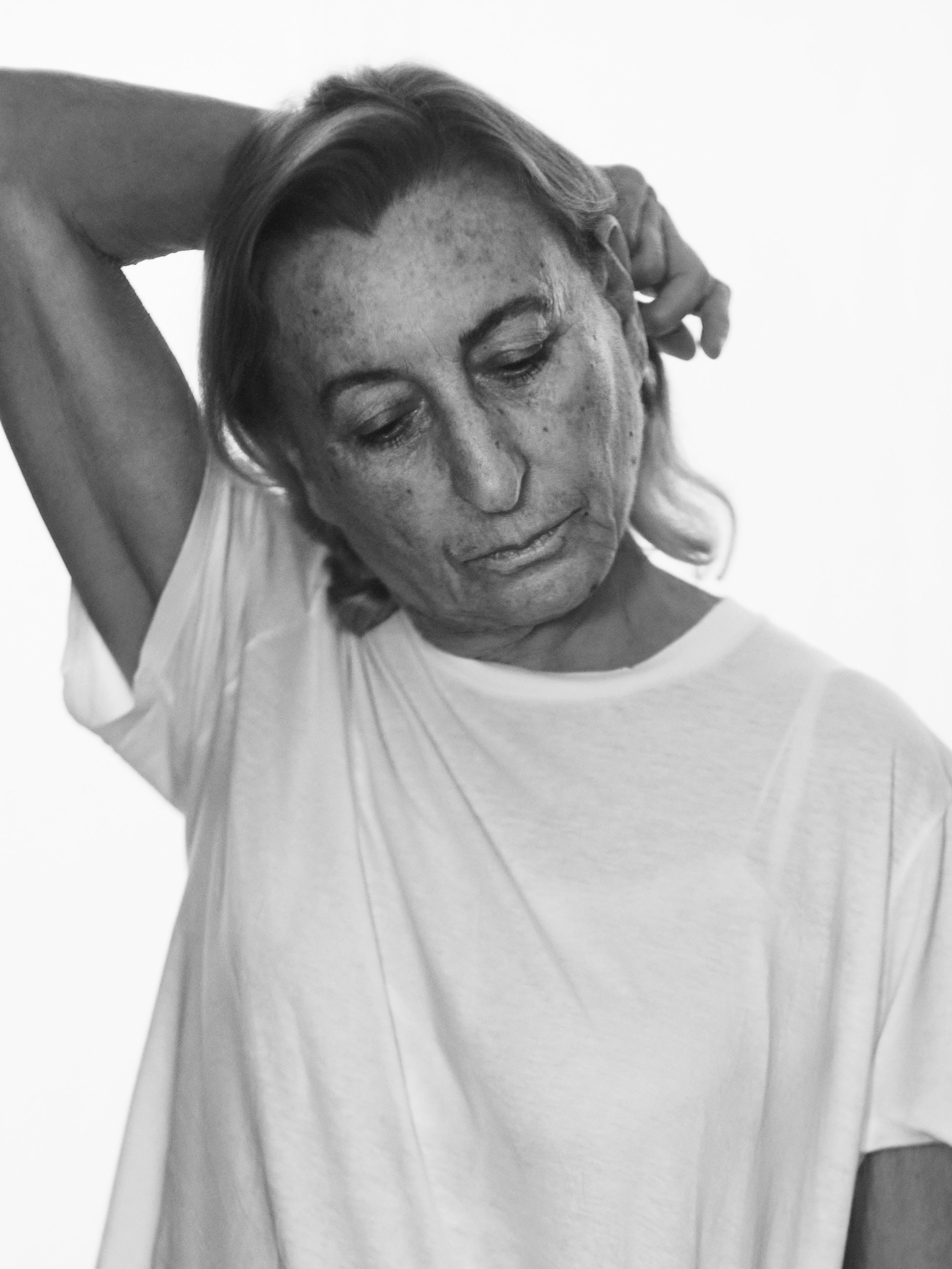
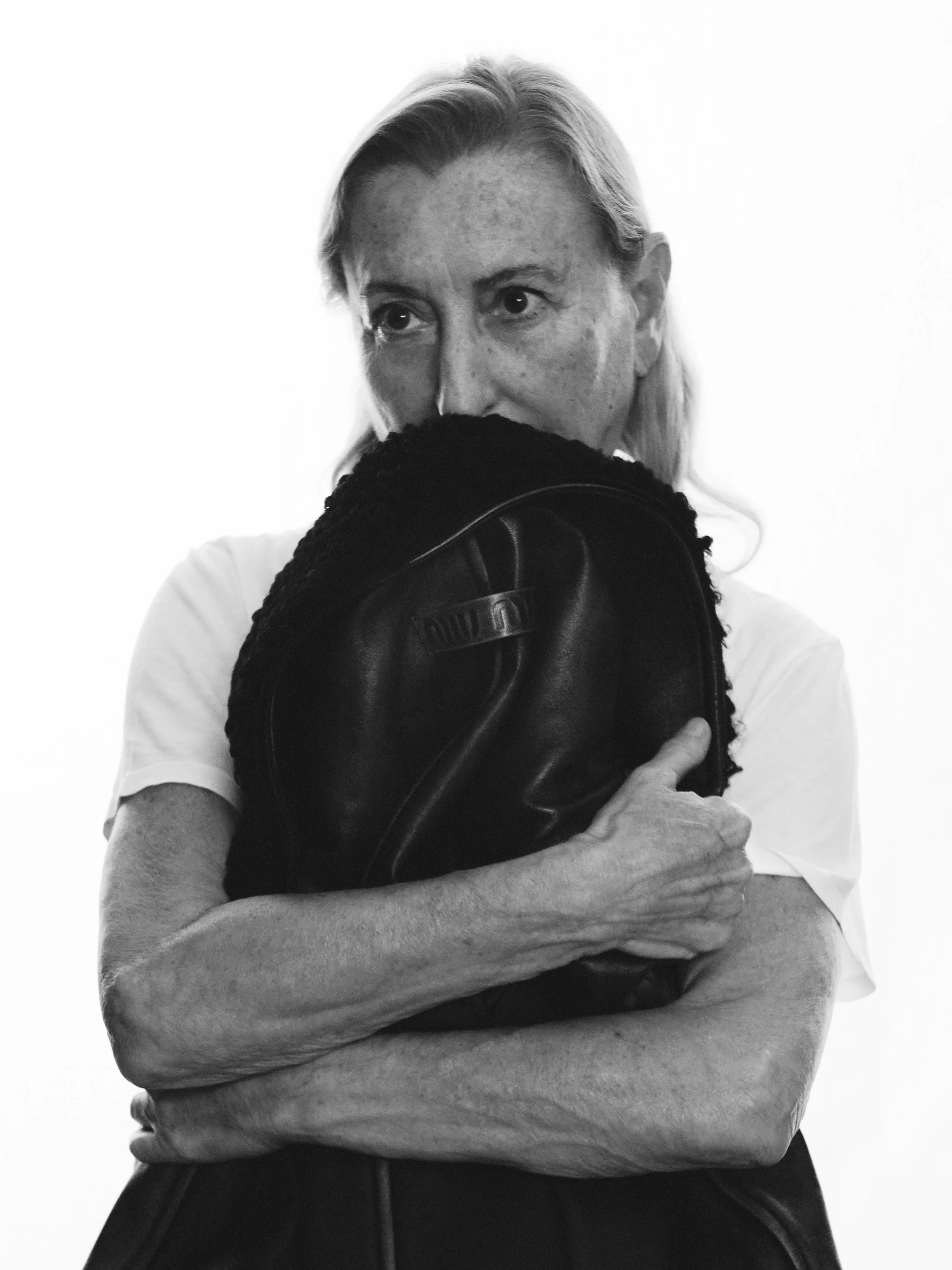
“I hate the idea of ‘muse’, the limitation of one person representing the whole thing. For me it’s the opposite. I like so many different things that, at least, I would have one thousand muses.”
Mrs Prada’s stated turn toward realism corresponds with a shifting consciousness that is perhaps inevitable as she enters her fifth decade as a designer. ‘Getting older, I have to deal with the idea of teaching or educating. I hate, at the moment, anything that is useless. Even in art. At the Fondazione I only want to do shows that make sense, that are useful. It’s probably the only thing I could do that is completely honest. “Commercial”, in the world of fashion, is an insult, but I run a company selling clothes. To be honest, we all need to sell. I want to do my job well, so I want to do something that is useful for people. To be good in fantasy is too easy. It’s useless.’ When she was younger, Mrs Prada struggled with the question of how to construct a life that could find her creative passions and humanistic morals in harmony with one another. ‘From a fashion point of view, it’s difficult, because you’re dealing with the most superficial aspect of existence. I always had a contradiction because my thought was really difficult to match with my work. I tried to introduce reality and observation into fashion, and do it in the most correct way. But as a profession, being a fashion designer is limiting what you can do. For myself, I probably created so many other things because fashion was not enough. But I like what I do. It’s the world I chose, so my ideas should also be reflected there, between the luxury and expensive stuff, and a vision of the world for the biggest majority – that was a contradiction I had in my life. Only now it’s a bit better, but it’s still there.’
‘Why is it better now?’ I asked.
‘With the power in communication that I achieved, I can dedicate myself to exploring and investigating ideas through my job as a fashion designer and the Fondazione Prada. Also the world around me is different. When I was a girl in the Seventies and my friends were revolutionary professors while I was doing fashion, it was tough. Now’ –she begins in a tone that I can’t identify as humour, resignation, or regret – ‘there aren’t so many revolutionary people in general.’
Our conversation ended with some advice: ‘Your life should be as round as possible. Your political point of view probably should work with your aesthetics and your beliefs. At least in my life, I’ve always tried to create something that works together. Not politics here, aesthetics there. Everything you do and say should make sense with each other. Not always succeeding, but trying to. I think that makes you happy in the end, and respectful of yourself. Sometimes it’s difficult, sometimes heroic. Maybe we don’t need to be a heroine, but we need to try and do what we think is right.’
While waiting in the check in line at Malpensa airport to fly back to New York, I stood under a giant banner featuring actress Emma Corrin in a Miu Miu eyewear campaign. All throughout Milan, similar ads appeared at bus stops and on posters plastered across neoclassical facades. I’ve done a number of big modelling jobs this year, but none elicited so many excited cries from friends as the news I’d booked the Miu Miu campaign. What must it be like to see your childhood nickname become shorthand for contemporary, fun, sophisticated fashion? Miu Miu. Not bad for a girl with no personality.