Troye Sivan and the Man That Got Away.
Ahead of She’s the Best, his forthcoming album about the highs, loneliness and longing beneath his life as a global pop star, Troye Sivan reflects on queer desire, femininity and the search for love.
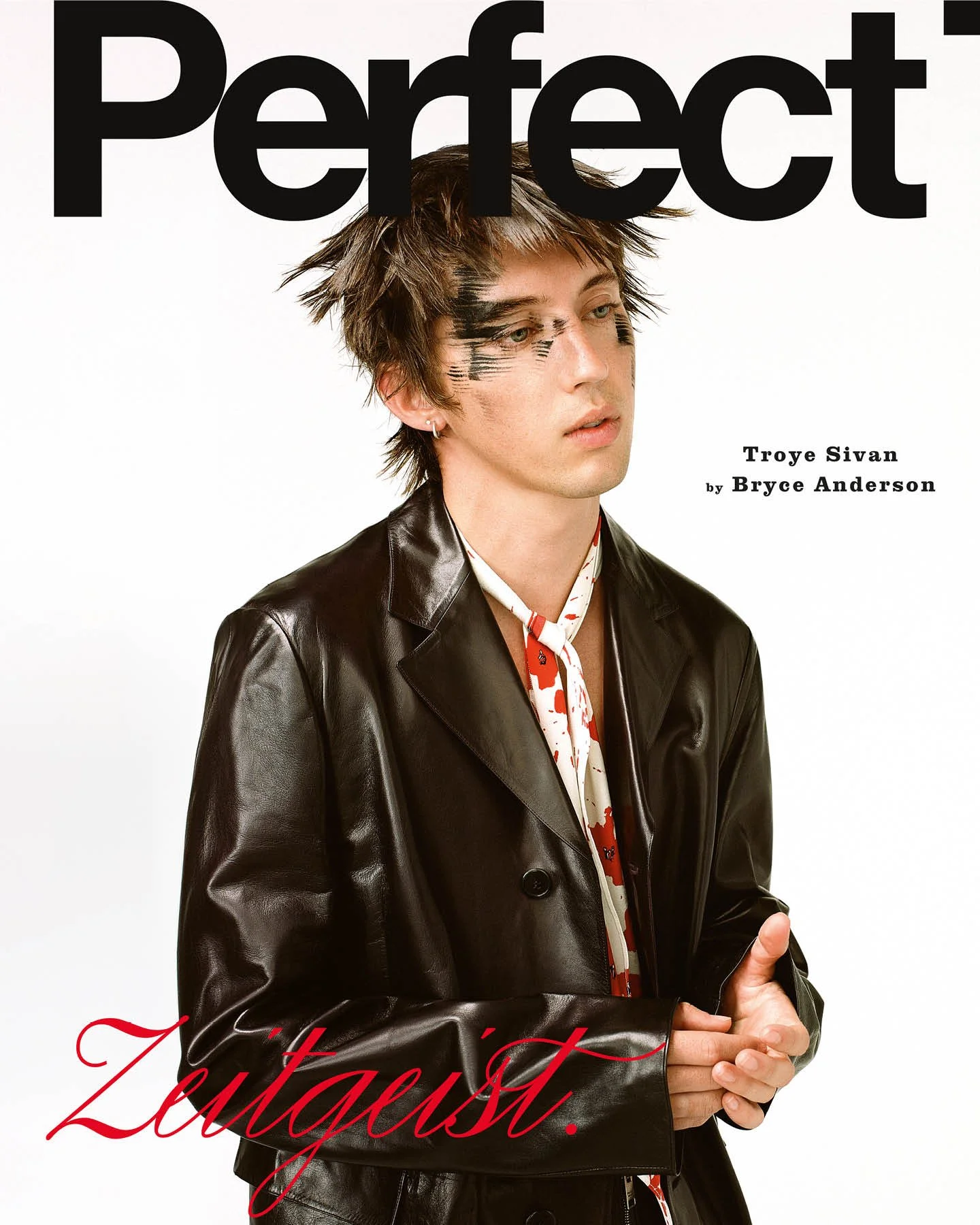
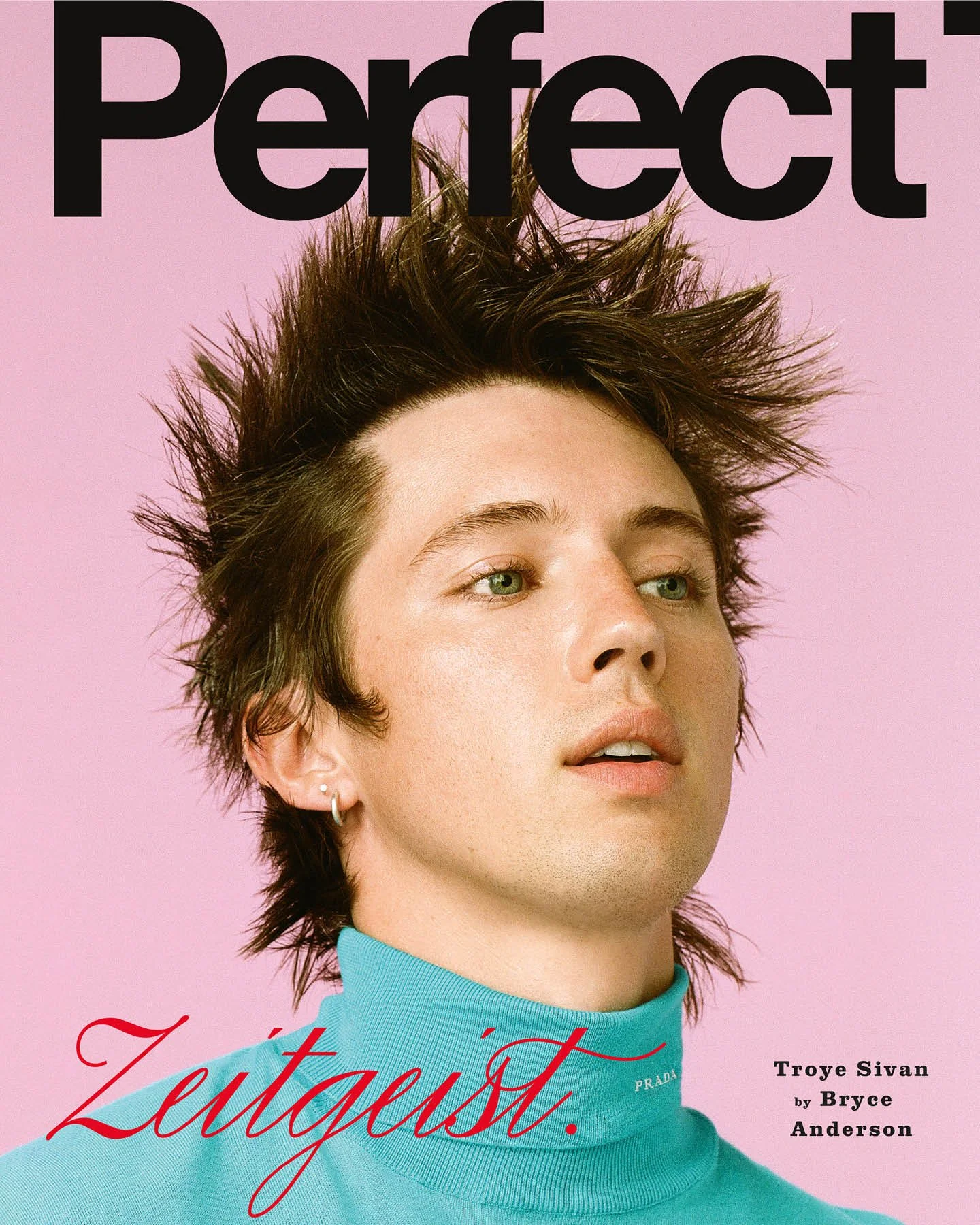
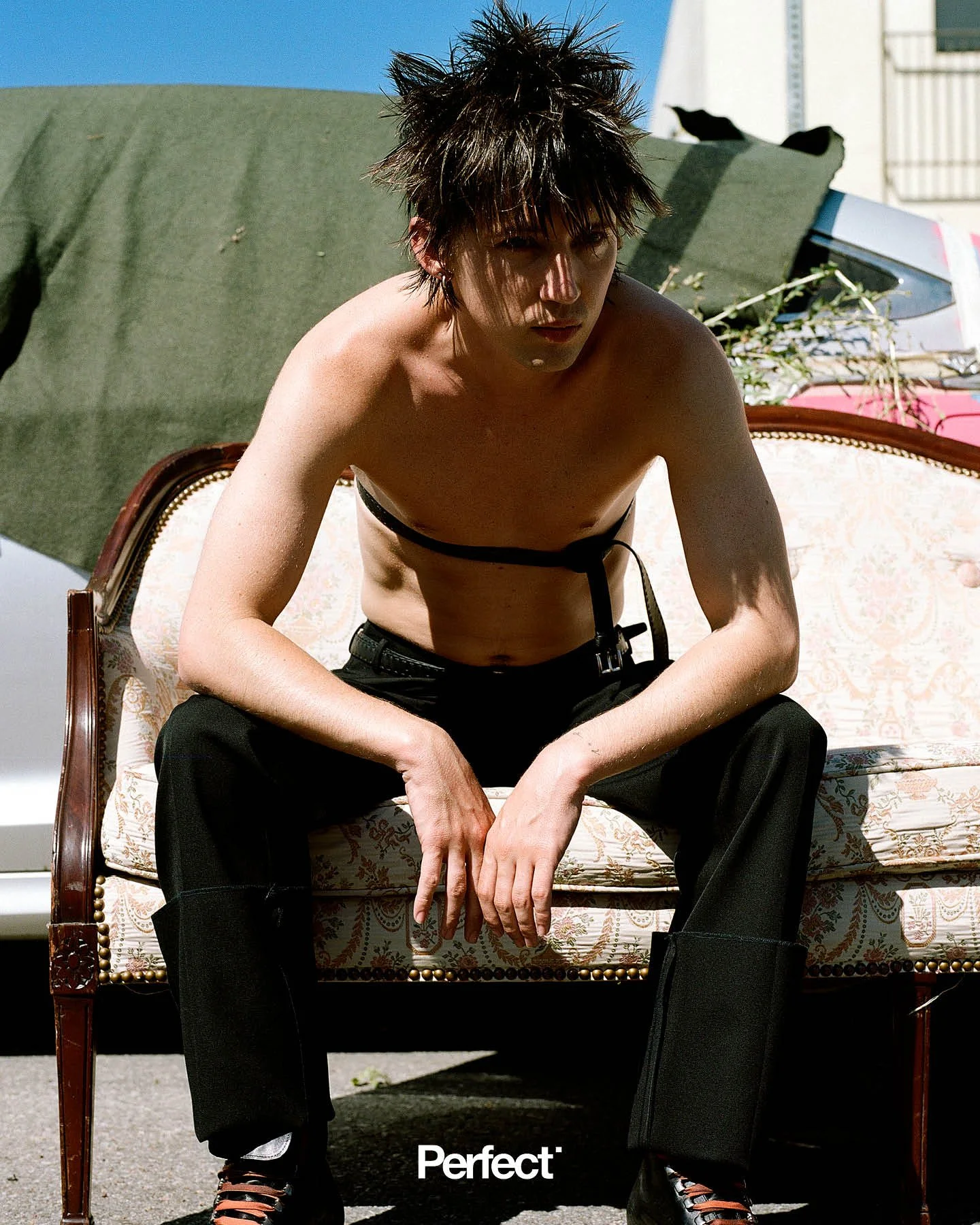
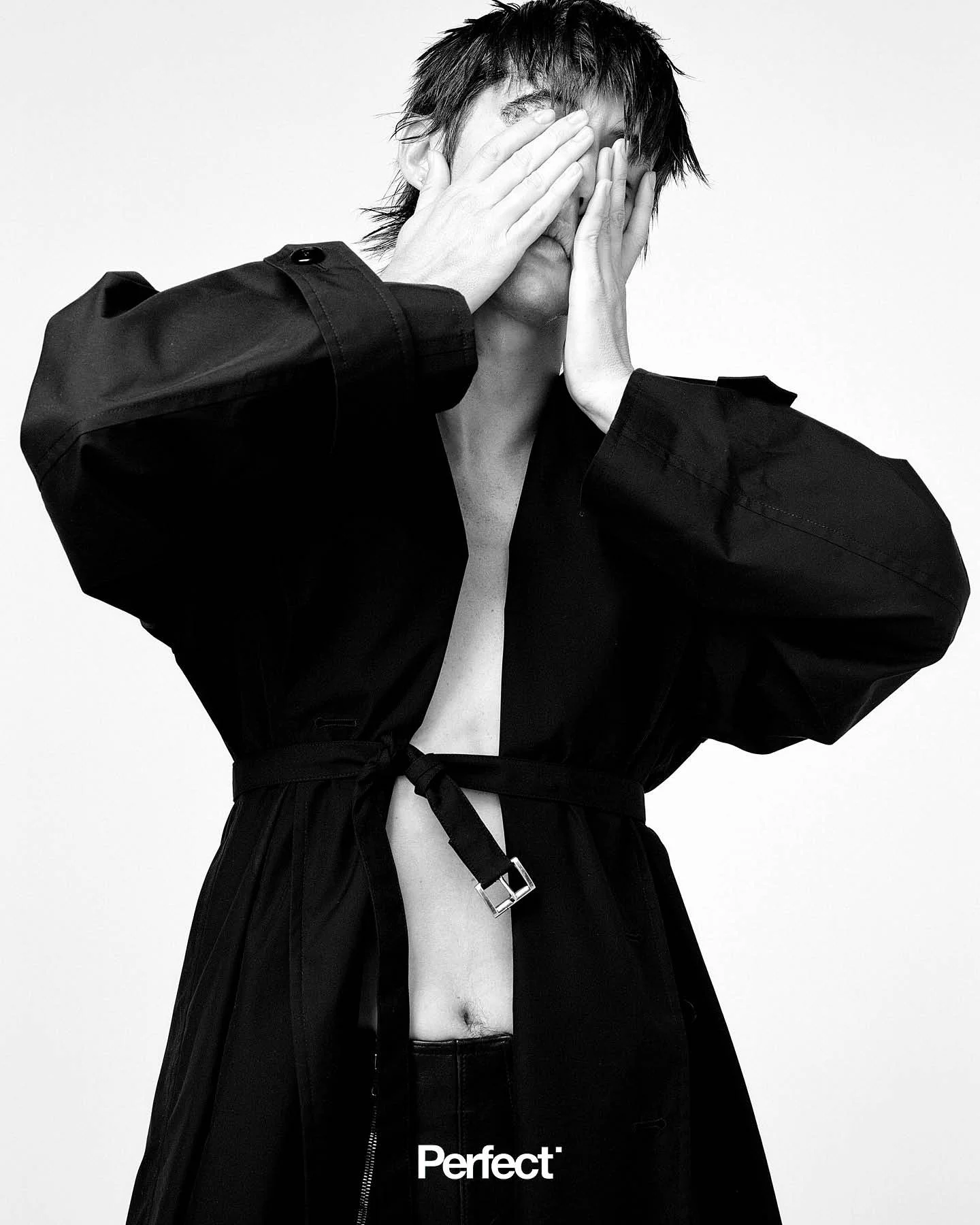
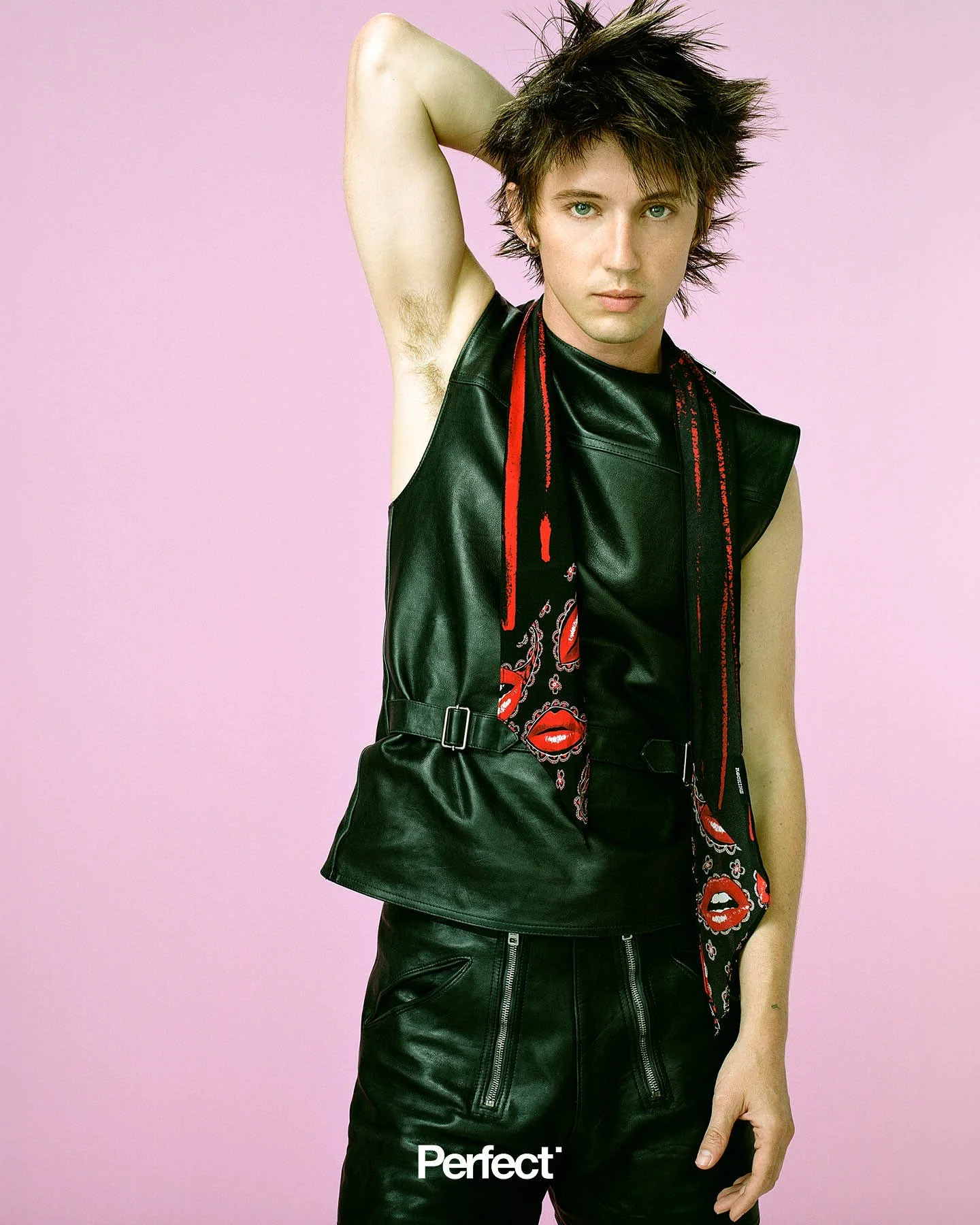
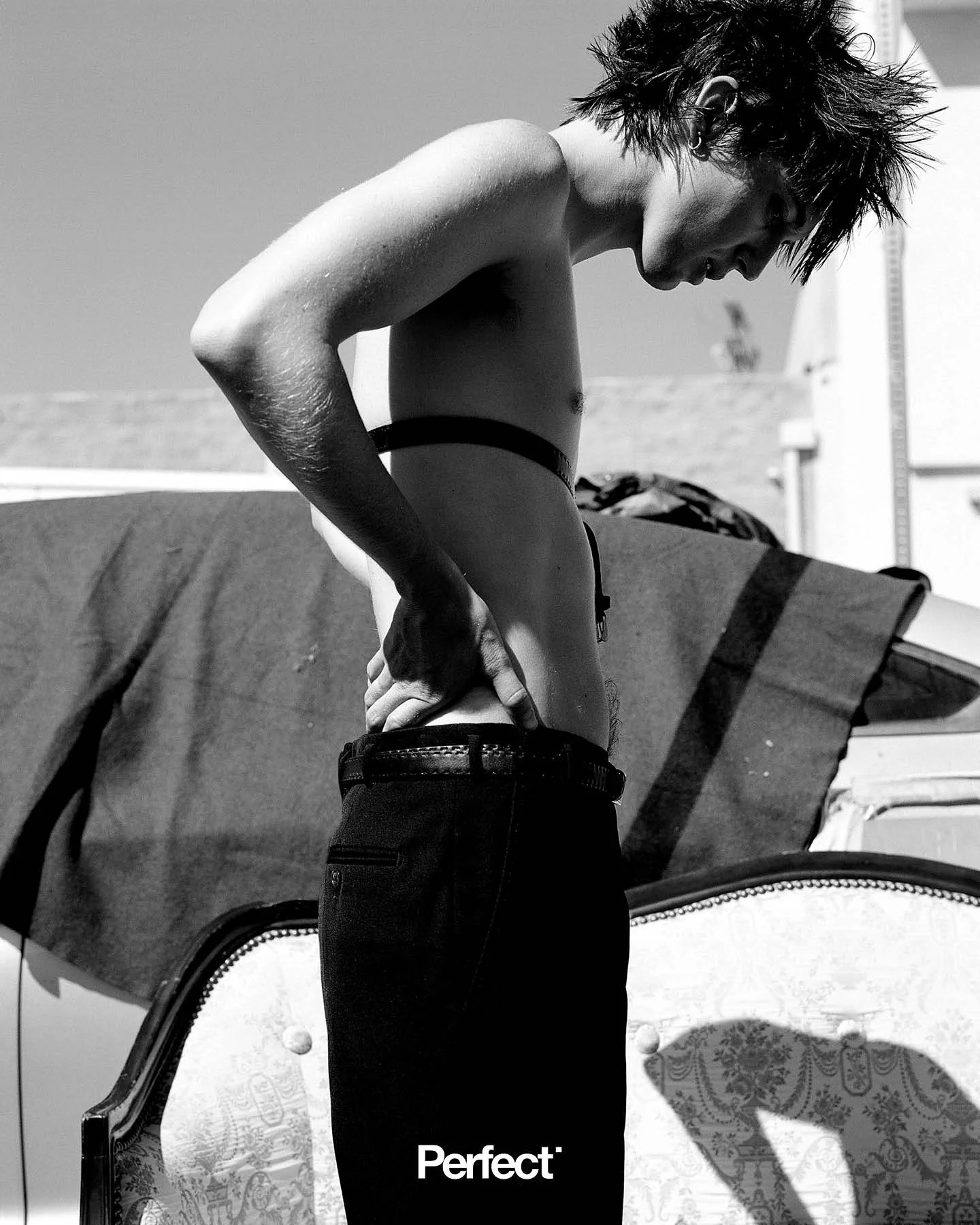
Troye Sivan for Perfect Issue 11.
Photographer: Bryce Anderson
Fashion Editor: Katie Grand
Writer: Murray Healy
Once upon a time, many years ago, before I started writing about fashion for a living, I was an academic, researching in the early days of queer studies, and one of my areas of specialisation was the role of gay men in pop music. Back then, there weren’t many, frankly, on the performance side. Elton John, not long divorced – from his wife – had only recently come out to the general public; Boy George and Neil Tennant of the Pet Shop Boys had yet to do so. George Michael’s forced outing after being arrested for cottaging was a few years in the future. Freddie Mercury and Liberace had both died in the closet. And yet, we knew. We knew of the centrality of gay men to pop culture – as managers and manufacturers of acts and bands (of boy bands in particular), as audiences (gay men and teenage girls – they were your core pop audience), and especially as performers. Back then, in a more explicitly homophobic age, it was as if the queer energy so integral to pop was somehow fuelled by the tension between the suspicion of its presence and its disavowal.
We theorised a future where these things would be openly acknowledged. We dreamed of a time when a gay male pop star would fill stadiums singing candidly about his love life and even his sex life, and these songs would be broadcast on Radio 1 and blare out across shopping malls and you’d hear postmen whistling the melody and even the Daily Mail wouldn’t get all funny about it.
Troye Sivan is exactly the kind of pop icon we could only theorise about back then. After six years building an audience of hundreds of thousands by singing on YouTube – first covers (Amy Winehouse, Justin Bieber, Adele), and then his own material – in the summer of 2013, when he was 18, two life-defining events occurred: he posted a coming out video, and he signed to EMI Australia. The two are linked: he dropped the video while he was in negotiations with the label, as he cannily understood that if he was out to his fans already, he couldn’t be told to stay closeted. (The label actually sent him an email congratulating him.) Since then, his sexual identity has neither proved a barrier to becoming one of the biggest, platinum-selling, Grammy-nominated, arena-touring pop stars on the planet, nor is it a subject he has ever been coy or guarded about. The title track of his second album, 2018’s Bloom, is a beautifully composed ode to the joys of taking it up the arse. His last album, Something to Give Each Other, celebrated the giddy hedonism of being young, free, single and gay in gleefully explicit detail.
What this says about the way culture has shifted in the past 30 years is a subject for another time and place (probably a doctorate thesis; probably dozens). But to my mind, Troye Sivan’s success represents a cultural triumph – he is himself with no compromise, no shame, and no hint of a mainstream moral backlash, even among the most conservative corners of the legacy press. Surely this is what liberation looks like?
“Work has come and gone, love has come and gone, boys have come and gone – but I have always, always, always had my girls”
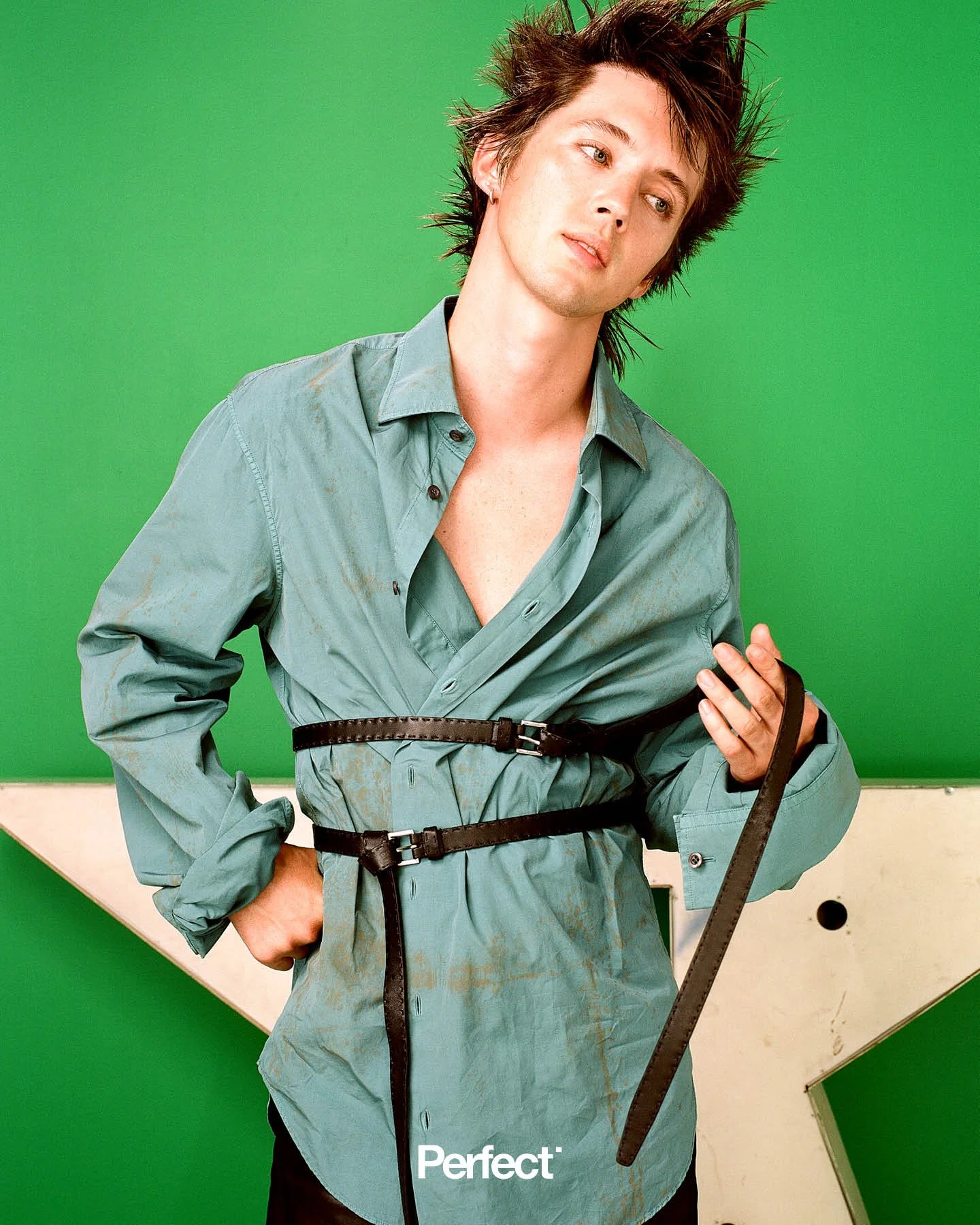
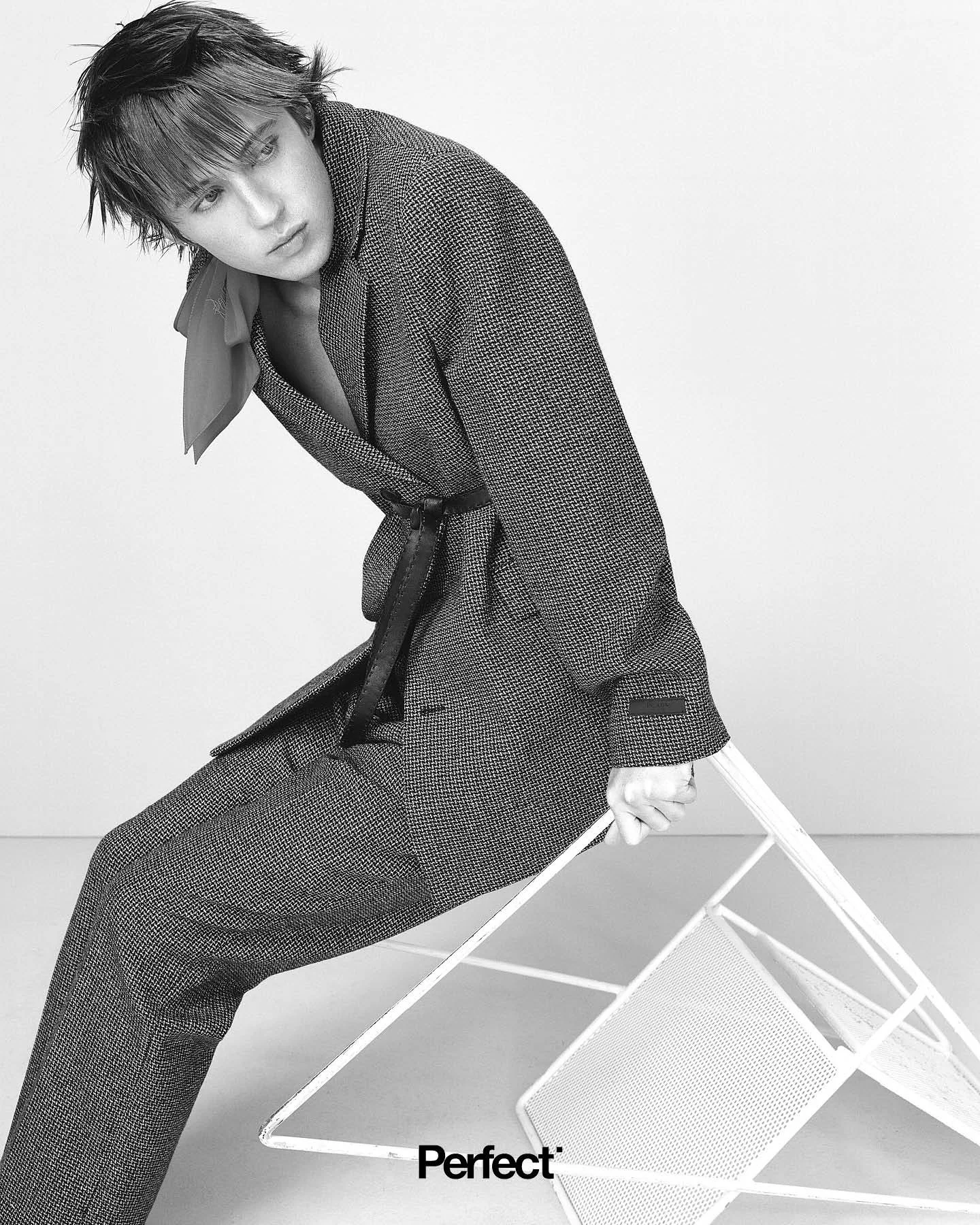
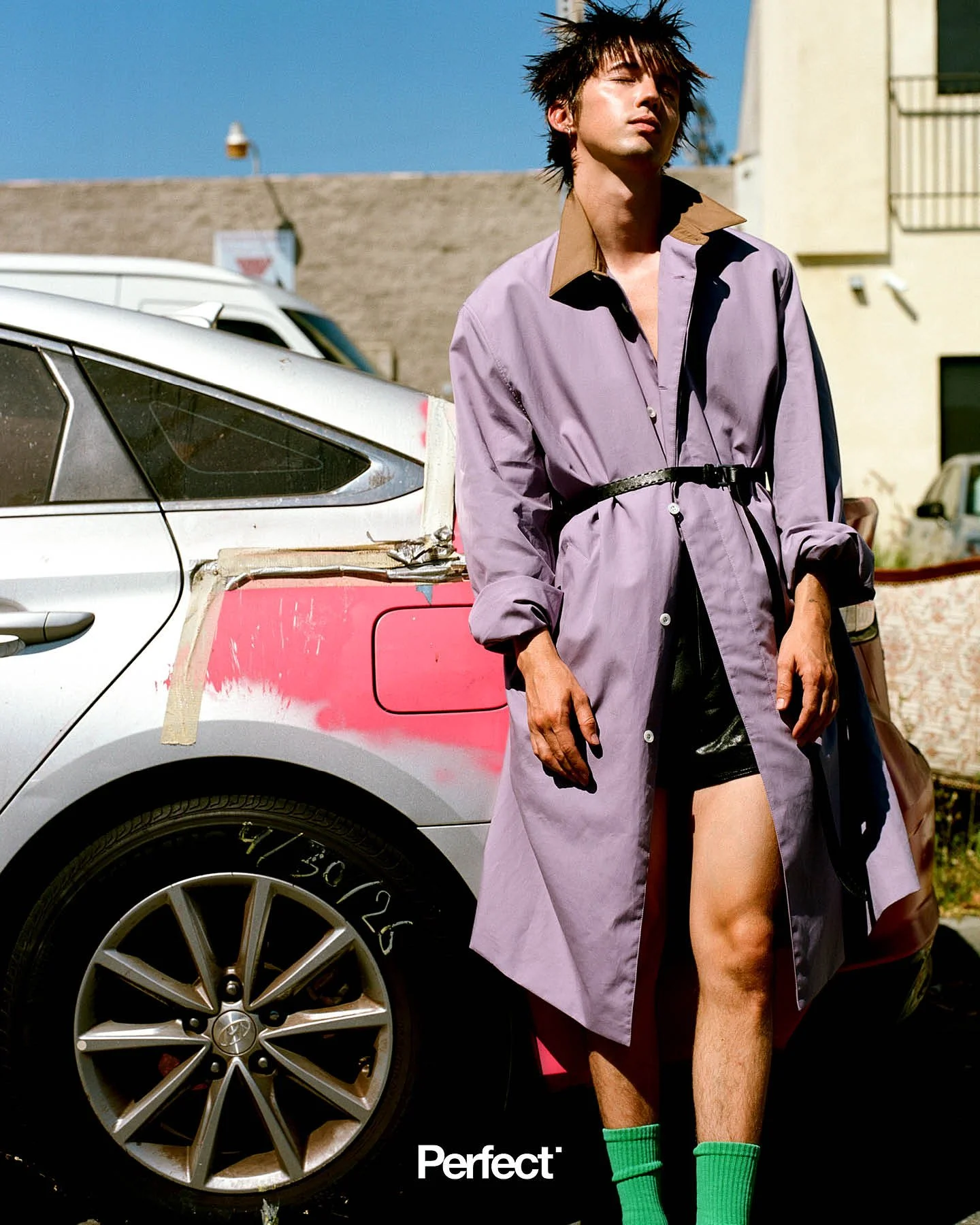
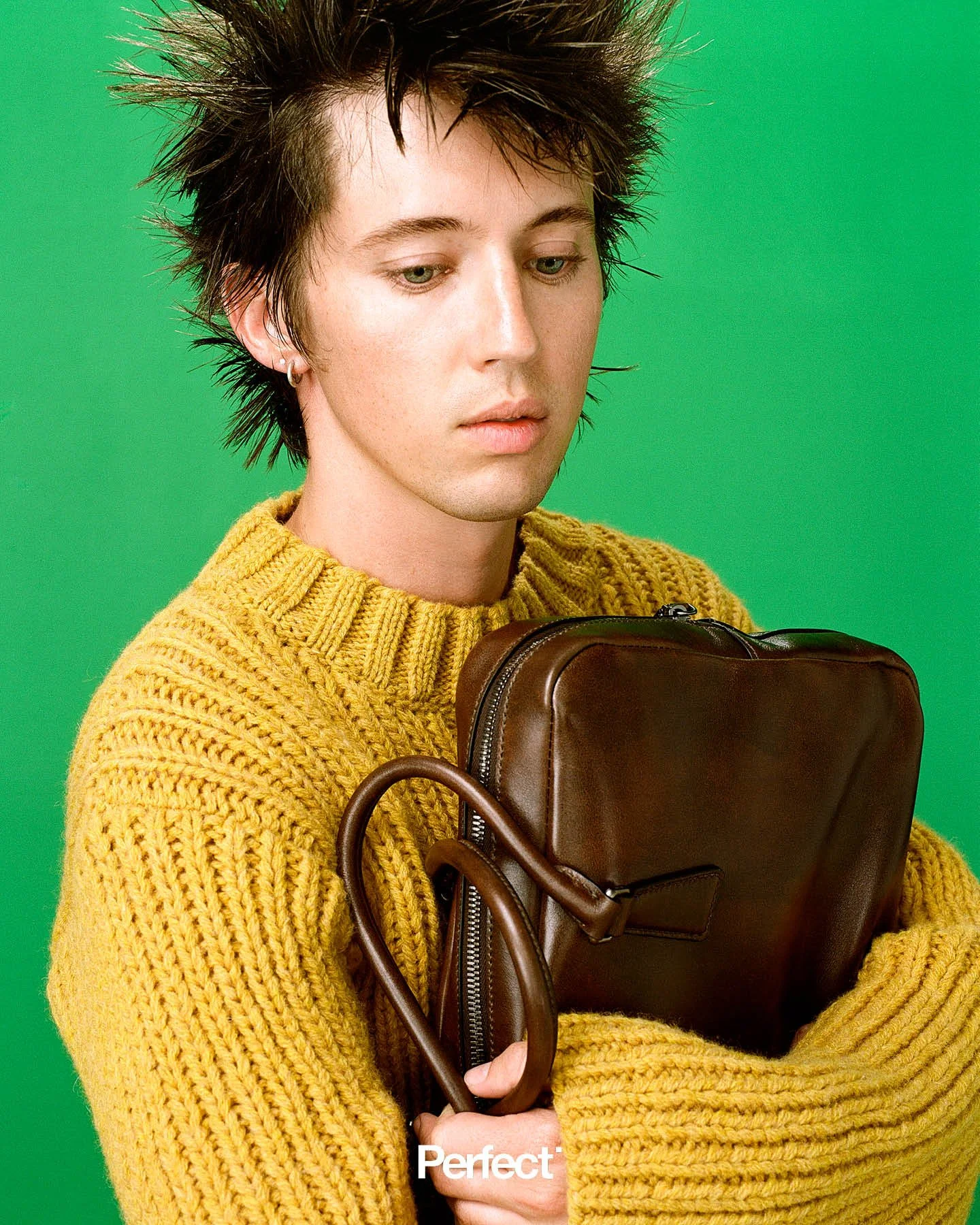
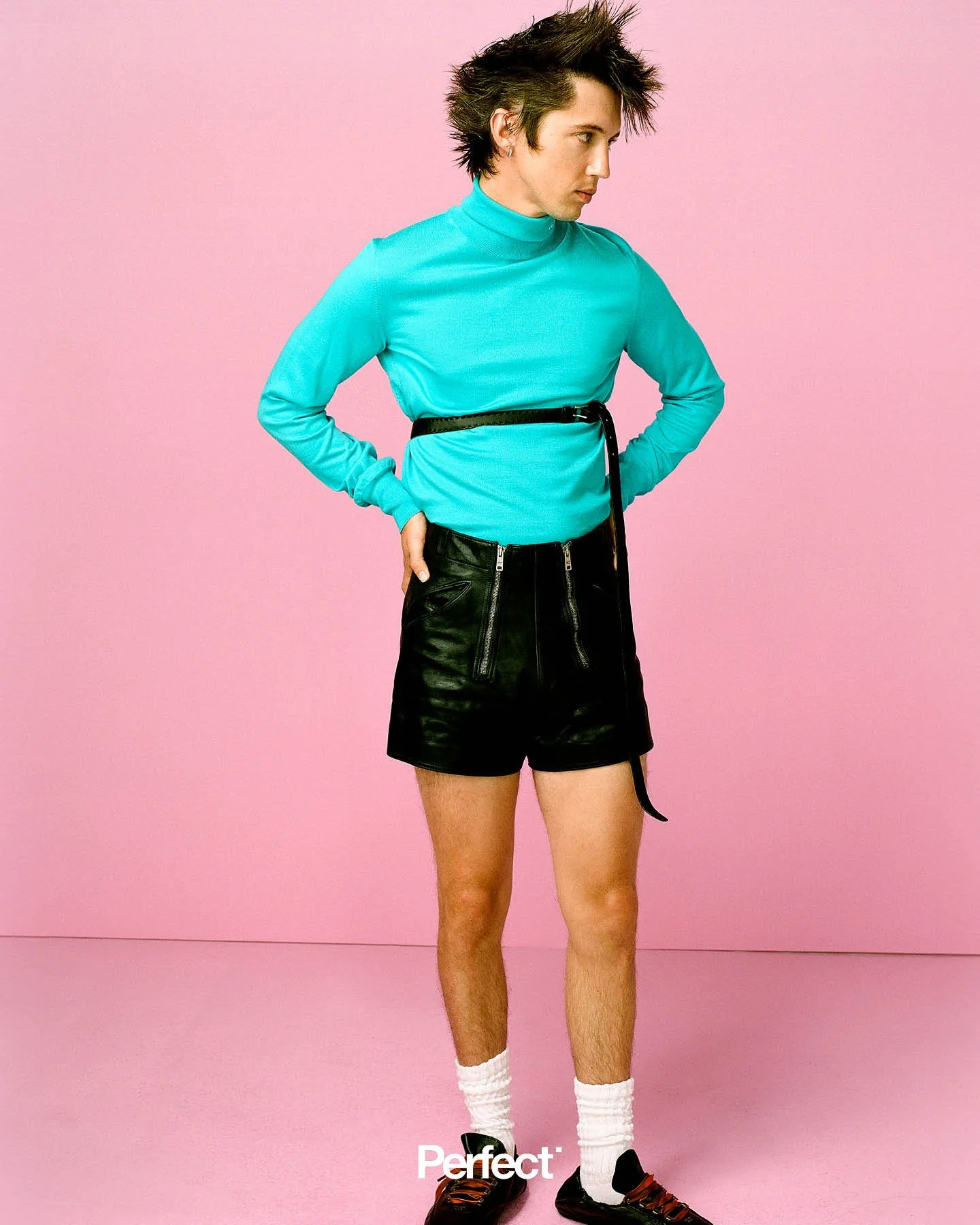
Troye Sivan has been back in his LA home (he splits his time between here and Melbourne) for a week. Before that he was in Europe – at a friend’s wedding; in Milan, at the Prada men’s show (he is an ambassador for the brand); in Sicily, ‘where I got a bit of a tan’.
He is now hard at work on the launch of his new album, and has already shot videos for its first two singles. As you might expect of someone who grew up on YouTube, and as has been evident throughout his career, he has an instinctive understanding of pop as a visual medium, and he plans his videos as he writes his songs. When he was working on the new album, he says, ‘I had visual references up on one side of my computer and lyrics up on the other. They go hand in hand for me.’ He says he has ‘a lot of photo books and art books, and I’m an absolute slut for Pinterest.’ He picks up from his coffee table a copy of Tickety-Boo, a hardback of images by the American street photographer Charles Traub, and opens it on a portrait of a young woman in a spaghetti-strap top sitting at a café table. ‘This is a random page, but she would have fit into the “She’s the Best” video.’
‘She’s the Best’ is the title track of Troye’s new album. Delivered in an almost Lou Reed drawl, it is a character study of a cool, unnamed, heroic, slightly elusive nightlife figure: we watch as she DJs, smokes, takes down incels on the internet. The details sound intimately specific, but this is not a particular real-life individual so much as an amalgamation of the women who have inspired him by way of a tribute to them.
‘Work has come and gone, love has come and gone, boys have come and gone,’ he says, ‘but I have always, always, always had my girls. I’ve got my sister, my mum; my two best friends that I’ve been friends with since I was two years old. I’ve always existed so happily in the orbit of incredible feminine energy. Even in a professional context, I think about how much power I feel in celebrating the feminine around me.’ He mentions his friend Charli XCX, with whom he toured North America in 2024: ‘Watching her star explode in the way that it has, and in the way that she deserves – being there for that felt like such an honour and a privilege. I feel like I was witnessing history being made, honestly.’ He mentions Lily-Rose Depp too, his co-star in one of his acting gigs, the HBO pop-star comeback drama The Idol. ‘I’m just in awe of these women, and of the trans women in my life. And even the feminine inside of me – that’s something I have really grown to adore. I think there’s so much power in femininity. And so it really became like a love letter to all of these people, and to myself.’
Musically, the new album marks a departure from the shiny perfect pop he has become known for. ‘If music was school, I feel like I’ve been a very obedient student,’ he says; this time, ‘I was really interested in not being one, and having a bit more fun.’ There’s a lo-fi flavour of The Avalanches in the way the samples are layered, and he mentions the influence of Swedish shoegazers The Radio Dept, ‘and things that felt a little bit more band-y. I think there’s a natural pendulum swing from the last album being so electronic. There’s electronic moments on this album, but overall I wanted things to feel a bit more… sloppy.’ He recorded a lot of the vocals at home on a mic set up on his desk to keep them from sounding too slick. This was also a reaction to the increasing presence of AI, he realises, ‘because I think AI is really good at making perfect pop. So maybe some of these more random or irreverent choices [are elements] the computer is much less likely to make.’
His previous albums charted the chapters of his personal life: Blue Neighbourhood, released when he was 20 (teen angst, first love, discovering gay nightlife); Bloom, at 23: (hook-ups, heartstopping romance, navigating a serious relationship); Something to Give Each Other, at 28 (a break-up, partying, the joys of no-strings interactions). The new album, he says, ‘essentially picks up where the last one left off.’
She’s the Best reflects an emotional shift in his life since making Something to Give Each Other. ‘The last album was written during a time of real personal fulfilment for me. It was between Covid lockdowns and I had a lot of time to spend with myself and meet new people, so it was very kind of connected.’ Once that album was released and he took it on the road – across Europe, North America and Australia, over six months of 2024 – the disjointed lifestyle of touring started to undo the feeling of connection he’d been enjoying. He still felt a sense of connection within the stadium environment – ‘very much so, to myself and to the people in the audience. But there’s also the other side of the coin: going home to the hotel room and, honestly, just feeling really lonely. I think the album wrestles with that duality. And I think that’s something I’ve struggled with over the last couple of years. It wasn’t as easy as summing it up, like, “at the moment I am horny and connected to everyone”, or “at the moment I am lonely and sad”. It’s allowing multiple things to be true at once and just sort of sitting in it. And the album really encapsulates all of that.’
Troye Sivan - She’s the Best.
Dir. Gordon von Steiner
A few days before this interview takes place, I am sent three tracks from She’s the Best and some notes Troye has written about the album as a whole, described in the accompanying email as a ‘thesis statement’. By this point I’d already been thinking a lot about why I think Troye Sivan is so important historically and culturally, and thinking back to my academic past as a way to frame that. In remembering those days, a song has crawled out of my memory: ‘The Man That Got Away’ by Judy Garland, from the 1954 musical A Star Is Born. The consensus within my little area of academia back then was that this represented a sort of year zero for gay men and popular music, slightly predating pop as we understand the term. Ostensibly a straight song mourning a romance that has ended, it was appropriated and treasured by gay men in a culture where it was still illegal to be gay, resonating as a lament for a love that is not so much lost as never stood a chance of starting in the first place. Sexual encounters at that time were dangerous, and the possibility of long-term relationships precluded by their very illegality. It became one of the first gay anthems in the canon.
At the time, I found this song, and the reverence for Judy Garland that was still palpable among older queens back then, frankly embarrassing. For the empowered, liberated gay men we believed ourselves to be, a song about longing for the one man who might rescue you from your melancholy was, to say the least, highly problematic. And yet it endured as the seminal torch song, the staple of endless drag queens’ lip-syncing repertoires. It still resonates in queer culture today: as I write this, Jinkx Monsoon has just finished a run in London playing Garland in End of the Rainbow, in which she sings ‘The Man That Got Away’.
In the days before this interview, I find myself thinking about that song, how much it annoyed me, and how utterly ancient its particular cadence of queerness feels compared to the sunny, sexy openness that Troye Sivan represents.
Then I read Troye’s thesis statement about She’s the Best. It’s clear that the album continues the celebratory approach to the subjects of cruising, clubbing and fucking of its predecessor. And yet… the text makes reference to the ‘cracks that start to show’ in this sex-positive surface, revealing beneath ‘a deep yearning’ for a man apparently beyond reach, maybe even non-existent. The album is ‘a letter to him, whoever he is’. The singer refers to his ‘search for someone to save me from this malaise’. He also describes this as ‘embarrassing’.
How did that old song go again?
Ever since this world began
There is nothing sadder than
A one-man woman
Looking for the man that got away
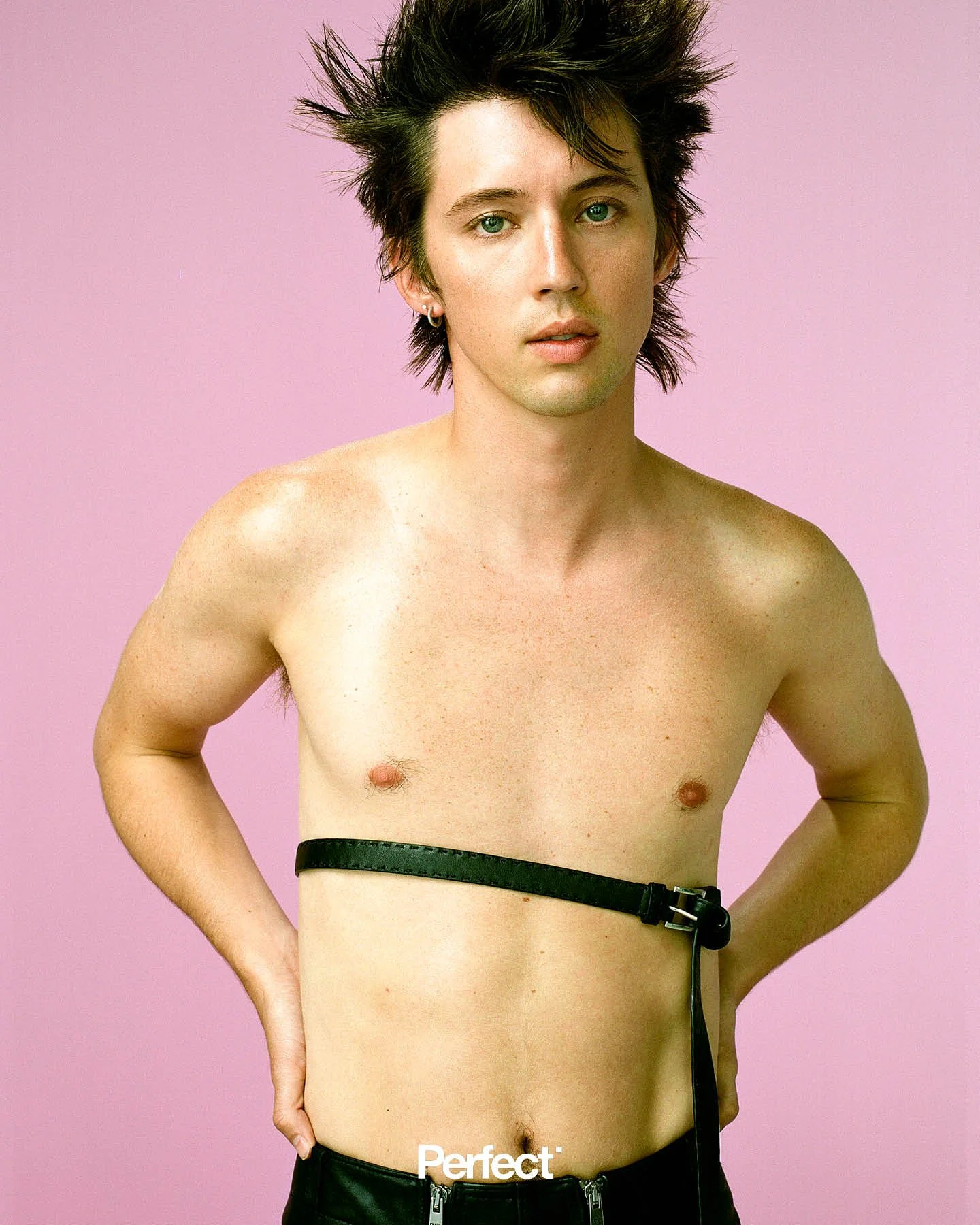
“It wasn’t as easy as summing it up, like, “at the moment I am horny and connected to everyone”, or “at the moment I am lonely and sad”. It’s allowing multiple things to be true at once and just sort of sitting in it. And the album really encapsulates all of that”
Back to the interview, where we are talking about the emotional impact of touring.
You touched on a similar mood in the statement you sent about the album, which mentions ‘yearning’ and ‘malaise’. And ‘him’. Can we talk about that?
‘Yeah. I’m 31 now, and a lot of my friends in Australia got married when we were 24, 25. And I felt absolutely zero pressure at that time. I think that being queer kind of makes you exempt from these societal timelines, in a really nice way. But now my queer friends are starting to get married, and my pop star friends are starting to get married, and I can just feel that there’s this change around me, and it makes me question some of the choices I’ve made. It’s tough, because I’m so thrilled in so many aspects of my life. I feel like creatively I’m operating at a level and collaborating with people that I could have only dreamt of. Truly, in my work life, I’m like a kid in a candy shop, and that’s really, really fulfilling. But there’s also a lot in life that I’m still searching for, within myself and then maybe within someone else. So I guess it’s really that. There’s songs towards the end of the album that I’ve been calling “manifestation songs”, where I literally wrote a lot of the album to this guy that I don't know who he is yet, imagining what that’s going to feel like and look like. There’s one song called “Lost Time”, and it details this perfect day at my house with this guy. It’s like, me and my baby staying up, making up for lost time, and maybe slowing down a little with everything else. I focus so hard on my work goals and I move towards them with like laser focus. And I think there’s a realisation maybe that my personal life needs the same sort of intention and attention.’
In the statement, you say that the yearning is ‘a bit insane’ and ‘embarrassing’.
‘I mean, it’s literally insane sometimes. There’s a song called “I Do This for You” that’s almost manic in its approach. It starts off – in my head at least – at a show. And I’m talking to the guy, whoever he is, and I’m saying, “I do this for you. All of this is for you and for our future life together.” And the production is really big and bombastic, it feels like you’re at a Janet Jackson or Madonna show or something. But then it breaks down and there’s this moment where it’s like, “Find hot singles in the Los Angeles area.” I sing that a few times. To me it represents that snap to reality where you get off the stage and you go home and, I don’t know, watch porn on your computer or whatever.’
I mention the song ‘The Man That Got Away’. He isn’t familiar with it, although I later discover his story does harbour a Judy Garland connection: one of the early breaks in his career was singing ‘Over the Rainbow’ on an Australian telethon when he was 11. I tell him I think there might be an unconscious through-line there that connects across history to the feelings he’s describing now, that still resonates within queer culture. I say that a lot of my generation found the sentiment in that song embarrassing, partly because it seemed so laden with pre-liberation shame. ‘That’s also part of the conversation in my head,’ he says. ‘I have the back and forth where it’s like, oh, casual sex is beautiful. That is something that I think should be celebrated one hundred per cent. And in the moments on this album where I am still in that kind of connected sexual zone, it’s not a performance of it, it’s genuine and it’s true. Those are all still things that I fully believe in and love. It’s just… maybe this album is a little bit more revealing of the layers underneath. I think it’s more about also saying, yeah, I want a partner, and being OK with that as well.’
One of the songs I’ve been sent is called ‘Fucking Forever’ – a sexually charged ballad that’s so specific that I’d assumed he had written it about a new boyfriend. From what he’s telling me, I suspect that this isn’t the case.
‘Fucking Forever’ – is that about an imagined relationship?
‘Yes, unfortunately. I’m realising in talking to you about it that the album is quite sad, because even in its moments of love or lust, it’s all a bit wishful thinking, I guess. Yeah, “Fucking Forever” is a song to him, whoever he is. It’s one of the manifestation tracks that I was talking about. And it’s exactly what I’m looking for and hoping for. And I felt it before, so I know that it is real, I know that it exists.’
I ask him how he evaluates his own work, whose opinion he values, how he knows when a track has reached the point where it needs to be. ‘It’s when I capture something where I’m like, “I don’t know how we did that and I don’t know if I could ever do it again, but it feels like me” – that’s the feeling I’m craving. And honestly, I do really, really, really care about my peers liking it. And that of course extends to people who have been listening to me for a long time and growing up with me.’
The commercial metrics of his work’s success don’t factor. ‘I could not for the life of you tell me how many albums I’ve sold in the first week of any of my releases or where they charted or if they charted.’ He has other criteria by which he judges the worth of his work. ‘I think the most heartbreaking thing for me would be if the album came out and someone was like, “Oh – he released an album?” I think I care much more about the cultural impact or conversation.’
Talking about the conversations that your work creates… Your last album was so brilliant in depicting a side of gay men’s sex lives which I don’t remember being so clearly communicated in pop with such a big platform before. Were you ever worried at any point, like, oh, have I gone too far, have I said too much?
‘I wasn’t ever worried. I think the only time I would ever get worried is if I was doing something that wasn't true, because then if somebody brings something up, it’s like, how am I ever going to talk about this? How can I stand behind this? Whereas I think being like, “I’m just writing about my life” is a pretty bulletproof defence. I don’t know what they could say. Hypothetically, “you’re hypersexual”, or something like that? Well, sorry – that’s my life. But also I think that naturally I’m a bit of a softie, I am a romantic. So even on the last album, which was quite a sexual album, there’s songs about love on there, for sure.’
He does remember one moment, while making the video for the first single to drop from Something To Give Each Other, that gave his team pause for thought. ‘The question was, should we have a guy pissing in the “Rush” video? And literally two nights prior, I saw something much crazier [in real life]. So I was like, this is real life. I don’t want to make a disneyfied version of this video; let’s just be honest. Gordon [von Steiner], the director, he’s also gay. I was like, we both know exactly what we’re getting up to on the weekends. So why should we not do that? Like, let’s just do the real thing.’
There’s a joyfulness in the honesty with which Troye writes and sings about sex which means the result never seems corny or sleazy. No matter how horny his output, his public image still stands securely within the pop-star paradigm of unthreatening, angelic boy next door rather than party monster or pervert. If we want to look back again to the 1950s and invoke the primal archetypes from the dawn of pop, he is more in the squeaky-clean mould of a young Cliff Richard than a young Elvis Presley and his dangerously sexual pelvis. For this year’s Met Gala, dressed in Prada in a white shirt, skinny black tie, long black overcoat and bleached jeans, Troye chose to nod to Robert Mapplethorpe in his styling. But even invoking the kinky bad boy of late 20th-century art couldn’t detract from Troye’s inherently cherubic demeanour.
“If music was school, I feel like I’ve been a very obedient student,’ he says; this time, ‘I was really interested in not being one, and having a bit more fun”.
‘It wasn’t as easy as summing it up, like, “at the moment I am horny and connected to everyone”, or “at the moment I am lonely and sad”. It’s allowing multiple things to be true at once and just sort of sitting in it. And the album really encapsulates all of that’
I think history will show Troye Sivan to be one of the most culturally significant figures of the 21st century. Given my own history, it’s hard for me not to reach that conclusion. To my mind, the tribute he paid to Charli XCX is even more fitting for him: watching his star explode in the way that it has, in the way that he deserves, is like witnessing history being made. I have no doubt that in 100 years’ time, scholars will be writing doctorate theses about him – for all the reasons touched on so far, and also because he is of that pioneering generation, alongside the likes of Justin Bieber and The Weeknd, who emerged through YouTube, harnessing it as a way of nurturing an audience and maintaining creative control once the majors move in, changing the shape and scope of pop stardom. ‘I think one of the most formative lessons I learned through making YouTube videos,’ he says, ‘is that people are smart and can sense when something is genuine and when it’s not. And it really gave me the confidence to pursue absolute honesty all the time in my work.’
If he has any awareness of his own standing in history, he wears it lightly. He’s not trying to make history. His commitment is to the present day, to shaping the zeitgeist. He just wants to write great songs, shoot great videos, put on great stage shows that celebrate the here and now. The goal of all truly great pop stars.
Do you ever think about your place in pop history? Do you see yourself as working within a particular lineage or tradition?
‘I actually only really think of myself in the Australian context, because I get a lot of pride from it. I’m very, very, very proud to be an artist from Australia. Whenever I see an Australian succeeding on the global stage, it brings me a lot of pride. I will often walk up to a celebrity I do not know purely because they’re from Australia and so am I – like we’re obviously going to be best friends now, you know? I think about how fucking cool someone like Kylie is to me. I’m like, that is so sick that you grew up in Australia, built this absolutely incredible discography and career and that you still live in Melbourne a lot of the time and you never gave up on your Australian roots. I really, really, really respect that and resonate with it. So I think about it in that context a little bit. I hope that when people are writing about Australian music in 100 years or something, my name gets in there somewhere.’