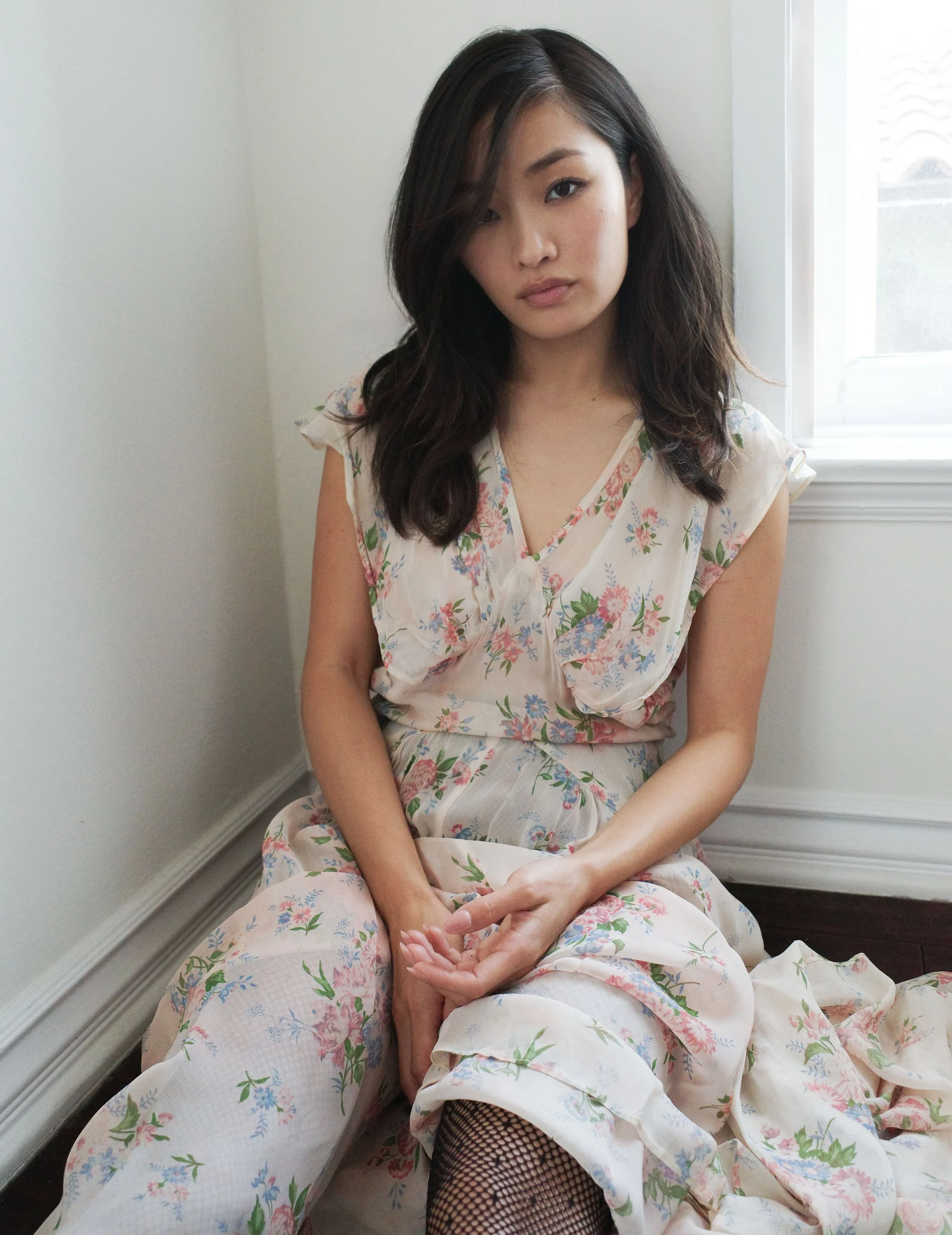
Anna Sawai for Perfect Issue 8.
Writer: Tim Blanks
Photographer and Fashion Editor: Yasmine Diba
2024 was a very good year to be Anna Sawai. She starred in Pachinko, Monarch: Legacy of Monsters and Shōgun, three of peak TV’s most acclaimed shows, winning a Best Actress Emmy and Golden Globe for the latter, and riding the subsequent wave of attention and acclaim to a height of ubiquity that might look like overnight stardom if it weren’t for the fact that it arrived at the end of a decade of work for Sawai where she was everything from J-Pop wannabe (lead singer Faky, 2013-2018) to yakuza wingpiece (Giri/Haji, 2019) to martial arts minx (Fast & Furious 9, 2021).
As an actor, you might hope but you could scarcely plan to have three major shows running simultaneously. I can’t think of one other instance in the annals of television. ‘I’m a very lucky person,’ Sawai acknowledges. ‘The opportunities showed themselves to me, and I took them.’ Pachinko came first, with Sawai as Naomi, a Harvard Business School graduate in Tokyo in the 1980s, all tidy black bob and Chanel suits. Next, Shōgun, where Sawai, playing Lady Toda Mariko in the late 16th century, learned to talk in archaic Japanese and walk in outfits equally weighted with history. Finally, Monarch: Legacy of Monsters. Sawai envisaged it as a fun adventure after the stürm und drang of Shōgun but it assumed an intensely dramatic heft during production, which was probably inevitable given that the arc of her character, Japanese/American schoolteacher Cate Randa, eventually leads to (relative) intimacy with Godzilla, which was scarcely less amazing for her than getting to work with the legend that is Kurt Russell.
From Faky to Shōgun, Sawai’s professional manifestations have run a strikingly wide gamut of Japanese female experience. ‘I want all my characters to feel very interestingly human,’ she says. ‘They don’t have to be Japanese, but I don’t want to choose something that doesn’t have enough substance in the character, because I feel a lot of Japanese characters have not had that. Mariko is one of the few roles that I feel is a proud representation of Japanese people. But whatever role I choose, it’s going to show the rest of the world another image of Japanese women, and I want to make sure that I choose something that feels right to me and right to my people. I don’t want Japanese people watching whatever I choose and thinking, “Oh, I don’t know about this representation.”’
But that commitment has created a tension for Sawai in her work. Reflecting on the filming of Shōgun, she says, ‘It was so easy to channel Mariko, because I grew up in Japan, and I know how much I try to hide and I’ll just put a smile or act like everything’s fine, but inside I’m kind of breaking down. But I really struggled, because I felt like I was feeling the emotions that Mariko was going through, and it was my job as an actor to express them, but I wasn’t doing enough that it would read.’ Her co-star, the veteran actor Hiroyuki Sanada, whose performance as the titular shogun Yoshii Toranaga won him both the Emmy and the Golden Globe for Best Actor, told her the best way to cope with that confusion was simply to feel, but to hide the feeling ‘because that’s what Mariko would do’. His cryptic advice worked because, Sawai agrees, that is also what every Japanese woman is used to doing. A kind of silent suffering. She is still trying to figure it out for herself, but she claims she has also learned to trust her instincts a little better. ‘Everything that I doubt about myself is probably everything that I should be going through as an actor. And I was probably doubting myself, because Mariko was also doubting herself in the scene.’ The most overwhelming scene in Shōgun (and there are many) is significantly the one where Sawai/Mariko gives full rein to her feelings, all self-doubt literally exploding.
As the first Asians to win in their categories, Michelle Yeoh with her Best Actress Oscar and Sawai with her Best Actress Emmy are emblematic of the shifts in show business tectonics. Before the award show, Sawai found herself sharing a round table for the Hollywood Reporter with Jodie Foster, Nicole Kidman and Jennifer Aniston among the Emmy-nominated heavy hitters discussing their profession. She was understandably nervous at first as the new girl in town, the latest competition. ‘But I didn’t feel that from them at all. If anything, it felt like they were embracing the fact that we were all there. They had been through a lot to know that sometimes people look at them like, “Oh, women don’t like other women” or “There’s only one seat for them”, but it was the opposite for them, like they were there for each other.’
‘I don’t know if I ever looked at myself as being like a “new” voice, because I can only do what I can do. But what I did, apparently, was “new”.’
At one point, the round table was discussing guardian angels, anyone who had been of particular assistance with their way up. ‘I think I said something like, “Oh, I haven’t found one person, it’s been very random people that I meet on set,”’ Sawai recalls. ‘Nicole was looking at me, smiling, and she kind of winked at me. And then afterwards, she put her arm around me and she was like, “If there’s anything that you need help with, you have someone to come to now. You can reach out.”’
Foster did her own outreach, not so much about a new generation of actresses but about the new types of stories that are being told. ‘And she was specifically looking at me. She said, “That’s why I found your show interesting.” So I felt nothing but warmth and support from those ladies, and it was just so mind-boggling that I was there.’
Sawai is in full agreement with Foster’s sentiments. ‘I feel that the world is opening up, and there are so many different actors, and there’s different storytelling. Maybe a couple years ago, it felt like the studios were doing it deliberately, because they wanted to show that they were diverse. But now it feels more organic, like there’s meaning to why we’re doing this. It’s less about performing in that way and more about being. I don’t know if I ever looked at myself as being like a “new” voice, because I can only do what I can do. But what I did, apparently, was “new”.’
And it was ‘new’ by being ‘old’. The character of Mariko came with a very specific set of demands: fluency in both Japanese and English, the stamina to endure a physically arduous 10-month shoot in weighty wigs and equally heavy layers of ceremonial kimono, and the ability to wield a naginata, a spear-like weapon, while dressed in same. On the advice of showrunner Justin Marks, Sawai never watched Yoko Shimada’s performance as Mariko in the original Shogun, the 1980 tele-event which starred Richard Chamberlain as English navigator John Blackthorne shipwrecked in 16th-century Japan. ‘I want you to have your own image of Mariko,’ Marks told her, ‘and I don’t want you to be influenced.’ Shimada won a Golden Globe and a nomination for the same Emmy that Sawai would later collect, but her life subsequently spiralled down to a sad end and she has been a significant omission from the celebrations of the new Shōgun. Sawai refers more than once to the silent suffering of Japanese women, especially with her mother’s generation (like Naomi in Pachinko). In that light, Shimada’s story takes on a cautionary sheen.
‘I’m a very lucky person. The opportunities showed themselves to me, and I took them.’

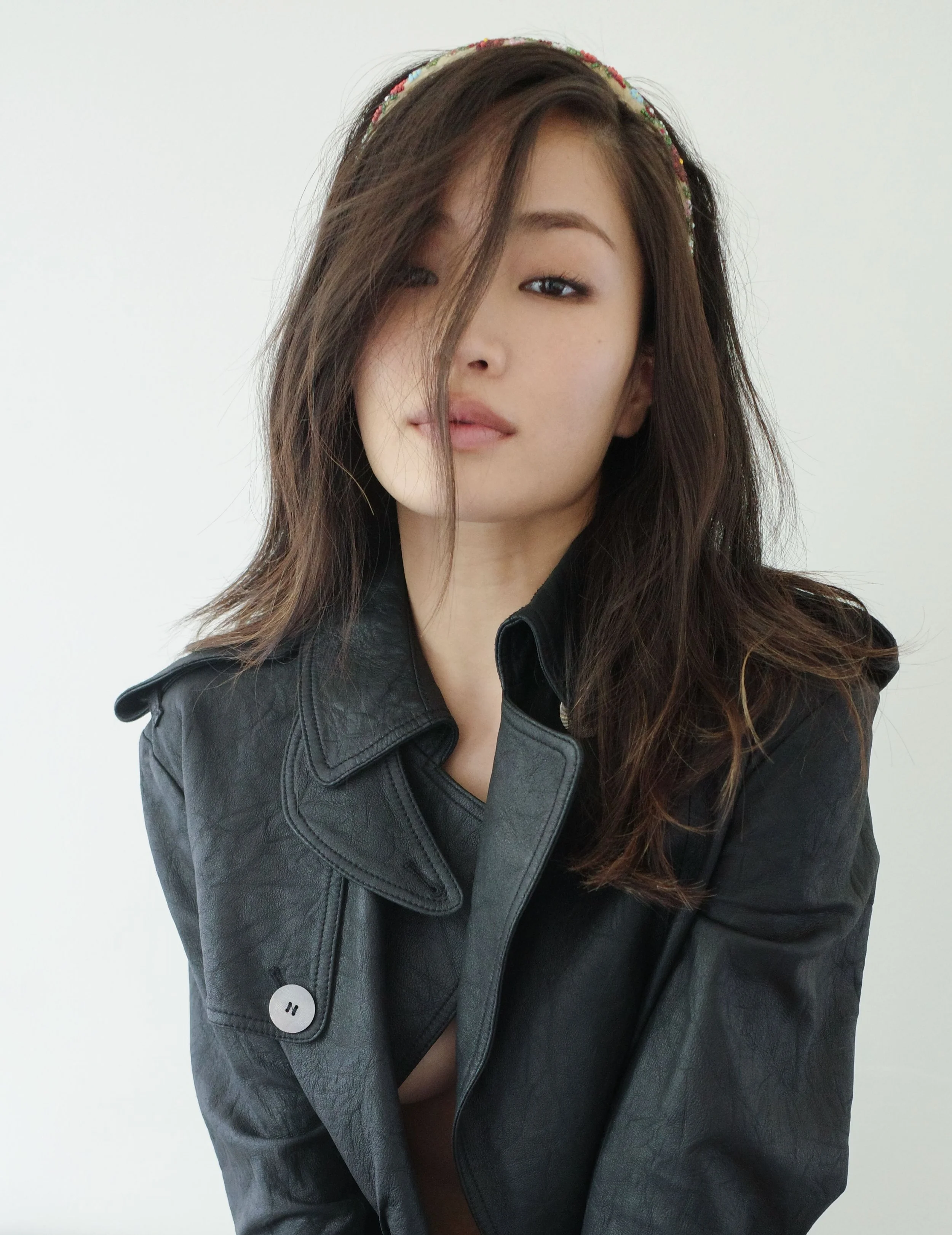
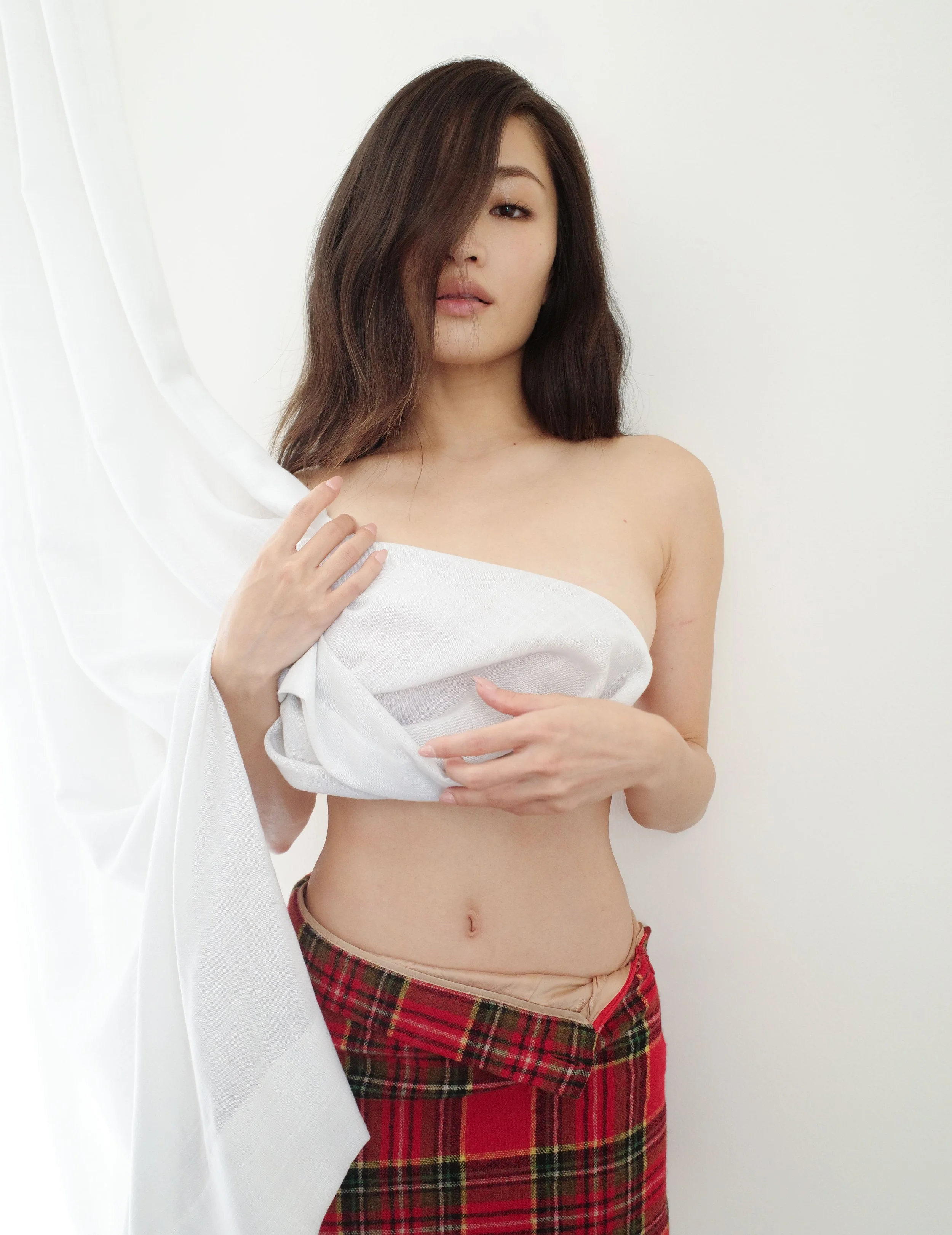
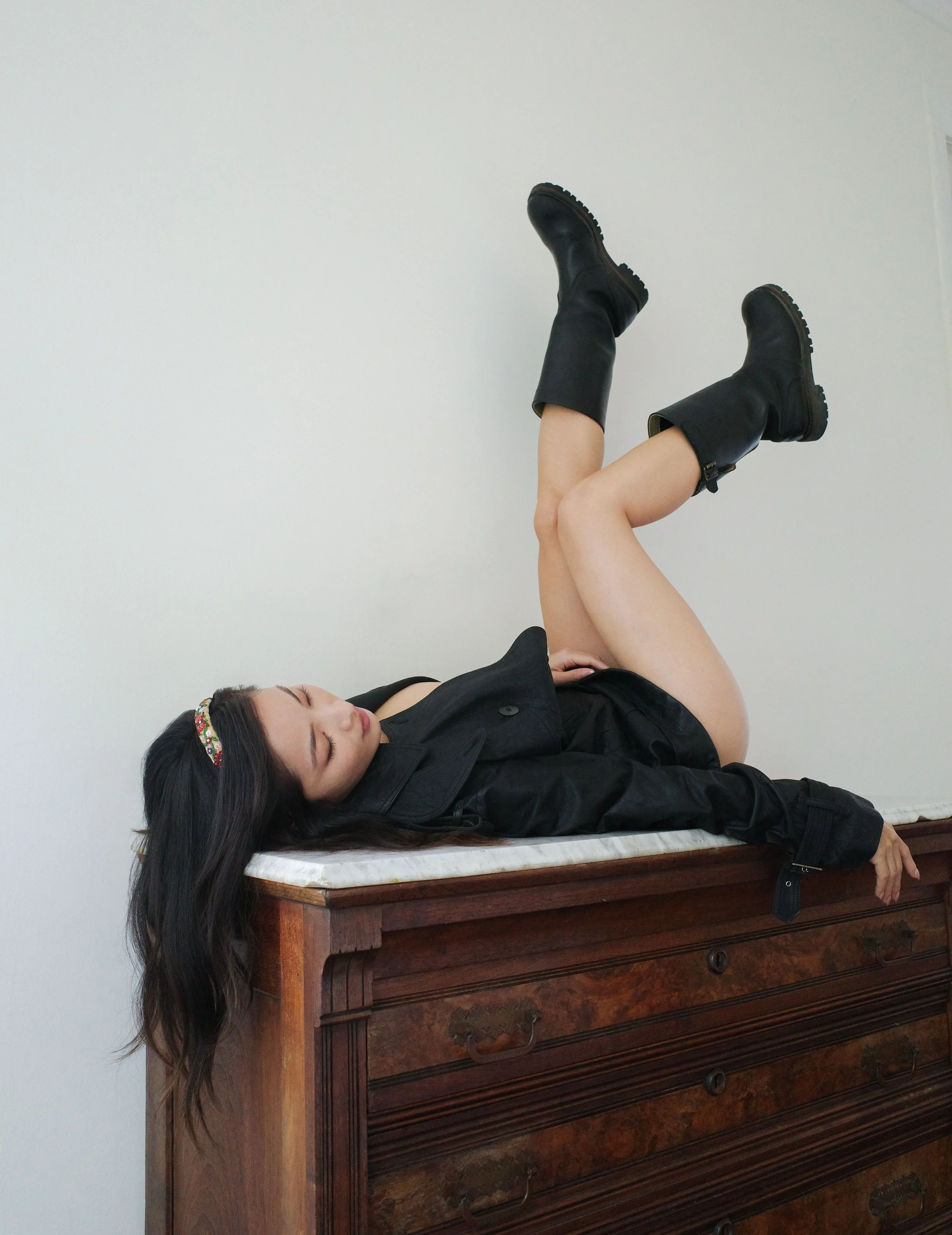
Speaking of omissions, Sawai is shocked that Cosmo Jarvis’s starmaking performance as John Blackthorne in the new Shōgun has had no awards recognition. ‘When we were shooting, if someone had asked me who I thought would be nominated, Cosmo would absolutely be my first choice. But he’s also not the type to want that. He’s so modest.’ Though he was also, by her account, such a determined actor, so sure of himself on set, that he inspired her to overcome her own uncertainty. If Blackthorne’s chemistry with Mariko is the slow-burn soul of the series, that may have been down to Jarvis sparking a quiet fire in Sawai. (It’s a bit much to say he’s the Burton to her Taylor, but it would be the purest poetic justice if he gets to play Mark Anthony against Zendaya’s Cleopatra and Daniel Craig’s Julius Caesar in Denis Villeneuve’s upcoming production of Cleopatra.)
Incredible though it may now seem in the afterglow of awards, Shōgun was considered a risk. ‘That was a conversation that we had before it came out,’ Sawai acknowledges. “A period piece, 70 per cent in Japanese, with a lot of unknown actors. It was scary. I think a lot of people believed it might be a really great project that not enough people would watch.’ It went on to win a record 18 Emmys. Ironically, the one place where it hasn’t really altered Sawai’s fortunes is Japan. ‘I expected a little bit more,’ she admits. ‘But Japan is an island country, so I think that they’re used to producing their own things and watching their own TV, so something that comes from abroad might be not as approachable to the Japanese people. The people who did watch it after the Emmys, I know they are not embarrassed about what we did. A lot of times when I was growing up, when I would see a depiction of Japanese culture, it would really seem like a Western point of view, whereas with Shōgun, I haven’t heard that.’
Her other big shows didn’t change much for Sawai in her homeland either. Pachinko has been extravagantly praised in the West, but Japan doesn’t emerge particularly well from this transgenerational saga about a family of Korean immigrants, and Sawai says the series didn’t get much promotion. I would have expected more from Monarch: Legacy of Monsters which features a spectacularly realised Godzilla, but, again, it comes down to Japanese projects created in Japan holding more sway over local audiences. Which means that, for all her burgeoning profile in the rest of the world, Sawai is untroubled by recognition at home. ‘I love it, it feels like I’m not working. I really like being able to live different lives. When I’m working, I’m in the States or on location. When I’m in Japan, I’m completely switched off.’
But there will surely come a time when the different lives intertwine. ‘I want to challenge myself,’ Sawai says. ‘I want to be surprised with what I can do. There's so much that I haven’t done. Anything that scares me, like Shōgun scared me, is always a good sign.’ It seems like a good moment to ask her who she would most like to work with. From her lips to their ears, and all that. ‘Yorgos Lanthimos.’ That didn’t take long. ‘I would be so terrified to try and bring his characters to life. The first one that I watched was The Favourite, but then when I saw Poor Things, I was just so blown away by Emma [Stone]. Once I see that, if someone told me to play her, I can, but if I read it in a script, I’m not sure if I would be able to even comprehend what I need to do, because it's so, so insane.’ I suggest that was also her experience with Shōgun. ‘But I felt like I knew Mariko because she’s Japanese,” Sawai responds. ‘Whereas with Yorgos’s characters, I feel like they’re so different, they would scare me.’
She sounds like she’s ready to be scared. Her decorum veils a fierce ambition. The promise it holds is compounded by the performances Sawai lists as inspirational: Jodie Foster in The Accused, Kathy Bates in Misery, Jessie Buckley in Women Talking. Women suffering, pushed to their limits. She also loves Viola Davis in anything. It’s a challenging lineup, hinting at depths that Sawai’s serene exterior very efficiently masks. “‘’m a happy person, but I have such crazy dreams,’ she confesses. ‘I wake up kicking my bed from the worst nightmares. I don’t know what it is. I probably need to find a therapist.’
Or, more likely, Sawai will let her work be her therapy, and untangle those nightmares on screen. ‘Wish me luck,’ she says, by way of a goodbye. If only she knew how much I wish her that, and a whole lot more.