A purveyor of pure pop at its most melodramatically life - affirming, Addison Rae reveals the emotional depth behind her lyrics - along with the tan lines beneath her layers, as she models Coach’s autumn collection.
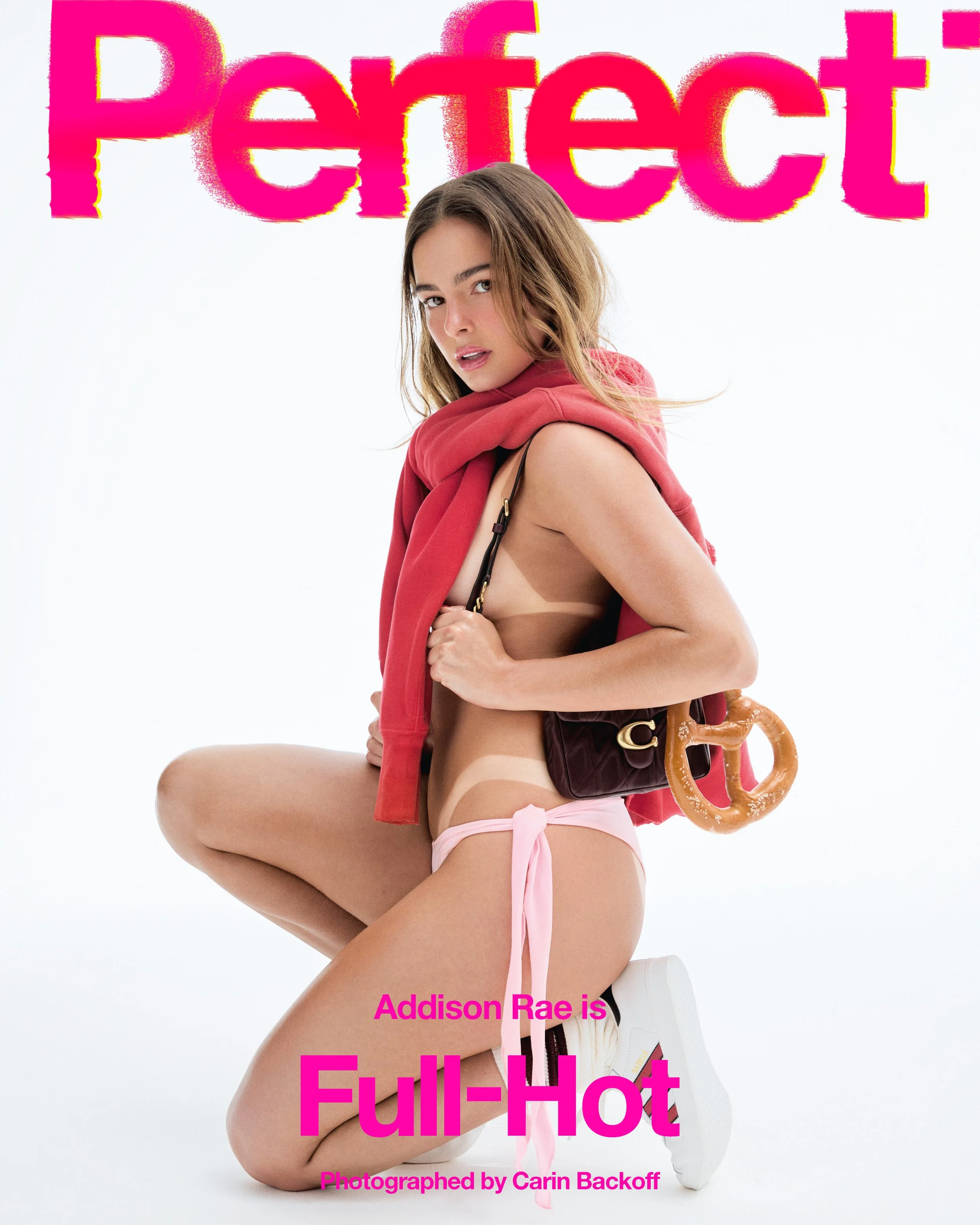
Addison Rae for Perfect issue 7
Photographer: Carin Backoff
Fashion Editor: Daniel Gaines
Writer Amber Later
“Honestly, pop music is whatever you want it to be.”
What is pop music? ‘The term has changed so much,’ says dancer, singer, actor and TikTok sensation Addison Rae, ‘even in the last decade.’ Once a designation granted to any record that attracted significant radio play and sales, today pop music describes a specific genre with its own distinct lineage, subgenres, experimentalists and experts. ‘To me, pop music is anything that gets you off your feet. I consider pop music as something that forces my body to have a visceral reaction, where I have to be physical to it.’ That Rae connects with music primarily through her body is no surprise; with a background in competitive dance, she quickly became one of the most followed TikTok accounts in the world by showcasing choreography for a global audience.
Now a nascent pop star herself, Rae has made it clear her passion for the genre runs deep. On her debut EP she covered ‘Nothing On (But the Radio)’, an old Lady Gaga demo that was never released but became a fan favourite through bootleg circulation. It’s a good metaphor for Rae’s pop philosophy: the mass appeal of a global superstar mixed with niche references only legible to true fans and pop historians. She has worked with tried and true hitmakers like producer and songwriter Benny Blanco as well as featured on tracks with pop auteurs AG Cook and Charli XCX. With characteristic positivity, Rae ends her thoughts on defining pop music with the admission that ‘it takes on so many different forms because you see so many different artists interpret pop in their own specific way, and I think that’s the magic of it. Honestly, pop music is whatever you want it to be.’
If that final definition, ‘whatever you want it to be’, seems vague, it’s only because as a student of music history Rae understands just how multifaceted and diverse a genre ‘pop’ has always been. In the course of our conversation she references Prince, Kate Bush, Jimi Hendrix, Michael Jackson, Madonna, Janis Joplin, Lana Del Rey and Billie Eilish as examples of artists who either inspire or influence her, artists who, despite sounding nothing like one another, could all fit into a general umbrella definition of ‘pop’. To set for her Perfect photoshoot, Rae wore a large black T-shirt with ‘Lady Fucking Gaga’ printed on it in bold white capitals, literally wearing her influences on her sleeve.
On social media Rae is known for her brilliant smile and chipper nature, but her recent artistic ventures have allowed her to explore emotions beyond what fans might readily expect. Last year she appeared in the horror film Thanksgiving, and described to me an experience of tapping into repressed emotions to fully embody her scream queen role. ‘I had this scene where I was just hysterically crying and screaming, and that’s such a pushed down or hidden part of me. I’m not a very outwardly emotional person. I’m always super positive. I like to draw in that energy, and I always try to remain positive and happy and smiling and bring that energy up. But leaning into the emotional side of myself unlocked something that I feel was always there and always inside of me. It was such an interesting discovery for myself.’ When, while discussing lyricism, I asked about her favourite poets and writers, Sylvia Plath (who knew more than a little about repressed dark emotions) was the first name mentioned. ‘She always makes me feel things. I get most inspired when I’m reading or seeing something and I’m like, whoa, I don’t know how to explain the way that I’m feeling when I’m reading or looking at this.’ The only way to explain the feeling is to embody it with a song of her own.
‘I feel like pop music helps me translate my emotions in a way where it doesn’t have to be deep and gritty and sad.
From one angle, pop is to music what melodrama is to cinema: a site where emotional fantasies can be indulged purely, where our everyday triumphs and insecurities are escalated to overwhelmingly consequential proportions. The gloss of shiny surfaces can serve as a cover for genuine feeling. ‘I found myself struggling to write a ballad or write a really deeply emotional song,’ Rae says about using pop as a conduit for pathos. ‘I feel like pop music helps me translate my emotions in a way where it doesn’t have to be deep and gritty and sad. It can be upbeat and uptempo, and still have that juxtaposition, lyrically, of a little bit more sadness, a little bit more heartfelt lyricism or something a little bit deeper that can balance it out. It helps me express sadness, or maybe even just being emotional, in a way that I struggle with normally.’ Rae cites Billie Eilish’s recent album Hit Me Hard and Soft as an example of the juxtaposition she’s describing, and also Prince (‘Prince was someone that always had these really intricate concepts, and you still wanted to get up and dance’).
After hearing her describe how she channels her own sadness and complicated feelings into pop songs, I asked Rae what song was sure to make her cry. She answered with ‘This Woman’s Work’ by Kate Bush, originally written for the 1988 John Hughes film She’s Having a Baby. ‘That song really, really hits me in the heart,’ she says. ‘Every time I listen to it, I just can’t help but, like, sob uncontrollably and think about my mom and about my grandma. It just touches me in the heart and takes everything out of me.’ ‘This Woman’s Work’ is sung from the perspective of a man whose wife is experiencing a health emergency during childbirth. He prays for her and the child’s wellbeing while also grappling with his own powerlessness, marvelling at the strength of women while trying to contextualise his own sense of masculinity in a situation that seems at once both pressingly intimate with and impossibly distant from his own experience.
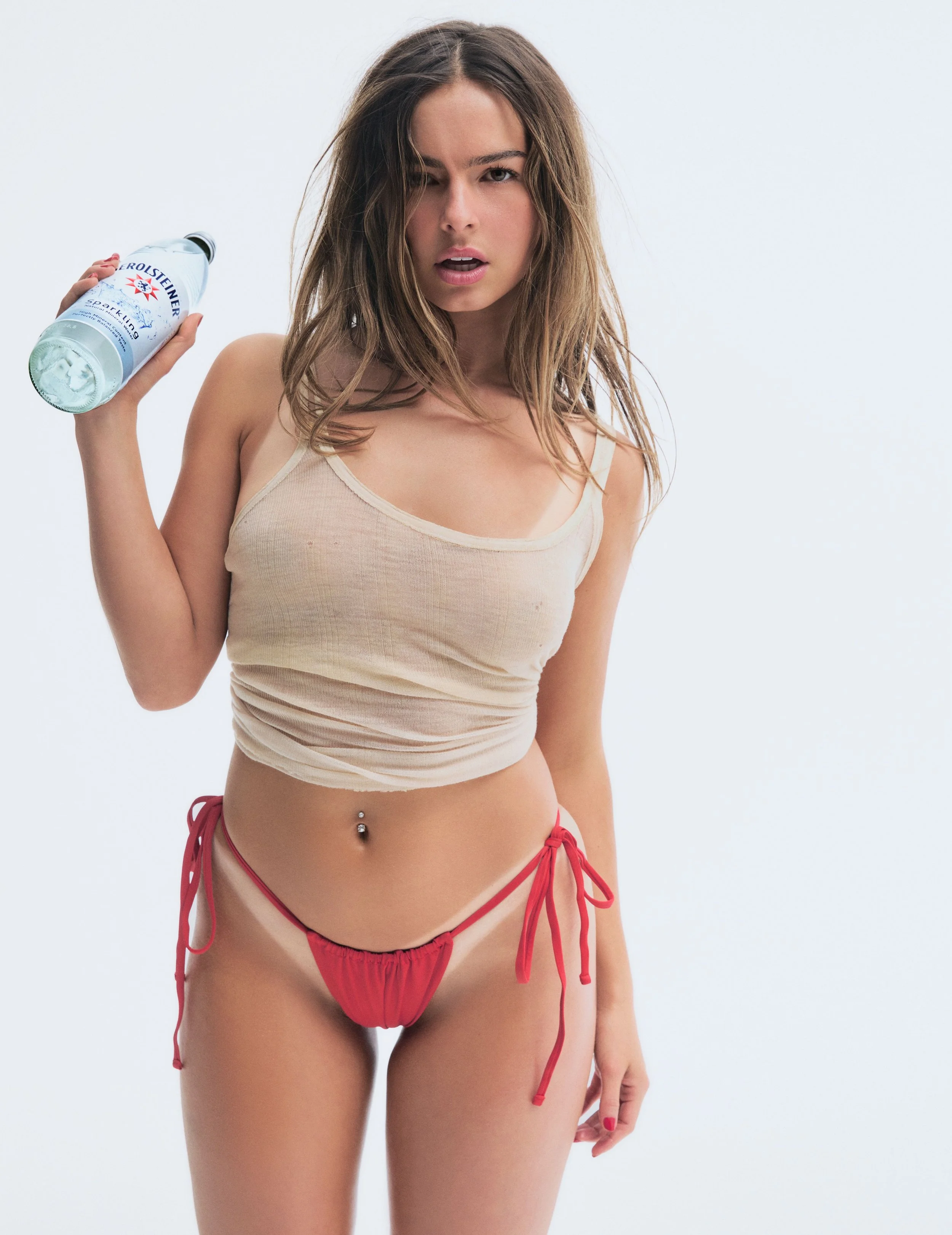
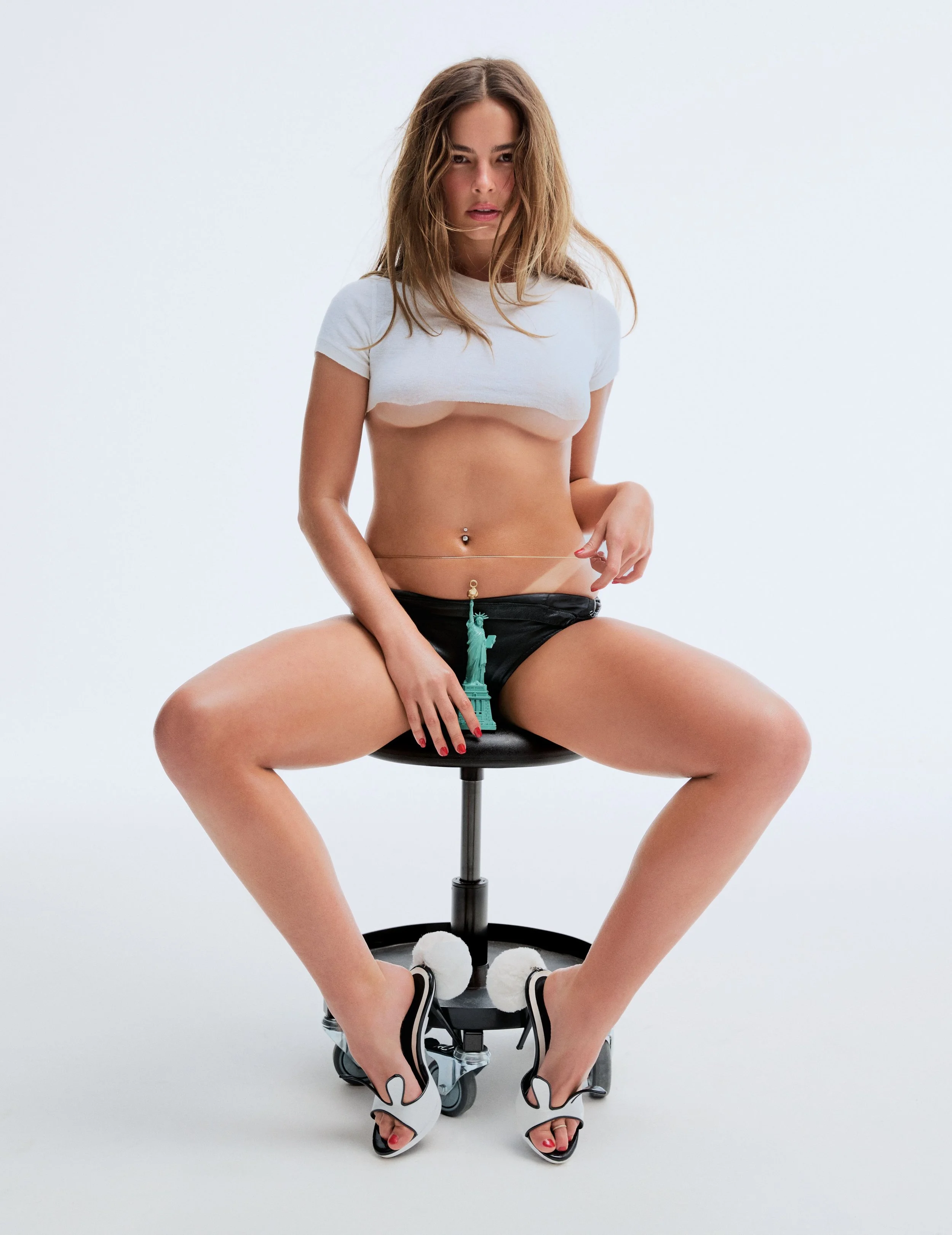
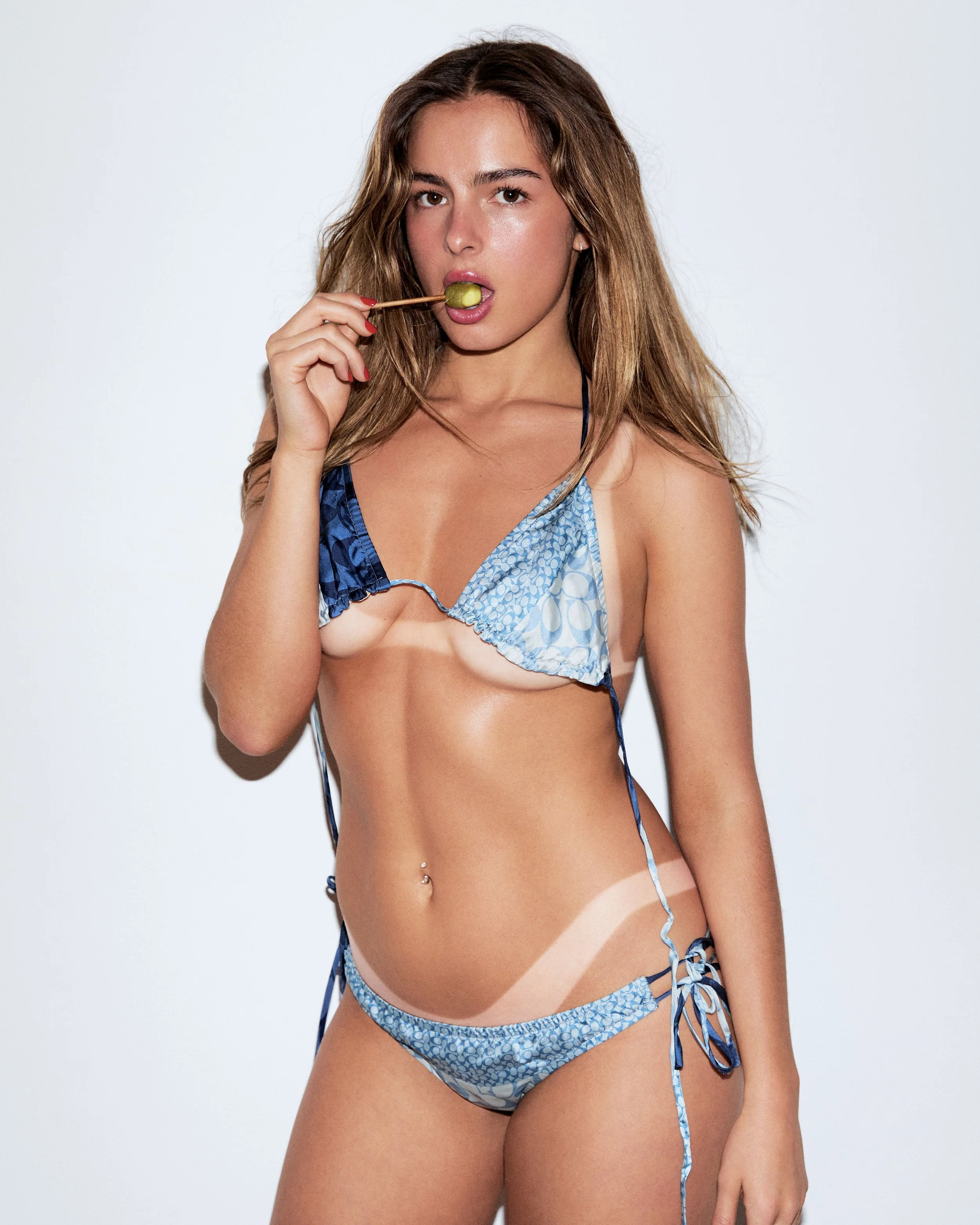

“I’m very into juxtaposing. I love adding a different feel to things that balances it out.”
Rae is keenly aware of how pop stardom is tied to its own archetypes of womanhood and femininity. Marilyn Monroe is a figure she cites as an inspiration, articulating how while singing a song like ‘Diamonds Are a Girl’s Best Friend’, Monroe ‘encapsulates this femininity with innocence, but competence and a demand for attention as well’. Like Monroe, Rae explores the complexity of womanhood through a deceptively polished persona. Her lyrics about fast cars, sexual charisma and undeserving men are also distillations of common desires and resentments. On one track, ‘Obsessed’, Rae tells her lover: ‘You said you’re obsessed with me / So I took a second and I said, “Me too… And if I lost you, I’d still have me / I can’t lose.”’ On another, ‘I Got It Bad’, she begins by singing, ‘He looked right into my eyes and it was over / I knew I should walk away, but I ran closer.’ She is simultaneously a totally self-sustained, independent woman and also totally beholden to her desire to succumb to another. Paradoxes of identity and desire are explored through deceptively sleek production and catchy melodies. It’s hard to listen to either ‘Obsessed’ or ‘I Got It Bad’ without getting the choruses stuck in your head and humming them all day after.
Even at the level of songwriting, Rae is all about contrasts. ‘Sometimes when I write songs these days,’ she says, ‘we’ll start it out with this certain idea of how it’s supposed to feel sonically. And then as we develop the song it almost naturally changes completely sonically from what it started as. But it’s always nice to have the raw bones first, like, “Oh, this is melodically what it wants to sound like,” and then completely flip it on its head. I’m very into juxtaposing. I love adding a different feel to things that balances it out. I’m a Libra, so I love balance.”
While shooting for Perfect, Rae curated a playlist of some of her favourite pop tracks. We listened to one of our mutually favourite Britney Spears songs, ‘Why Should I Be Sad?’, at least four times: ‘Why should I be sad? Heaven knows… Why should I get mad? Feel sad? Who knows…’ It’s a perfect illustration of what we discussed: how there is emotionally more than meets the ear with pop music, and how a memorable melody and exciting rhythm can make even the most lonely sentiments palatable and broadly communicable. Every now and then on set, shooting would pause so the make-up team could touch up Rae’s tan lines, drawing clearer borders between the darker and lighter parts of her skin. The concept was to have her in clothing where the tan lines didn’t match up, a precisely calculated, cheeky glimpse at what is normally hidden from view. Are the images, with their make-up augmented tan lines, deceptive or revealing? Artificial or honest? Like the best pop songs, why can’t they be both?