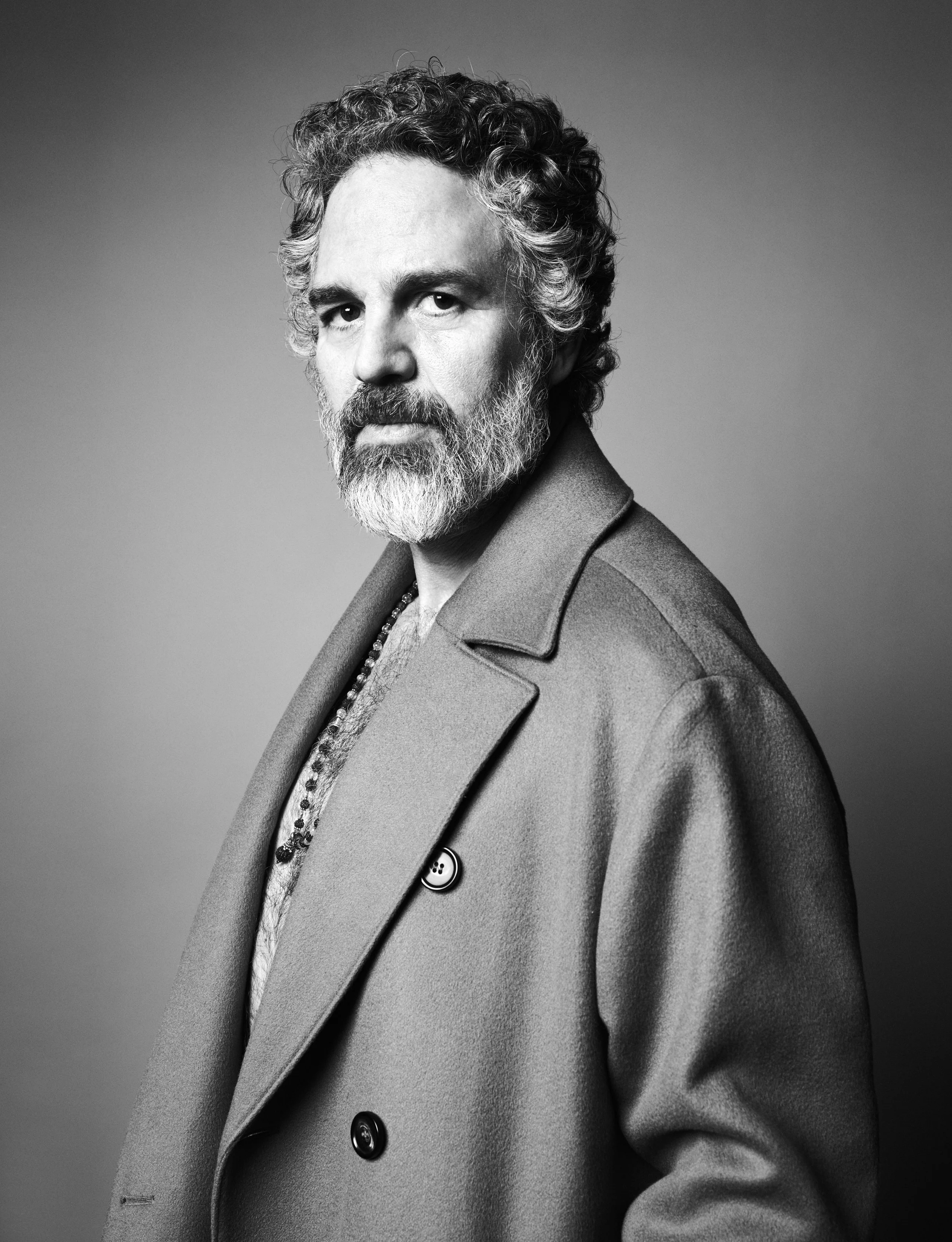
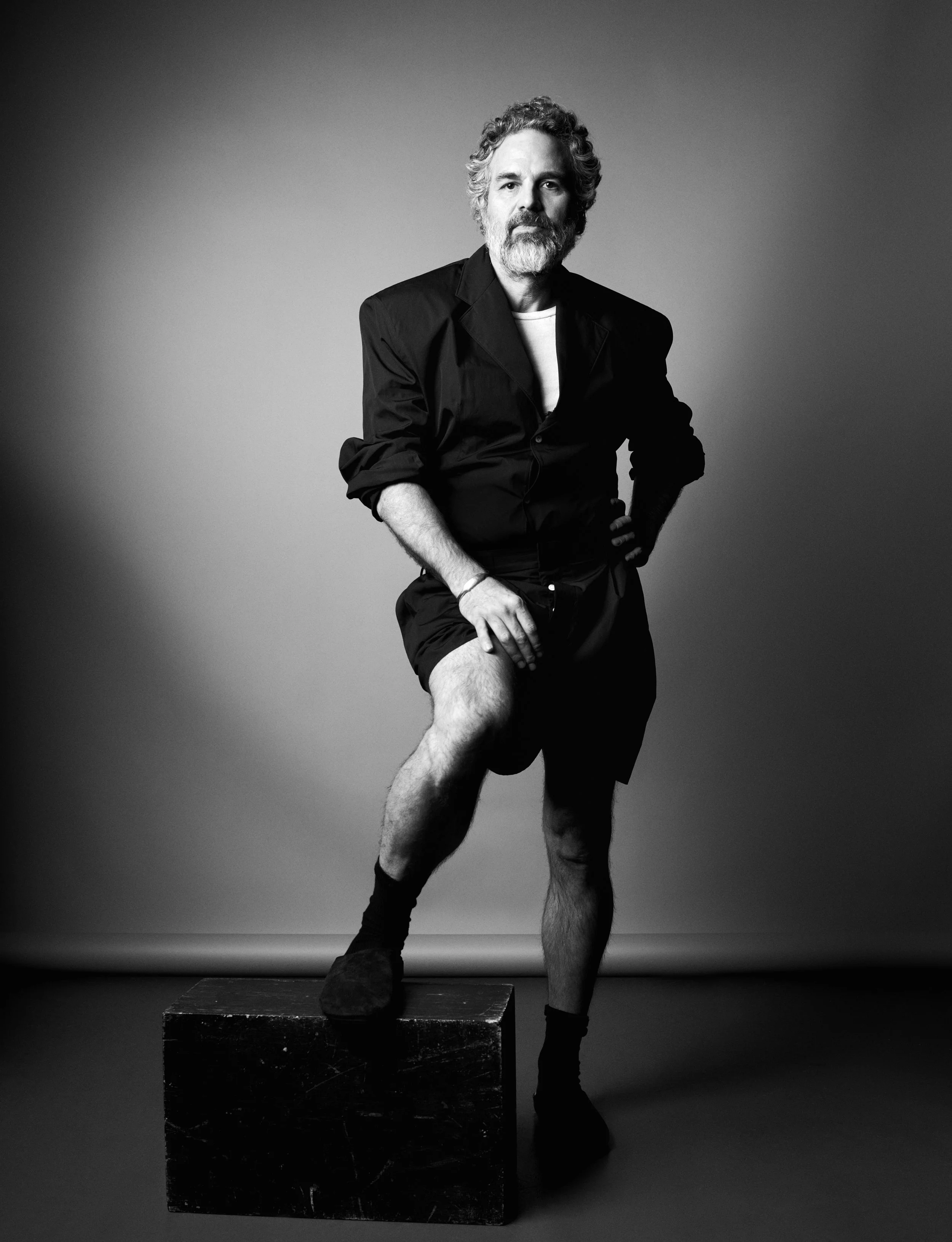
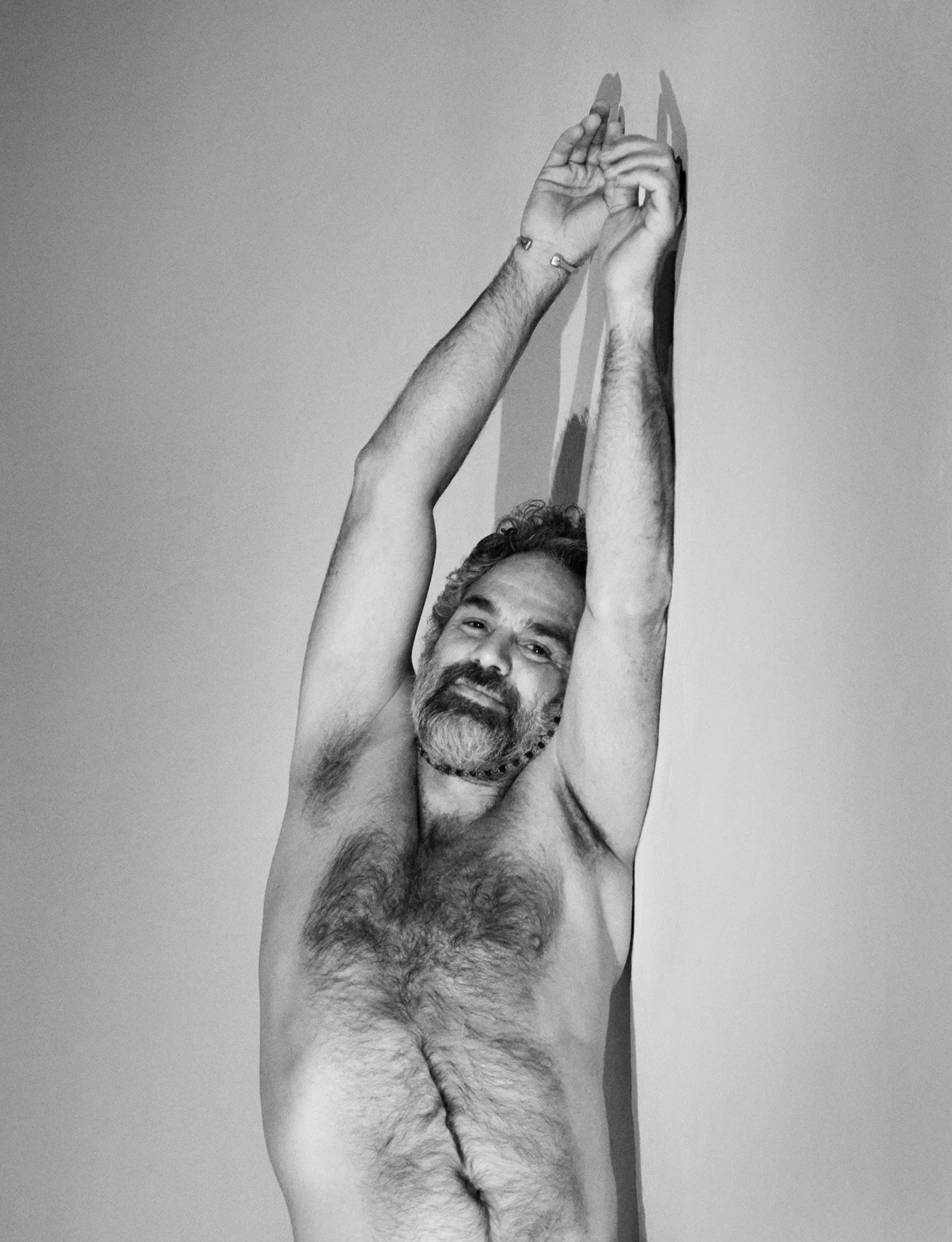
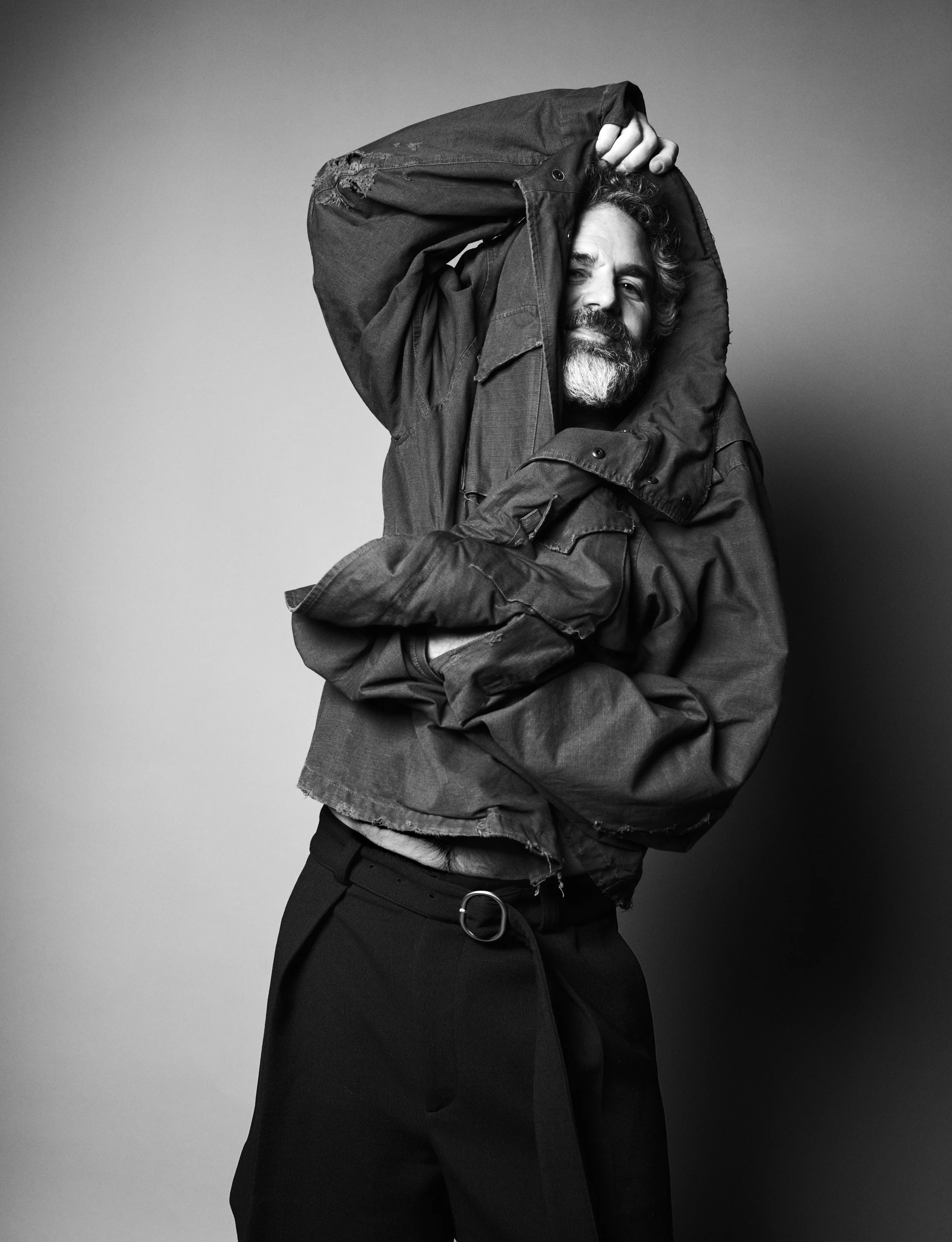
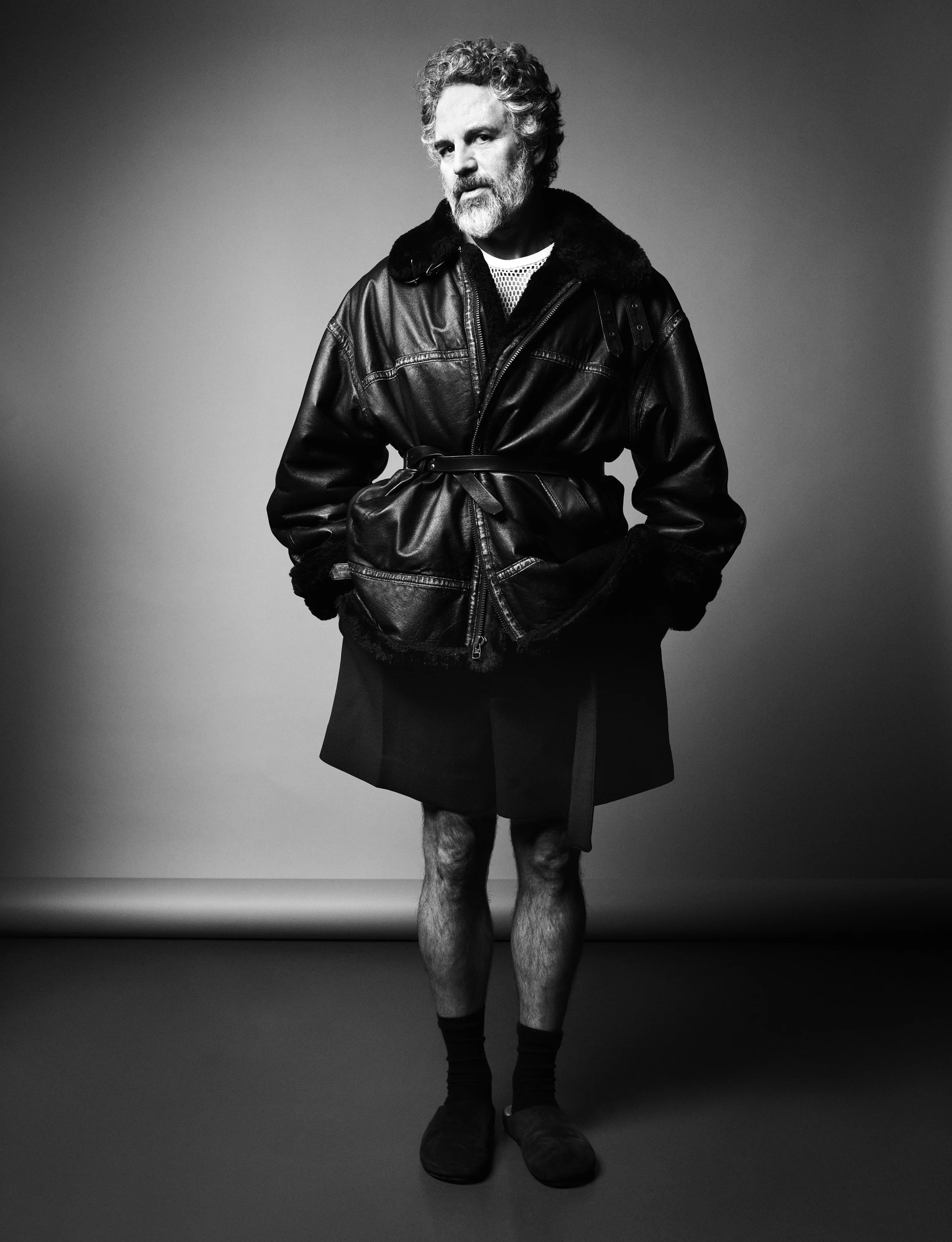
Mark Ruffalo for Perfect Issue 6.
Writer: Amber Later
Photographer: Willy Vanderperre
In Poor Things, the latest film from director Yorgos Lanthimos (The Favourite, Dogtooth), Mark Ruffalo stars as Duncan Wedderburn, a conniving, cocky lawyer whose confidence is challenged by the spirited young Bella Baxter, a Frankenstein-esque medical experiment played by Emma Stone. Poor Things is a wild, surreal carnival in which sex, money and surgery are satirised while social taboos are ripped asunder. For such eccentric and explicit material, the film retains a wide appeal. In Ruffalo’s own words, ‘It does what great storytelling should do: give it to you on a human, emotional level.’ Here, Ruffalo and I discussed the importance of costuming in developing a character, representations of sex in media, and the existence of the human soul.
What in particular attracted you to Poor Things? Was it working with Yorgos Lanthimos, or maybe you had read the novel it was based on?
Honestly, it was really working with Yorgos. I was such a big fan of his, and in awe of him as a director. He had my agent send it to me. I read it and thought, I don't know if I can do this. And so I reached out to Yorgos and I was like, I really want to work with you and I really appreciate you thinking of me, but I don’t know if I could pull this off. I’ve never done anything like this before.
What in particular did you find intimidating or challenging about it?
Part of it was just being so shitty. It’s such a misogynistic, egotistical character, and so gregarious. I hadn’t really played anything quite that expressive and grand. I felt like it should be and could be funny, but I also haven’t done a lot of comedy like that.
What happened in the conversation with Yorgos that convinced you to change your mind?
He laughed at me. He was just like, ‘That's funny. You could do it. I’m very confident you could do it.’ And then I said, OK, well, I trust you. And then we were off, but I was afraid the whole time. Even as we were rehearsing, I was thinking, am I gonna be able to do this character? It’s kind of silly now, I guess, because I had such a great time. I really enjoyed playing him. But you get into a career, or a brand or whatever, whatever the world expects from you, and you start to feel like, oh, I kind of have to honour that, maybe. People expect from me a certain kind of thing, and I should be delivering on that.
‘I’m 55 now, so… like,
the sex scenes -
am I too old to be doing that kind of stuff?
Does anyone want to see that?’
A lot of other characters you’ve played have been more charming. Wedderburn’s personality ends up being kind of repulsive.
And I’m 55 now so, like, the sex scenes – am I too old to be doing that kind of stuff? Does anyone want to see that?
I think a lot of contemporary movies shy away from sex. Not just shying away from being explicit, but also shying away from acknowledging the relationship between sexuality and psychology and what motivates us.
That’s really astute. Yeah, I feel like we’re in this prudish time for films. But you’re right, it is so deeply connected to the psychology of a character. And it should be explored in that sense, too.
There’s an interesting transformation with the character you play where in the first part of the movie he does come across as very charismatic, very confident, very capable, everything that he says he is. And then gradually he’s revealed to be kind of weak and pathetic. You talked about some of the challenges that you initially anticipated playing this character, but once you’re on set how did you overcome those? What are some of the references, either from your own life or outside of yourself, that you were drawing on to create the character?
One of the things I did love about it was that he did have that arc. You think you know somebody, and then all of a sudden something unexpected and surprising happens. We did like 10 days of rehearsal, which just never happens on a movie, and during that process, there was a lot of playfulness. It was mostly theatre games, we probably only spent 20 per cent of our time actually on the script. During the course of that, and from the costume fitting, I started to get an idea of who that character was. Men who see themselves as strong and who project all this confidence, and they’re overbearing and they’re super sexualised – I just find a lot of that to be a little bit trying too hard and covering up some deeper insecurity about themselves. Especially when it comes to the way they treat women in this macho, misogynistic way. Usually, they are the ones who are most terrified of women. I feel like that’s a really interesting dynamic that we don’t really get to explore very much. And he falls in love for the first time, but he doesn’t know how to do love. Love, to him, is an idea of possession. Playing with those themes is really exciting and interesting.
Like we discussed earlier, the idea that you really can understand a lot about a person by examining their sexuality and examining their relationship with gender vis-à-vis sexual interactions is a major theme of the movie. Is it fair to say that was a major crux for you in understanding the script and character as well?
Oh, yeah. The whole film is exploring that in this very, very courageous way for mainstream filmmaking right now. It’s so interesting about him, because he’s such a dandy. He even wears a corset and he has a kind of femininity to him that he would never want people to know. He’s not even aware of it, I think, but it’s definitely there. The costume was so crazy. I had ass pads and this whole padded undergarment. There was padding in his chest, and his ankles, and his calves…
Could you tell me a little more about the costuming process? The costumes and the sets and the skies made it such a visually sumptuous experience. What was it like working with the costume designer Holly Waddington to create the character?
Yorgos definitely had this aesthetic he was working off of, and sumptuous is a really good word for it. It was beautiful, but dark. It was turn of the century, but also very modern materials. And it was extreme in a lot of ways. Everything was pushed outward. When you first put those clothes on, they start to tell you a lot about a character, about the way you stand, the way you move in a high collar, and what that demands. People discount how much character is informed by costume, that relationship. You see it in fashion shows, you see it on the red carpet, people taking on these personas based on their dress. It was very informative to me. The more I started to understand the road we were going down, the more I was involved with decisions about it. It became this kind of collaboration between us. As an actor, I came from the theatre, and my teacher used to scream at us, ‘You must have a costume, darling. I don’t care if you buy it, you borrow it, or you steal it. You must have a costume. And the costume must inform you! Let it inform you!’ She was intense, right? I never forgot that. It’s given me quite a bit as an actor in doing character work.
Based on the trailer and the limited knowledge I had going in, I expected the story to take place in some made-up country or a totally fictional realm. So one thing that surprised me was the quasi-turn-of-the-century, European setting. I liked that it had this vaguely historical base, but still reinterpreted it with a lot of freedom, treating the past as its own fantasy universe. Do you think that the suspension of reality and beginning with the premise that even though this is like our world, it’s clearly not, allowed you more freedom to explore the themes you were just discussing? Were you able to achieve things in a fantastical setting that you wouldn’t have been able to in a more realistic setting?
‘The time we’re living in feels extremely oppressive to me a fucking heavy time. Poor things feels like it’s punching out against this feeling of oppression’
Yes, absolutely. It freed everything up. Whether it was the costumes, whether it was the behaviour, whether it was the accents, it just freed everything up: what we could do with the sets and what we could do with the technology. Even things like our dance, it sort of feels like it’s in period but then it’s not. It’s like another time. The time that we’re living in feels extremely oppressive to me. It’s like, we’re all so free on social media. We think we’re free, but everyone is sort of putting it on and enacting this idea of realism. This movie feels like just punching out, like an explosion against this feeling of oppression. Emotional oppression too. It’s just a fucking heavy time we’re living in. The idea of this regressive, right-wing political, international urge to go backwards in every way is taking its toll on all of us in some way or another. It’s in fear or it’s in disappointment, or surprise, or whatever. And this film is so outwardly outrageous in every sense against political correctness, against the idea of gender, against the idea of sexuality, against the idea of filmmaking itself, against the idea of this style of acting that we’re all doing right now. It just feels very explosive and free in a very, to me, oppressive-feeling time.
While playing this role and thinking about these things and working on this project, was there anything you came to realise or understand about yourself that you weren’t previously aware of?
Just as a performer, there's another kind of personaliaed oppression of what you’re allowed to do, what you allow yourself to do, how you want to be perceived by people. These are creeping issues in this kind of social-media age that we’re living in. Everyone can do anything they want and be as extreme as they want. But a lot of it, most of it, feels like it’s performative in some way. It’s like you’re not even aware of it in yourself, but culturally we’ve become that. I become aware of it by breaking free from, like I said, this idea of who Mark Ruffalo is, who Mark Ruffalo is as an actor, who Mark Ruffalo is politically, who Mark Ruffalo is culturally. In a lot of ways I get to shake that off here. That’s really what I think the movie is about: how dynamic we could be if we allow ourselves to. That’s Bella’s journey, in a way.
I’m interested in what you’ve been saying about speech and actions today feeling performative in some way. What are some of the specific instances where you observe that happening?
Well first of all, how people are commercialising themselves. About 10 years ago, I started hearing this word brand, and I didn't understand what it was. Like, ‘We’re gonna brand you,’ or ‘This is gonna be your branding.’ Everything was branding, branding, branding, branding. I was like, what the fuck is ‘brand’? That’s all come to fruition now. People have branded their lifestyles and they’ve branded their personal lives. Once it’s a brand, there’s an expectation that goes along with that. And that expectation never leaves your conscious, or even subconscious, activities. (Holding up his smartphone) There are thousands of filters on this thing. There are thousands of ways to express yourself. We’re all expected to do it. A lot of it is commodified. It’s this mass commodification of our very beings. That’s new to us. Maybe you used to see a celebrity do it, where they would endorse a watch or a car or whatever. Now, it’s just everything. People feel like they’re being the most sincere, the most open, the most expressive of themselves. But how is that actually even possible when you're expecting to get likes from it, or to sell something from it? It’s a fine, subtle thing that I don’t think we’ve really come to terms with, what it costs us, but I think maybe we’re beginning to a little. It’s like a massive surveillance system, every private aspect of our lives. And it’s all for somebody else. It’s all for show for somebody else. And I don’t know what that does to you in the long run.
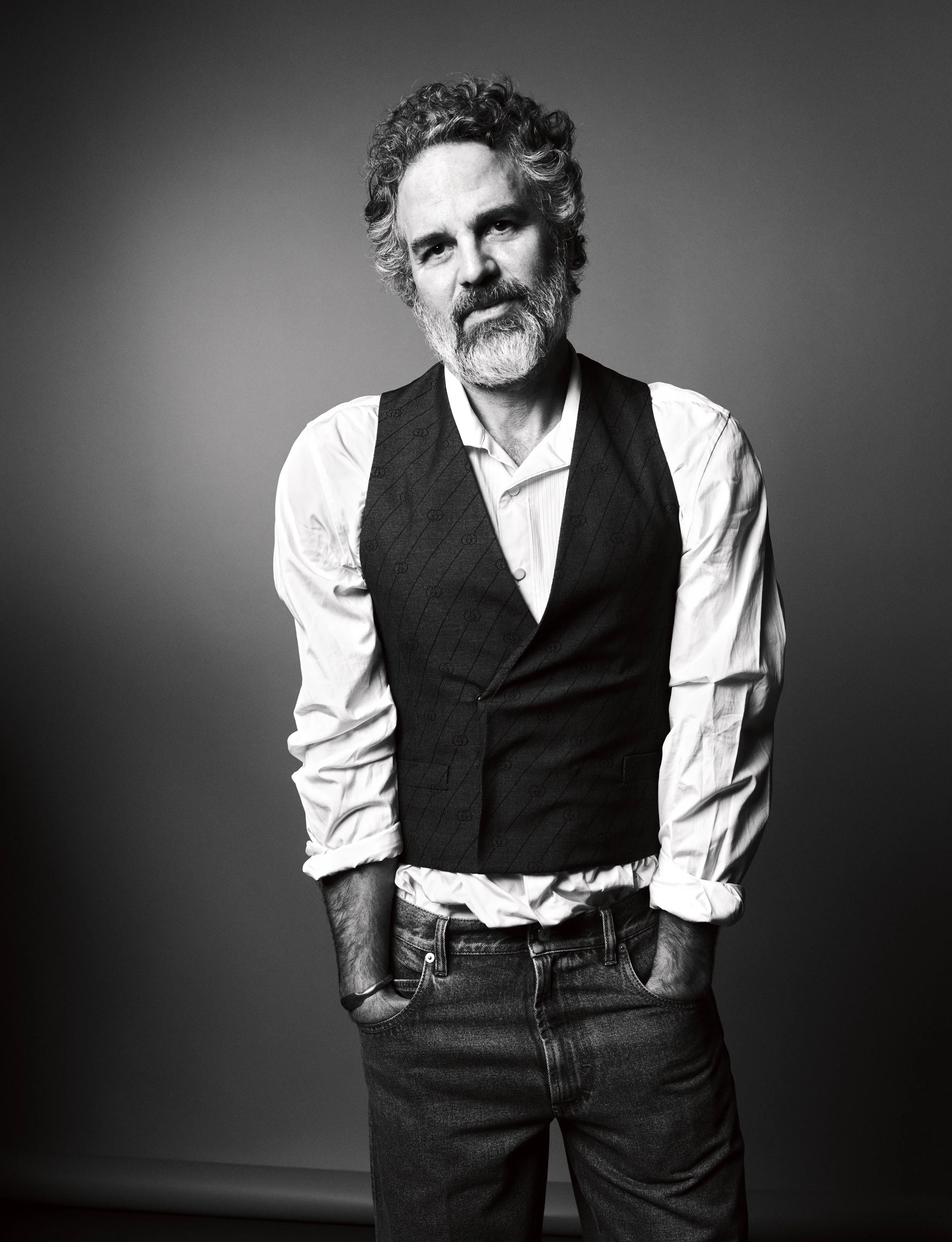
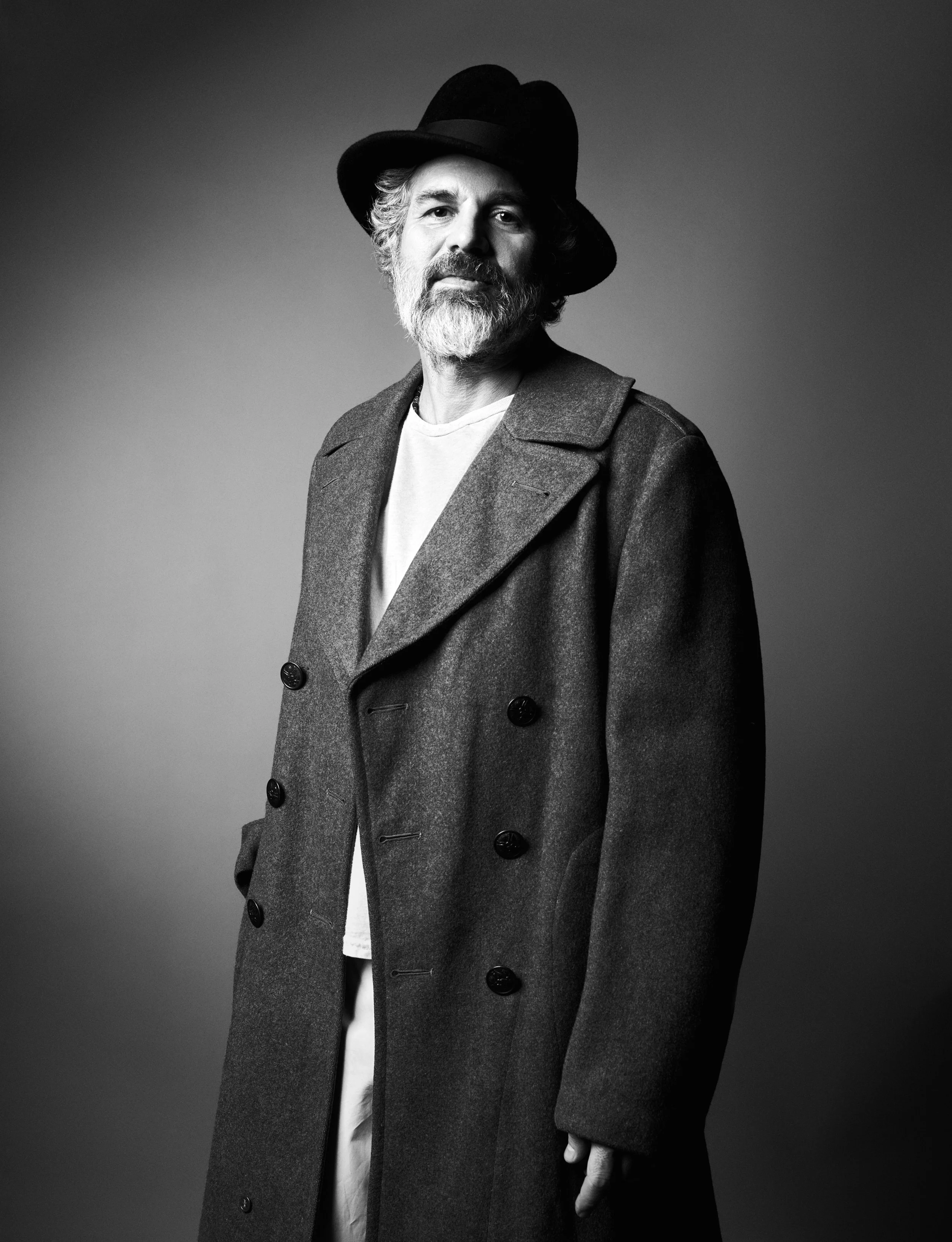
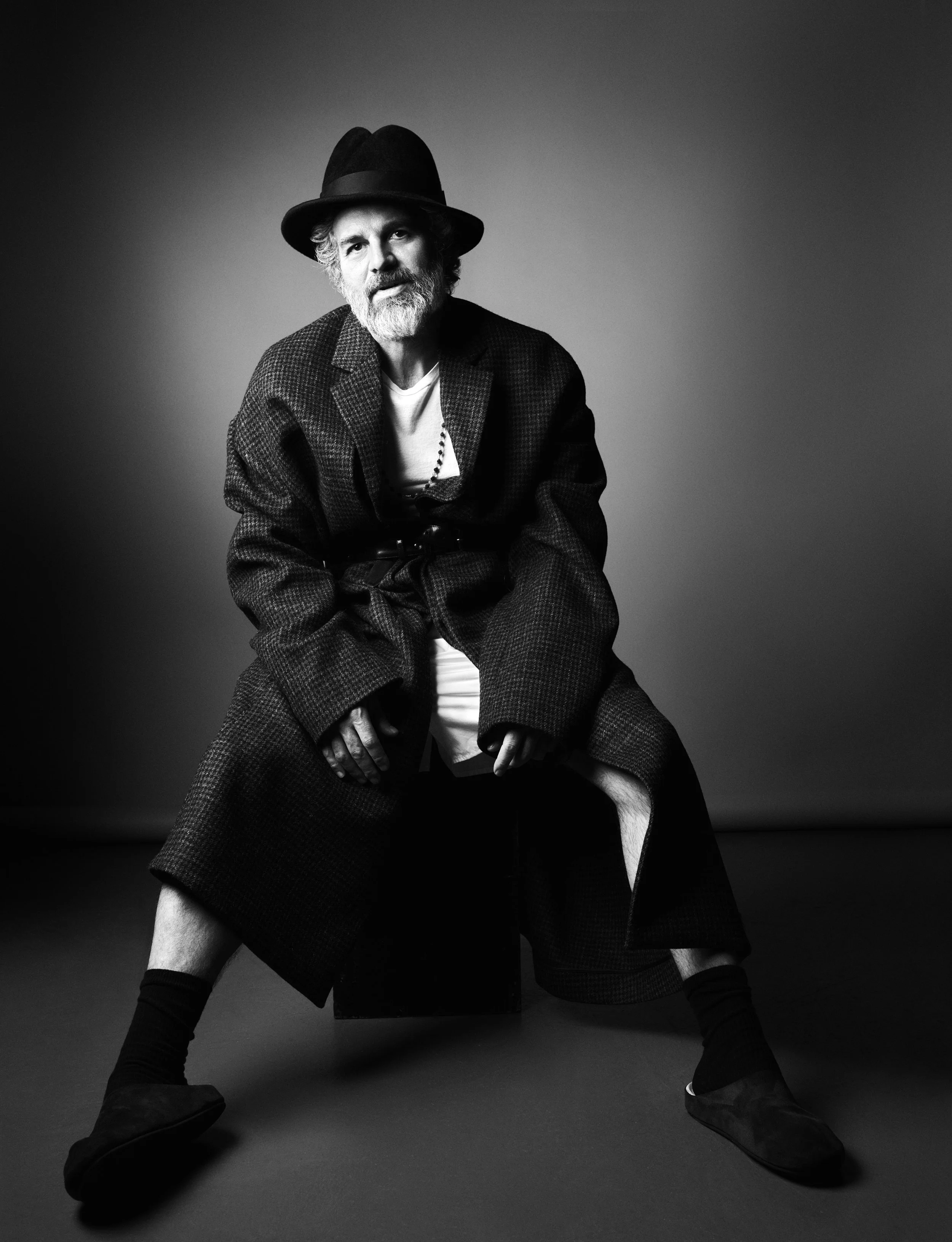
Do you feel that there's any aspect of life, whether public life or within your own personal life, where you do feel you can escape that? You talked about this performative ethos imprinting itself on people at some deep subconscious level. Do you still feel like you have environments or relationships or aspects of your life that really do feel like they exist free from that?
You know, it’s all in relationships. The one thing that I keep getting drawn to where I feel comfort, and it’s soothing, and it feels real, are my relationships to people and my relationship to the natural world. Yes, a relationship can be surface level, but a real relationship cannot stay in that tiny bandwidth for too long and sustain itself. At some point, you’re going to see and feel the human being. We discount how much we feel people, we feel their vibration, we feel the essence of them. They make us feel a certain way after we’ve been with them. Those are realities that I don’t think can ever be duplicated, falsified or counterfeited, not in totality. Like my relationship to nature – that’s the one thing that does not lie. (Holding up his smartphone again) We’ve come to think that this is a reality, but this is actually a projection. The reality is outside of our door, of things that have to consist of and live in a relational world that follows simple laws of reality. And so that’s where I’ve been getting a lot of my love. There’s nothing like that. And there’s nothing that gives you that but to be with the people that you love. It happens between you. It doesn’t happen on one side, real love. The sadness of the world and the uncertainty of the outcomes are so disturbing that I keep finding myself going deeper and deeper into relationships that I know have something good and decent and loving in them.
I don't even mean necessarily in a religious sense, it could also be in a more secular metaphysical way, but, do you believe, to any extent, in the existence of a human soul? Is this a concept that, even if not by those exact words, resonates with you?
It’s honestly something that I've been in conflict with, probably since I was in a Catholic school, in a born-again Christian family. My father was Bahaʼí, so I was surrounded by these ancient Christian, Judaeo and Islamic structures. So I had all that sort of front-loaded on me as a kid. But I always rebelled against it. I couldn’t buy into these concepts, a lot of them were ridiculous to me. They defied any kind of logic or the reality that I knew as a kid. And so I struggled with it. Honestly, I’ve gone back and forth on it so many times. But I know, when I’m with people and I’m in nature, that I’m experiencing something that is profound, and is organised in a way, and feeds me. I don't know if that’s a soul, I don’t know if that’s the spirit, I don’t know if that’s just the hardwiring of mankind. But maybe that is what the soul is: this shared experience. When you go to a movie, and everyone laughs at the same thing, what is that? Why would everyone laugh at the same thing? If we didn't have some common language, why would you be moved by a love story? Why would so many people cry at a certain thing if we didn’t share something? And maybe that something is what people refer to as the soul. I’m interested in that. As a performer, that’s what we do. That’s always been interesting to me, and what that phenomenon is, I don't know.