No actor’s career says ‘romcom’ with quite the clarity and distinction of Meg Ryan’s. When she faked an orgasm in the middle of Katz’s Deli, Canal Street, New York, during the climactic comic moment of When Harry Met Sally, she set in stone a new template for the way women would present themselves on the commercial big screen. She touched a new nerve. Why shouldn’t this be what we see on screen? Here was the ghost of future gods – of all the Sex and the City women, of the Broad City broads, of Lena Dunham’s Girls girls; of the very latest incarnation of those who chose to take the reins of a new flavour of candour and turn it into their own new take on the tragicomic fairytale that always comprises modern love: Rachel Sennott’s I Love LA.
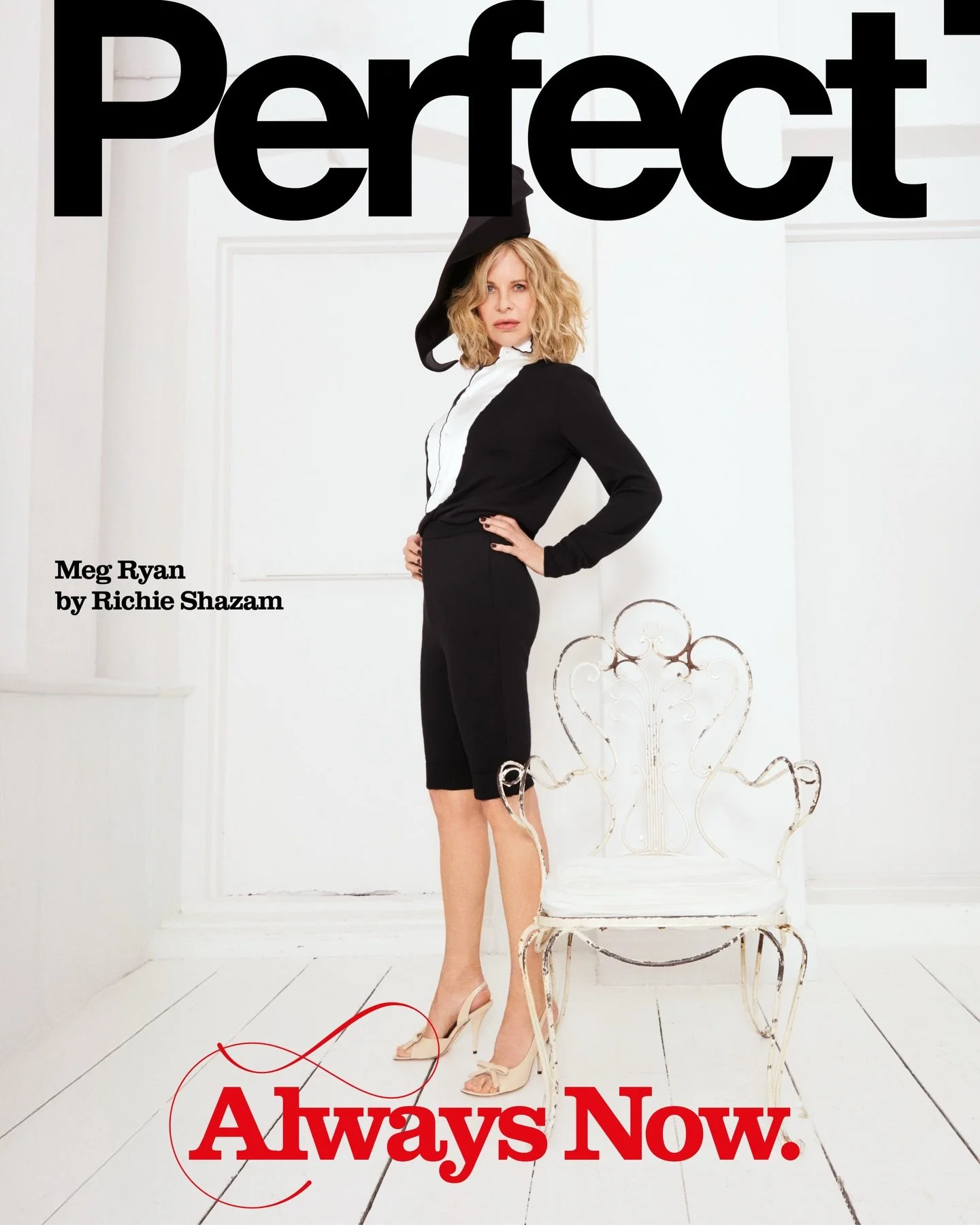
Meg Ryan for Perfect Issue 10.
Writer: Paul Flynn
Photographer Richie Shazam
Yet when it’s suggested to Meg that she might have been involved in any form of screen revolution with the work she made so utterly compelling, she bats it off and turns instead to talk about those whom she learned most from. In the space of an hour’s conversation, Meg Ryan made more of the work of recently deceased screen icon Diane Keaton and the Hollywood writer’s writer Nora Ephron than she did of her own. These distinguishable levels of humility play well for Meg, but really, she has lived the Hollywood life of a legend. She is treasured for good reason.
We last spoke two years ago, during the promotional cycle for What Happens Later (2023), the bittersweet, magic-realist two hander that saw Meg caught in an airport snowstorm with her college sweetheart, played handsomely by David Duchovny. It was a film she directed as well as starred in and was deservedly proud of. Next on her screen slate is the role of the therapist in the Lena Dunham Netflix project Good Sex, which feels like it may get closest to tying together two disparate generations of accidental open rule-breakers with a neat bow.
The conversation was gorgeous, Meg introducing new tangents to ideas about screen storytelling, delighting in the experiences she’s been gifted, disentangling the meaning behind them and throwing in the magic of the Chanel NY subway show to boot. Then nine days after we spoke, Rob and Michelle Reiner were killed in Los Angeles.
A new patina of genuine melancholy hung over the conversation as it played back. She first worked with Reiner when he directed,When Harry Met Sally, then co-starred with him in Sleepless in Seattle. No director is closer associated with Ryan. In a statement that tells you all you need to know about Meg Ryan, she posted this in his wake: ‘I have to believe that their story will not end with this impossible tragedy, that some good may come, some awareness raised… I don’t know, but my guess is that they would want that to be hopeful and humane, to be something that brings us all to a greater understanding of one another and to some peace.’
Whether on screen or off, Meg Ryan has always been among the best of us.
The last time we spoke was about What Happens Later. At that time, you taking control of what a romcom might be was the most exciting thing.
Oh, thank you so much, that’s a nice read on it. I think people were maybe expecting more of a traditional romantic comedy. But you know, this was about looking back – on miscommunication, on mistakes that were made, on this idea that there’s a sacrament of reconciliation that there are very particular steps to. It was social commentary, too. Anyway, I had a blast doing that.
I liked the idea you presented in it that relationships might end but they never really die.
There are formative people in your life. It’s also true that we all have a subjective experience and fairness demands, or curiosity demands, that we at least try to accept that that’s true for everyone. Everyone’s got a version of the truth. In that little movie, both people were willing to accept where they were wrong. They were willing to listen. They have a completely magical reality and take advantage of what was presented to then. In a magical way, the universe conspired to give them some closure.
What does it take for Meg Ryan to attach your name to a project now?
The ideas have to be resonant enough to spend time on them. The themes have to speak to you. You may not answer any questions, but you have fun asking them. For directing, that can be three or four years, so the idea has to be compelling. For acting it’s different. I just did a movie for Lena Dunham, which she directed. I wanted to see how she did it.
When I heard about this, it almost felt like you passing the baton from Nora Ephron to Lena.
I don’t know about that, but Lena is such a romcom fan and she does it so differently. We share a love of Nora. I think Lena would be so flattered, the idea of her getting any kind of baton passed to her from Nora.
There was a thank you to Nora at the end of What Happens Later. What imprint did she leave on your life?
Well, I’m very grateful to her because I have had a lot of opportunity in my life because of my relationship with her. I did three or four movies with her and then I knew her and I saw the example that she set for so many other people. It was just incredible to watch a woman write and direct, and to see the example of a woman doing that first hand. I really saw the power of words around her, the power of language. How she wielded it. In Hollywood people wield different kinds of power, but hers was intellectual and human.
Do you remember how you first met?
It was something to do with When Harry Met Sally. I’d been in the Castle Rock offices, because Rob Reiner and Billy [Crystal] and Nora and I got together and talked a lot about the story.
Nora’s famous quote, of course, was ‘everything is copy’. That’s a very brave statement for a writer to make. How does it apply to an actor?
Being an artist is always about taking what has been lent to you by the world.
That’s fabulous. Can you expand?
Everything in your experience is for you in the creative process. Whether you are a writer, director or actor, that’s the fun thing about being an artist and embarking on a project. All of a sudden you can’t believe how the world and your dreams are just feeding you, as long as you are paying attention. Your senses just get very heightened. It’s a cool state to be in. Words will just come to you as you’re writing. Or you’ll see an article or a book that will just speak to you.
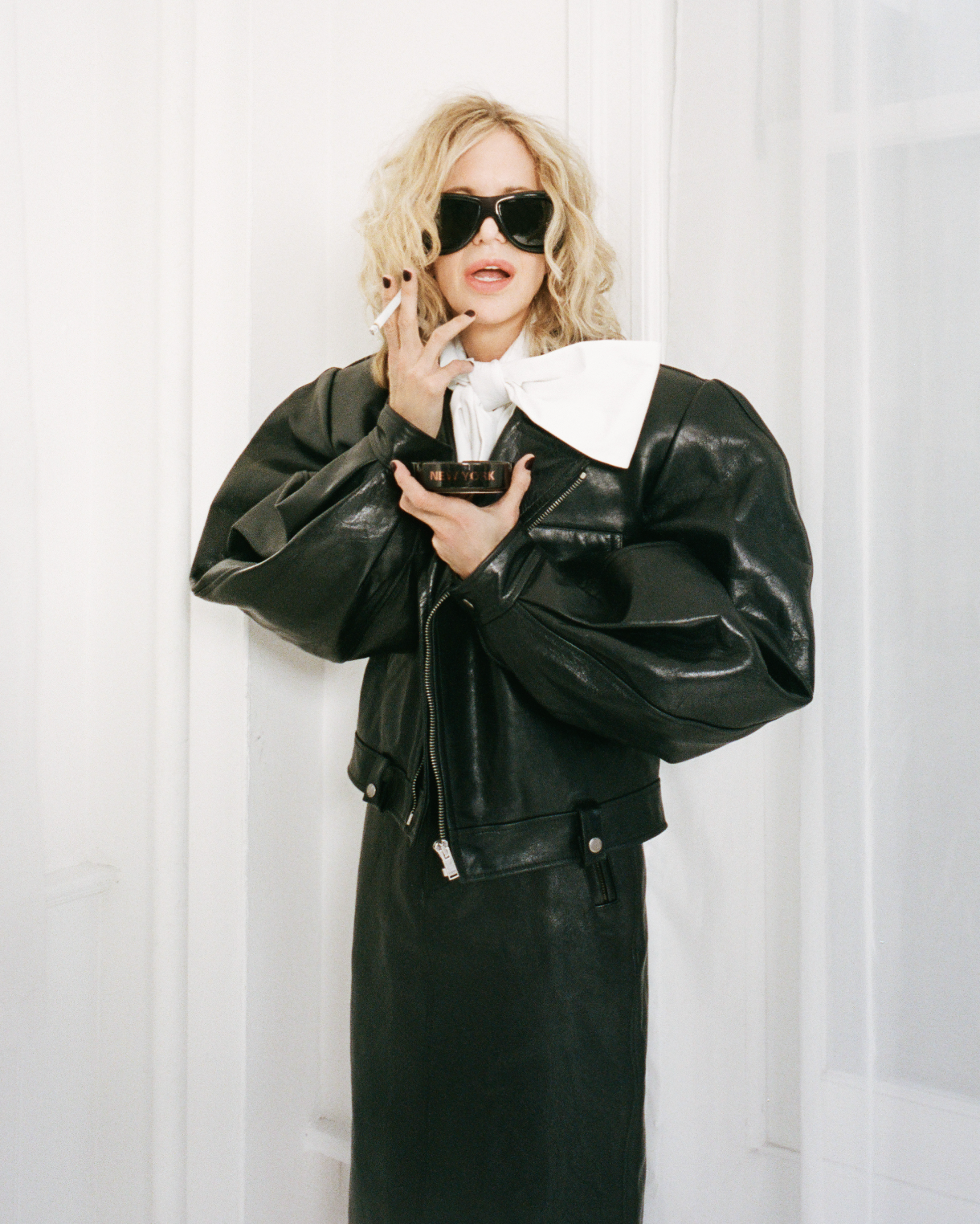
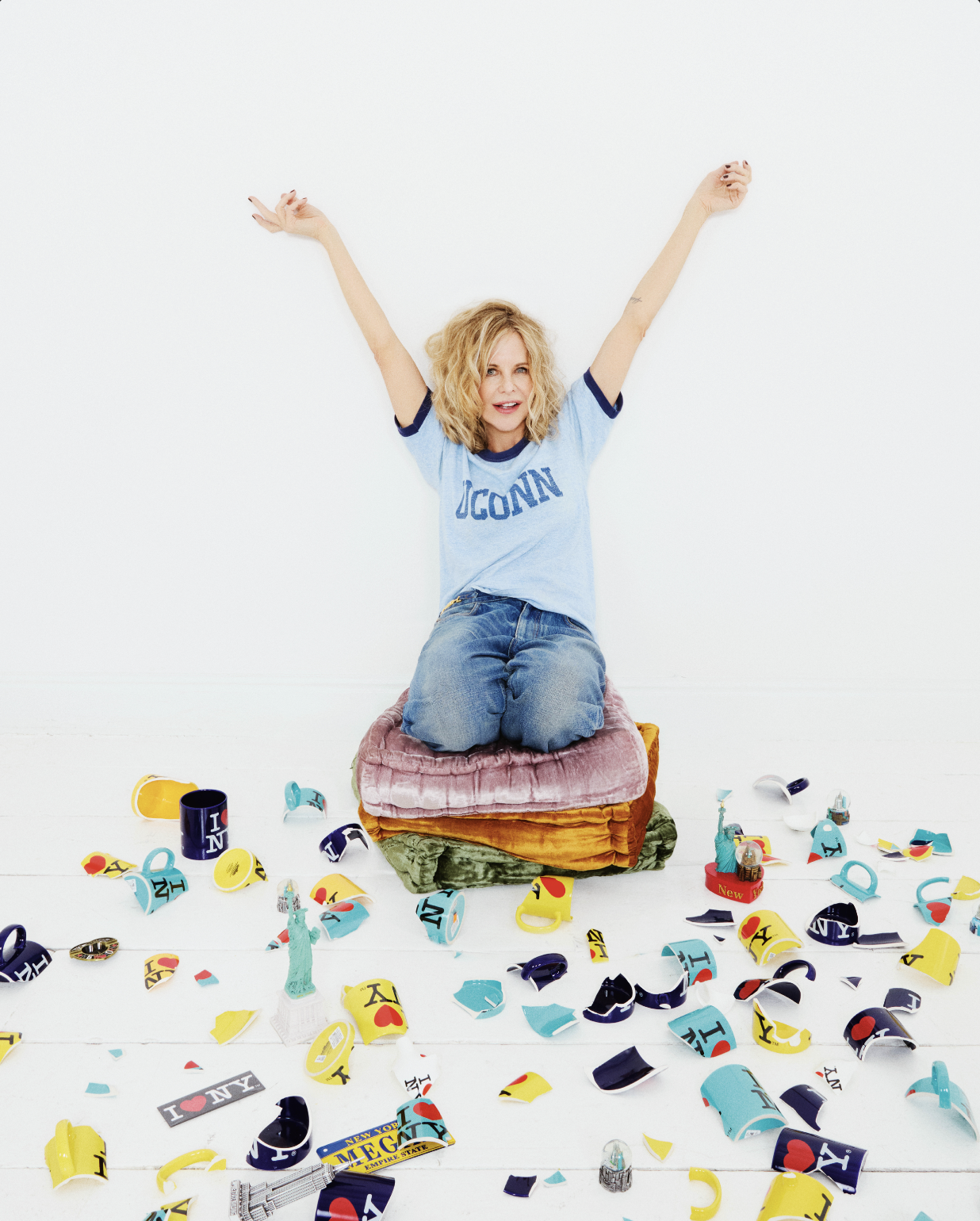
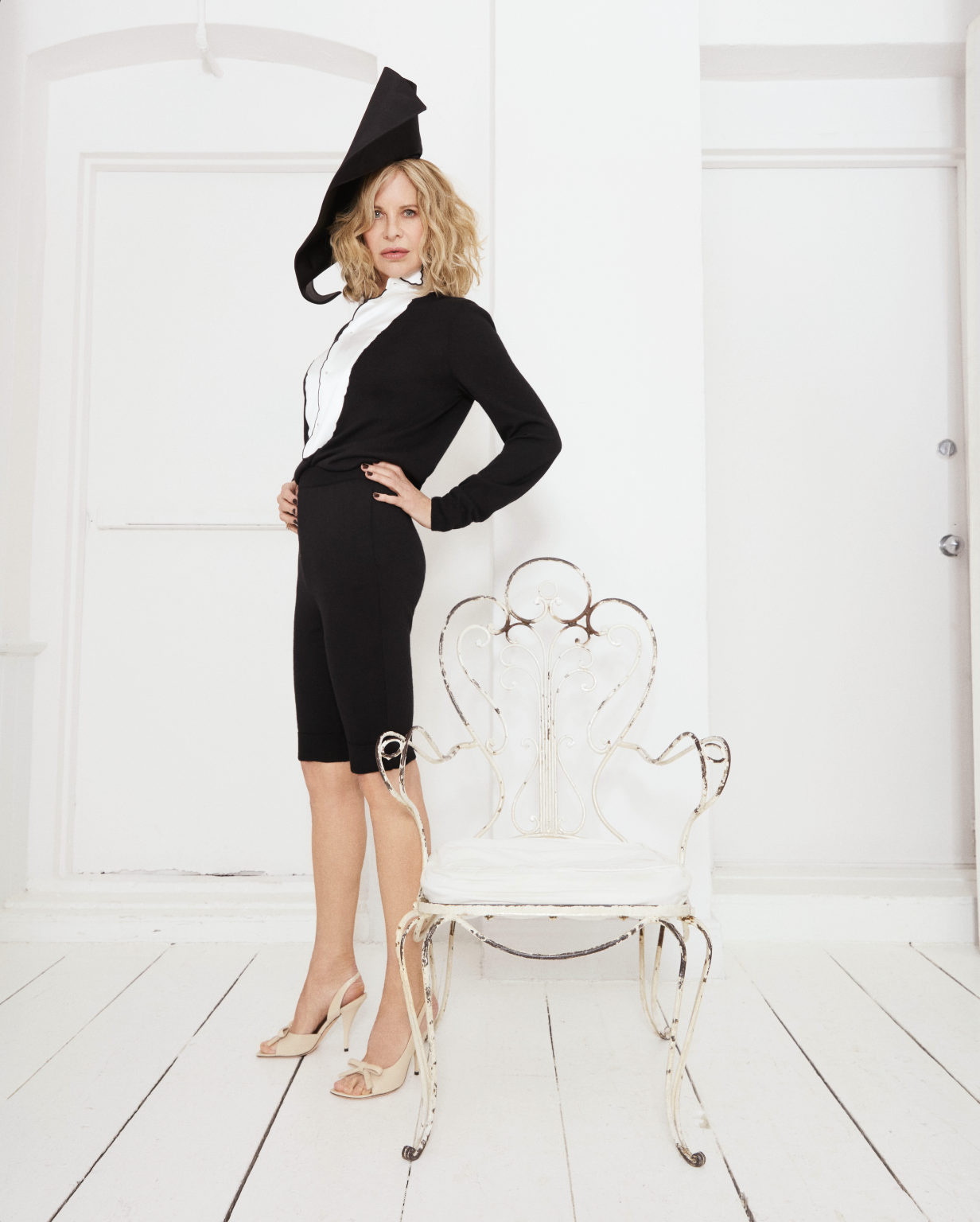
“Being an artist is always about taking what has been lent to you by the world.”
Is having a creative life-raft to use your emotional experience a safeguard for life?
I don’t really think about it that way. I just think as an artist, the world is coming through you when you are interpreting it. [Nora] said everything is copy; I think everything is for you. All your experiences, all your awareness, all your consciousness is for you to use and reflect back in your work.
Tell me about the approach from Lena for you part in Good Sex. How did it happen?
I’ve been a fan of hers for a really long time. I loved Girls – so specific and personal. Anyway, I met her at a Taylor Swift concert. It was at Wembley. And she says, ‘Oh, I’m just working on something – will you read it?’ She didn’t really say what it was about, just that the cast is fantastic. She’s her own force in the world. She’s really quick on her feet. She’s really fast, really smart and really fun. I play Natalie Portman’s therapist.
When you work with someone like that, do you feel like you are part of a change in the way that women are seen on screen?
No, I wouldn’t say so. But what I would say is that there are certain women who have influenced me. I have to talk about Diane Keaton. Lisa Kudrow, Diane and I, we all three played sisters, in a movie that she directed [Hanging Up]. Walter Matthau was our dad. I know. She was such a pure artist. So smart. Such a good writer. So observant. So free with advice. And it never even felt like advice. She really made the people around her feel seen and understood. Man, I appreciated her just throwing herself into the scene. She had such a strong visual sensibility. I really learned from that. Because I didn’t have that kind of gift. She was an example of being an artist through and through.
What do you think the ultimate tale of love is?
What a good question. I remember someone once telling me that a love story is only ever as good as its obstacles. It might be an internal obstacle or some sort of circumstance but it makes you really root for them. Obstacles.
Do you worry about the cinema industry?
Yes, everyone is worried about the industry, but there were so many great movies this year.
What was your last spine-tingling cinema experience?
Marty Supreme. It’s so good. One Battle After Another is so good. There are so many good movies this year. We saw Hamnet. [Jessie Buckley] is like the centre of the Earth in that movie. There’s a lot of great movies, so much good work out there. Everyone’s worried about production, about the state of things, but there is some unbelievable work out there.
Have you always considered yourself a New York person?
In my soul, yeah. I’m from Connecticut so I’ve been in and out of New York my whole life.
What are your earliest memories of coming into the city?
Being on the train, Metro North and Conrail at the time, getting a great sleep on that hour and a half. Then Grand Central Station. When you grow up in the suburbs, it’s like sunflowers to the sun, your relationship with the city. Your friend’s dad might work there. Your grandmother takes you to Bloomingdale’s. You’re defined in relationship to the city. I can’t quit it. I just love it. It’s really great right now, too.
What was your last New York moment?
I went to the Chanel show. I don’t know anything about fashion, really, but I have been to some shows in the last few years and have had a fun time, but this was something else entirely. It was pure cinema, the way the girls entered on that train, all backlit, and then they had all this interesting interaction. The clothes were beautiful, the music was amazing, people were so happy. It was such an art piece, top to bottom. It made you think about fashion differently, New York differently and Chanel differently. I really felt like I understood fashion as art. All of the girls walking were like the stars of a movie.
Do you keep pieces from movie sets?
I have a few. I gave a coat from Sleepless in Seattle to The Academy. I have some clothes from that movie I did that Griffin Dunne directed. I really loved the clothes in that movie. With Kelly Preston and Matthew Broderick? Addicted to Love! Good fashion in that one.
Are you allowed to have favourite movies from the past or is that asking who your favourite child is?
I’ve had favourite experiences. That’s all you can control and, really, that’s your big memory. The people that you spent time with. I was so lucky with everyone that I worked with.
You’re never giving this up, are you?
No. It’s the same as ‘everything is copy’. If you’re an artist at all then you’re interested in the world, so you might just as well keep investigating it. Stay curious. You’ll be rewarded for it.