‘First of all, I love cows,’ says Goldie Hawn, explaining the presence of a life-size model Friesian on the lawn of her California home. ‘They’re unbelievable.’ In the Aspen ranch she shares with her partner, Kurt Russell, Goldie has a whole paddock of them. Cows, bulls, the works. ‘And I used to go out on the fence and I would sing to them,’ she says. It comes as little surprise that Goldie Hawn can entrance an audience, whichever audience that might be, at 20 paces. ‘You have no idea.’
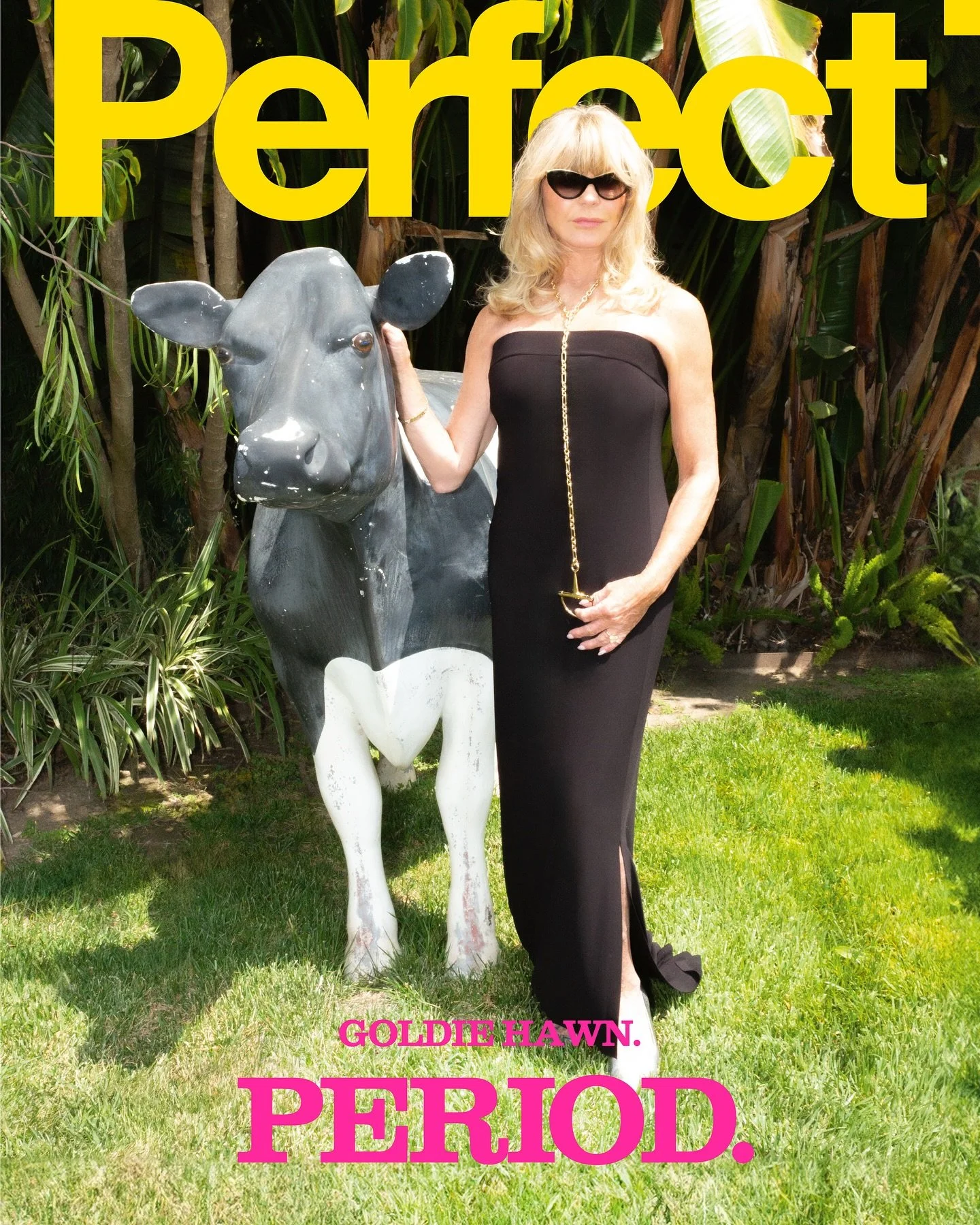
Goldie Hawn
Writer: Paul Flynn
Photographer Yasmine Diba
Suddenly, the grande dame of gentle American goofball breaks into the chorus of ‘Where Is Love?’ from the Lionel Bart musical Oliver!. ‘They’d come to me and gather round,’ she explains. ‘They would come walking towards me. Oh my God.’ For her LA home, a replica had to suffice. ‘That cow, I got in the Eighties,’ she notes. It was an impulse purchase from an antiques store on Melrose; she can’t remember how much she paid. ‘But it was just after Katie was born.’ She means her daughter, Kate Hudson. ‘I have that cow in every front yard or back yard.’ A wistful undercurrent traces the sentence, as if she can picture every home she’s lived in, shadowing each progressive word.
The mystery of the model cow solved, we attend to the serious business of being Goldie Hawn, American Icon. It is not all gentle froth. For the last quarter of a century, Goldie has been concentrating on the neural pathways of the American public, most specifically through her charitable foundation, MindUP, a preventative mental health charity. The MindUP aim is to get schoolchildren to understand their brains young. Its implications are huge. But beneath the seriousness, it is always wise to remember a mantra Goldie Hawn keeps for herself, on the subject of the incredible career she has maintained, both on and off camera, as performer, human being and, for the last 25 years, momentous philanthropist. ‘Being funny? Making people laugh? Frankly, that’s God’s work. Right?’
When fame first found her on the ubiquitous late Sixties American comedy sketch show Rowan & Martin’s Laugh-In, Goldie Hawn took the prudent decision to see a psychologist. It just seemed like the right thing to do. A dancer from Washington with an adorable disposition, one that tied several disparate characteristics up together with a bow – Goldie was both goofy and sexy, awkward with a surfeit of instinctive natural charm, neighbourly yet razor smart, comic, camp and cute – she quickly established herself as America’s little sister, girlfriend, BFF and confidante. Rowan & Martin producer George Schlatter ‘would always say, “Goldie, if she was an elevator operator, she would be a star elevator operator.”’
Goldie sought help to understand how to navigate her public/private portfolio. Her ambitions back then were to disappear quickly from Hollywood and retreat back home. ‘I was going to open a dancing school, get married, have children, live a normal life.’ That was not to be. ‘It took the world by storm instead,’ she remembers.
The precipitating factor for finding a suitable shrink was a series of unforeseen panic attacks. ‘I became very successful,’ she says, ‘and with that, I became extremely anxious.’ In the late 1960s, anxiety was not understood the way it is now. Mostly, you were expected to just get on with it. Also, this was new for Goldie. ‘It was not part of my personality. I was not ever anxious before, so at that time in my life I was frightened.’ Action was needed. ‘I went directly to a psychologist to try and figure out what was wrong, when I should be happy and on top of the world, but I really wasn’t.’
You might see Goldie Hawn as an early forebear of Farrah Fawcett-Majors, Jennifer Aniston, even Britney Spears. There is something in the emergence of both Sabrina Carpenter and Addison Rae that most recently recall the cheerful, wry emblem of Americana Goldie emerged as in Rowan & Martin. In truth, every clever and gifted corn-fed blonde entering the US celebrity cyclone since she reshaped the fame graph, bending it to her dimensions, will be a little bit Goldie Hawn. Yes, she was the girl next door, but she sat on a dazzling plinth. A star that wriggled its way into the sitting room, taking up permanent occupancy, refusing to leave.
Her ascendancy was striking enough to scoop an Oscar for supporting actress in her debut feature, the 1969 screwball comedy Cactus Flower, in which she played alongside Ingrid Bergman and Walter Matthau. On the night, demand was so high for Goldie’s special brand of magic, she couldn’t attend the ceremony and instead sent Raquel Welch to pick up the prize on her behalf. When Hollywood recollects its golden Seventies pre-eminence, an era when cinema ticket stubs rained over Hollywood like so much confetti, it is largely expedited by thinking of Goldie Hawn’s wonderfully bluff performance in the Warren Beatty hairdressing salon drama Shampoo. Goldie was finally nominated for her Best Actress Academy Award for Private Benjamin, a role which sent the global schoolboy demographic into a state of wild-eyed sex-charged delirium by putting hotness in army fatigues. Goldie Hawn is the head of her own dynastic film empire, not just as a performer, producer and casual agitator. She has a literal dynasty too: her partner Kurt Russell, daughter Kate and sons Oliver Hudson and Wyatt Russell are all actors. In 2025, talking to Goldie Hawn is a little like finding yourself in an audience with a member of the entertainment wing of America’s royal family. She commands a stage simply by being on it.
It comes as something of the plot twist, then, to hear she had neither planned for nor desired fame, recognising quickly its disquieting responsibilities and most prevalent pitfalls. ‘I never really wanted to be,’ she says, ‘and I know this sounds crazy – but I never wanted to be a star.’ Because she was not looking for it, fame turned out to be just the human condition, redacted, magnified, dysmorphic. ‘With that, I was disoriented.’ The reason fame titillates so much from the audience’s point of view is the same reason it confuses from the practitioner’s perspective. Before social media democratised the idea of fame, it was the way we judged ourselves by pointing a collective finger at someone else.
That’s a lot to deal with, alone, at 20. ‘I didn’t get what I considered “a normal life”,’ she says. ‘That didn’t work out. What did work out is my time learning more about myself. I was fascinated with how the psyche was working, how my perspective was changing, how I was really able to arm myself with knowledge and experience, to know how to be able to deal with celebrity and other people’s judgements. I realised that I was pretty much my own person. It was a really loving experience.’
Her psychologist, she says, ‘was wonderful. I owe him a lot, because he knew exactly how to do this.’ He had trained in Freudian practice. ‘I would come in and feel quite happy,’ she recalls, of his California rooms. ‘He’d say, “OK, Goldie, I think it is time for you to lie down and free associate.” When you free associate, you just say whatever comes to mind. And as you are talking about whatever this is – which is a bit stupid to begin with – it becomes like the unpeeling of your mind.’
The process appealed to the young Goldie Hawn. She could feel its path towards something meaningful taking quick effect. ‘You just start peeling away and peeling away and then things get into more of your subconscious, remembering things, bringing things up, having memories and thoughts and so forth. It was amazing.’ What evolves is what Freud called ‘transference’, the redirection to a substitute (usually therapist or doctor) of emotions originally felt in childhood. ‘The doctor suddenly becomes a father,’ she says. “Cognisance doesn’t last, at the end of the day. It gets you into figuring things out. This is a visceral way of finding out what’s inside you.’
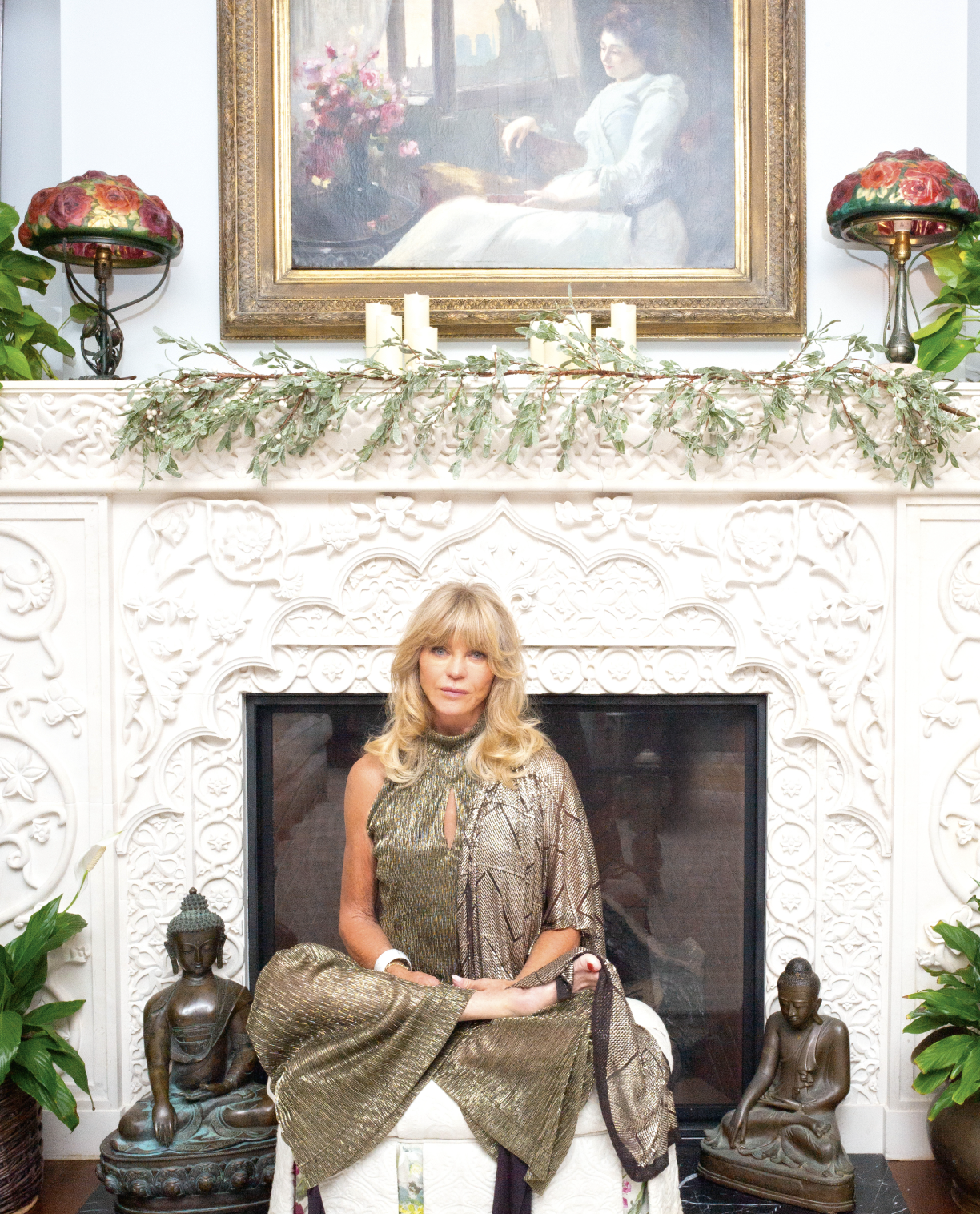
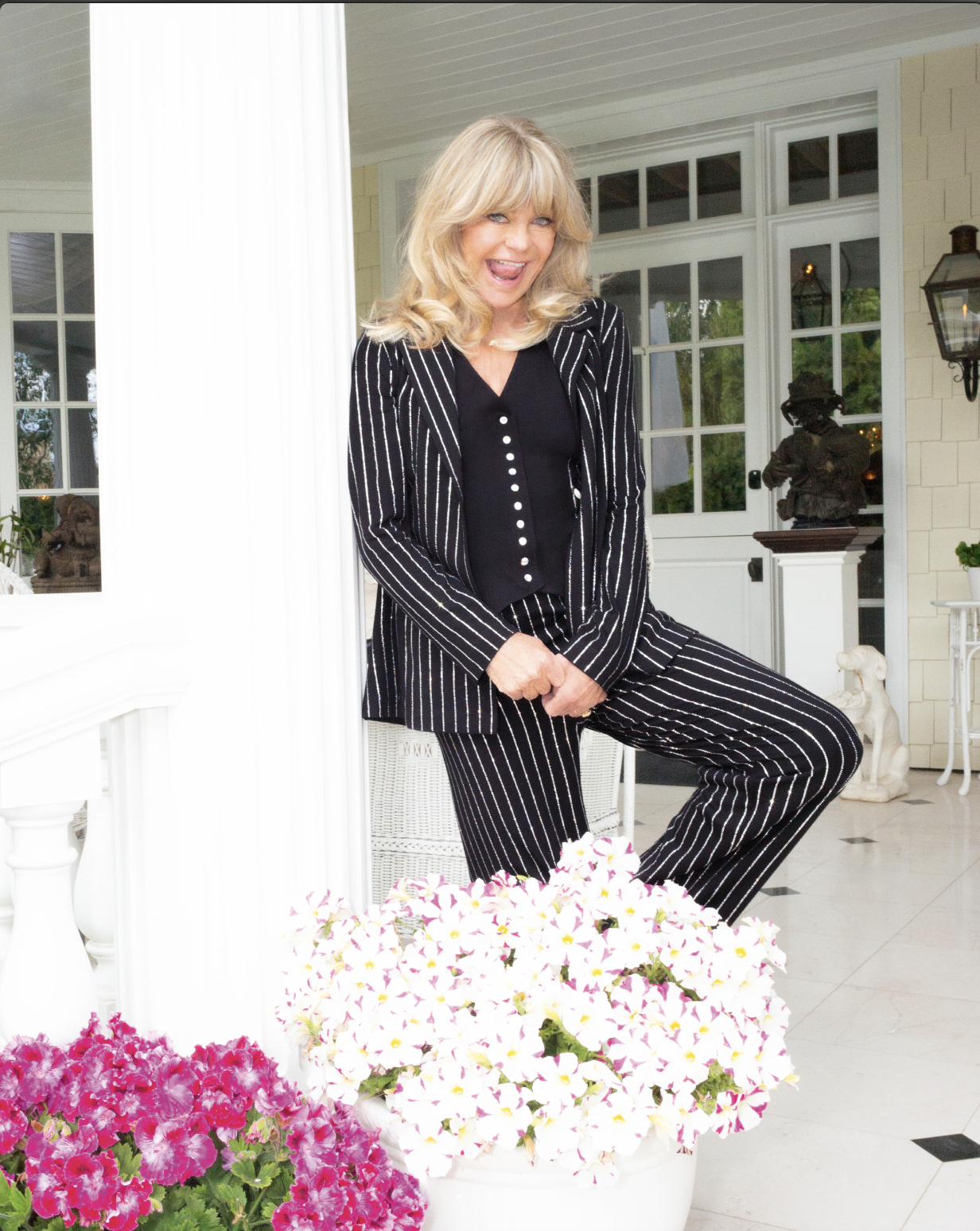
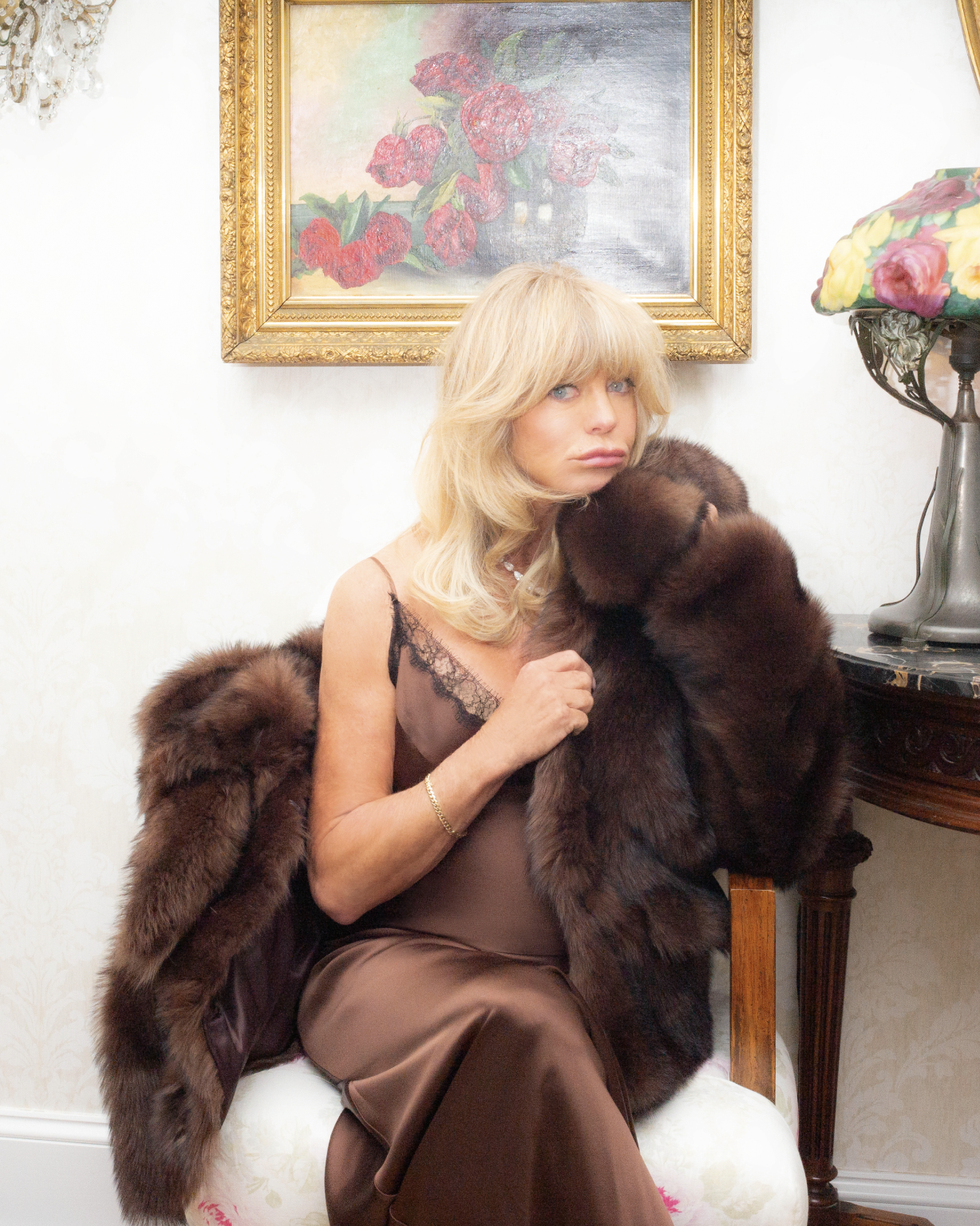
For Goldie Hawn, objectivity became the key to understanding her new-found fame; one that simply occurred because there are some faces, some talents, towards which we cannot help be magnetised. ‘Through the objectivity of my learning how to distance myself from problems so I can solve them, I would notice that people would say, “Oh, her performance is so great,” or they would say, “Oh I love Goldie Hawn.”’ At the core of her psyche, uncovered in these strange, trance-like sessions of free-associative transference, she realised that adoration didn’t interest her. ‘Well, some people didn’t like Goldie Hawn,’ she adds, laughing. ‘And some people didn’t like my performances.’ That was fine. ‘I would just look at it as if it was coming from their perspective, not mine. I honoured their perspective. It was from the eyes that they were seeing through.’ The panic attacks lessened, then vanished.
There are deep lessons to be drawn from the life of Goldie Hawn. Even half an hour into an intense conversation with her, one realises that she holds some of the fundaments of fame in the palm of her hand. She is zealous about her charitable practice and genuinely believes that children understanding their own brains could change the world at a pivotal time. She should be taught on day one at Fame School. ‘I think that’s really important to remember, that not everybody is going to look at you the way you see yourself.’ Her career may have altered the boundaries of American womanhood, but it is not one she wants to dwell on now.
In the end, she visited her therapist for eight years. When their final session finished, he turned to his client. ‘He said to me, “I want you to know something. I want you to know that I am the proudest of you of all my people, because you really don’t have transference anymore, Goldie. You’re a free person. You really don’t need me any more.”’
In translation: goodbye, you are now ready for fame.
‘I hugged him and thanked him for the experience.’
Goldie Hawn believes that her artistic and philanthropic instincts are driven by the same purpose. ‘Of course,’ she says. ‘Yeah, they all come from the same place. I’ve always felt that I was in service.’ The key to understanding her life’s work, she says, is collaboration. “Rather than someone who was interested in all the accolades – Oh, I did this, I won the awards, I ticked this off… I didn’t get that out of it. I know me. I know who I am. I know what I am capable of and I know what I am not capable of.’
From an early age, Goldie understood that although her face might have to carry a project, it was not the whole project. ‘I’m not a narcissist, you know? I think this is a very dangerous thing, to put yourself in the middle of your universe.’ The strapline for MindUP is ‘building emotional resilience through mental fitness’. Is that something Hollywood prepared her for? ‘In terms of that emotional resilience, you have to have it, particularly when you’re starting out. The truth was, I had to do a lot of dancing around to not be what would’ve been considered a bitch. You watch the way you speak, you make sure your ideas are sound, and then you stand up for what you believe in.’
Nevertheless, she understands what it was that she brought to film projects. ‘When people see you in a certain way then it makes them feel a certain way. Happy, funny, warm, whatever.’ Sometimes, at the height of her commercial success, she would sneak into the back of movie theatres, just to see a response. ‘To hear people feeling good, laughing. Oh my God, this is so amazing to hear a whole theatre laughing, to hear them exalted. That makes me feel so good, and then I’d leave.” It's impossible to not recognise in retrospect, that this is where her interest in the human brain began developing further. “All I ever wanted from my acting career,” she says, “was to be authentic.”
Her charitable work, she says, has often been more challenging. ‘Children now, they’re working in very complex society. In 10 to 15-year-olds, the biggest cause of death is suicide. If a 10-year-old is thinking of suicide, we have some serious issues to deal with here, in our country. Not just our country – I later find out it was the world. Children depressed, lonely, fearful. They now live on their tablets. They live on their social media. It’s affecting them in a way that is isolating them. Their brains are not functioning in a way that they need to be functioning, to learn what’s right and what’s wrong. They have such algorithms now that are addictive. One of my big issues here is that this should be in every classroom, to learn about the brain no matter what, for our children.’ She believes her own practice could live outside of the classroom. ‘It’s time to take it out into the world.’ She speaks with clarity, passion, an informer perspective.
The people she has to get past to be effective now are not steely-faced producers, nor Hollywood studio heads, but government practitioners who want to uphold the status quo; who don’t believe, as she does, that kids should understand their brains in the way they might understand their bodies.
‘I’m still creating,’ says Goldie Hawn. ‘I’m still growing. That’s who I am. What do I want out of it? I want an unrealistic dream. I want every child in the world to be able to have a way to deal with their obstacles. To understand that we need each other to exterminate loneliness and to be able to create a real group of citizens everywhere that is interested in the greater good and is able to manage their emotions. So we can rule better, get better leadership and find a kinder world.’
For Goldie Hawn, one gets the sense that the big work is still to be done. ‘Would I say I was proud of myself?’ she says. ‘No. My mother was proud of me. I only do in life what I think is right and then I stand behind my position. Same thing when I produce movies – I stand behind my vision. I often fought for my vision. But I didn’t feel proud of myself. I felt excited by the idea that you get to get some of your thoughts out there, and maybe even get to change something? Change is the ultimate goal.”