Josh Brolin: No Half Measures.
He’s the rough-hewn product of an age when hardship sculpted character. From his hell-raising Californian youth to Oscar-nominated glory to becoming the hard-faced stalwart of Hollywood’s most successful fantasy franchises, Josh Brolin reflects on a life lived large.
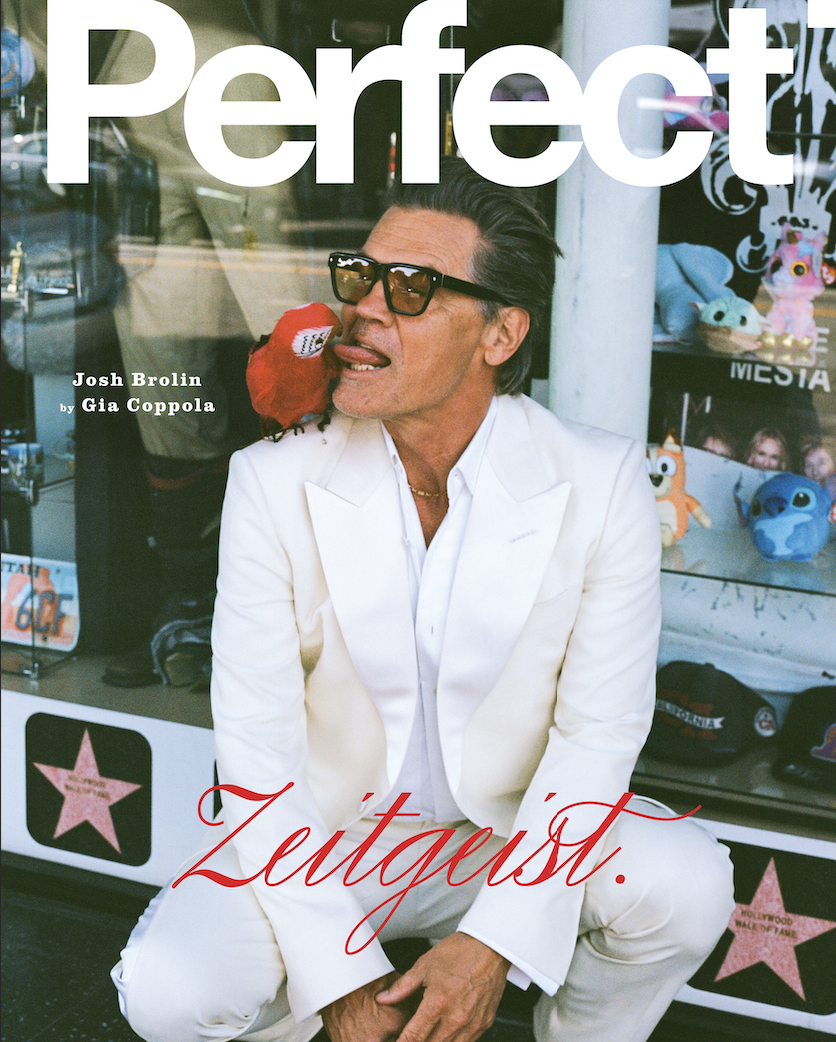
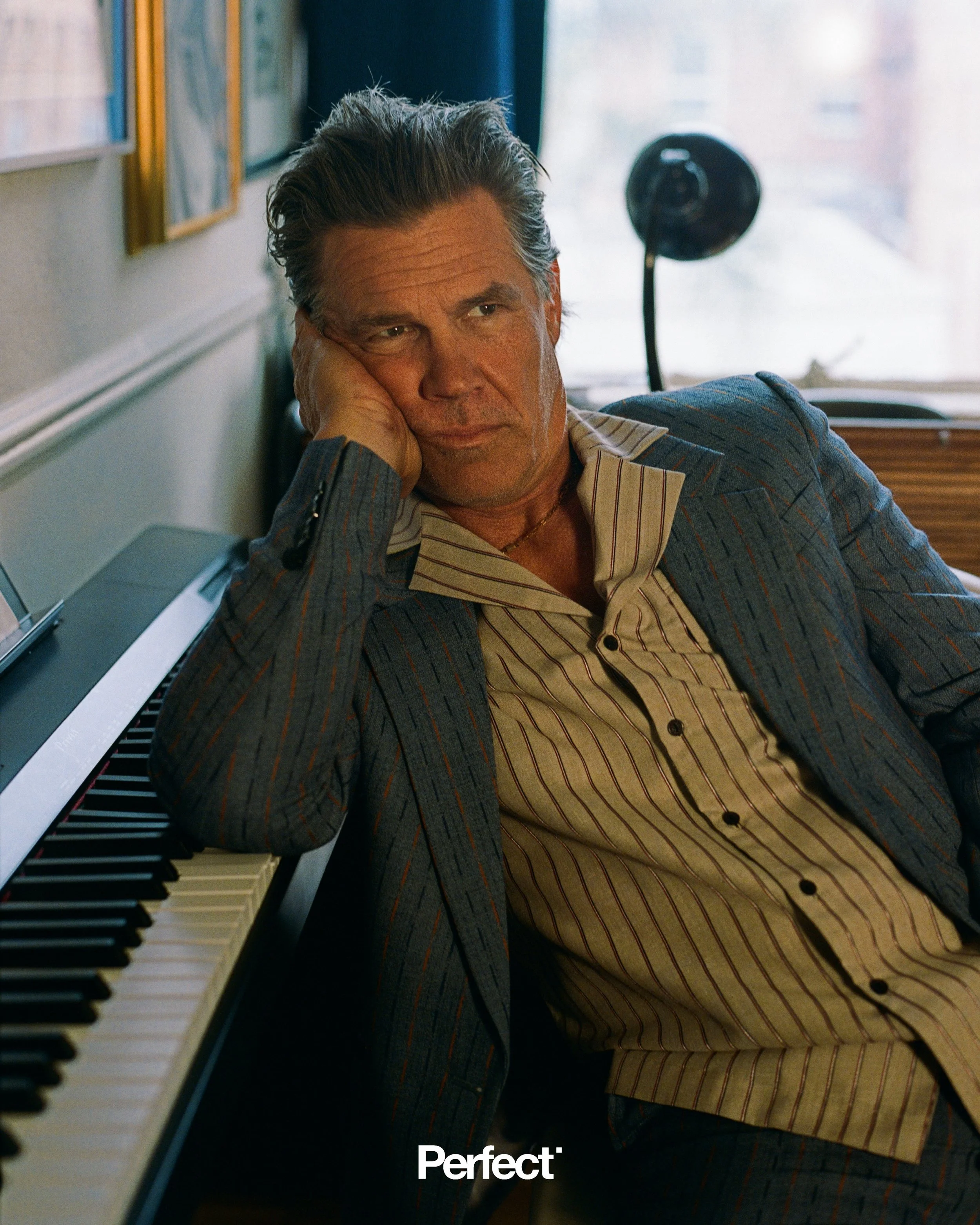
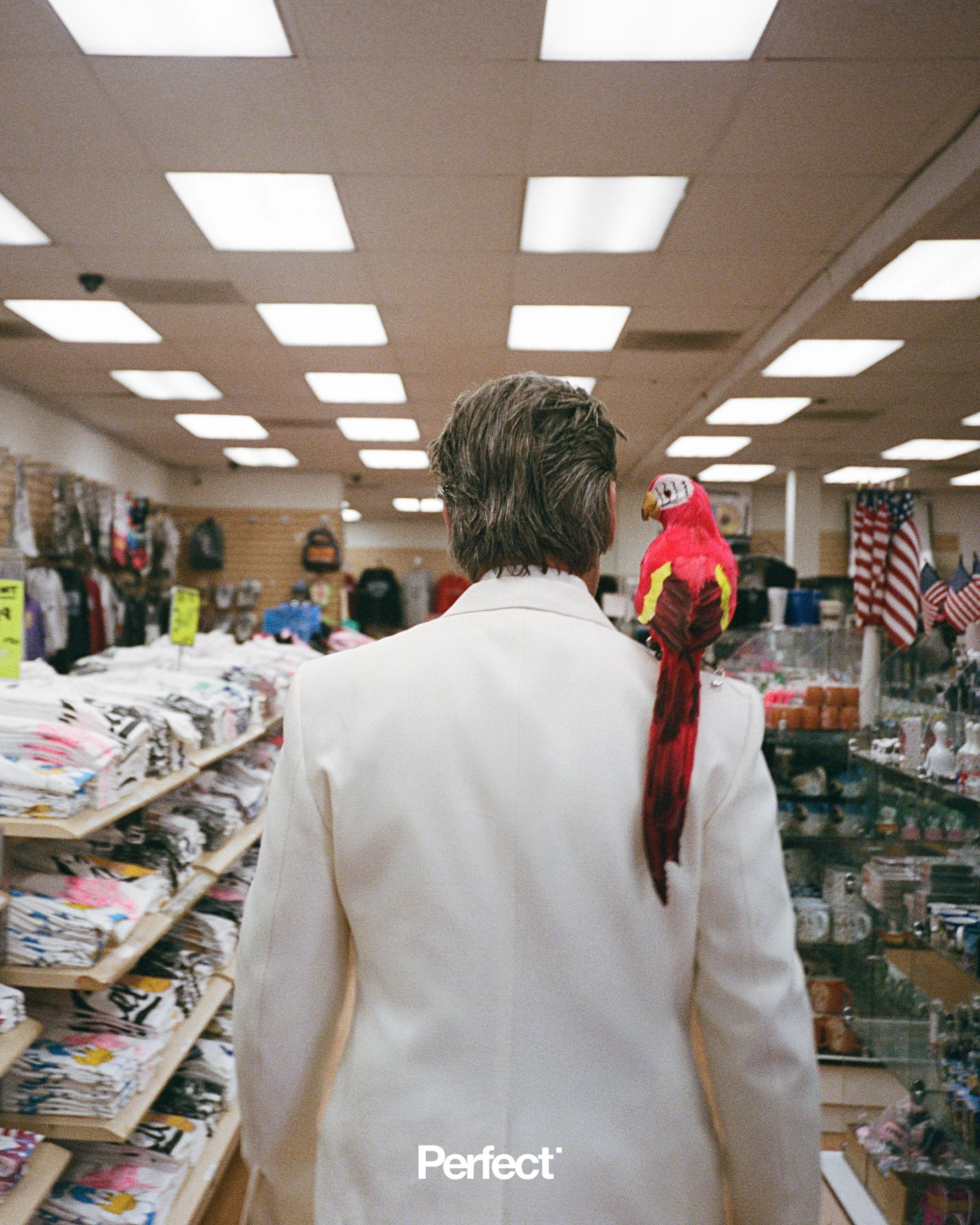
Josh Brolin for Perfect Issue 11.
Photographer: Gia Coppola
Fashion Editors: Anda & Masha
Writer: Alex Bilmes
Josh Brolin appears on my laptop screen in a grey slogan T-shirt, a tribute to country music legend Waylon Jennings: ‘Too dumb for New York City, too ugly for LA.’ Brolin has solved both problems today by being at home in Santa Barbara. His trucker cap locates him more precisely still, in Montecito. Emblazoned on the crown: ‘Cito Rats’, a delinquent surfer-skater-punk gang that swarmed the town in the late 1970s and early 1980s. Brolin was a member, and while Montecito today is moneyed and becalmed – famous as home to Oprah Winfrey and the Duke and Duchess of Sussex (feelings about Waylon Jennings’ output unrecorded) – it was a different place in the lost days and nights of Brolin’s hellraising adolescence: gritty, dilapidated, thrilling.
It’s 10am in California. Brolin is Zooming from his office, a barn-like structure, recently completed but already pleasantly lived-in, walls painted green and covered with framed pictures, shelves filled with books, photos, tchotchkes and mementos. A guitar rests against a wall. A cute fluffy dog is asleep on a sofa. What breed is it? ‘German shepherd,’ says its owner, drily. (Whatever it is, it’s not a German shepherd.) As you join us, Brolin is showing me a life-size bust of the skull of Joseph Merrick, the Elephant Man, which sits opposite him as he’s writing, which he does a lot. It reminds him, he says, when he’s feeling whiny and self-indulgent, that others have faced struggles harder than his own. ‘So, just fucking suck it up and do the work.’
Some people (me) might find it disturbing, I tell him, to have to gaze daily on that most horribly afflicted man. ‘I don’t care,’ he says. Josh Brolin is not a man to mince his words.
At 58, wisps of silvery hair escaping from under his hat, Brolin looks fit this morning, though you’d hesitate to call him fresh-faced: he has the rock-hewn, sun-blasted, square-jawed handsomeness of a cowboy, which he quite easily could have become if he hadn’t been an actor – an actor who has played cowboys many times, as well as other tough guys who have weathered storms.
Depending on your demographic, or your vintage, or your sensibilities, you will know Brolin best as a brooding figure in acclaimed, director-driven movies. A performer engaged in an ongoing investigation into wounded masculinity, one of the enduring preoccupations of American film, with a delicacy and sensitivity that belies his grizzled façade. Or you’ll know him as Thanos, antagonist of Marvel’s Avengers, a thick-necked supervillain with the skin-tone of a grape slushie and a chin, as Brolin has put it himself, like ‘a nutsack’.
If you’re closer to my age, which is closer to his age, he’s the ‘dude from The Goonies’ (Brolin’s words again) who followed that early breakthrough with two decades of ‘mostly dreck and fodder’ (guess who?) until, in 2006, he was cast in the Coen brothers’ masterpiece, No Country for Old Men, one of the essential Hollywood films of this century.
As Llewelyn Moss, a down-on-his-luck Vietnam veteran who stumbles on a fortune in drug money in the Texas desert, Brolin didn’t have pages of dialogue, but he didn’t need them. Here was an actor whose muscular screen presence could stand up to those of Javier Bardem’s psychotic hitman and Tommy Lee Jones’s weary sheriff. Since then, Brolin has worked with the Coens again on True Grit and Hail Caesar!; Oliver Stone on the Wall Street sequel Money Never Sleeps and an uncanny portrait of George W Bush in W.; Ridley Scott on American Gangster; and Denis Villeneuve on the gripping Sicario, as a swaggering, morally bankrupt American spook fighting the war on drugs, and as Timothée Chalamet’s warrior mentor in the spectacular Dune films.
He was Oscar-nominated for his finely calibrated turn as Dan White, murderer of Harvey Milk in Gus Van Sant’s biopic of the gay politician. Perhaps most enjoyably he was Bigfoot Bjornsen, the tight-ass, hippie-hating detective in Paul Thomas Anderson’s Inherent Vice. More recently, he’s been a fire-and-brimstone preacher in the third Knives Out whodunnit, Wake Up Dead Man. A reptilian reality TV producer in The Running Man. A traumatised suburban dad in the stylish horror movie Weapons. Coming soon: The Dog Stars, a post-apocalyptic thriller from Ridley Scott, with Jacob Elordi and Margaret Qualley; the father of a scuba diver swallowed by a cetacean in the thriller Whalefall; and Gurney Halleck again in Dune: Part Three.
That’s the CV. The man is easily as interesting as the work. In 2024, Brolin published a memoir, From Under the Truck. (The title refers to an incident involving his mother and a drinking contest that ended up with the loser, her then boyfriend, unconscious in the position described.) Lyrical, impressionistic, unconventional, the book is quite unlike other celebrity autobiographies I’ve read, and all the better for that.
His father is James Brolin, a TV star of the 1970s and 1980s – rugged, square-jawed etc – and his stepmother, James Brolin’s third wife, is Barbra Streisand. (‘A singer,’ Josh drily explains in his book.) In his book – as, it seems, in his life – both these imposing figures, while warmly acknowledged, take supporting roles to the star of the show, apparently the star of every show she was in: Jane Cameron Agee, Josh’s mother, a casting director turned wildlife activist. Josh and his younger brother, Jess, grew up on a ranch alongside horses and wolves, coyotes and mountain lions. Jane was an alcoholic and a man-eater. Impossible, unforgettable, she died in 1995, killed when her car smashed into a tree. She had been chasing after a boyfriend with whom she’d had a drunken fight.
Her son’s childhood was traumatic. He owned his first motorcycle aged four. He was drinking at nine. Taking LSD at 13. His career as an outlaw began in earnest at 11, when the family moved to Montecito and he became a Cito Rat. He helped start the hardcore band Rich Kids on LSD. He became an alcoholic, a brawler like his mother, and a petty criminal. He writes: ‘I rolled cars, dove through windows, ran from cops, and fucked women I’d normally be too afraid to talk to.’ (You don’t get that from Dame Maggie Smith.)
He has been locked up nine times, the longest a four-month stint in Pasadena for fighting multiple police officers. He has sobered up and relapsed. He has dug ditches and played the stock market. He has been stabbed in the belly. Of the 50-strong original Cito Rats, 36 are dead. His best friend Danny shot himself dead, aged 14, in front of his family.
Some of the stories in the book are funny. Others are horrifying. There is an account of a drunken Brolin wandering Portland, Oregon, during the making of My Own Private Idaho, hoping to be discovered by Gus Van Sant. (He wasn’t.) There is a pathetic encounter, in New York, with Philip Seymour Hoffman, in which the critics’ darling – sober at the time – attempts to escape from Brolin, who is so fucked up he’s not wearing shoes, or a shirt. ‘He goes harder than anyone I know,’ Sean Penn said of Brolin, when the actor was still drinking and drugging. That same night, in 2009, Brolin was needlessly rude to Robert de Niro, an actor he hugely admires, before delivering an awards acceptance speech so graceless that his own publicist couldn’t look him in the eye.
Brolin is a father of four. His elder children, a son and daughter, the first born when he was just 20, are from his first marriage, to Alice Adair, an actress. His second wife was Diane Lane – child actor, teen star and a leading lady on stage and screen since the 1980s. They were together for a decade before divorcing in 2013. Brolin married for the third time, in 2016, to Kathryn, his former assistant. They have two young daughters.
Clean and sober now, like his characters Brolin has weathered storms. He is charming company, even at 5,000 miles’ distance: playful, quick to laugh, questing, and intense. The following interview has been edited for length and clarity.
I had prepared a list of random questions that I wanted to ask you, and then at the weekend I read your book and that made me want to throw that list out and start again. I really enjoyed it. It’s beautifully written and it feels completely honest.
Thank you for saying that. It means a lot. It really does.
The structure, the lyricism of the writing, the lack of bullshit. Did you plan it like that?
It started to dictate what it wanted to be as I was editing it. I wrote maybe 500 pages and as I started to cut, those stories [about my mother] were the best stories. The wet clay that I was as a child was sculpted most by this woman.
You were born in Los Angeles but you grew up in a place called Paso Robles. Describe it for those of us who have never been.
Country. Hick. Farming. Horse country. The kind of community that would take their kids out of school for three weeks to harvest. We lived on a 230-acre ranch on Route 1, which means it was in the middle of nowhere. Which means it didn’t wholly exist, other than for the people who lived there. Seven miles to Templeton, the nearest town.
Until I read your book, I didn’t know anything about you except that I’d seen your movies and that you are the son of a famous actor…
And I’d gotten the silver spoon, and the nepotism and all that stuff?
I don’t think I’d given it that much thought, but I suppose I’d assumed you’d grown up in Beverly Hills or somewhere equally fancy.
A true Hollywood debutant.
The childhood you describe is tougher than that.
Workwise, yeah. You get up, you feed the horses. Because of what my mom did, being a wildlife activist, she expected a certain level of toughness. From everybody, not just her children.
I’m sorry to read your own stuff back to you, especially in my British accent which doesn’t do it justice…
No, it sounds better in your accent.
Not when I’m reading you the words of your own mother, it won’t. But I loved this line. It’s something she said to your brother: ‘Why did you slam the goddam door on my wolf?’
My mother was relentless. She was a lot of fun. The problem was it was unhinged. My mother had no tools, you know? [Anthony] Hopkins, being a sober guy, one day goes to me, ‘How great is it, that we’re like this?’ And I said, ‘What do you mean?’ And he said, ‘We’re just angry and we’re driven and we’re dark…’ And I was like, ‘Is that a good thing?’ Because I always felt quite broken, and that I needed to create a new character to be a good person. And he said, ‘No. Left to our own devices there’s nobody who has more of a negative impact than we do. We create more destruction and more hurt than your typical norm. But given a few tools we can direct our lives in a way to have such a positive impact. More of a positive impact than the norm.’ Left to her own devices, my mother? It’s a fucking Tasmanian devil vortex of chaos. With a few tools, maybe [she could have] broken the chain and evolved a little bit. I got the opportunity. Because I was looking at a lot of jail time [14 years, aged 19, for assaulting police officers] and that opportunity [to go to rehab] was forced on me. And I was lucky enough to be gifted with some tools that I still utilise all the time. I’m still not totally normal. I have to implement a few tools each day to be a better parent, to be a better friend, to have a better work ethic, to focus, and all that shit. So the point is there’s a lot of similarities between my mother and I, mine is just directed better.
The tools you mentioned. You get those from AA?
Yeah, the 12 tools. And I don’t love AA all the time. I get bogged down by AA. Like, ‘Fuck, everyone has a problem. Jesus Christ.’ But you take it from different things. You take it from fucking [theoretical physicist] Carlo Rovelli [whose book Seven Brief Lessons on Physics he is holding up and waving at the screen], you take it from [he holds up a copy of Feynman’s Rainbow, Leonard Mlodinow’s memoir, subtitled A Search for Beauty in Physics and Life], you take it from Stoic writings. You take it from wherever you take it. It changes all the time. And yesterday was a shitty day, and the day before was one of the greatest days of my life. Whatever. It is what it is.
A slight delay on the line means I keep unintentionally interrupting Brolin as he talks.
I’m sorry to keep interrupting you, Josh.
No, not at all! You’re not interrupting. You’re just being very… British.
I can’t help it! It’s the only way I can be.
(Laughs)
Both you and your dad are actors. Are there other things you have in common?
Maybe some humour? Maybe? My dad’s almost 86. He’s gotten to a place now where I think he tries very hard to express love in the best way he can. And he’s gotten way better at it. But what I think is interesting about people that want everything to be simple, the why-can’t-everyone-just-calm-down? people, is that they’re usually surrounded by chaos. And [their way of trying to shut out the messiness] makes it look like they’ve evolved, somehow, when they haven’t necessarily. I don’t know, man. I love my pop! I know there’s a lack of my dad in the book. That wasn’t intentional. That was brought to my attention by [his literary agent]. Like, ‘Your dad’s still alive and your mom’s dead. You know that, right?’ And I’m like, ‘Yeah, but that’s not what the book wanted to be.’
You do come across in the book as your mother’s son. Less so your father’s son.
One had more influence than the other. I never saw how hiding served.
You’d rather confront things, have them out.
And then I’m gonna be dead. I like the colour of that. I saw on someone’s post the other day, Jane Birkin – you know Jane Birkin? – she said that she wanted this life (raising and lowering his hand to show the peaks and troughs of a life lived at full throttle), that it would be boring otherwise, and someone commented on it and said, ‘I’m not interested, I like the easy life.’ And I know that that person has a lot of shit going on.
That’s interesting. Because I have this life(hand in a straight line, indicating life lived cautiously). And I’m cool with that. I have friends who live what I think of as big lives, like yours, but I wouldn’t cope well with that myself. I don’t want to have people freaking out around me. It’s too stressful.
When I go to Italy, I feel at home. I’m very animated! And here [in the US] people are like (pretends to be cowering in fear), ‘You so violent.’ I can’t help but have this face. I have a gnarly fucking face. But also, I really enjoy my time alone. I like my silence. People think it’s an affectation, being on my motorcycle, riding choppers and shit. Dude! I just had a day where I rode from Los Angeles up to Santa Barbara, probably the prettiest drive up [the Pacific Coast Highway] that I’ve ever had. The sun set and then I’d go around over a hill and there was the sun again and then I’d go around another corner and the sun was there and then it would set again, and the clouds and the mist and the ocean to my left and a train to my right and I was like (awestruck whisper), ‘Fuck! My life! This is unbelievable! And it’s mine.’ I’m not on the phone. I have a 70mph headwind. I’m exposed. And literally I’m getting tears in my eyes. I’m like, ‘This is it! This is the colour!’ That’s the big life, to me.
I have never been on a motorcycle, ever.
(Making the straight-line hand gesture for a friction-free, risk-averse life) That’s OK! I don’t judge that.
They’re dangerous, they’re noisy, you have to wear loads of heavy leather clothes.
You don’t, but OK.
And where d’you put your shopping?
(Laughs)
But for you, that’s me-time.
Yeah, it’s my alone time, one of the versions of it. I’m a very present parent and that’s why I had such a tough time of it yesterday. It was constant. It was literally constant. It was like (leaning in close to the camera so his face fills the frame), ‘Hey, can you back off for a second?’ And you still get this (leaning in even closer, so he’s just a pair of eyes and a nose). So yesterday was just, oh, my God! Like, ‘It’s OK to play by yourself. Go in the treehouse or something…’ So, I get up very, very early in the morning. I write in the morning, or I read. I don’t want to get up that early. But I’ll get up at 4.30 or 5 and I’ll get a couple of hours to myself. And then it makes the rest of the day great, because I’ll feel like I’ve accomplished something. I’ve filled myself up with some sort of nutrient, and it feeds my day like a good breakfast. So yeah, I do like my time alone. And chaos, in my life, doesn’t have to represent the level of chaos my mom lived.
You write that you grew up in an era ‘where hardship sculpted character’. Are you nostalgic for that time? Do you miss it?
I don’t think I miss that era. I think the version I grew up with was a little much. But it’s very important for me to instil in my children a defined work ethic. I took it too far with my older kids. I was like, ‘Hey, you know all this money I’m making? In the will, you’re getting nothing. Zero. My goal is to spend every last penny.’ I would never say that today. But they both have incredible work ethics. And I look around, even I hire people, and I’m like, ‘Oh! You want paid vacation, you want as much money as possible to do the least amount of work, and you’re not interested in learning because it’s too “hard”?’ Fuck all that.
An epigraph from the book: ‘You can’t ignore the animals in your bones.’ Which is graffiti you saw, in Glasgow?
I saw it on a wall and I took a picture.
What does it mean to you?
It means everything to me. What you hide will be revealed. It will have consequence. You can’t deny your intrinsic self. You just can’t. You push shit down and it will come out sideways. My whole thing is, I’m not interested in things coming out sideways any more. I was the guy, it all came out sideways. All this rage in me. I would drink and I would be afraid. A very fear-based guy. You can’t ignore the animals in your bones. Meaning: if you repress shit, it will come out somehow. But it also represents the fact that this little kid [himself] had to be on point all the time because he felt that it was all coming at him, hard. Nobody deserves that. As [the story] evolves into Santa Barbara and the Cito Rats, you’re dealing with a ton of narcissists. Parents who didn’t want to parent. They just wanted to do what they did.
There’s a sense that I think a lot of people of our age feel, that our parents’ generation was somehow uniquely ill-equipped for the job of raising kids. Why is that? You must have thought about that.
I think it’s true, but I also think that we yearn for that time, when you see those videos of like a makeshift bike-jump or something you would never allow now – there’s something amazing about that freedom, and how you learned to be self-sustaining through a group of friends. But yeah, think about all the things that were happening then [in the late 1970s, early 1980s]: cocaine, disco, all that. In the group that I grew up with, the through-line was neglectful parents. Parents whose needs and wants came first. Kids were way down the line. I think people would [have said of his younger self], ‘Oh, he’s such a wise kid.’ I was my parents’ psychologist. I listened to my mom’s issues, I listened to my dad’s issues. That whole thing. You were raped of a childhood. I don’t say that feeling victimised. That’s pretty common. So you have that wisdom because you’re living in abject fear. You become wise, but it comes from a place that’s awful.
The culture of the time was the Me Generation. Self-actualisation. Me, me, me, what I want. And anything goes.
That’s right. And now you have the pendulum that’s swung so far in the other direction. And you have nothing but helicopter parents. I talk to my wife about this all the time: ‘Don’t. Cut. The pancake. Any more. She’s seven. Let her try cutting her own pancake. It’s OK!’ They’re not going to be able to take care of themselves, man. You have to let them fall. We went to the skate park yesterday and I told my five-year-old, ‘You’re scared because you haven’t yet had a fall. Look at this kid over here. Every trick he’s trying, he’s falling. And that’s OK. Fall, get up, try again. If you’re sitting there so terrified that you’re going to get hurt, you’re never going to learn, you’re never going to grow.’ And the five-year-old’s like, ‘What?’ (Laughs) Some people may say, ‘Why the fuck are you telling a five-year-old that?’ But that’s me.
All I knew about Montecito before I read your book, and I think this may be true of lots of my fellow Brits, was that Prince Harry lives there, and Oprah. Quite a different vibe from the place you describe in your book.
Very different vibe. My dad had used the money he made on [1979 haunted house classic] The Amityville Horror to buy a house here. I think it was $650,000 or something. That was a lot of money back then. I saw a house for sale here the other day for $195 million. It’s a joke, man. It’s become a rich man’s haven. Montecito was working class. Where I live now, it’s the last working-class area, and it’s not going to be for long. [In the more recent past] I would refuse to come back here. I would regress immediately. My [second] ex-wife and I almost bought a place in Santa Barbara and during that process I contracted Bell’s palsy [causing paralysis and drooping in one side of the face], a pretty severe case. I was just about to do W. at the time and Oliver [Stone] had to push it off for like six or eight weeks so I could get my face back. Seventeen years later, when my current wife and I decided to move to Santa Barbara, that’s the other time I contracted Bell’s palsy. And to have it more than once is very rare. That should tell you everything. And I’m a sceptic [about woo-woo stuff]. But that’s undeniable. And when 36 out of 50 friends die, that’s not normal.
How did they die?
Mostly drugs. Some of them, car accidents. A couple of them, alcohol. Alcohol and car accidents, like my mom. But mostly drugs.
Pop culture romanticises that period, the punk era. And we romanticise drugs and criminality. How do you feel about it, when you look back on it? Because 36 out of 50 friends dead – I’m not very good at maths, but that’s a horrifying percentage. It’s too many people.
It’s too many people. Luckily, even though I was in the nucleus of it, I wasn’t the guy heading the whole thing. And no, I don’t yearn for it, at all. Even when you write things like being in New York City with just a pair of pants on and no shirt and no shoes and you see Philip Seymour Hoffman again and he’s got one foot going in the other direction, because he can’t wait to get out of the conversation, I can write that in a way that’s colourful – but do I wish for it to happen again? No! The irony is that Phil’s dead, and I’m not.
The implication of the story is clear: it could have gone the other way.
Easy. The truth of the matter is that Phil [who died of an overdose in 2014] did something to not be sick, so he could go and pick up his children at the park. I know what that is. He was trying not to be sick, and he’s gone. I’ve seen that many, many, many, many, many times. It’s never intended, it’s just an ‘oops’ moment. And it’s too bad. Because there’s another side of that, that I’ve also seen many, many, many times. Not to get into a whole AA thing, but I’ve seen people who you would just write off. You’d go, ‘That guy’s fucked. He’s dead, for sure. It’s just a matter of time.’ And then you see them 10 years later [looking great] and you go, ‘Holy shit! What happened?’ And that’s really special. The other side of it is not special. Phil was the darling of New York and of Hollywood. Maybe he couldn’t deal with the fact that he’d done one of these bigger movies, he wanted to make some money, and maybe it killed him. ‘What about my integrity?’ All this meaningless shit, ultimately. But you start shaming yourself, spiralling, and you want to get out of that shame spiral so you do something that’s going to fix that, momentarily. It’s just shitting on your life. I got sober after having woken up on the sidewalk in Venice [California] and I was late seeing my grandmother who was on her death-bed and I walked into that hospital room and everyone was looking down, and it’s (despairing shrug), ‘Josh is Josh.’ Everyone felt that. Even my kids felt that. ‘His mom was crazy, he’s crazy. It’s just what we have to deal with.’ And my grandmother looked at me and smiled. Just happy that I was there. And I thought, ‘How dare me? How dare me have everything at my beck and call, and I shit on it, on a daily basis?’ And my grandmother, who got through 99 years of life on life’s terms. ‘How dare me?’ I’m getting overdramatic about it, but the whole thing is, I want to avoid all that shit and keep stuff in perspective. I just took a year off. It was a really interesting year.
What did you do with your year off?
I built this house. My wife and me, we did everything. We didn’t have an interior designer, we didn’t have an architect. We had a contractor, but every inch of this house is my wife and me. It’s us. We’re extremely proud of it.
Why did you decide to take the time off?
I’d done five movies back to back. I felt really good about most of the work. I’ve always had kind of a love-hate relationship with it all. I told myself, take the time off. I don’t know, man. I just needed to be with myself, I needed to be with my kids, I needed to be with my family. I felt emptied. Not by the work. It’s promoting the work. Most of the time it’s like, ‘Hey, what if we crack an egg on your head?’ I’m like, ‘What the fuck?’
When did you stop drinking?
November 1, 2013.
Coming up for 13 years, congratulations.
Your math is pretty good.
Here’s another example of me counting: you’ve been married three times. That shows a commitment to the institution of marriage. A belief in marriage as an idea, even if it doesn’t always work out.
A belief in longevity. Not necessarily in marriage. I believe in longevity [in relationships], I just couldn’t ever implement it. There was always something better. I truly believe, and my wife knows this, but if I’d known then what I know now… I mean, I’m still very close with my first wife. Very close. My whole family sang her happy birthday the other day, on video. That could have worked out. My second marriage could have worked out. This one, so far, it’s the longest relationship I’ve ever been in. And it’s working out. We fluctuate. People say, if your marriage can survive building a house together… The house kept us together. She truly is my best friend. But [when you have young kids] how do you find time together? I just told you how I find time to be alone. What about with my wife? What about that thing that sustains us? It doesn’t have to be firework romance any more. But what about sustaining? That’s been super tough for us. And this time [when he hasn’t been working] has helped that. But yeah, we’re very happy right now. We’re almost surprised by it.
I used to edit a men’s magazine and one of the things I was always asking men to write about was married life, happily married life, or just long married life, what it feels like to be in a relationship with the same person for years, decades. Nobody wanted to do it. Everybody wants to write about, in your case for example, your crazy mother, your relationship with your dad, friendships, previous relationships, first love, the one that got away, whatever. But getting someone to write honestly and with love and respect about a long-term, ongoing relationship with a woman… I mean, women write about it all the time.
Michelle Obama writes beautifully about it.
You write about it, too. I was struck by your uxoriousness. Your love for your wife comes across in your book in a way that is unembarrassed. I think men are embarrassed to write about or even talk about loving their wives.
And what a waste of time that is. I won’t go off on a whole tangent, but the idea, the affectation [of masculinity] is so boring to me. I think that very early on, I yearned for a different type of manly energy. Any time I get around that (boorish macho voice) ‘You know women…’ (Mimes rolling his eyes) I go, ‘I don’t, bro.’ I’m the woman, apparently. I’m the one that wants to talk about feelings. You know, men are from Mars, women are from Venus? Apparently I’m from fucking Venus.
Which is interesting, because the roles you’re associated with are tough guys. Men’s men.
(He makes a mean face and points at it)
It’s the gnarly face, I know. But what people take from seeing you in those roles is that you yourself are a man’s man, a tough guy.
‘I’d love to have a beer with him.’
Exactly. And you don’t even drink beer.
There you go. [Although] I actually built a bar right here, for my friends who drink. I don’t have to spend my life in AA meetings. Nor do I want to. I don’t want to be the perfect AA guy. I want to take what I’ve learned in AA and implement it, to grow my life. People in AA are like, ‘You’ve gotta be careful.’ I’m like, ‘Careful of fucking what? Careful of colour? Everyone wants to go fucking black and white? No thanks. Not interested.’
I’m going to ask you some quickfire Q&A questions now.
You know what I love that you do? You don’t hide that this is an interview. This is so you can write this article and then on to the next one. Not that you don’t want to be in this. But I love that.
I’m sorry I’m not disguising it more as a social occasion.
No! I really appreciate it.
What was the most memorable phone call of your life?
Probably from Joel and Ethan Coen, getting No Country [for Old Men]. I wasn’t supposed to get the part. I’d sent in a tape, because I was working, and I’d been turned down. And then I got in there because of my agent. And I left thinking it wasn’t happening, but I was happy to meet them because I was a fan. And I got a call that day: ‘We’d be very interested in having you in our film.’ I don’t remember verbatim. But it was very humble in the way they expressed it. And they’ve become my good friends and I love them very much.
What qualities are most attractive in a woman?
Definitive direction. A real sense of self. I’ll give you an example. I’m the strict one in the family. I definitely push my kids. And their mom can sometimes be that other thing. [But] she had a freakout the other day. I mean, she was fucking done, man. And I just sat there, and it was so nice just to be able to witness. My kids were so happy for the rest of the day. And psychologically it was one of the most interesting things I’d ever seen. To me, a mother creates the ground. A father can support it. And they felt like they were walking on solid ground, all day.
She gave the kids a line, they crossed it, and now they know where the line is?
It’s that simple.
People like to know where the line is. It makes life so much easier.
Especially as a kid. Their job is to challenge the line, your job is to create the line. It’s like getting the cereal [at the supermarket]. My older kids would be like, ‘I want this! I’m going to have a meltdown!’ I would sit there in the aisle and I’d have a bigger meltdown. They’d be like, ‘Fuck.’
You cooked in a restaurant for a while, years ago. If I was coming over to your place for dinner, what would you make?
Probably I’d barbecue a good salmon. Wrap it in tinfoil, put a bunch of shit in there and let it bake. Rosemary and lemon and orange and lots of butter. I wanted to be a chef. I had so much fun in that restaurant. And talk about crazy. Every single cook and chef I worked with was insane. And it was an open kitchen and a ton of yelling and it was Italian!
What was it called?
Rocky Galenti’s.
Great name. There’s another restaurant in your book with an even better name. I’ve forgotten what it was called. Something to do with beef.
Hoover’s Beef Palace.
That’s it! The most American-sounding restaurant I’ve ever heard of.
By the way, it is. Hoover’s Beef Palace was in Templeton, California. A really small town of like 2,000 people. It’s where all the cowboys and farmers went and then after breakfast, behind it, was the livestock auction. (Does an excellent impression of the rhythmic, rapid-fire speech of the auctioneer, aka the ‘cattle rattle’) And all the old guys with massively thick fingers buying and selling. We still have the ranch there. I sold it in 2004 because I was broke. I wasn’t acting a lot and I was trading [on the stock market] full-time. And I needed money to trade. So I sold the ranch, and then I bought the same ranch back in 2010.
You were a pretty good trader, right?
I was good. I was very disciplined, which was surprising to me. I had learned from somebody who was very disciplined, and I never went for the big win. I would always go for what I called ‘breaths’ in a foundationally sound stock. It always has to take ‘breaths’ [moments when a stock loses momentum before rising in value again] and I’d take those breaths. What you’re really watching when you read a graph is people. You’re watching fear and greed. And you’re taking advantage of that. But you’re also looking at the fundamentals of a company. Once I got better I understood my niche, I appreciated my niche, I played my niche. And now I don’t do that. People who say they trade? If you traded, you’d be up at four o’clock every morning, and you’d have four screens, four tabs per screen and it’s a full-time job and it’s stressful.
Did you enjoy it?
I did, very much. But it was just as easy for me to let go because it didn’t make sense [once his acting career had taken off again].
What’s the most intriguing drug?
The greatest hallucinations I’ve ever had was from Holotropic Breathing from Stan Grof. It’s the hallucination that I probably utilise the most today.
OK, I don’t know what any of that means. Whatever you just said.
Holotropic Breathing. Stan Grof [psychiatrist who developed the practice in the 1970s] came up with it. But I mean, LSD was pretty good.
What happened when you did the breathing?
Oh, man! I just did it again a couple of months ago. It’s two hours of breathing. (Purses lips and violently sucks in air, violently exhales, and repeats) Like that. And you get lobster hands [where the fingers lock up due to lack of CO2]. I love experimenting. I just can’t do it with drugs any more. But I went from hysterical laughter to hysterical crying. And then I started hallucinating. And I saw this big Buddha in a forest. Or I saw this concrete thing and I was the statue. I didn’t understand it. And then I heard laughing children but I couldn’t see where they were. And as I lifted my head, I saw the concrete break and fall off me. Like, really seeing it. Like an acid trip. And then I looked down at myself and I had this huge, bulbous stomach and fat legs and fat arms and thick fingers. And I realised that I was like that laughing Buddha. And all these children came out of the forest and started climbing all over me. And there was more than that. But that was a really distinctive hallucination that I still use. It was me at my most purified.
When you say you use it, how do you do that?
It takes me back to what’s essential. Whenever I’m creating a load of distracting shit that I don’t need? ‘Don’t forget about the Buddha and the children. You are a laughing, ignorant idiot who loves playing with children.’ Whatever that means as a metaphor. If I’m acting, ‘Don’t forget that we’re in a sandbox.’ Don’t take yourself too seriously. That creates tension and that creates a lack of imagination. Stay imaginative, stay present, stay open. It’s an embarrassing fucking profession. Embrace it. Play.
Another line from the book: ‘I’m steady with violence but violence doesn’t suit me.’ What does it mean to be steady with violence?
In my rage, I have been comfortable. But there is a part of me that’s not interested in living in that rage perpetually. You know, I’d get in fights. T-Roll, my buddy, we’d call it ‘shark eyes’. I would drink and I would turn. Turn into something else. Some people talk about an allergy, with alcohol. And you go, ‘It’s not really an allergy.’ Mine was. You put alcohol in me and I changed. I was a different person. And whatever I was hiding would come out sideways. Would come out explosively. And it wasn’t always violent. Sometimes it was verbal. Sometimes I’d just get into it with somebody. And maybe they deserved it, in my head. It’s so self-absorbed: I wanted to be the hero. And just go in there and just quash this motherfucker, you know? In sobriety, I’ve tried to come to terms with that need to be the hero. Which is why I was in a lot of those relationships, I think. I wanted to be the hero. ‘Nobody can deal with you? I can!’
You mean romantic relationships?
Romantic relationships, yes. Not just my marriages. Wanting to save, when it was really me who was needing to be saved. I don’t pretend to have a fucking PhD, but it’s endlessly fascinating to me. Which is the only reason why acting is interesting to me. How do we create something that mirrors how complicated we make [our lives]?
You’ve had an unusual life for someone in your position. Plenty of successful actors become famous in their early twenties and they remain in that bubble for the rest of their lives.
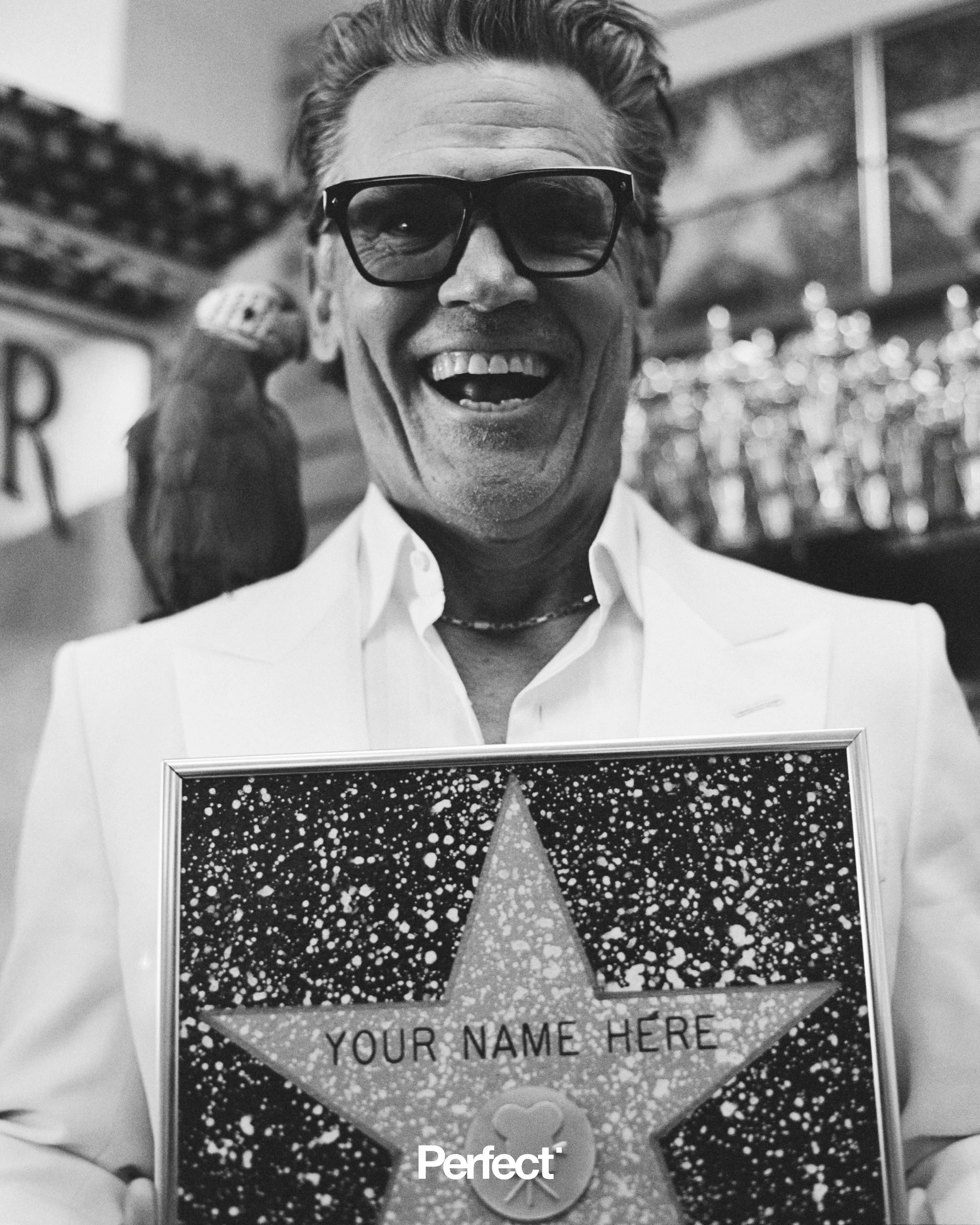
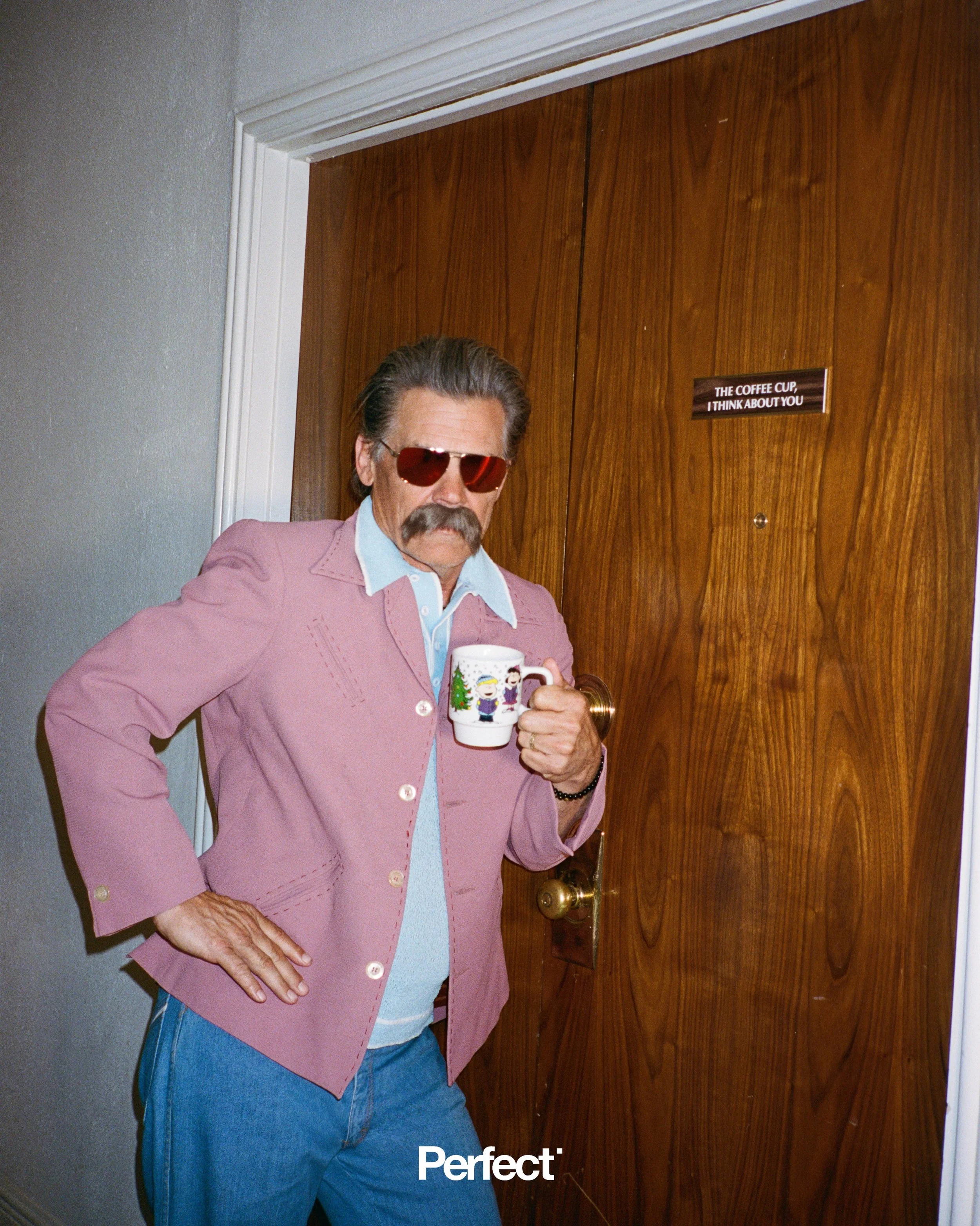
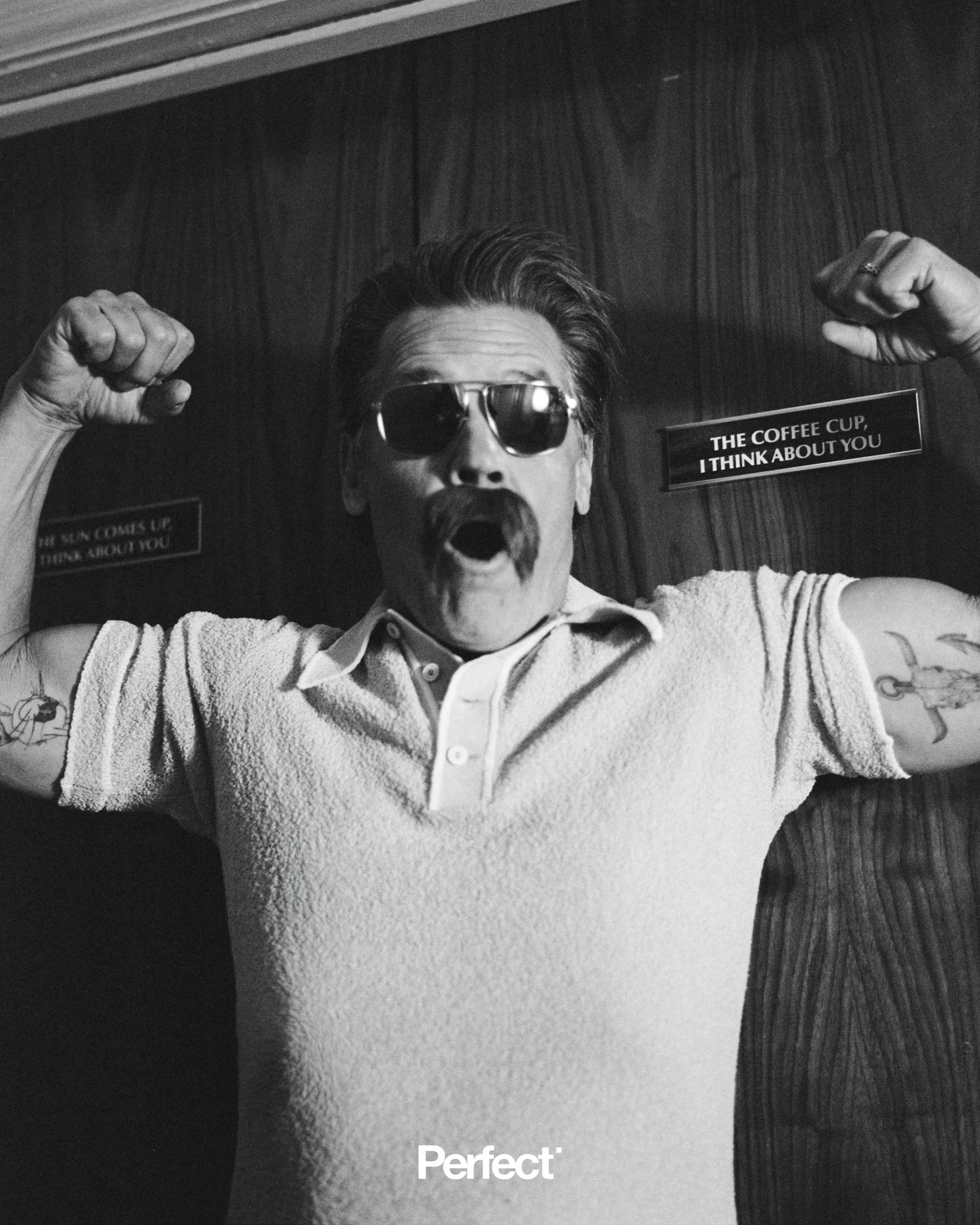
I can’t think of anything more boring. But part of taking the year off has been, I’m sick of denying that I’m an actor. Not that I’ve done that publicly, but to myself. I’m sick of fighting it. Like, ‘See! I’m a real guy! See?’ I’m telling myself that I don’t have to do that any more. Even in this photo shoot. I used to go to photo shoots and I’m like, ‘I’m not wearing a fucking fur coat! What’s the matter with you? Just take the fucking picture.’ Now, in [the Perfect] photo shoot, they have all these loud clothes, yellows and greens, and I’m like ‘Yes!’ I’m like, ‘As long as I don’t look like I’m trying to be young, you can do anything you want, and I’m game.’
I’ve seen the pictures. You look like you’re having a really good time.
We had a blast! And I loved Gia [Coppola]. Gia was – is – literally eight months pregnant. And she was super mellow. I thought she was going to be (affected fashion-person voice), ‘OK! So now I want you to jump off this roof and I’m gonna take a picture!’ And it wasn’t like that at all. We had great conversations and she just took pictures.
Would you miss the attention if you were no longer famous?
Another reason I’ve taken time off. It was revealed to me I need more attention than I thought I needed. ‘Where did everybody go? Why aren’t they calling me?’ I like all that shit. I call it God’s Slap. It doesn’t feel great all the time. But I like what it does. It wakes me up.
What was the last thing you stole?
I used to steal a lot, man. I stole everything. What was yours was mine. The biggest thing I stole was $6,000 from my mother, who had played a pyramid scheme. I found money she had stashed. I paid her back after I did The Goonies. I’m a big guy for karma. I stole from San Ysidro Pharmacy and I paid them back, too, and they didn’t understand what for and it didn’t matter. I said, ‘This is yours.’ And whether the guy pocketed it or not, who knows, doesn’t matter. But I haven’t stolen anything for a long time.
Do you have it within you to kill someone?
Sure. If it had to do with my kids? Or someone else’s kids? Yeah.
What’s the weirdest thing you’ve ever put in your mouth?
Ooh. I was going to say something so inappropriate.
Be my guest. We welcome inappropriate behaviour!
I’m sure. That’s the whole thing with doing this magazine. It doesn’t make sense, on any level… Which I like.
(Laughing)What do you mean?
What’s the weirdest thing I’ve put in my mouth? Probably my dog’s foot. Or my dog’s face. To make my kids laugh.
When did you last feel utterly insignificant?
Oh, all the time. I mean, dude, I am literally saturating myself with science right now. I was a massive fan of [TV astronomer] Carl Sagan when I was a kid. He was my hero! So it’s like me re-embracing what I loved when I read Ray Bradbury and Isaac Asimov as a kid. It’s me allowing that, finally, again. Listening to [British physicist] Brian Cox the other day, Andromeda will eventually collide with our solar system, there’s no way you can not feel insignificant. The sun will eventually burn off its fuel, stretch, expand, and incinerate the Earth. There’s no way you can not feel insignificant. That’s a self-absorbed way of saying, man, you’d better take the time and live it fully, because none of this shit matters. None of it. This is an accident. And we’re not doing well with it. So try in your little bubble to do the best you can, and make it fun for others. And have a little intimacy in the middle somewhere. Before we’re incinerated.
And on that bombshell… What colour is Tuesday?
Yellow.
How would you like to be remembered?
Colourfully.