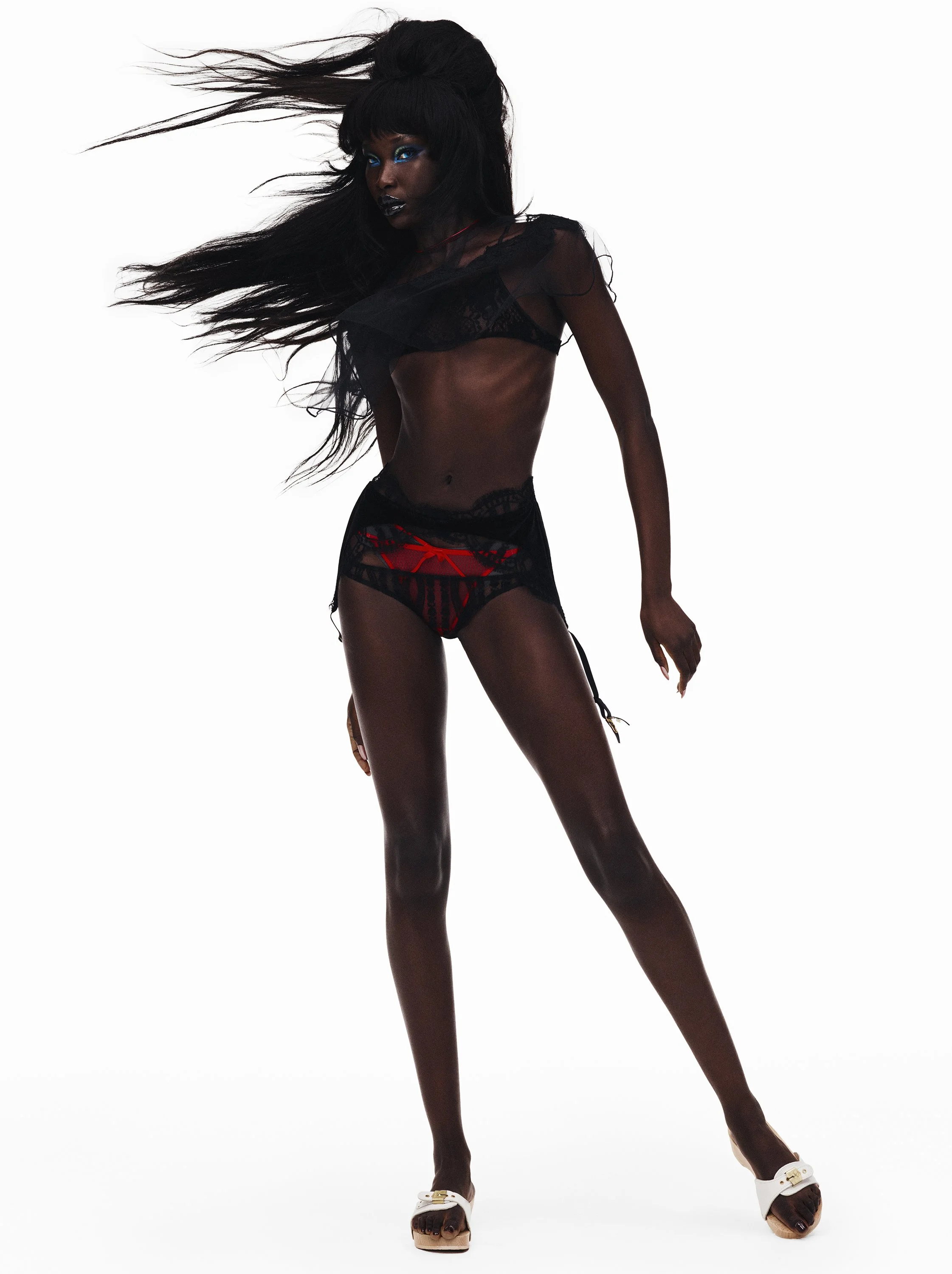
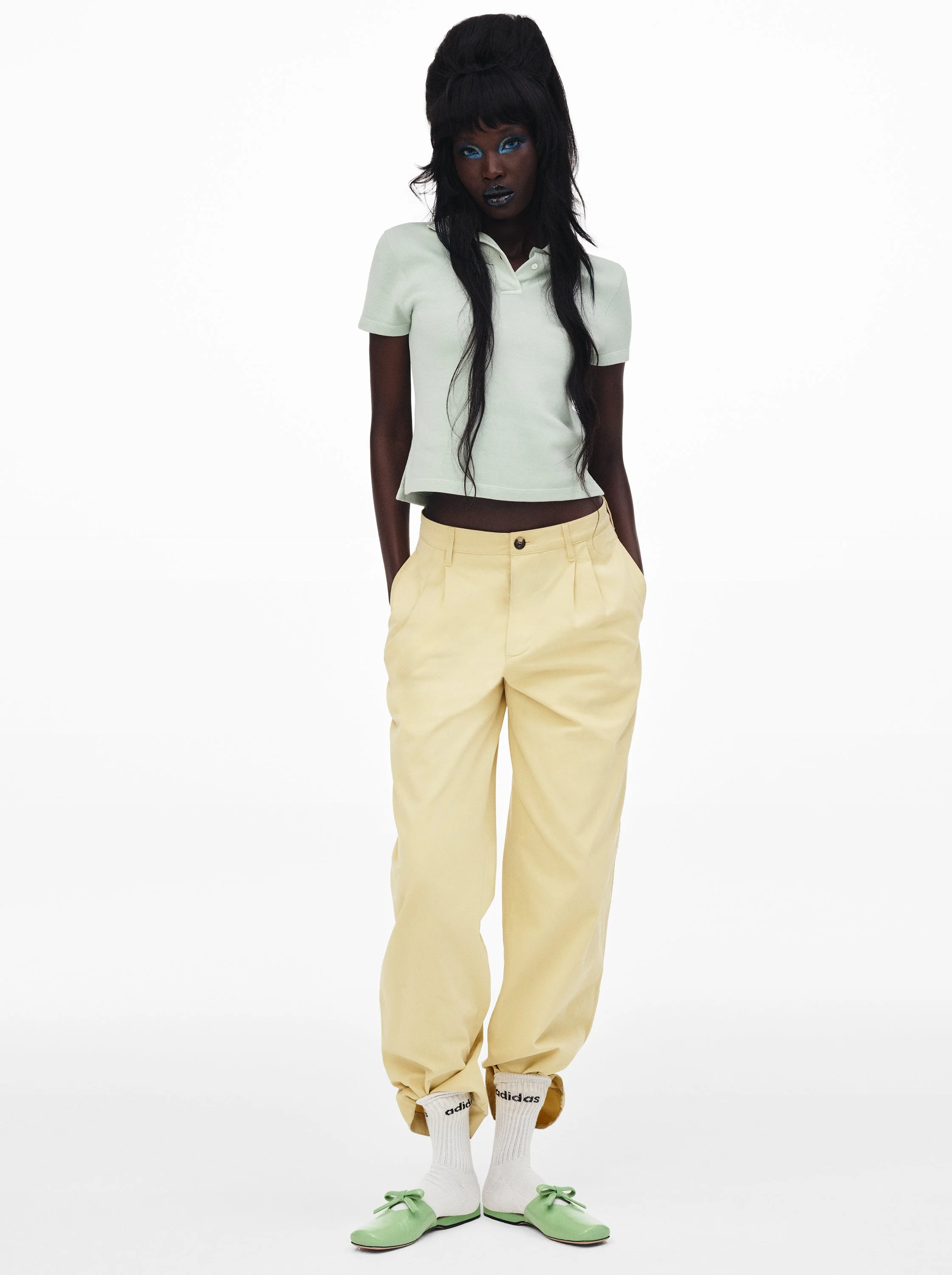
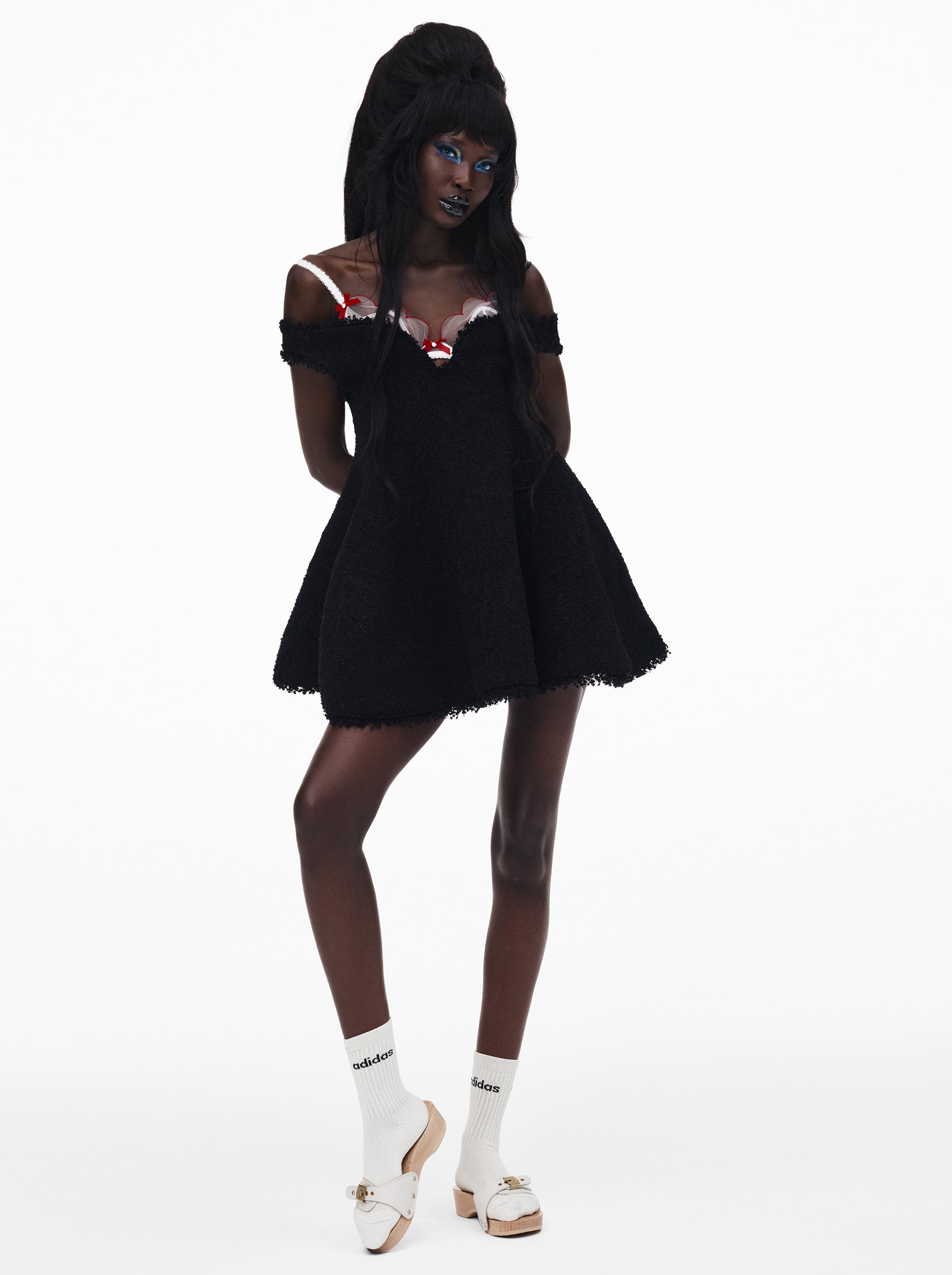
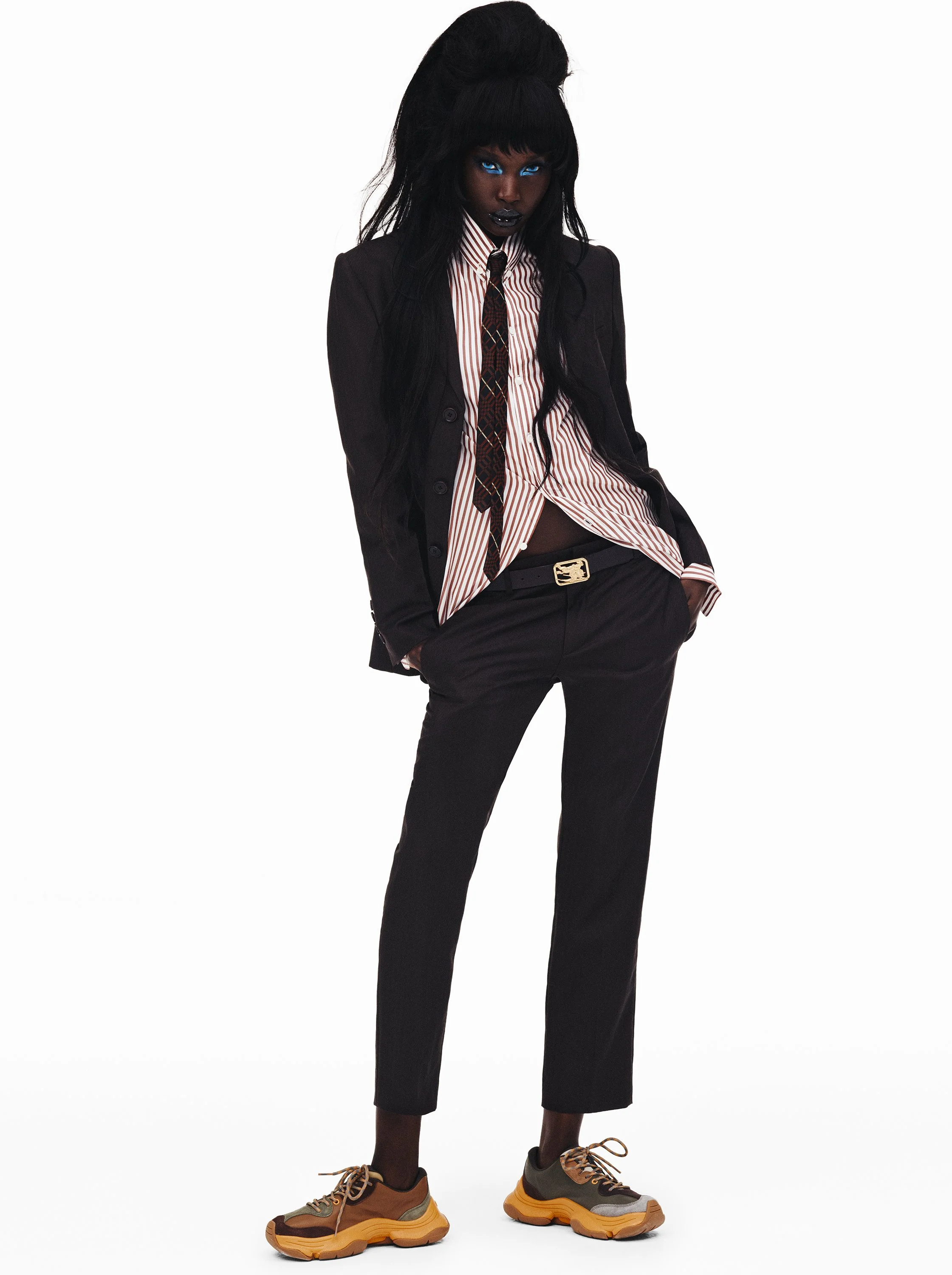
Always Now: Adhel Bol interviewed by Paul Flynn for Perfect Issue 10.
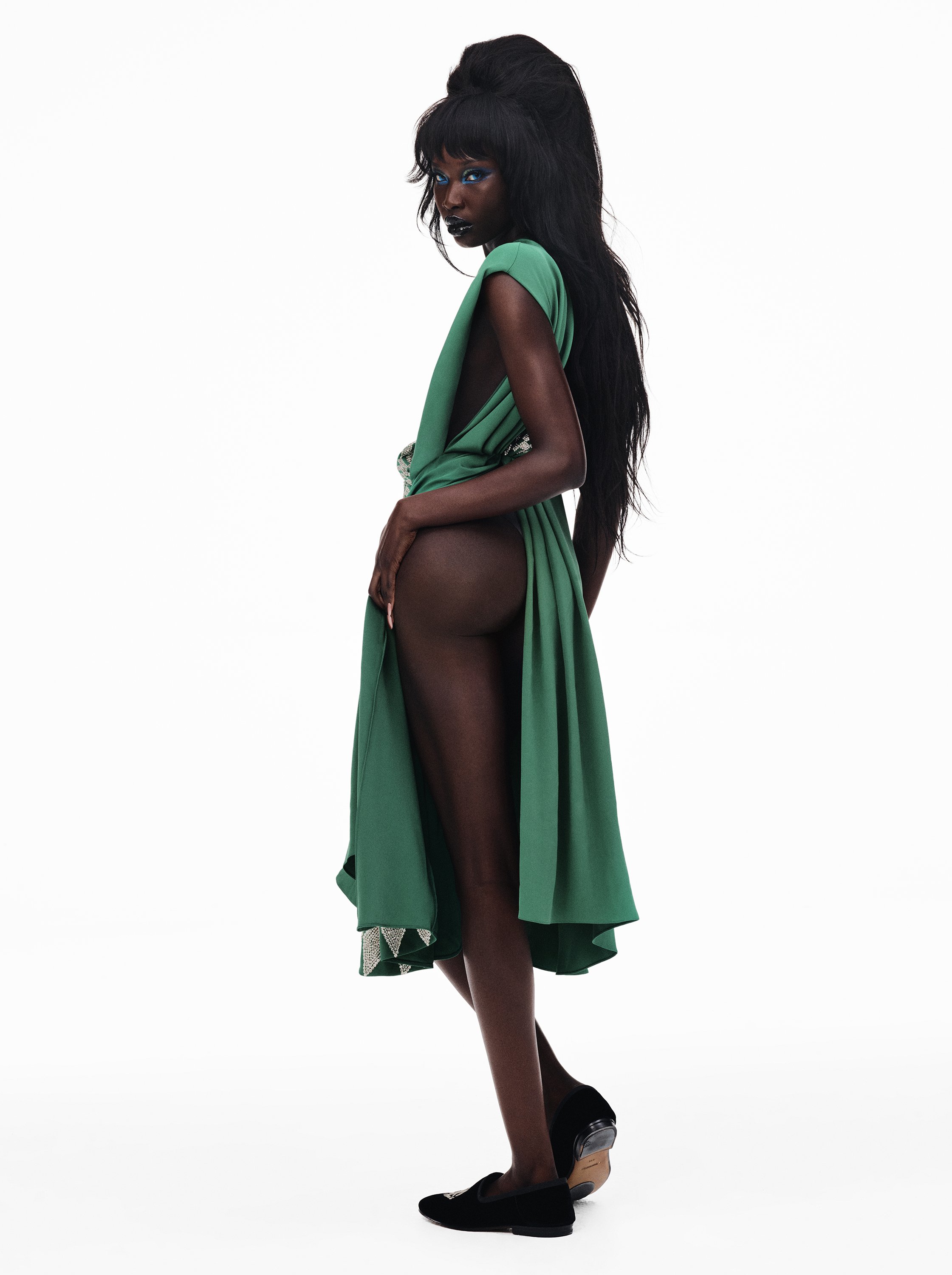
Adhel Bol for Perfect Issue 10
Photographer: Rafael Pavarotti
Fashion Editor: Katie Grand
Interview: Paul Flynn
Over a cup of mint tea in Bar Italia one rainy Soho Friday afternoon, the striking supermodel Adhel Bol is discussing her favourite TV show, the compelling Netflix political potboiler The Diplomat. Adhel has just finished watching season two, ‘and I cannot wait for the next.’ She adores Keri Russell’s portrait of the fictitious US ambassador to the UK. ‘I love it so much,’ she says. ‘I think to see what really happens behind the scenes in politics and how the world is really run? There’s a lot of deception in the world that normal people don’t get to see.’ Adhel is here for it all. ‘Also,’ she confides, leaning in, ‘that could have been me.’
Adhel was first cast for a modelling job while at university in Kenya. Her family (‘the greatest people in the world’) fled their native South Sudan during the war and arrived in Kenya, when young Adhel, the eldest of seven (six girls, one boy – “I know!”), was just a one-year-old. Determined to keep the South Sudanese culture alive in their offspring, the Bols nurtured a politically charged firstborn. Her university degree, not quite completed, was in International Studies and Diplomacy. ‘I loved it, but an opportunity arrived.’
Modelling was always going to be her calling. Friends had often suggested the idea to Adhel. ‘They would always mention, gosh, you’re so tall, or you’re beautiful,’ she says, ‘why don’t you try and venture into modelling?’ After seeing an advert from an agency on Instagram she decided to apply. ‘I basically thought it was a casting for a job,’ she explains. ‘I thought it would be a little bit of pocket money while I was at uni. I went and it was an agency casting girls and looking to place them internationally. Out of the 200 or so people that were there that day, I was the only one that was offered a contract.’
During the last four years, as Adhel has settled in London, she has become something of a muse for the era-defining photographer, Rafael Pavarotti. She first shot with him in 2021. ‘I arrived on set and there were all these clothes laid out. They looked crazy and then the make-up was very eccentric. Honestly, I was thinking, what are we shooting? It was very out of this world, something I didn’t fully understand at first. But what I did understand was that there was method to his madness.’
Work began in earnest. ‘They spray-painted me, put me in big, big costumes.’ Creating bold, hard and experimental pictures came naturally to her. ‘I saw the images and I was like, OK. I see what he is doing. I see why he is bringing these different components together – to create art. What I would call his work is art. It is not typical photography, it is not ordinary, it is out of this world and he is visionary. He is so brilliant. Before working with him, I guess I thought the job would be something like America’s Next Top Model. No way!’
It is not just as a photographer that Adhel loves Pavarotti. ‘He’s just the best person, too,’ she says. ‘Raf is one of the sweetest human beings. His mind works in a completely different way than normal people’s mind’s work. His energy is so beautiful. It’s light, it’s positive. Me and him have this synergy when we work together.’
For Adhel, the possibility of modelling first occurred to her when she saw pictures of her fellow South Sudanese icon, Alek Wek. ‘Oh my goodness, what a brilliant woman, what a beautiful woman,’ she says, composing herself with another sip of tea. ‘The way she stood up for herself, challenging the beauty standards of the time? She was one of the few darker-skinned women in the industry and probably one of the only South Sudanese women of the time to really take a stance. I really looked up to her. I think she’s my icon, basically.’
Now it’s Adhel Bol’s turn to pass on the baton, a role she’s happy to step into. ‘By the time I came over to London, there was a slight shift in the industry, where darker-skinned women had been appreciated more,’ she says. ‘I saw more representation of us. I found a community of sisters when I came here, and some of my best friends are from South Sudan but grew up in different parts of the world. We’re spread all across the world – Australia, America – but we came together in this industry and made a sisterhood. We all really, really appreciate that. For the South Sudanese sisters, it’s the culture that brought us together, the similarities of how we looked that drew us to each other.”
The focus of Adhel’s ambitions has turned from representation to something noble and significant: to encourage understanding of her heritage, however that might happen. ‘I want to keep going on the trajectory I’m on,’ she says. ‘Keep aiming for the stars, keep shooting beautiful images and working with great people. But also to create space for younger generations, the people who look up to me and the people who look like me. I want to create a safe space for them. I hope to be one of the people that creates improvement in the industry. That’s my ultimate dream.’