2026, yeah, my jeans still Hedi.
As Hedi Boy style runs riot everywhere from London to LA to Tokyo, Hedi Slimane somehow remains one of the most influential fashion creative directors despite not working at a house. Did the youths in skinny jeans and tight leather jackets ever really go away?
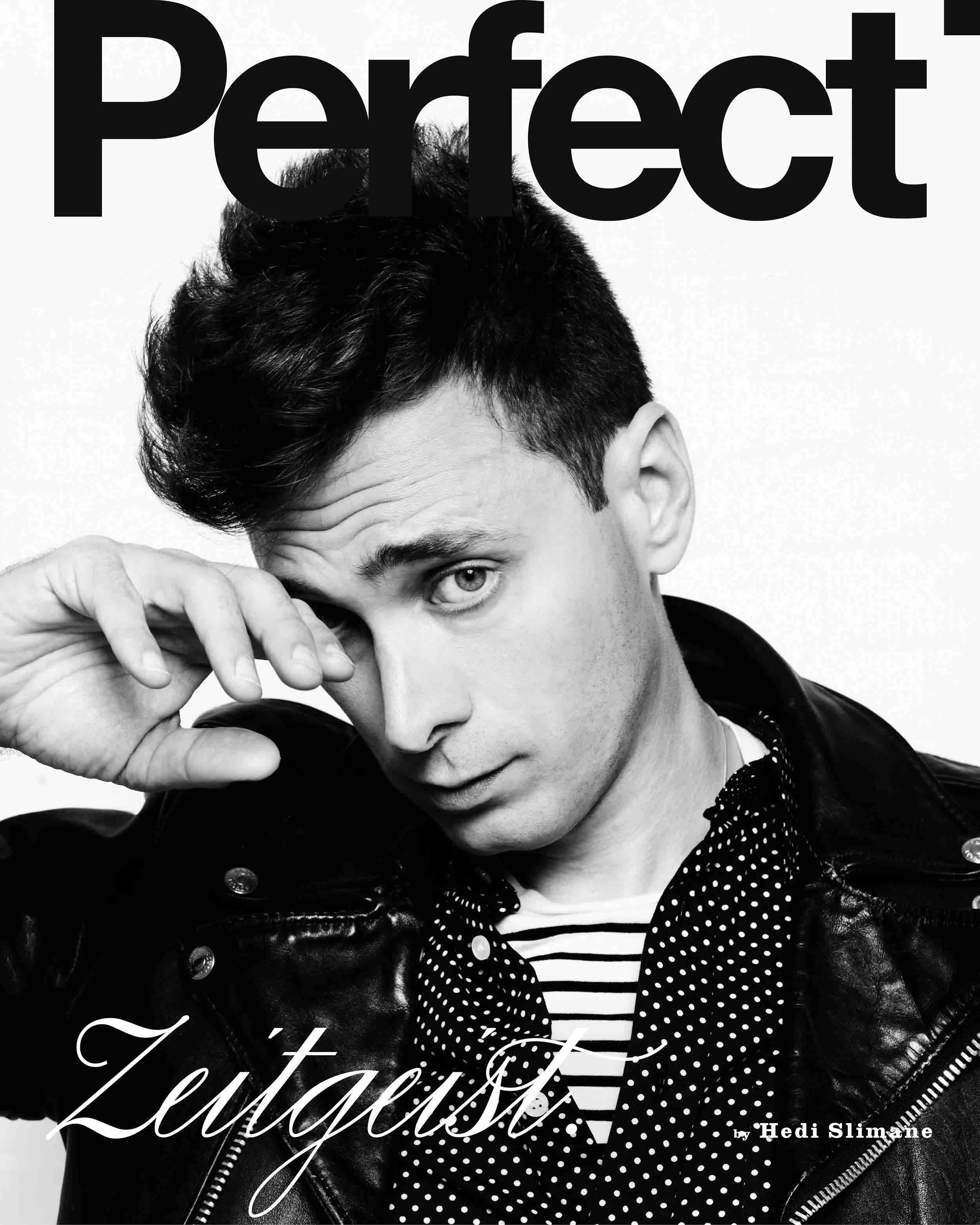
Hedi Slimane, Self-Portrait, Perfect Issue 11
Writer: Susie Lau
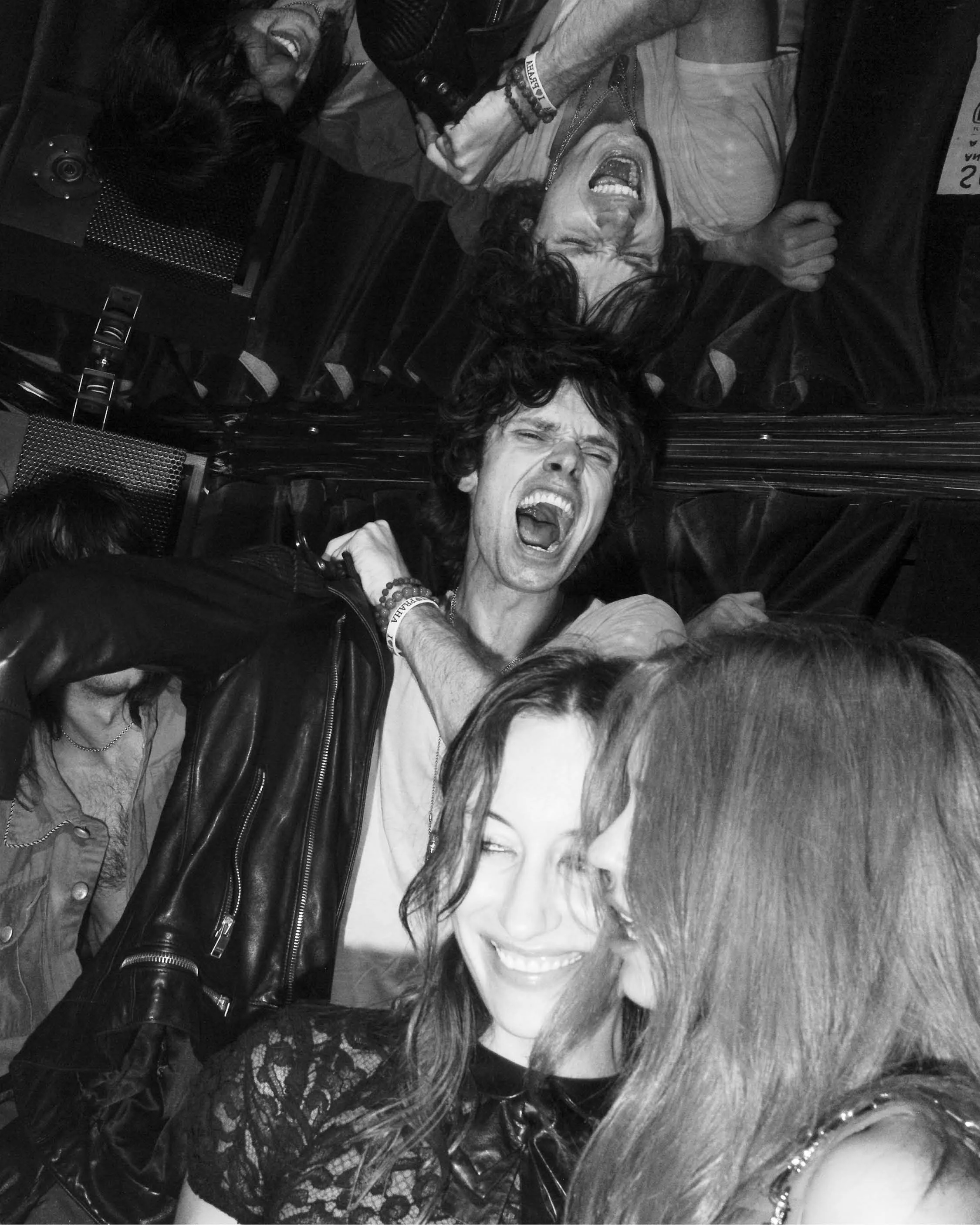
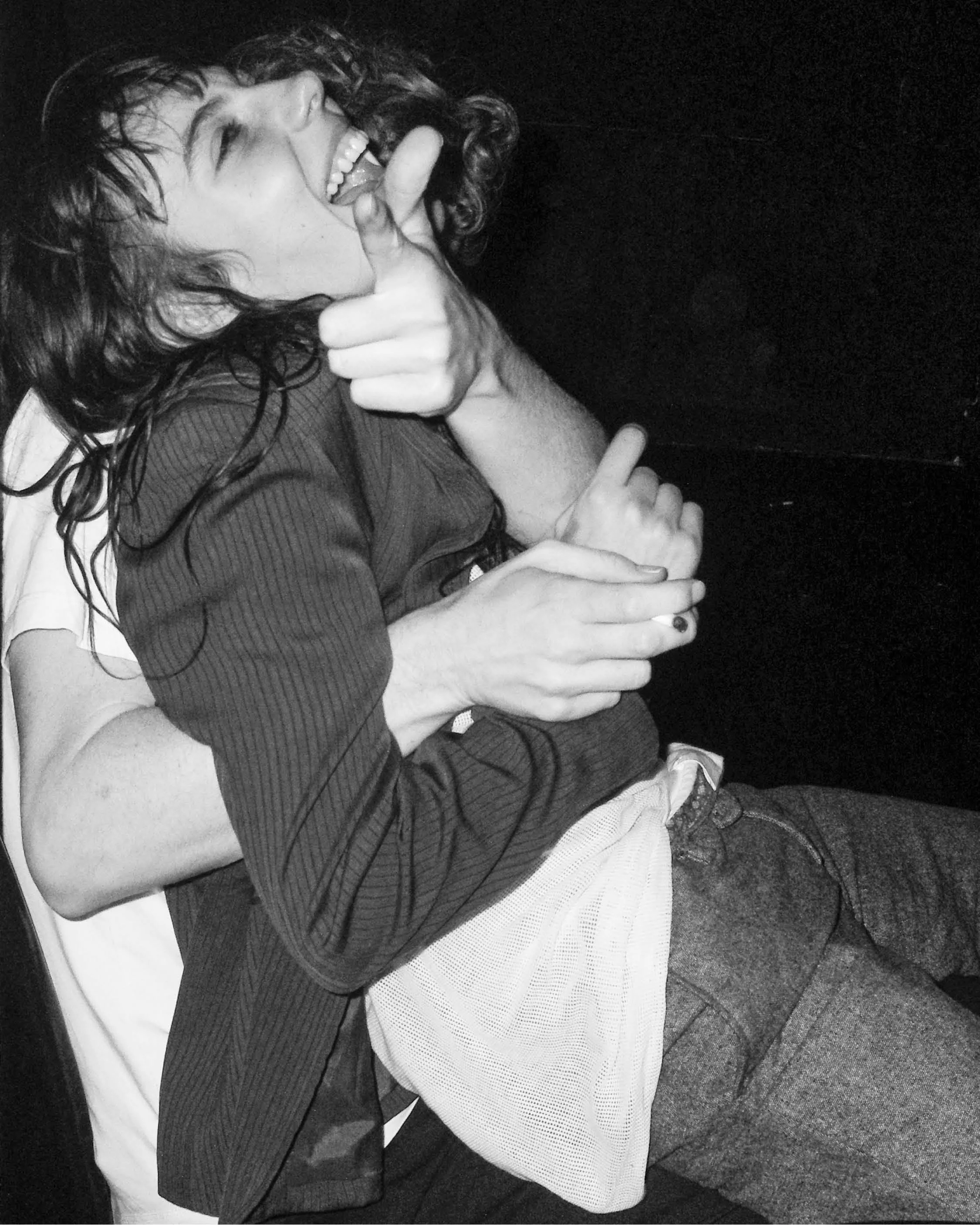
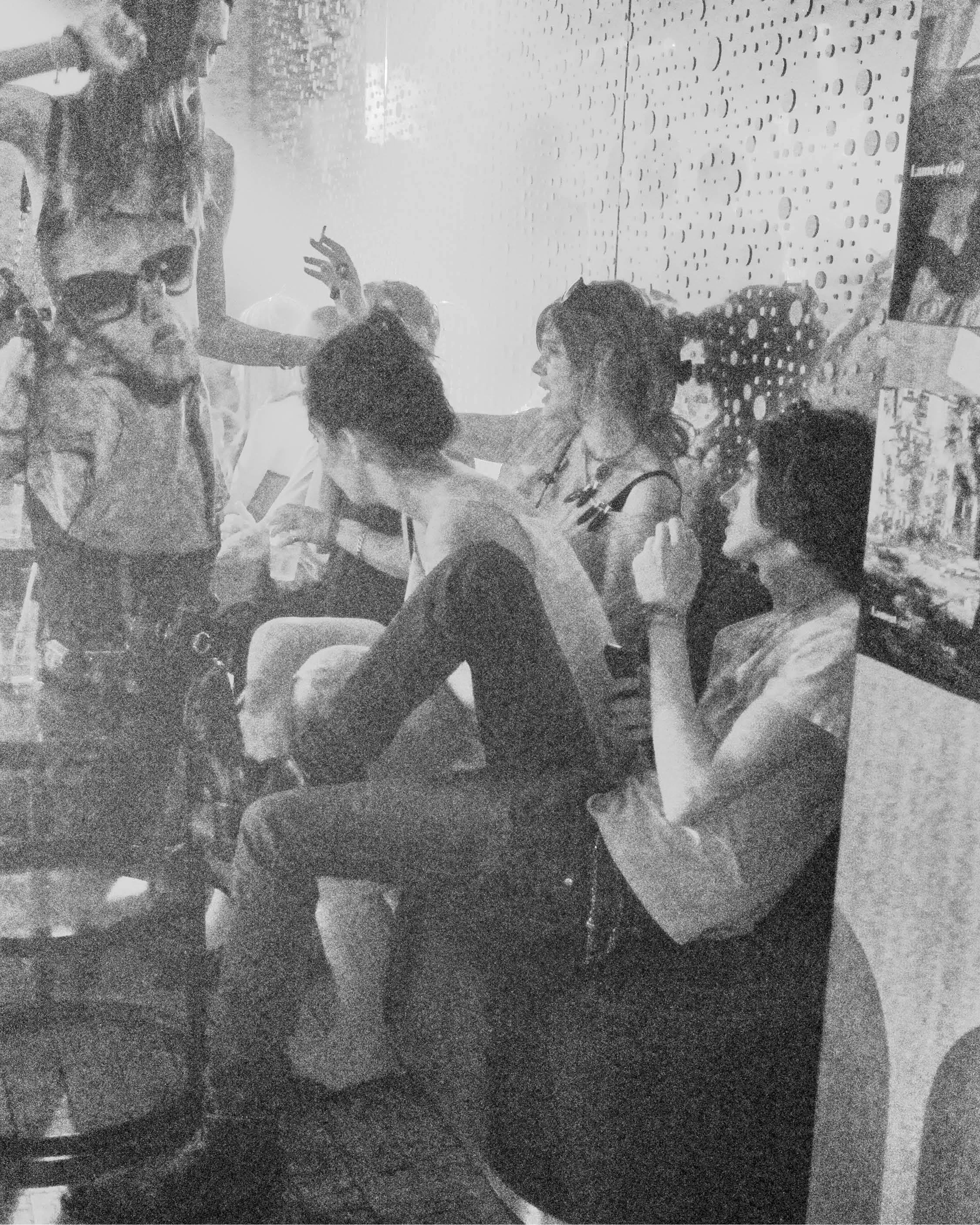
On a Thursday night in April on a nondescript stretch of London’s Embankment, I find myself on a moored barge restaurant-slash-bar, Tamesis. It is 10pm, and a gentle queue of people dressed in layers of black, leather and denim, which will grow exponentially, are being ticked off the guest list at Post Party’s first boat party. It’s only been eight months since Lux and Wolf Gillespie (sons of Primal Scream’s Bobby Gillespie and stylist Katy England) started their scene-driven ‘after party before the after party’. ‘We just wanted a place where all our friends could hang and we could play the music we liked. It was just about making something that’s funny that everyone could come to,’ explains Wolf.
In its short lifespan, Post Party has already seen iterations pop up in Glasgow, Milan and New York, as well as regular nights in London. The night before, they had put on a bus tour around London, stopping everywhere from warehouses in Hackney Wick to bougie karaoke in Mayfair. Post Party is not necessarily postcode-specific, and neither is the music. The line-up tonight includes Gambian-American rapper Pz’ and Swiss punk band The Peacocks, with Eastern Margins collective’s Amil Raja DJing. ‘You’ll see here we have bands, electro, DJs, rappers,’ says Wolf. ‘It’s genreless.’
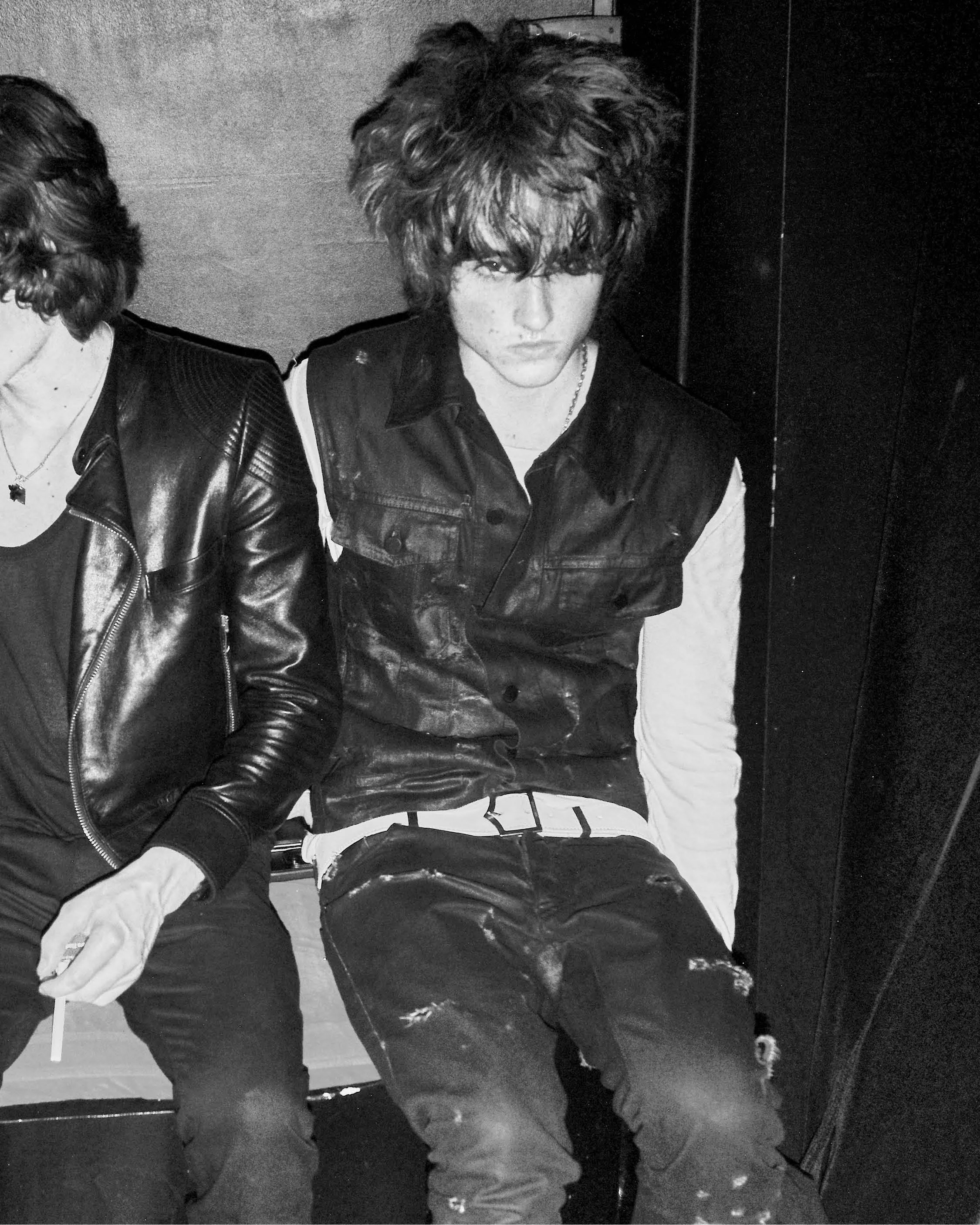
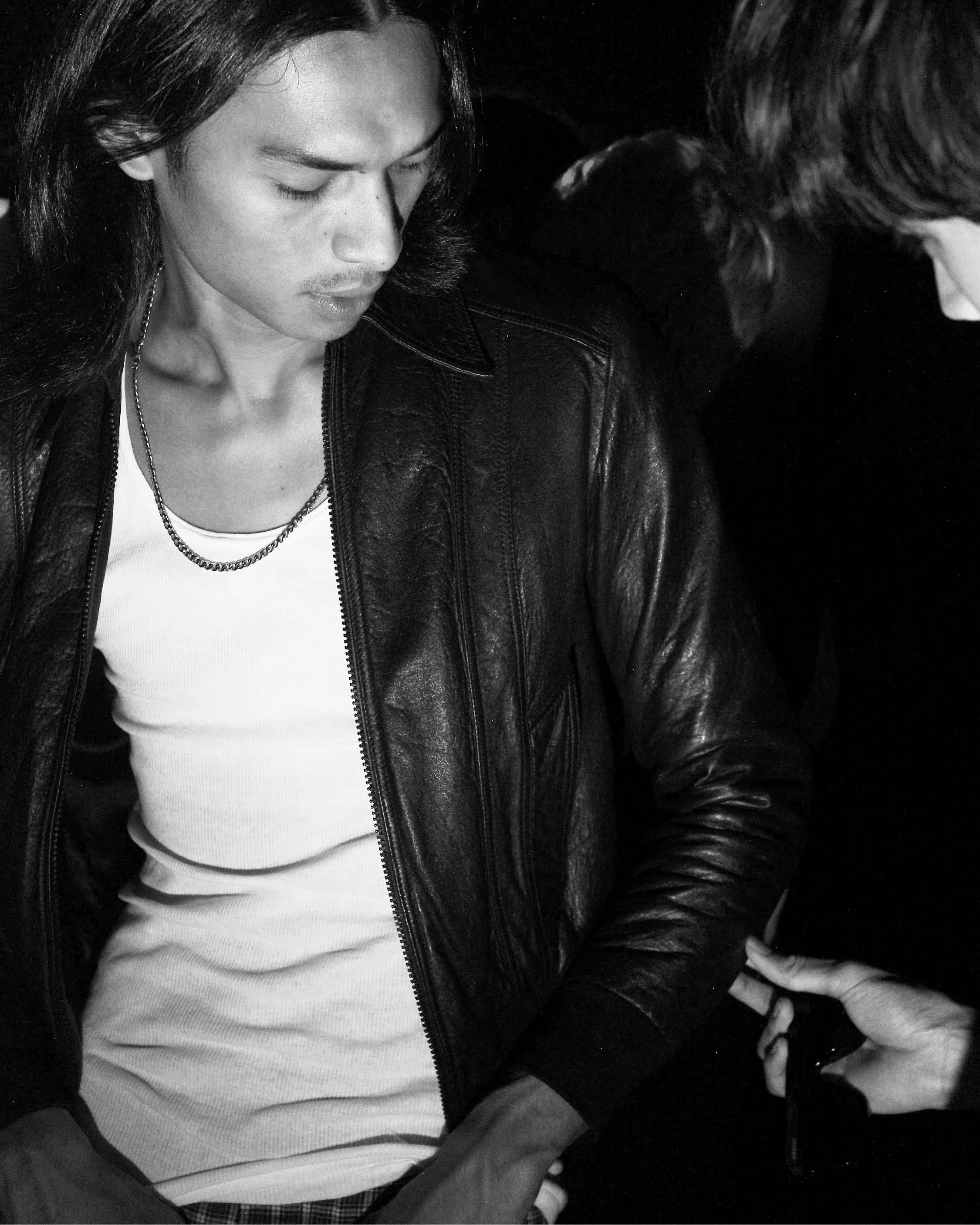
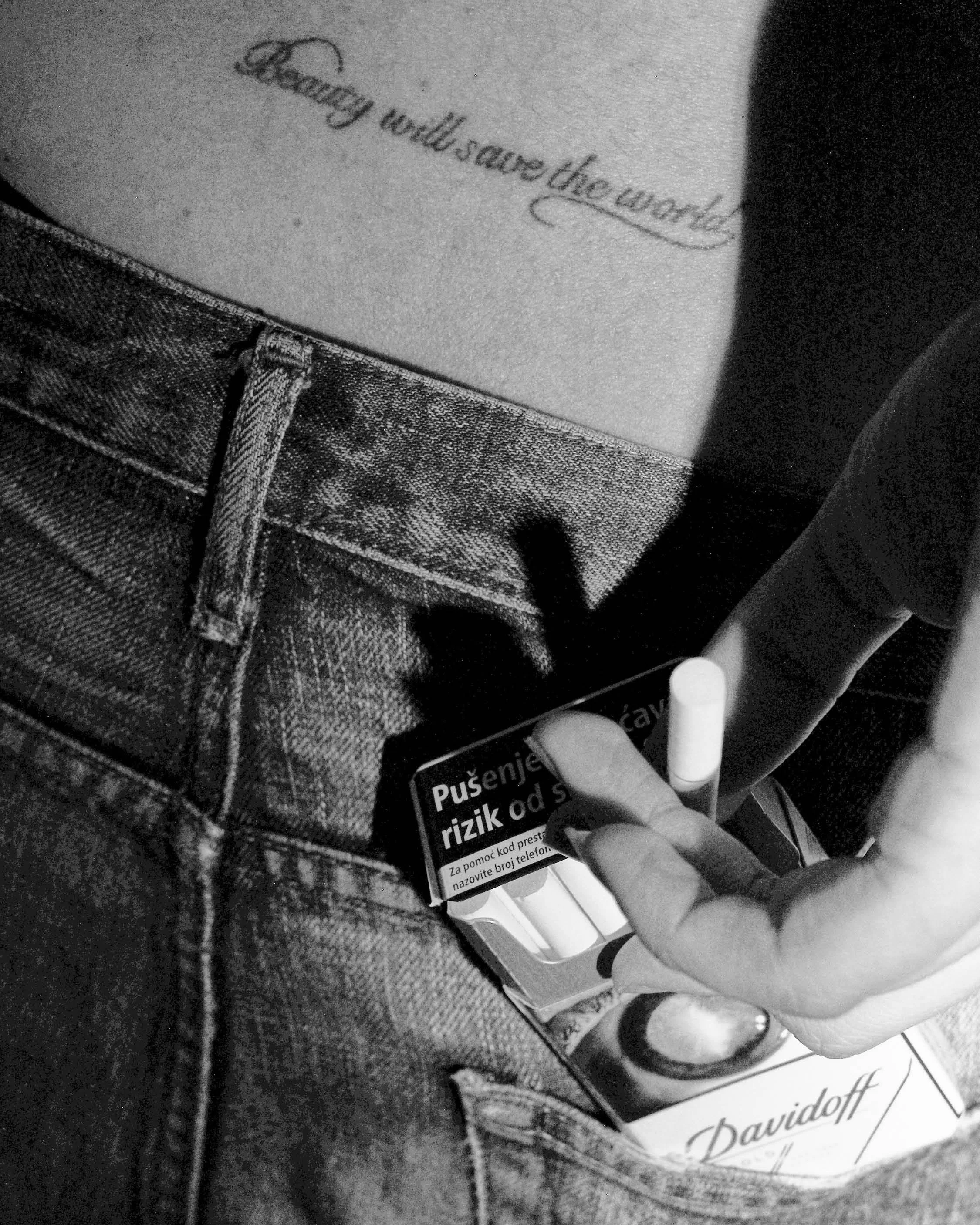
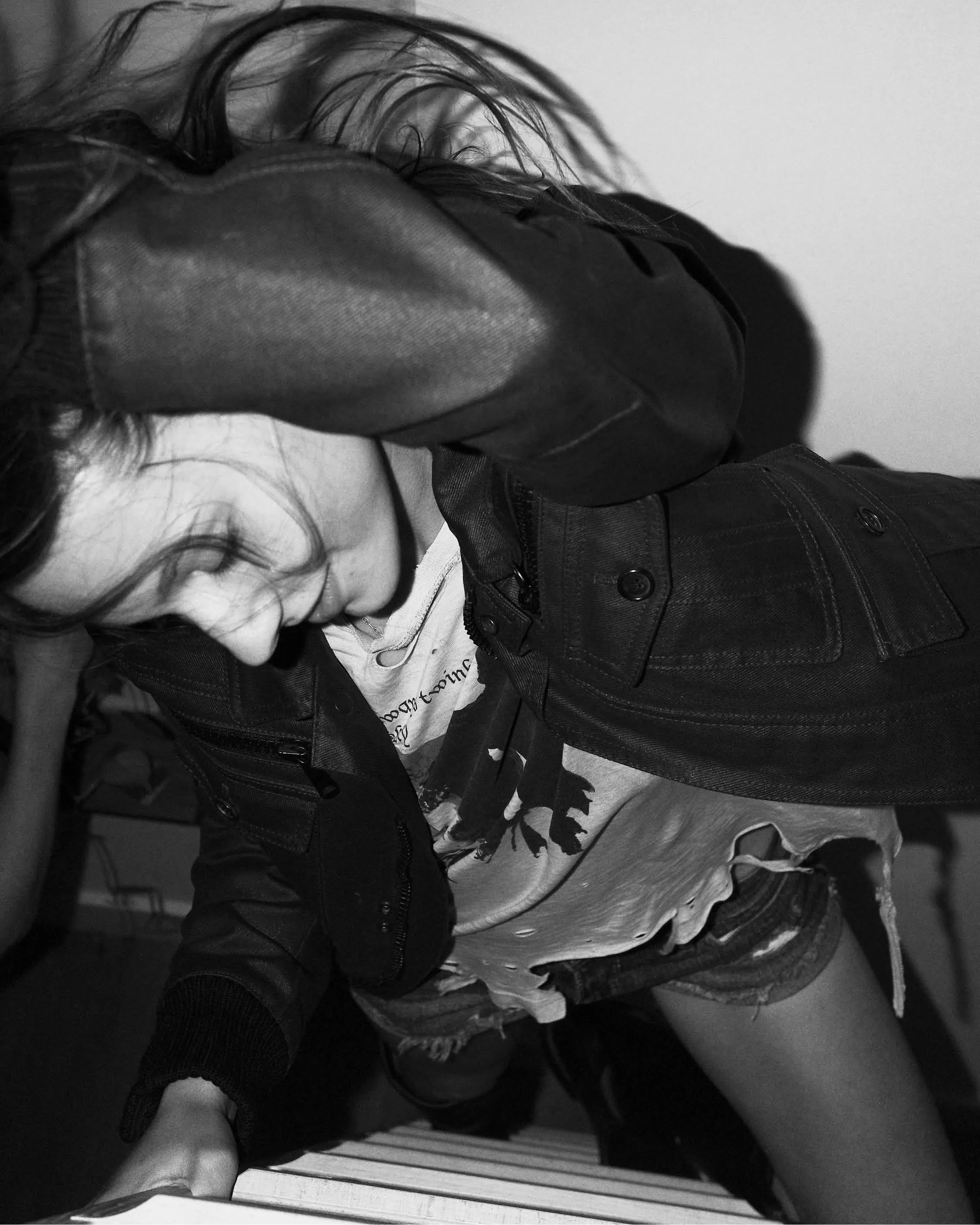
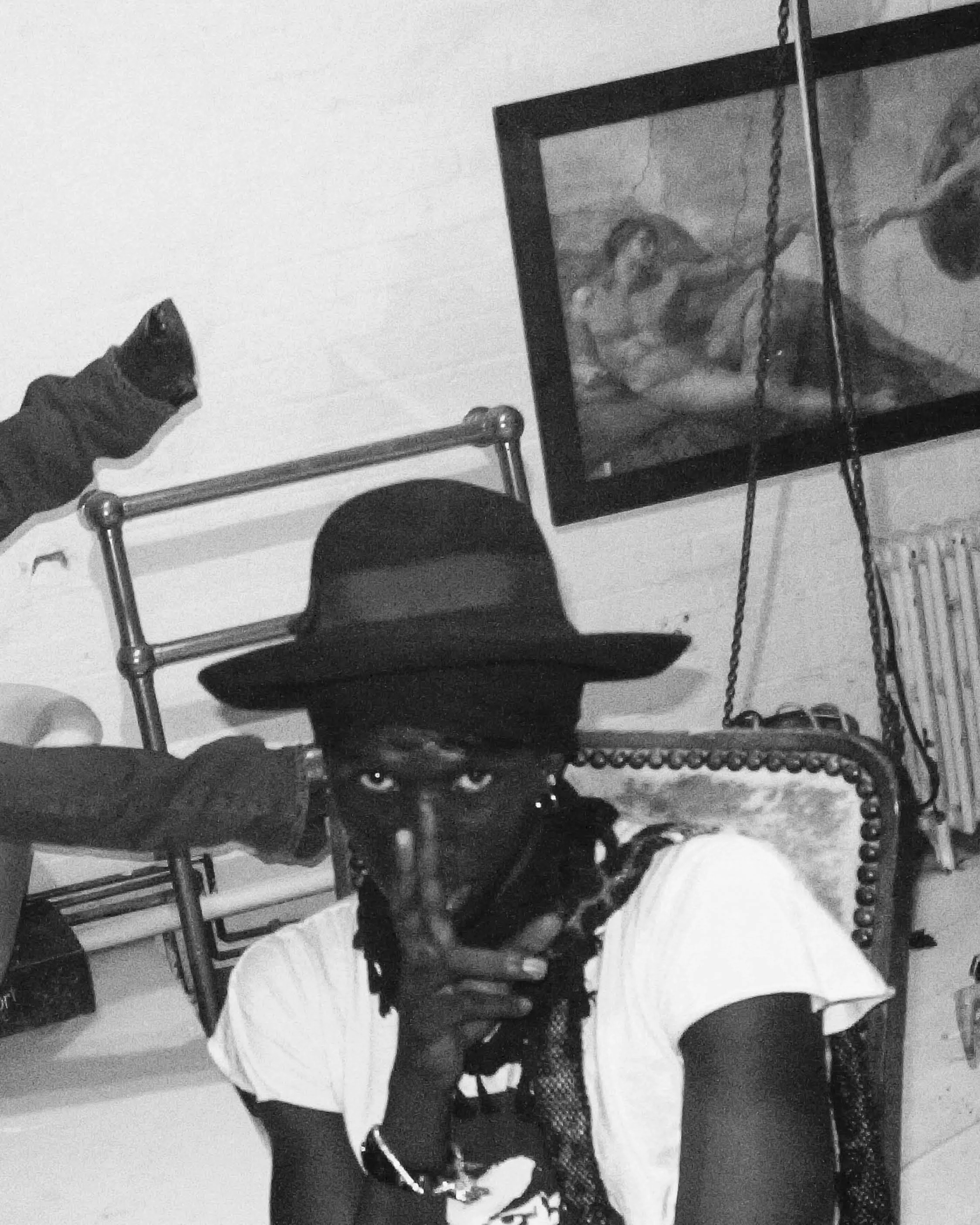
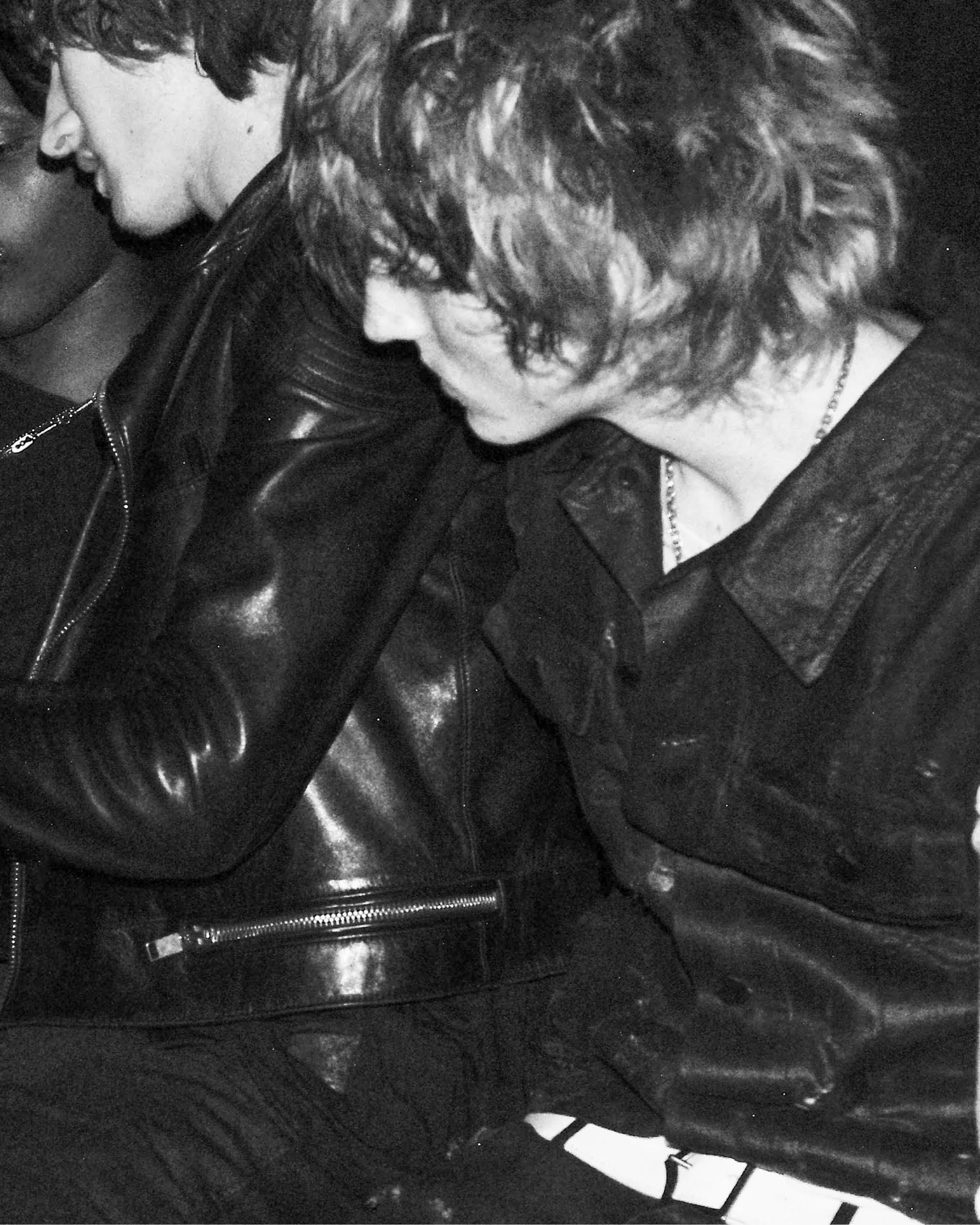
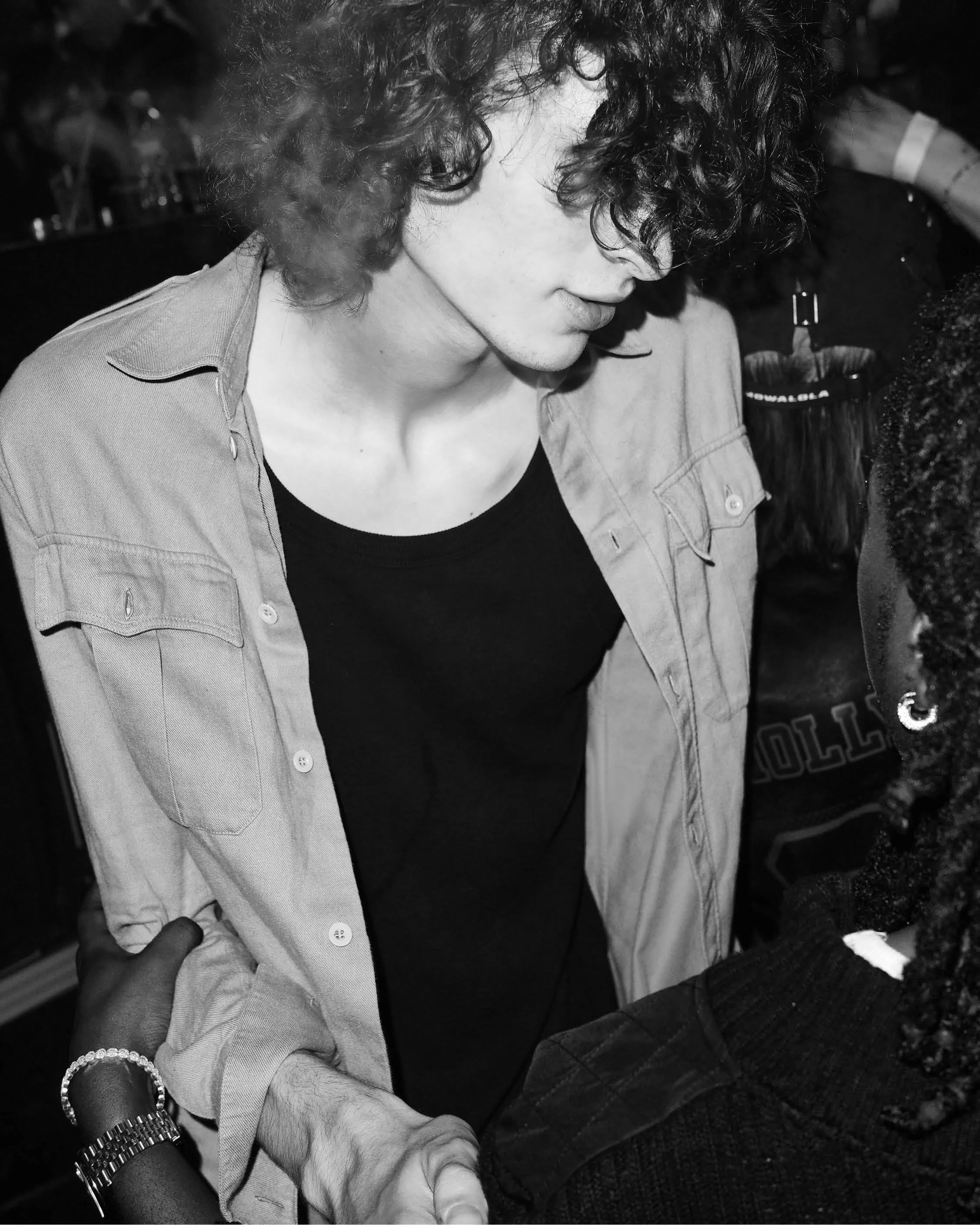
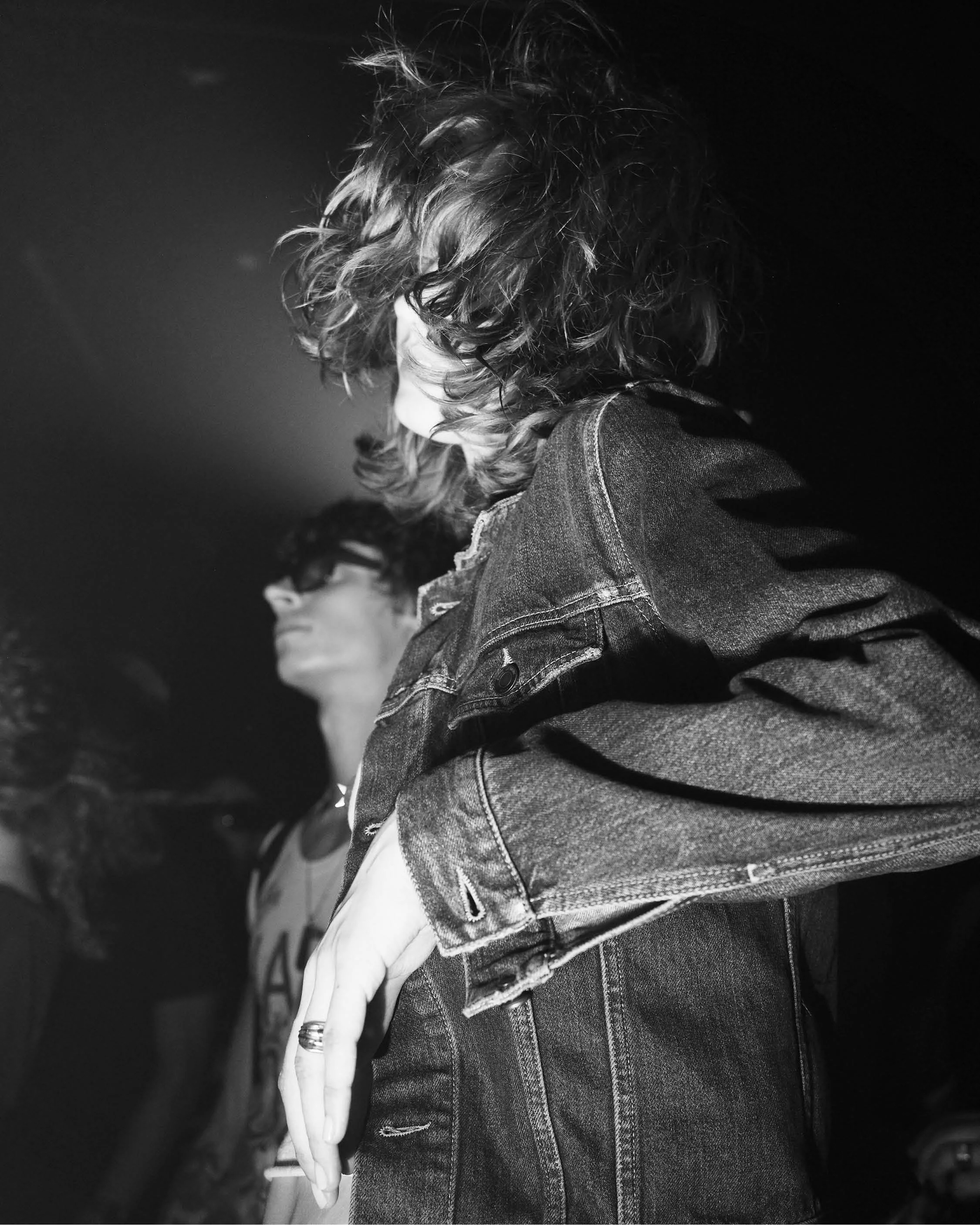
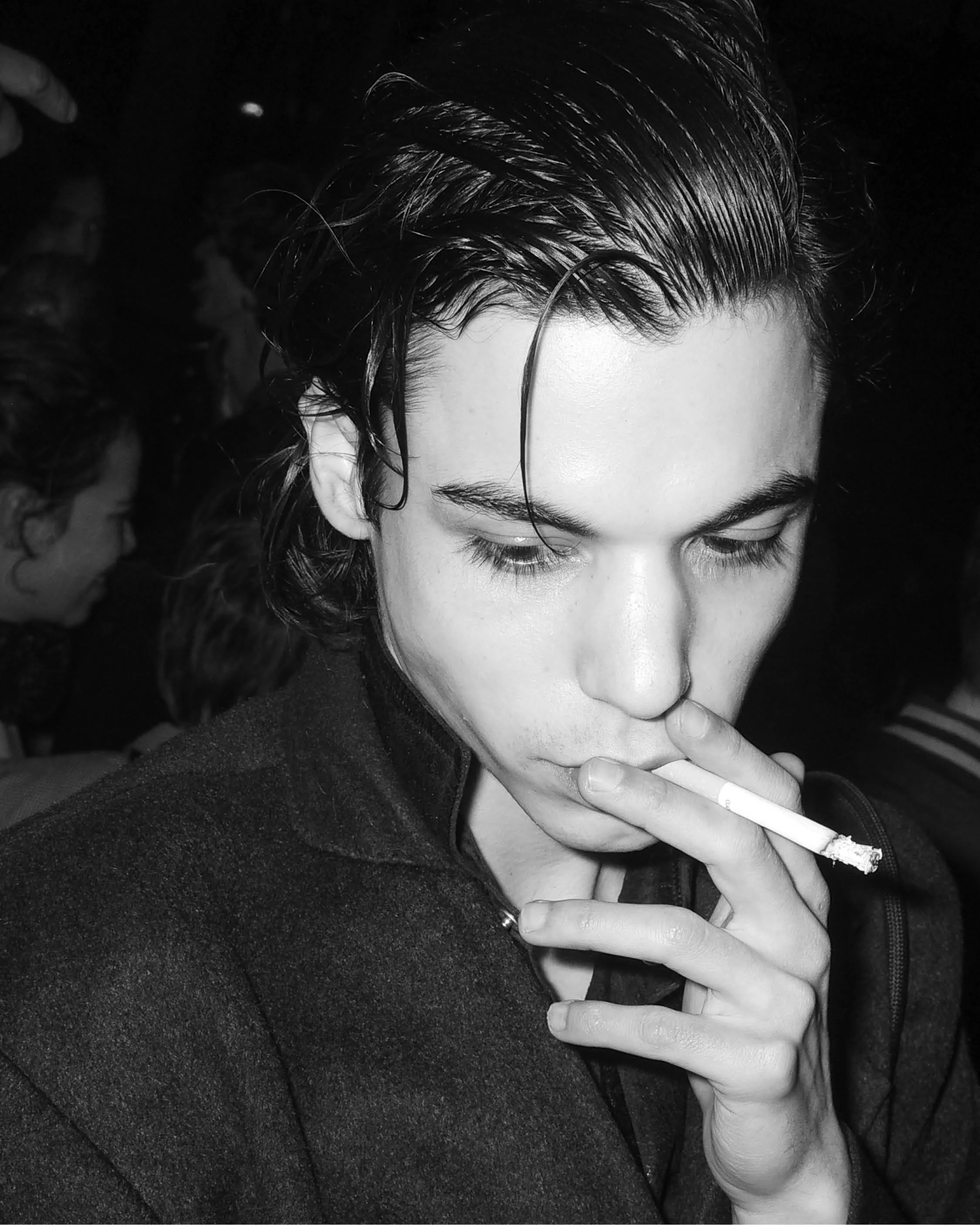
The style of Post Party goers, though, does have a distinctive specificity. Black, crow-like creatures wandered around clad in outfits that are at first glance reminiscent of indie nights of yore: ripped-up band Ts, beaten-up tight leather jackets, box-dyed jet black hair and, yes, the skinniest of skinny jeans. These are the Hedi Boys, a term that has sparked the imagination of superior levels of internet intrigue, and neatly sums up the redux of Hedi Slimane’s oeuvre that spans his influential tenures at Dior Homme, Saint Laurent and Celine, but hones in on a core silhouette, established in Slimane’s Dior Homme days. ‘I feel like I’m in a time warp,’ remarks my partner, Jaimie, who I’ve dragged with me for moral support but also because he was, once upon a time, a prominent music journalist who had first-hand experience of those hallowed figures of Pete Doherty, Razorlight and the like – the first wave of Hedi Boys, if you will. The nostalgia of this 2004 to 2006 era is what is partially fuelling Post Party. ‘It’s the music that’s coming back,’ says Vasyl, a key member of the Post Party crew. ‘There’s only Hedi who designs the kind of clothes that are related to this scene. And the scene is coming back.’
Post Party’s inception neatly coincided with Slimane’s post-Celine era, having unveiled his last collection for the French house in September 2024. Returning to his photographer-auteur roots, Slimane, always two steps ahead of the subcultural nightlife curve, has already repeatedly photographed the protagonists of Post Party in cigarette smoke-scented leopard print and skinny scarves, jostling with guitars and hair flung back in abandon. Despite being sanctioned and signed off by the man himself, asking people at Post Party about how they feel about the resurgence of Hedi Boy style elicits mixed responses. Aaron Oddoye, a graphic designer who had designed the flyer for the Post Party boat party, is more sanguine about Hedi Boy’s rampant proliferation. ‘That’s how it goes. Everything gets memed, but I mess with it.’ Wolf hesitates to pigeonhole his crowd as dressing in a certain style. ‘You’ll see, this is a scene where people care about how they dress. They put a lot of effort into what they wear.’ Another, who is dressed head to toe in the exact Hedi Boy mould complete with the much-vaunted Saint Laurent Wyatt boots, declines to be interviewed, but not without admitting, ‘Yeah, I’m a Hedi Boy. The fit just works, doesn’t it?’.
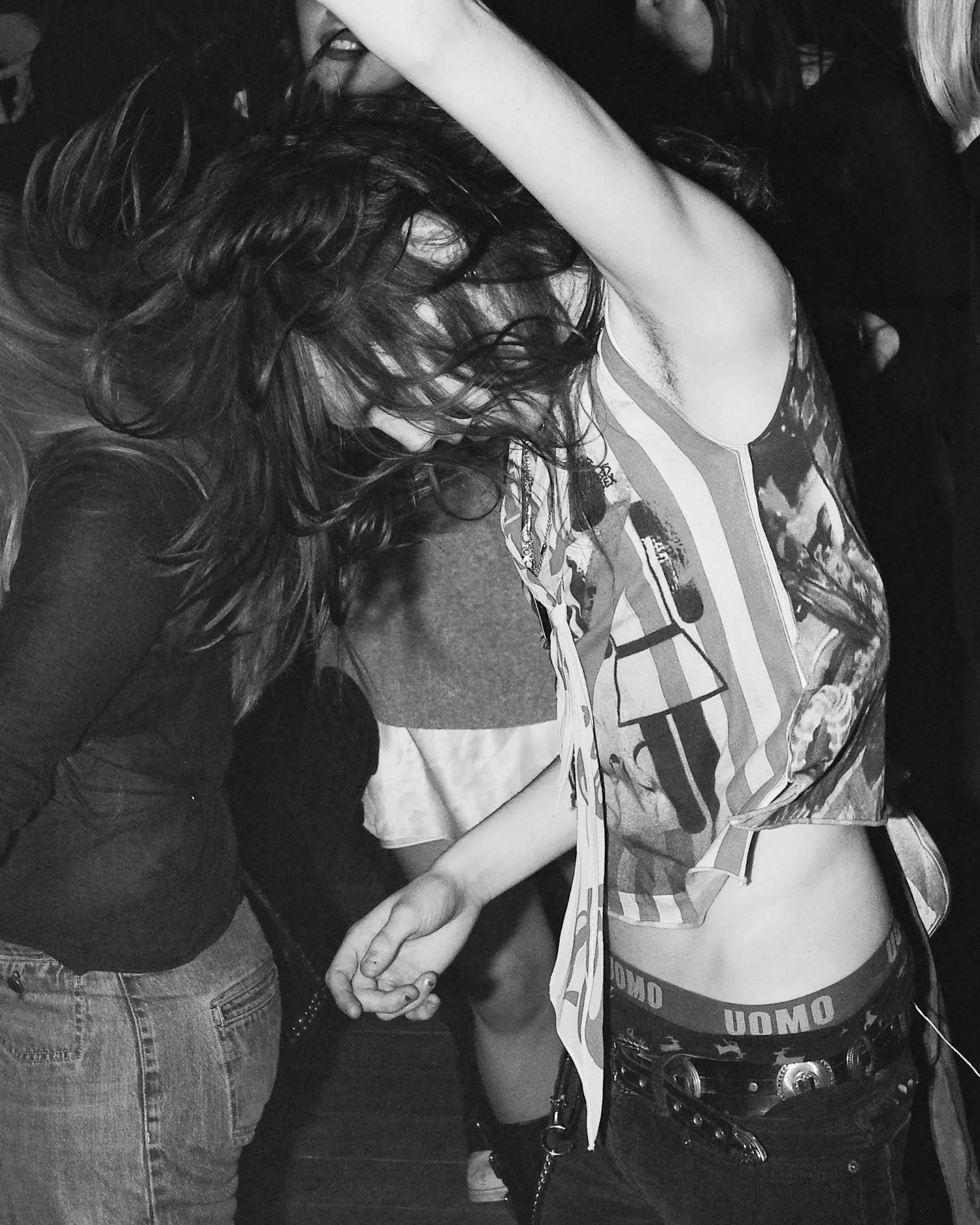
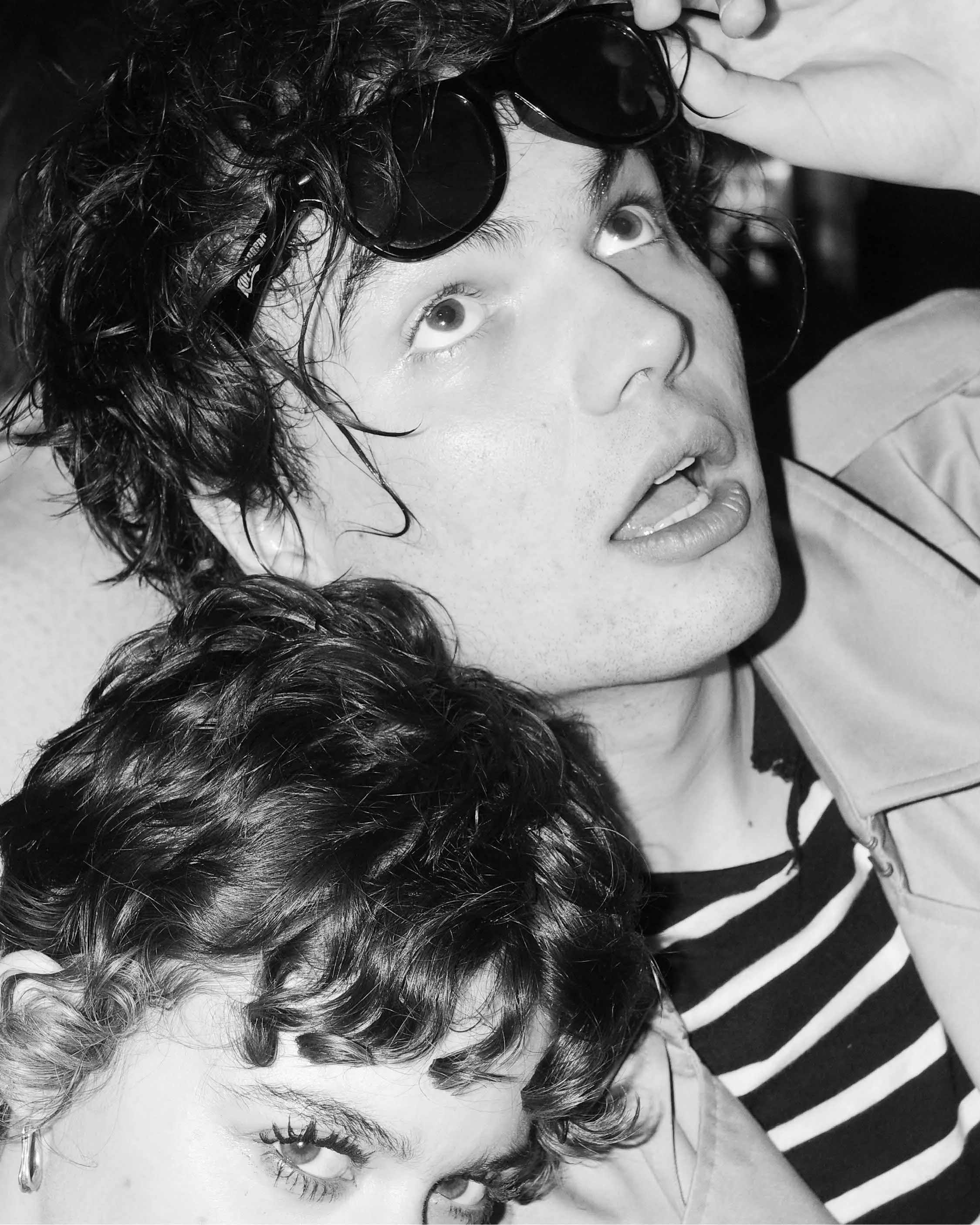
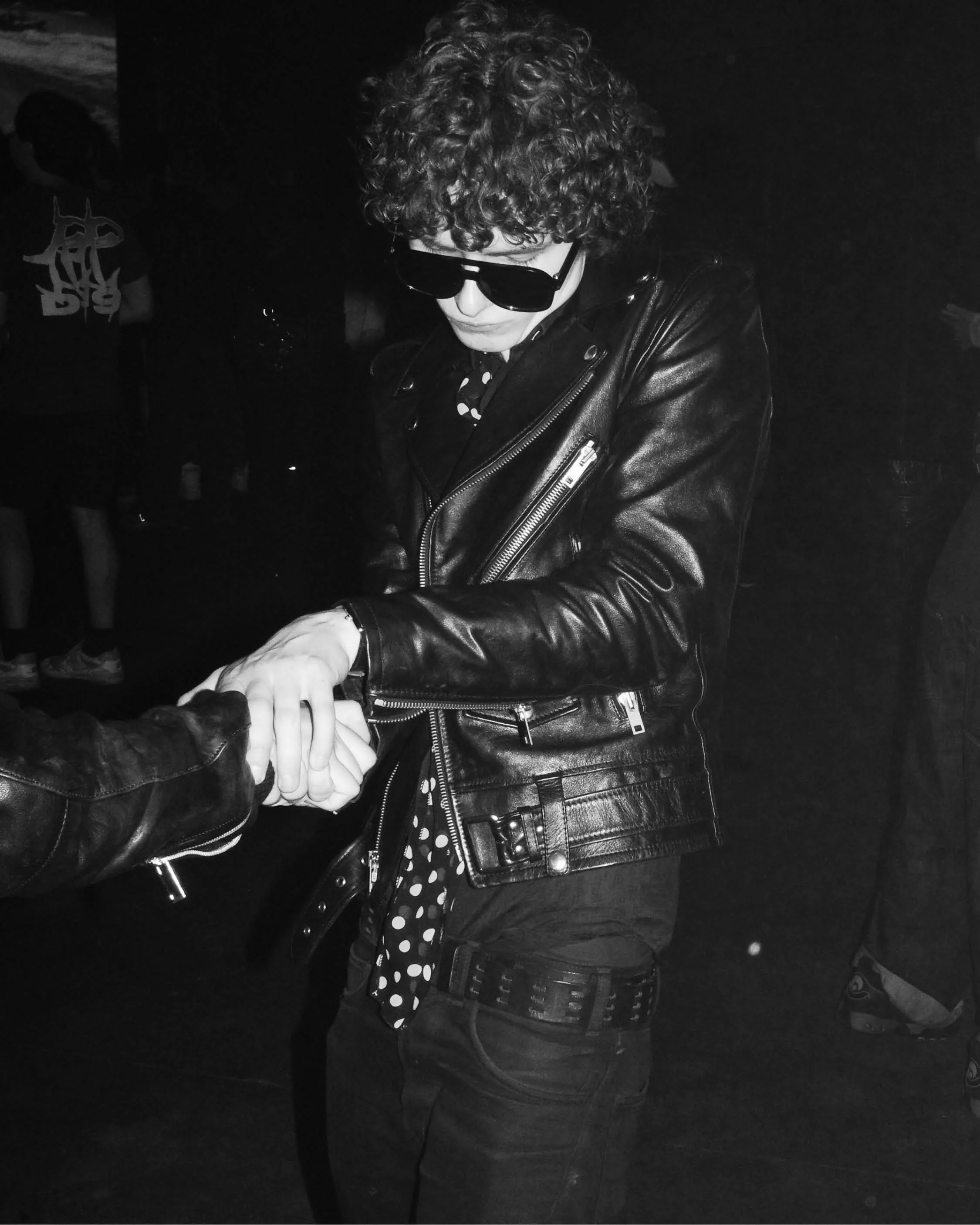
Photography by Bruno Mosso (@brunommosso)
The Hedi Boy vernacular that has sparked intense online granular conversation first came to the fore when style commentator Emma Winder made a TikTok video series last year, probing into the Hedi Boy style genre like a David Attenborough fashion anthropologist. ‘One in three boys in London has a high probability of experiencing a Hedi phase in their lifetime,’ proclaims Winder, tongue firmly in cheek. But actually, a walk through Shoreditch and Dalston (and, yes, Post Party) reveals these boys in a mixed Slimane era of ‘SLP beanie, a suede L01 stud and a pair of waxed 02 jeans’ – as one of Winder’s interviewees summed it up – to be very much a reality. SoCal electroclash duo The Hellp went viral for doing an OOTD video talking in ironic deadpan about having to source their low-waisted skinny jeans from Bosnia while gatekeeping their origins (they’re likely to be April77 or Nudie, if you must know). More earnestly, both Noah Dillon and Chandler Ransom Lucy have repeatedly professed their impassioned enthusiasm for Slimane while routinely wearing grailed Dior Homme pieces. ‘(Slimane) defined what the model male is. I think he’s articulating a lifestyle that he didn’t know would happen,’ said Dillon in a recent podcast interview with Scott Lipps. Lucy (known as @skinnyyoungthug on Instagram) pointed out a simpler reason for their enduring commitment to Slimane: ‘We’re both thin, not-short dudes, and this is what looks good.’
Beyond online viral moments, the influence of Hedi Slimane has always been pervasive, whether he was working at a house or not. Perhaps it’s the way Slimane himself has moved from house to house, taking prolonged breaks in between to concentrate on photography, observing youth culture and amplifying voices again with each tenure at a house. Over a 24-year period, first at Dior Homme (2000 to 2007), then Saint Laurent (2012 to 2016) and most recently at Celine (2018 to 2024), Slimane has built and built on a style that renders itself time-proof and seismic in each wave. By 2006, Slimane’s Dior Homme imprint had already seen watered-down permutations in the mass market, with Topshop doing metallic-coated jeans and Primark going viral for selling £10 Napoleon military jackets. When Slimane went to Saint Laurent, you’d see babydoll dresses and holey knits being rehashed in the rise of contemporary brands like Zadig & Voltaire and Maje. Wherever he went, the reverberation always ended up mass, and therefore entrenched in a wider clothing culture that goes far beyond the confines of high fashion.
Sei, a Tokyo-based rock and fashion editor, has been documenting Slimane-associated music artists and creatives since 2015, first on a blog and now on their Instagram account, @seilibrary, and they point to Slimane’s active referencing of his own design past as contributing to its status as a recurrent style movement. ‘Hedi has often mentioned the importance of retracing the past, and we could already see the signs of this during his late Celine era. For example, for the spring/summer 2023 women’s collection, he used music by The Libertines and presented looks reminiscent of Kate Moss. Later that year, the fall/winter “Celine at The Wiltern” show rolled out rock-infused stagewear-style looks, and that season’s menswear collection, “Paris Syndrome”, firmly re-established a black-centric, skinny silhouette.’
And just as Slimane exited Celine in 2024, leaving a discernible aesthetic gap, the Hedi Boy movement unsurprisingly gathered steam. While the man himself is no longer attached to a house (and at the same time rumoured to be going to every single house under the sun), the cyclical backlash towards the loose, wide-legged, streetwear-inflected silhouette popularised by Demna at Balenciaga had well and truly been set in motion. ‘The skinny silhouette that Hedi once established was considered outdated for a while,’ says Sei. ‘Today, however, the wide silhouette is starting to find itself in that exact same position.’
When breaking down the subcategories of the incarnations of Hedi Boy, it’s clear not all Hedi Boys are created equal. James Parkes, social media director at Beyond Noise magazine and a longtime Hedi Slimane collector and enthusiast, points out the halo effect of being merely associated with looking like a Hedi Boy, while not strictly wearing any actual Hedi Slimane pieces. ‘It’s funny, because the silhouettes I see claiming to be Hedi Boys are not really Hedi at all. It’s a way of intellectualising music-adjacent style. It puts you in the zeitgeist, despite him being at the biggest houses making loads of money. If you ask a kid what’s your idea of cool, being a Hedi Boy gives people instant access to stereotypical cool.’
Many Hedi Boy subjects seen in the aforementioned viral videos aren’t necessarily wearing Hedi pieces either, as they seek to recreate the look with other brands and vintage pieces. The osmosis of wearing a tight black leather jacket, skinny jeans and a heeled boot is enough, especially if a Hedi Boy exists mainly through TikTok GRWM videos. Back on the Post Party boat, Harry, who works in music social media marketing and is wearing a Scottish military jacket with a Todd Edwards T-shirt emblazoned with ‘Jesus loves UK garage’, acknowledges the role of Slimane as the originator. ‘I had to learn that he shaped everything. He’s so entrenched in the culture. My idea of cool was Hedi. He really summarised how a modern guy should look.’
Collecting and replicating Slimane’s looks has never been more fervent, with searches of ‘Hedi Slimane’ on the second-hand platform Grailed up by 50 per cent. Japanese proxy sites like Yahoo Auctions – once a secret hunting ground for people like Parkes, who’d use it to bag bargain Dior Homme finds – are now seeing hiked-up prices thanks to high profile-collectors like Hyunjin of Stray Kids, who was photographed wearing a Slimane-era Dior Homme destroyed jacket even while he was a Kim Jones-authored Dior ambassador at the time. ‘When it comes to vintage, while Japan does have physical vintage shops that specialise in archival pieces, the market is characterised by incredibly active peer-to-peer distribution through flea market apps and online auctions,’ says Sei. ‘This seamless circulation makes accessing collection pieces relatively easy. As a result, a unified ecosystem has emerged where Hedi Boys – not just in Japan, but all over the world – are searching for, buying and selling Hedi’s clothing.’
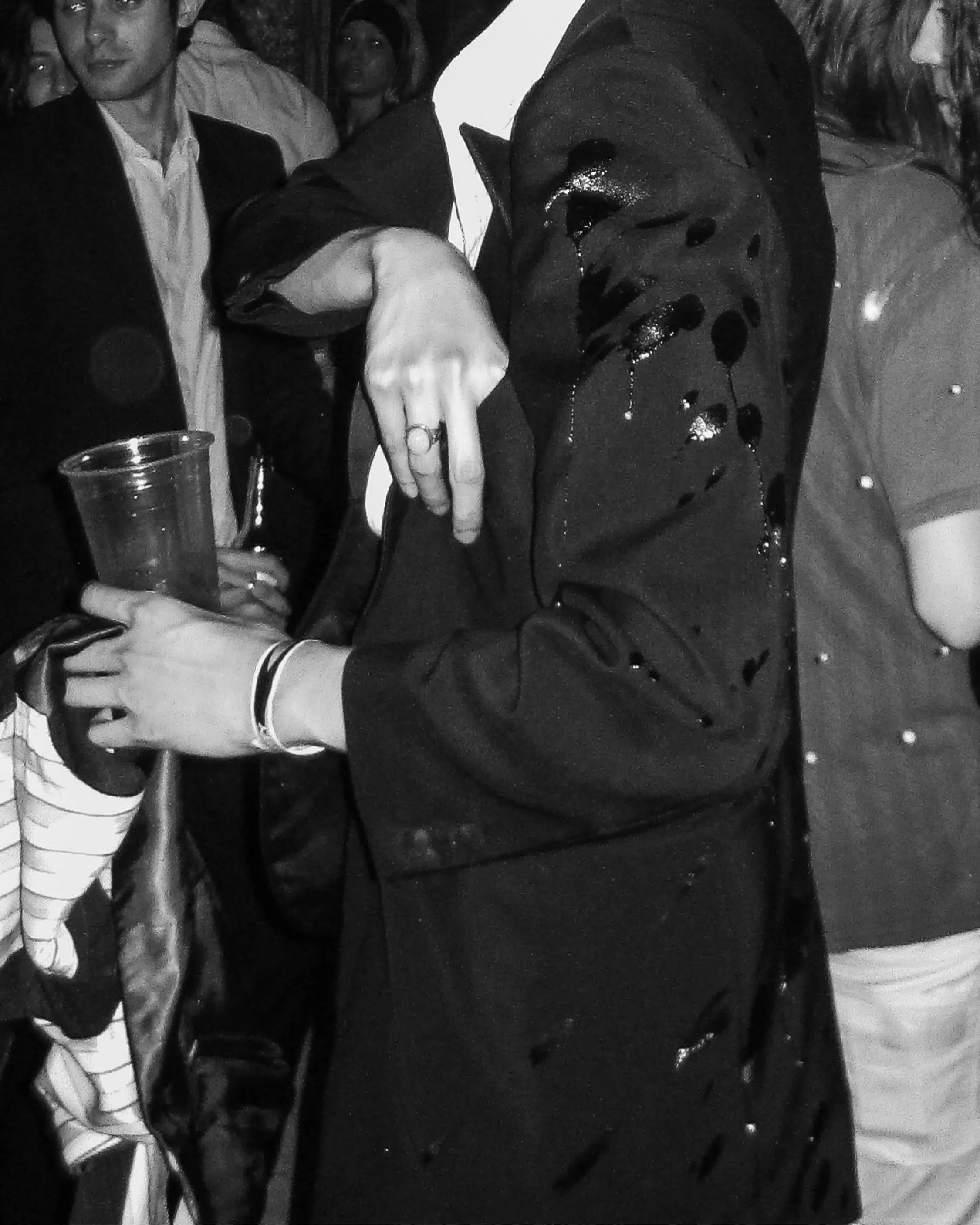
Photography by Bruno Mosso (@brunommosso)
In this cycle of replica and reverb, though, there are stark differences between Hedi Slimane’s Dior Homme days and the present-day Hedi Boy resonance. The biggest sea change that you can instantly see on the Post Party boat is how diverse the crowd is, in race and cultural origins – unlike the indie sleaze spaces that I experienced back in 2008 in London, which were, for the most part, very white and also very British middle class. The diversity is also reflected in the music genres that Post Party puts on their line-ups. ‘Half of the people here are UK underground rap fans and half are fans of The Strokes and Libertines,’ says Harry. The exclusively guitar-based bands of Dior Homme’s male muses and soundtracks have given way to a scene dominated by UK underground rap. ‘You can be a punk on a Monday, or a rapper on a Tuesday. It’s like skins from a video game,’ remarks Wolf, when talking about the wide-ranging Post Party music mentality. Other Post Party goers echo this idea of cosplaying Hedi Boy style.
‘I genuinely put together what I wanted to dress like as a kid, like a cool mad anime character – it just happens to coincide with the Hedi Slimane character of today,’ says Jesse, a fashion comms student living in Brighton, and originally from Nigeria.
‘Most kids here would have found out who Hedi is through a rap lyric,’ says Wolf. One such lyric belongs to the poster boy of current British underground rap, fakemink, who has namechecked Slimane on several tracks, such as ‘Makka’, where he intones: ‘I’m only 20 but it feels like plenty... 2025, yeah, my jeans still Hedi.’ Born in Ilford to Punjabi Indian and Algerian parents, Vincenzo Nischal Camille Bhatia, known as fakemink, has been one of the key players in bringing specific vintage Dior Homme styles to light and thus spawning its own standalone conversation. In April he took to Coachella in a pair of spring/summer 2006 glitter silver jeans, the holiest of Dior Homme grails, worn with Tom Ford leopard-print boxers poking out and a Burberry check scarf tied around his waist. The low-riding sag of the jeans has either been lauded or derided online, but it’s the unexpected combination of this IYKYK cult item alongside a classic symbol of British chav culture that feels especially pointed, and recontextualises a pair of jeans that were once worn by a skinny, blond mod figure in a collection entitled ‘The World Was a Mess but His Hair Was Perfect’, taken from the title of a song by The Rakes.
On @seilibrary, the globalisation of the past 20 years is reflected in the Hedi Boys (and girls) from Japan, South Korea and China who benefit from that second-hand collectors ecosystem and an archive of paper matter, birthed from Slimane’s days at Dior Homme. ‘Hedi has left behind an immense wealth of references beyond just the clothing itself,’ says Sei, ‘including early experiments with collection live streams that were ahead of their time, vast amounts of look-book imagery, and magazine editorials. In Japan particularly, there is a rich accumulation of these magazines, and the fact that people from outside Japan are now digging through them is a phenomenon unique to our current era.’ On a more obvious physical note, the Asian Hedi fans also happen to be natural fits for Slimane’s clothes. ‘Many young Asian men possess naturally slender builds,’ adds Sei. Indeed, there’s no getting away from the distinctly skinny body frame that Slimane’s clothes are geared towards, and which so many cite as the reason why they are drawn to Hedi. ‘My whole life, I’ve always worn that stuff,’ says Wolf. ‘It just matches my figure.’
If there’s another noticeable shift between the environment of Hedi Slimane’s clothes the first time round and present-day Hedi vibes, it’s that there is decidedly less consumption of alcohol and potentially other substances, which speaks to the Gen Z culture of today. ‘Sometimes we get kids coming here who have never even had a drink,’ says Wolf. ‘If we have a venue that says we need to hit a £4,000 bar spend, then we have to turn it down because it’s just not gonna work even if I had 400 people there.’ ‘Rappers are like the modern rock star because no one is actually going to be doing heroin like they used to,’ says Vincent Rockins, a model and fashion design student at Central Saint Martins. ‘Your chatGPT subscription is more important than drugs. It’s tough times we live in.’
That’s not to say recreational drug taking isn’t around, but the energy at Post Party is definitely less fuelled by drugs and alcohol. The floor is less sticky and the bathrooms are distinctly devoid of the smell of vomit. There’s also a pragmatism in the air, where networking and partying go hand in hand, most likely a consequence of the economic pressures on this generation of party revellers. ‘Post Party is great for networking for us, as so many fashion people come,’ says Adal Gal, a freelance stylist and fashion communications student. ‘All my best creative work comes from meeting people like this.’
To say that the culture surrounding Post Party and the Hedi Boy style movement is unoriginal would be facile. Look closer, and the layers of everyone’s Hedi-esque outfits do look different. ‘If you’re going to take something from your mum’s closet, you’ve got to subvert it,’ says photographer Arthur Anstee, who is documenting the party. The very name Post Party speaks to the acknowledgement by this generation that they get that millennials are constantly on their case about their supposed lack of originality. Wolf Gillespie is defiant about Post Party’s raison d’être. ‘People are always like “postmodern this, post that”. I always hated when people said that, so it’s a play on that. Or when people say there’s no new culture any more. No! The artists that come here have their own thing going on. They’ve got their own stories to tell, their own lives and romances. Just because they might have jeans on from 20 years ago, doesn’t mean they’re not doing something original.’
The discourse surrounding Hedi Boys on the internet and social media, perpetuated by boys in their bedroom pulling on their skinny fits and Reddit discussions about what body mass index is needed to pull off Dior 02 jeans, can leave you cold. It’s hard not to wince at the granular way people lob insults at each other over whether or not their jeans are the right lustre finish. It can seem like the joy and debauched origins of the original youthful spirit these clothes are meant to exist in has been sucked out of the majority of Hedi Boy content on social media. And that’s where Post Party rebuffs all of that below-the-line commentary – especially when you’re in the midst of people dressing for pleasure and wearing their ‘Bosnian’ jeans with real allure and verve. For Wolf, the mean-spirited nature of the internet melts away when you’re actually presenting yourself out in the real world.
‘There’s still that culty behaviour of “oh, you’re not one of ours” or “you’ve not done enough to wear that badge”, but I think it all exists online in comment sections and Discord,’ says Wolf. ‘Or it’s like people will screenshot the fact that they listened to a band on Spotify when they only had 10,000 listeners versus now when the band has 100,000 listeners to show off. Nobody is going to pull up like that in real life. When it comes to actually going out, you’re more free.’
And with that, it’s time to disembark the boat. The semantics of the Hedi Boy in the end don’t matter as much as its lasting impact. At the end of the day, you can’t fight youth’s desire to want to be countercultural, and Slimane has decreed that the style blueprint of that counterculturalism be form-fitting in leather and denim and invariably in black with an idiosyncratic swagger. ‘These pieces – a pair of jeans, a leather jacket – they’re always part of fashion and they’re these basic items that will never go out of style,’ notes Parkes. ‘He’s taken these staples of everyday wear that people are able to identify with and rally behind.’
Whether you’re stumbling upon it by accident, recreating it as a faithful collector or keying into it as a IYKYK flex, it seems all roads lead to Hedi. At a time when fashion houses are being reshaped and still finding their footing with new creative directors, it’s no wonder that many are turning to Slimane, who at the time of writing remains a free agent. Whatever he does next, Slimane has left behind the most enduring and influential silhouette blueprint of the 21st century. A black and white picture may well exist 20 years from now looking much like the photos seen on Post Party’s Instagram feed in 2026, in the same way that they echo scenester party pics from 2006. ‘Hedi’s ultimate appeal lies in his constant, unbreakable connection to real rock music, art and, above all, people,’ says Sei.
We end with Hedi Slimane, the original Hedi Boy himself, musing on his extraordinary career – as well as looking back at teen Hedi, the genesis of the Hedi Boy spirit that is undoubtedly universal.
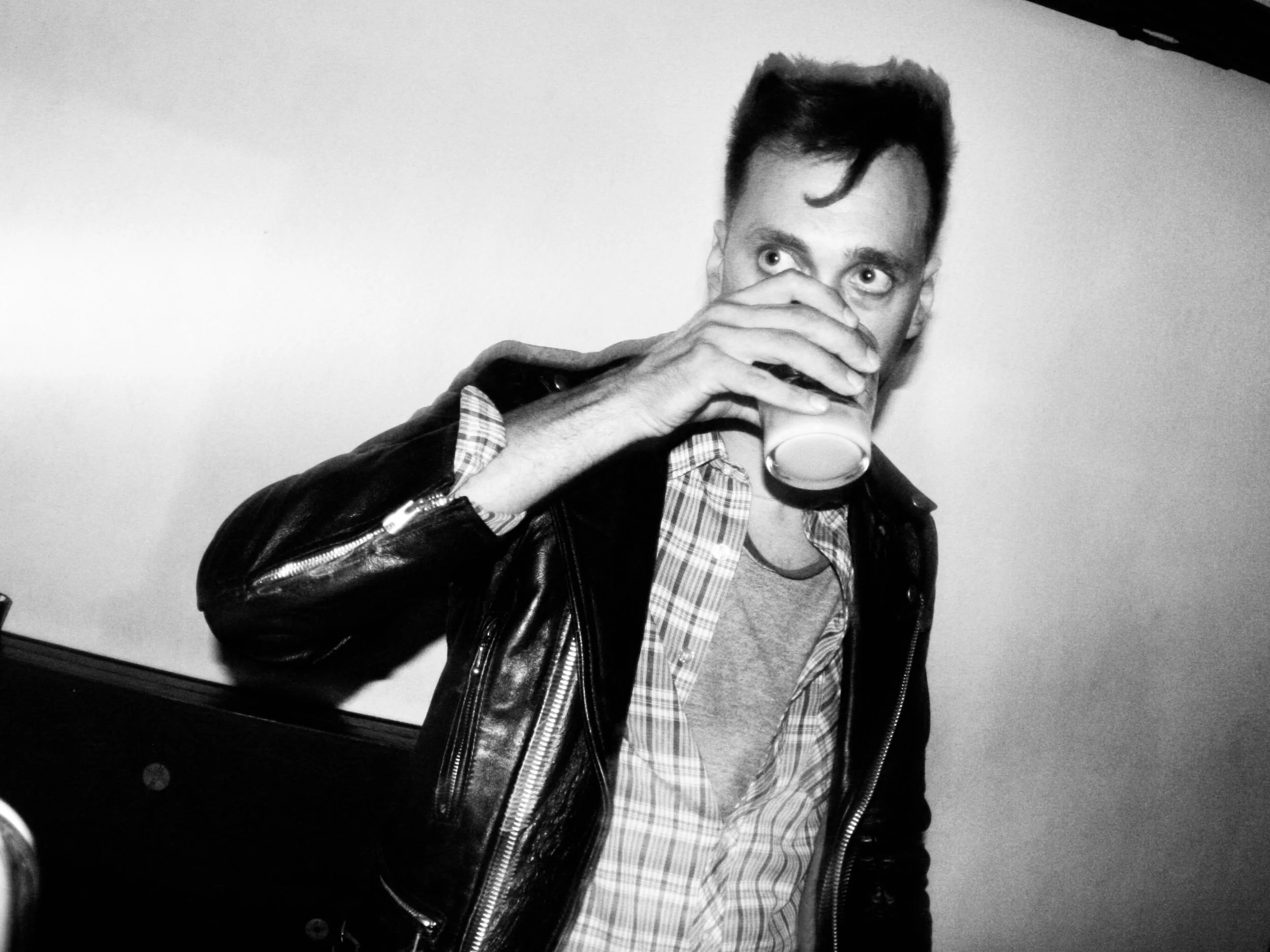
Hedi Slimane portrait photography Dan Bailey (@tokyodandy)
Hedi Slimane: “Young collectors are looking back to early Dior Homme, then YSL and Celine. Technically, I believe the ‘Black Tie’ collection in 1999 started it. It is probably the seminal or prototype collection for the subculture emerging in the UK, US and Asia.
Everything was already there in ‘Black Tie’ at YSL, long before Dior: the allure, the proportions, the character, the attitude – skinny silhouettes, shades of black, double leather, androgynous bodies and clothes, musicians, street-cast indie models etc. Not so many clothes were produced as I was leaving, so they are probably difficult to find and collect.
I presume that the necessity of leaving a house I loved at the time, leaving behind Pierre and Yves, who were like my adoptive family, led to a sense of frustration, just as I was beginning to enjoy at Saint Laurent the kind of creative freedom that allowed me to pursue this oblique idea of masculinity and to hone my style. In that sense, Dior Homme was for me a way to keep going, to pursue obsessively an allure and a character, and to place them within the musical background I was constantly interacting with – from Berlin to New York, dressing the London scene, documenting it and so on. It was not the beginning, by any means, but it was the most publicised period of my career.
Technically too, and with the benefit of perspective, it all simply came from being that boy as an Eighties teenager – rooted in rock music, too skinny to find clothes that fit, ostracised for not being masculine enough, mocked for my androgynous frame and look, unable to be accepted as I was, which I took as a badge of honour early on. It was never a rebellion, but rather my sincere truth, a carefree affirmation, carried by the stubbornness and restlessness of youth.
If that still resonates today, it is probably because it was never a construction, but a reality check, finding strength in not belonging, never thinking about conforming or fitting in. Perhaps the fashion and photography also carried this sense of affirmation and elective community – culturally, stylistically, musically etc – and became extremely codified with time. Besides, I also never changed direction, despite any form of opposition, and always pursued and committed almost defiantly to the same character, through repetition, season after season, fashion house after fashion house. How many personal styles can one have? Let alone as a fashion designer.
Decades later, I see this generation making this story their own, giving it new meanings, somehow carrying the torch.”