Jordan Firstman Is The Zeitgeist.
He made an indie movie about gay nightlife and its collision with the responsibilities of adulthood. Club Kid became the hit of Cannes, prompted a bidding war and is now the most anticipated cinema release of the year – making writer, director and I Love LA star Jordan Firstman the man of the moment.
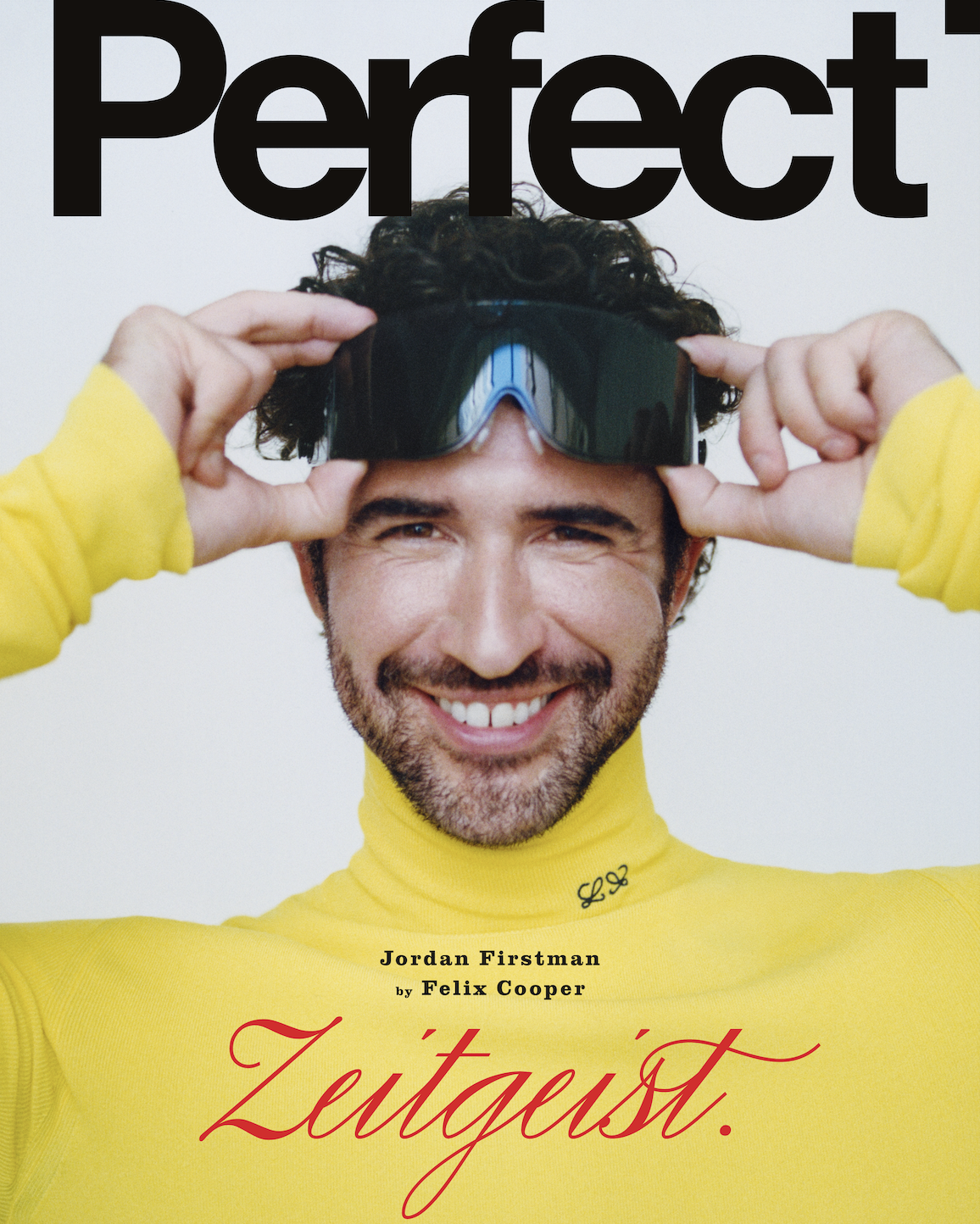
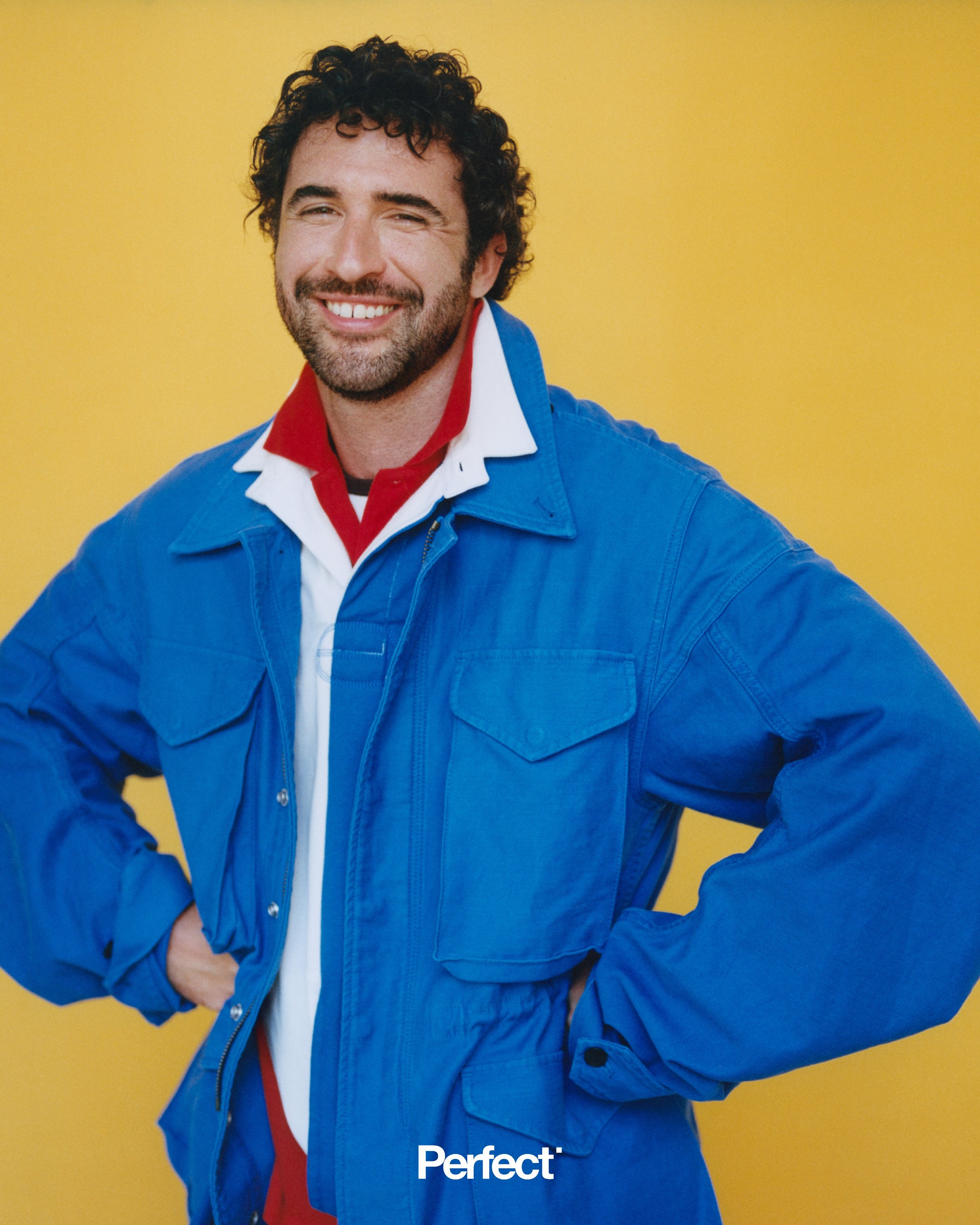
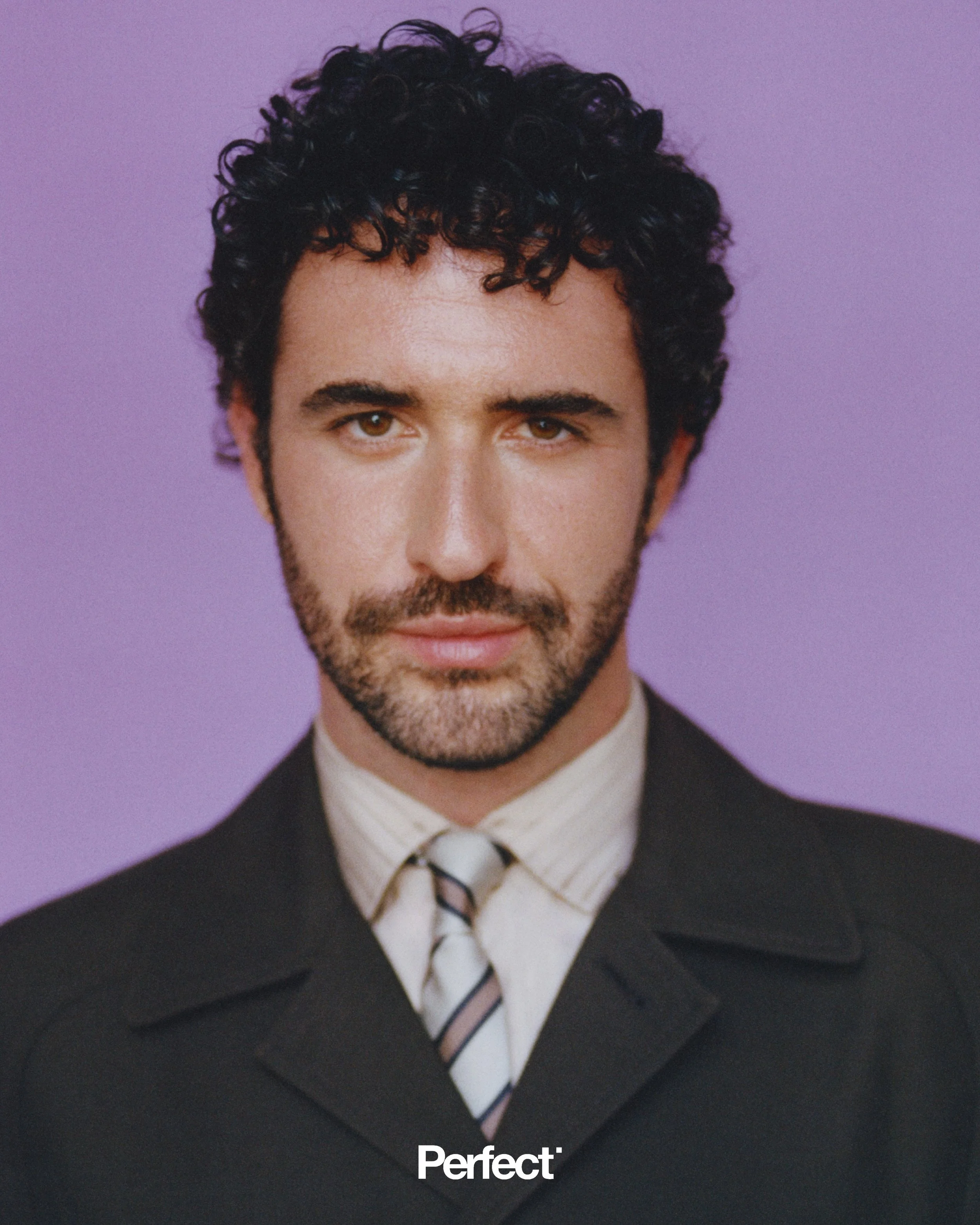
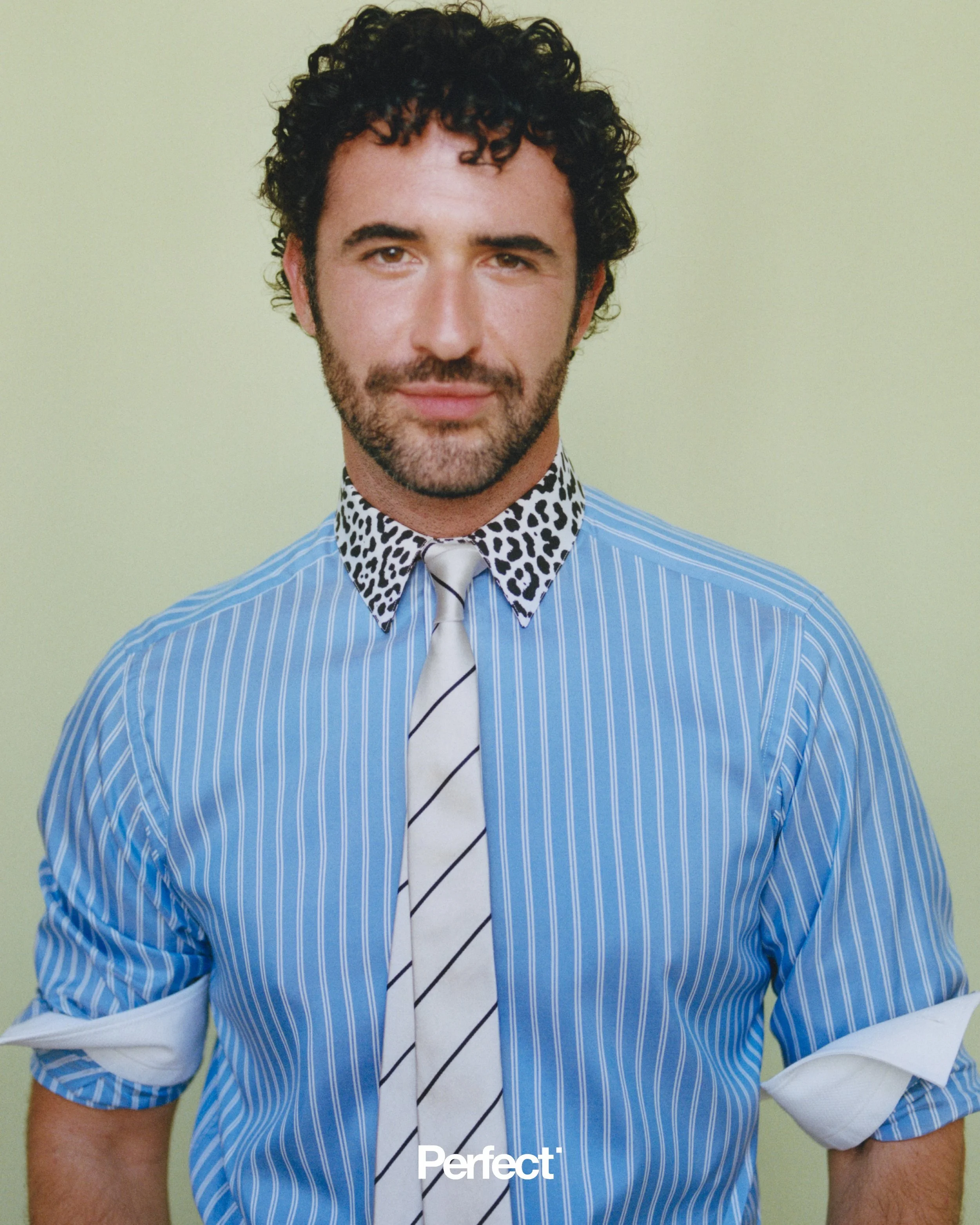
Jordan Firstman for Perfect Issue 11.
Photographer: Felix Cooper
Fashion Editor: Stuart Williamson
Writer: Paul Flynn
The problem with writing, directing and starring in a film about queer New York nightlife culture is that nightclubs move by instinct to a restless beat. They can catapult off on wild new tangents over the course of one Saturday night. Suddenly, all the new drugs are old. The old drag is tired. The new music’s dead. The beauty of the New York night, the irresistibly shaky foundations on which it is built, is its frantic taste for reinvention. ‘I started this when ketamine was really big, and then G took over,’ notes Jordan Firstman, for example, of his debut feature film, 2026’s out-of-the-box queer masterpiece, Club Kid. ‘And movies take so fucking long.’
Jordan Firstman is a satisfyingly antsy enough chronicler of his clandestine microworld to care about getting every single detail of it right. In Club Kid, an argument between father and son takes place in Seward Park, the sun-dappled centre of Dimes Square (‘He’s drinking the Dimes Square watermelon slushy and eating a sandwich from Dimes,’ notes Firstman of the son). The first cameo appearance is from the unassailable queen of the New York night, Amanda Lapore. If Club Kid is about to tell us anything about what it is that gay men give up when we give ourselves over to the night, it needs to do it with pinpoint accuracy. ‘I wanted it to just stay very present,’ he says. ‘As far as the culture and the references and the scene it’s replicating, it is very rare to watch something as that thing is still happening.’ Being three steps ahead of the conversation is some gay men’s metier. Jordan Firstman has that thing.
He went out partying a couple times in preproduction, he notes, just to check the temperature. Jordan Firstman is a nightlife connoisseur. Though he grew up in Long Island, New York state, he found his nightclub feet in Berlin. At the age of 20, he travelled to Europe on a road trip, facilitated mostly by finding men to bunk with, saving his hotel budget via the gay dating app Grindr. He found Berlin disco utopia at that contemporary temple of hedonism, Berghain. ‘First ecstasy tablet, first darkroom, first threesome – everything done in a week.’
Club Kid finished shooting 11 January this year. Jordan snuck a couple of lines of dialogue he heard while out in New York into the script from those final excavations, then had voiceovers record them into ADR at the last minute. Much of the dialogue of Club Kid should have found its way onto tote bags and T-shirts by the end of this year. It’s a funny, sad picture. His final edit was made mid-April, breezily accommodating a Cannes Film Festival premier that would go on to change Jordan’s life. ‘I don’t know whether I will ever fully process those five days,’ he says. ‘I’ve never felt such a shift in my life. It was like one day I was this and the next day I was that.’
“I fought really hard for my choices. People sometimes didn’t understand them. People wanted to cut so much that I had to fight for my vision.”
We are talking on a Zoom line, London-Liguria, where Jordan is in one of the prettiest corners of Italy, enjoying the last of his early summer break before returning to Los Angeles for work. Next week costume fittings begin ahead of the filming of I Love LA season two, the fabulously madcap Rachel Sennott HBO satire in which he stars. Light seasonal rain patters outside for the length of our conversation. He is wearing a royal blue Lacoste polo shirt he bought at the airport. He is instantly charming, tanned, quick, reactive, a wide-open book.
The auction that erupted after Club Kid’s preview ovation in Cannes resulted in a $17 million global deal with A24 pictures. ‘Even the bidding war, that wasn’t the moment for me,’ he says. ‘Seeing the movie [with] an audience, we had never done that before and they were just on fucking board. I fought really hard for my choices. People sometimes didn’t understand them. People wanted to cut so much. So much that I had to fight for my vision. I was just so proud and extremely vulnerable, because this movie is so personal to me. I have said my entire life and career that what I want, more than to be seen as talented or successful, is to be understood. I felt very understood in that room. Like it was OK to be me. For many years I had not felt it was.’
For most people familiar with the work of Jordan Firstman, Club Kid is the film they may least expect Jordan Firstman to make. Moving from Long Island to LA at 21, he worked as a writer on his then-boyfriend’s HBO show, Search Party, a Scooby Doo tale of coolly deluded Brooklyn hipsters trying disastrously to locate some meaning in their lives. Since then, Jordan has established a multidisciplinary pathway to his current position. His talents first moved overground during a spate of comedy skits posted to Instagram Stories during the pandemic. He first hinted at greatness as star of the zany Mexican accidental death heist, Rotting in the Sun, a cult hit which nailed his sceney corner of giddy, sex-positive, club-savvy queer culture. Club Kid ties it all together with a bow, cementing him as probably the greatest contemporary documentarian of what we might politely refer to from the inside as ‘the gay mess’. Jordan Firstman understands the ennui of living in a culture drenched in too much of everything, a pharmacopeia of too many drugs, a body count of limitless sex on demand, an information superhighway heavy on the ‘super’, heavy on the ‘high’. Now he does it with added meaning, too.
What has separated Jordan from his peers has largely been a sleight of hand at wide-angling the mess. Now he’s ready to own it. ‘This is broad strokes,’ he says of Club Kid. He has the good gay grace not to complain about the mess, instead observing it as a 360-degree proposition, to see the humour at one extreme of it complementing the potential for tragedy at the other. His great queer literary hero, it turns out, is Jean Genet. ‘You know, to be queer is to already be taking a risk,’ he notes. This is a typical Jordan Firstman monologue, delivered off the cuff. It could be the opening to a riveting Ted Talk, if only anyone involved in their programming had been on Sniffies and knew what monkey dust is. ‘We put ourselves in situations, and the reward of that is that we get so much more experience in life than so many other people do.’
He understands the value and risk of this transaction because he made it. ‘Whether you remember those experiences or not is kind of irrelevant, because you get them and they live inside of you.’ He says he parties less than he used to, but that part of what drew him to write and then make Club Kid was his experience with the Russian roulette chemsex drug, GHB. He is conversant with every extremity involved in the gay party canon. ‘I wouldn’t give back those times ever. I have met some of the most beautiful, sensitive, creative, beloved lives in these spaces. You have the well of human emotion that is alive in them. It’s painful and it’s funny. Gay people are so funny. People on drugs are so funny. But I’m showing the story of a person who got into nightlife and it has run its course.’
With Club Kid, Jordan has turned his instinctively glib gears directly into reverse, crafting something deep and questioning from the last ashes of the night, a moving, sad, lovely portrait of club promoter Peter Green (Firstman) and the 10-year-old child he inherits out of the blue at the precise moment his life is collapsing, Arlo (Reggie Absolom). The story is established quickly, in an effective darkroom scene, built from decelerated strobe lights and the erotica of bodies, when a woman follows Peter, so wasted he can barely sketch the shape of what he is doing, into the sex den. When we flip forward 10 years, the question of gay responsibility suddenly hovers. There is a small human being to account for.
The film has pleasing echoes of two Seventies nightlife masterpieces: Andrew Holleran’s peerless novel Dancer from the Dance, a morality fable beginning with the poisoned apple of the New York dancefloor, and the all-conquering, working-class Brooklyn disco classique, Saturday Night Fever. There is something of the old kitchen sink drama to it. Club Kid feels like the first proper temperature gauge of New York nightlife since Party Monster, World of Wonder’s Michael Alig documentary about what happens when the gay nightlife dips into psychopathy. How far we’ve moved since the theatre of all that. ‘I always knew that what I was making was a story about a lost soul,’ he says. ‘Peter to me is a perpetual lost soul, from the first frame to the last. I think that lost souls are often very sensitive people and sensitive people like to take drugs. They just do.’
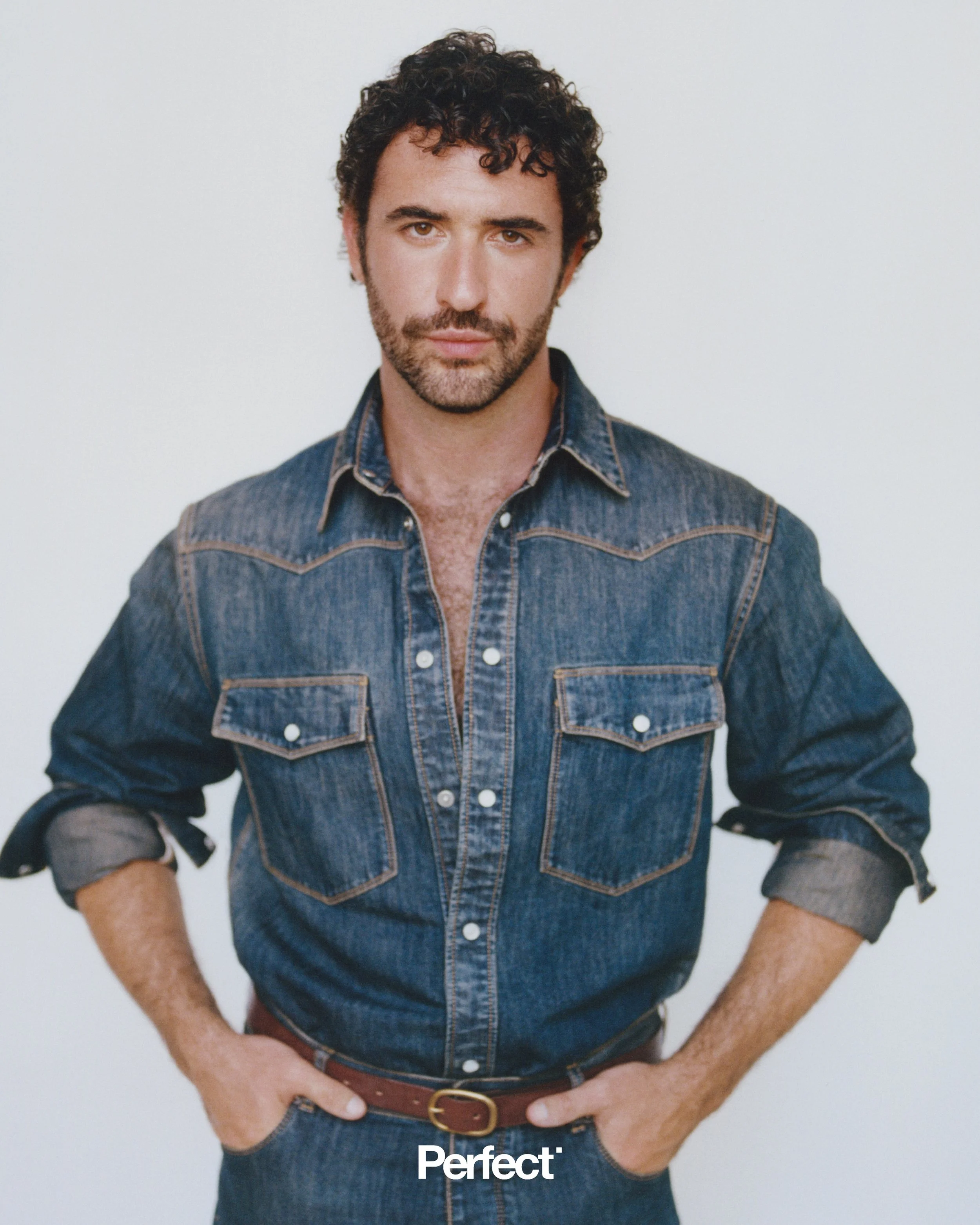
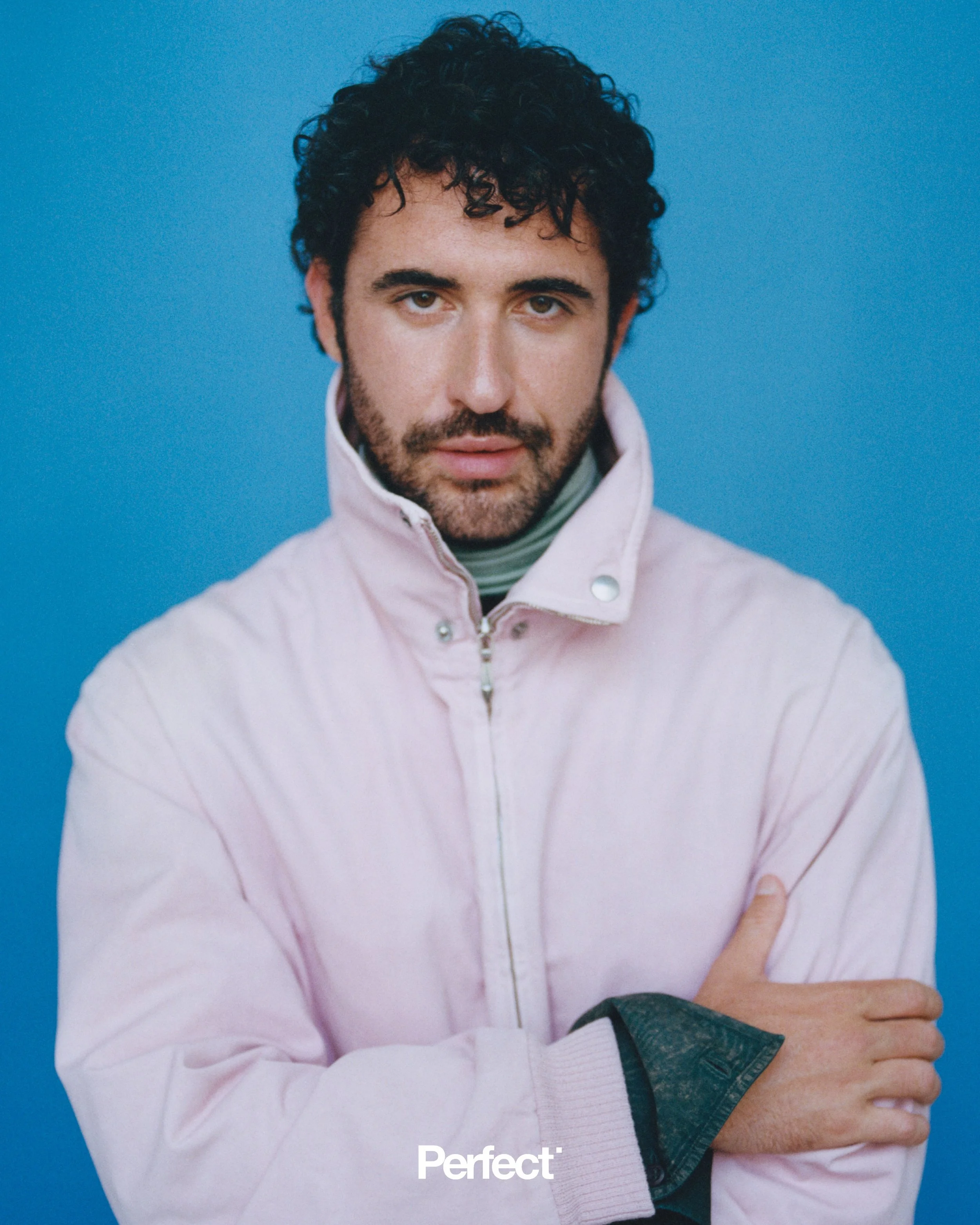
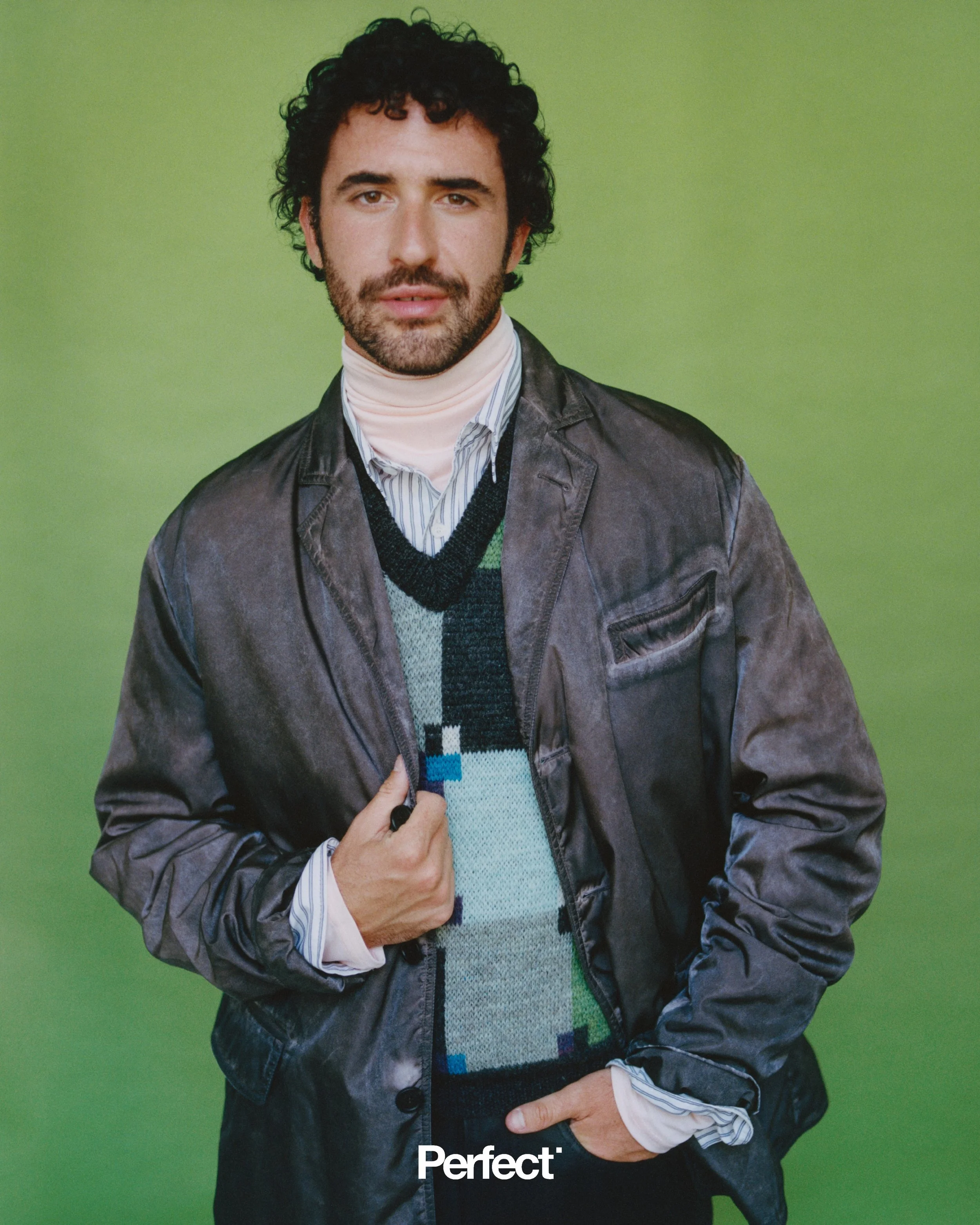
“I always knew that what I was making was a story about a lost soul. I think that lost souls are often very sensitive people, and sensitive people like to take drugs. They just do.”
Like all the best storytellers, Jordan Firstman can and does divide sympathies. ‘I think people sometimes think that I am a cocky asshole,’ he says bluntly, without any trace of self-pity. ‘And I am.’ Like all the best humorists, he cannot resist a punchline. ‘But I am because I’m insecure.’ Say what you want about gay app culture, but it’s really honed some gay people’s communication valves. Jordan has that thing, too.
‘No, I do have a healthy dose of self-confidence,’ he continues. He is nothing if not delightfully self-aware. ‘I do think I am a talented person.’ And then he cuts himself off, aware of how any soundbite can now be redacted to splice up a career at this early stage of its blossoming. Club Kid is the opening shot of the career of a potential film maestro, the work of somebody with enough self-reflective guile to be a cultural totem: a body through which a demographic can learn to understand itself. For better and for worse, Jordan is the gay voice we both deserve and need in 2026. It would be unwise to lose control and slip on the rung of a ladder to such a lofty pedestal now.
‘I don’t know,’ he says, temporarily diverted, ‘I think it’s like, people don’t want to see a gay person be confident.’ He can affect the look of somebody slightly baffled by a compliment, a regular disposition for those who found fame on the internet. He is discernibly a sex person, another attribute which can put off a prudish mainstream in uptight times. ‘You can see a straight man talk about their work all day long, you know?’ He sighs. ‘Anyway, different story. I’m grateful for this film. It was my place to put my vulnerable side in, my pain and my feelings about the world and myself.’
During his ascendancy, both online and off, Jordan has become a kind of one-man shorthand for the fecklessness of 2020s night-time gay male archetypes – alternately, on screen he has played the boyfriend you can’t trust (The English Teacher), the stylist you don’t want (I Love LA), the holiday companion you dread (Rotting in the Sun) and now the drug addict you tell yourself as the party clock strikes midnight you will never turn into (Club Kid). Peter Green is a new iteration for Jordan, but he is recognisably part of his continuum. We needed the others to get here. Like all of the characters he plays on screen, a garrulous ragbag of expositional autofiction, Peter Green could be plucked from a Sam Levinson drama. Like none of them, he could almost be plucked from a Nineties Richard Curtis movie, too. ‘I’ll take that,’ he says laughing.
The great and tricky twist of Club Kid is not how much Peter Green battles with his newfound fatherhood. It’s how much he likes it. Club Kid is the second excellent independent movie this year to deal with gay male parenting after Fairyland, a sweet, Sofia Coppola-produced Seventies San Francisco travelogue thatplays exactly to gay type, from living a tortured, closeted existence to an untimely, Aids-related death at the film’s end. It’s a great film, of which you can guess pretty much every beat. In Club Kid, you can guess none.
Club Kid is transgressive because it asks new questions about heteronormativity, posing tricky, often unanswerable dilemmas about how some gay men chose to live our lives. It made me cry on several occasions, once with a scene at a piano, when father and son belt out an Ethel Cain tune. ‘This is about our lives,’ says Jordan. ‘Our relationships. I didn’t shy away from being overly sentimental or heartfelt. We are so used to nihilistic things, or distance from characters. If it is a cool thing, the character has to be disaffected or evil. We see so many of these evil gay characters.’ Jordan has become expert at playing them. ‘I just wanted to tap into something a little softer, more unapologetically heart on its sleeve.’
He says when he started writing the movie, all he wanted was to write a complete script that read like a great story. ‘I wrote it in pieces and I would take little bits of things that I was seeing around me, things that I was dealing with.’ This is how gay men get to tell our stories truthfully. ‘It became a tapestry.’ It sounds like he had to stop thinking directly about his own personal concerns in order to unlock what he really wanted to talk about, a dissection of gay men and our relationship to responsibility; what exactly it is we lose when we hand ourselves over to nightlife. ‘I can’t really pinpoint what it’s about,’ he says. ‘Or what I am trying to say, if anything. I don’t think I am trying to say anything. It’s just an expression of a lot of different observations and emotions, woven into something. All that mattered to me was that it was a clear story.’
During his formative nightclub experiences in Berlin, traipsing from Grindr hookup to Grindr hookup, by way of the most exciting nightlife in the world, Jordan Firstman noticed a certain remove in gay men of the night. ‘Partying and drugs can make you feel very detached from a lot of dark things,’ he says. ‘Not to go too much into my personal life, but in the scene that I was in in Berlin for a couple of years, people were just kind of dying all the time.’
At this point, he could replace the word Berlin with London, Amsterdam, New York, Manchester or Brighton. Any gay enclave anywhere. ‘I noticed that the friends of the people dying, they didn’t even have a second to be sad about it. They just knew exactly how to deal with it.’ A chill wind of recognition is transmitted down the line. ‘I was like, woah, this is not where I want to be, where I am so desensitised to it all.’ Suicide, overdose, just giving up. ‘The way that it’s dealt with in the movie… Everyone’s kind of a drug addict in it. So it makes everything feel like kind of a joke, like they’re not actually dealing with the things that are around them.’ When a child enters the picture, his story turns into something metaphorical, symbolic, reminding everyone of what innocence once looked like. ‘I think it’s our right as queer people to question everything, and maybe some queer people have gotten a bit too set in their ways and think that there is a certain way to be queer.’
The first hookup Jordan found in Berlin, as a 20-year-old nightclub novice with no life experience outside his home in Long Island, was a local German doctor. ‘It was a fairly sex-based trip for me,’ he says. ‘I was trying all the dishes and the different cuisines, because I was just so young. I have always been a pretty horny kid.’ He connected with the doctor on a couch-surfing app, which led to a sort of Airbnb meets Gaydar hookup situation. ‘He was giving me weird-ass pills at night and kind of drugging me. I was kind of OK with it. Until one day, he gave me what they give to keep people in a coma. I woke up in the middle of the night and I had no idea where I was. So yeah, I left that night.’
Club Kid is a film about learning to love yourself as a gay man, making Jordan Firstman’s trip to Cannes a uniquely satisfying experience to be privy to. Another amazing twist in Club Kid? Arlo is cooler than Peter. He has to be, for this complicated, brilliant, generational story to land. ‘Peter and Arlo really want to impress each other, in different ways,’ he says. ‘Reggie is so brilliant. Arlo doesn’t want to disappoint Peter. You can see it. He’s been passed around his entire life. He is really trying not to fuck it up. And for Peter, that is the first time someone has seen something good in him.’
“I think it’s our right as queer people to question everything, and maybe some queer people have gotten a bit too set in their ways and think that there is a certain way to be queer.”
Sometimes life imitates art. ‘When we were in Cannes,’ says Jordan Firstman, ‘I had a moment where I felt Reggie really looked up to me. I don’t think I’ve ever had someone that, at least to my face, has looked up to me. And that was a beautiful thing to give myself. He’s seeing me in my fancy outfits and I’ve directed this movie and he’s like, wow, this is a really cool guy. It was a new emotion for me.; Years ago, he might have let that feeling pass, embarrassed. Perhaps laughed it off. Perhaps turned it into internet satire. Perhaps he wouldn’t have even realised or recognised it. Not now, at 34. ‘I just took it in a way that I normally wouldn’t.’
It felt good.
‘Right? I’m not going to sit here and say I have no self-esteem but I definitely have struggled with it. Sometimes I fucking hate myself. And I wanted to put that in. Life is important. The way we live it is all we have.’
Are you the zeitgeist, Jordan Firstman?
‘I guess we will see,’ he says, something of his old form returning. Then he bolts. ‘I feel like I made something timely and good. That’s all.’ That’s enough. ‘I hope people like it. Zeitgeist is maybe too much pressure. I don’t know that I need to be that.’