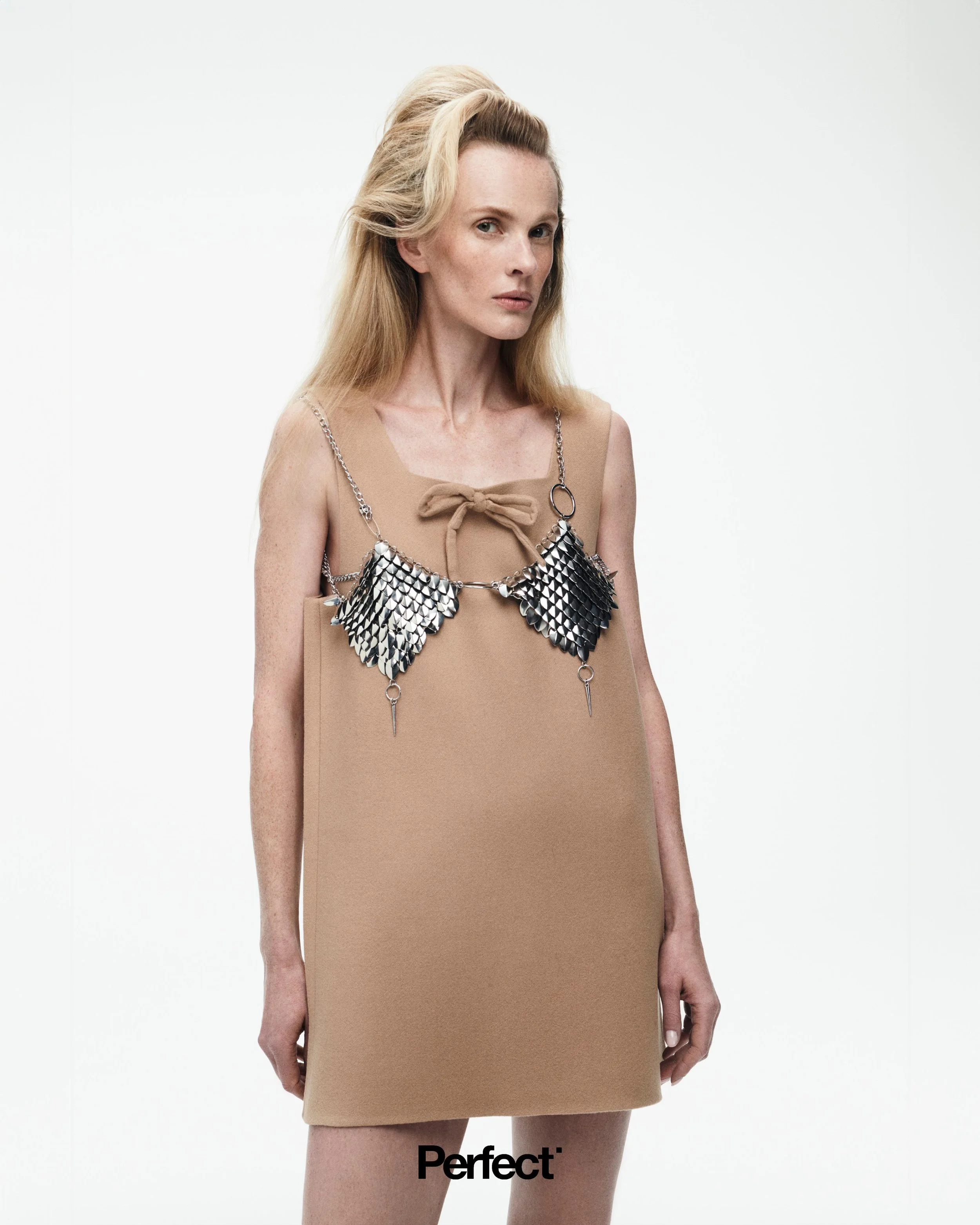
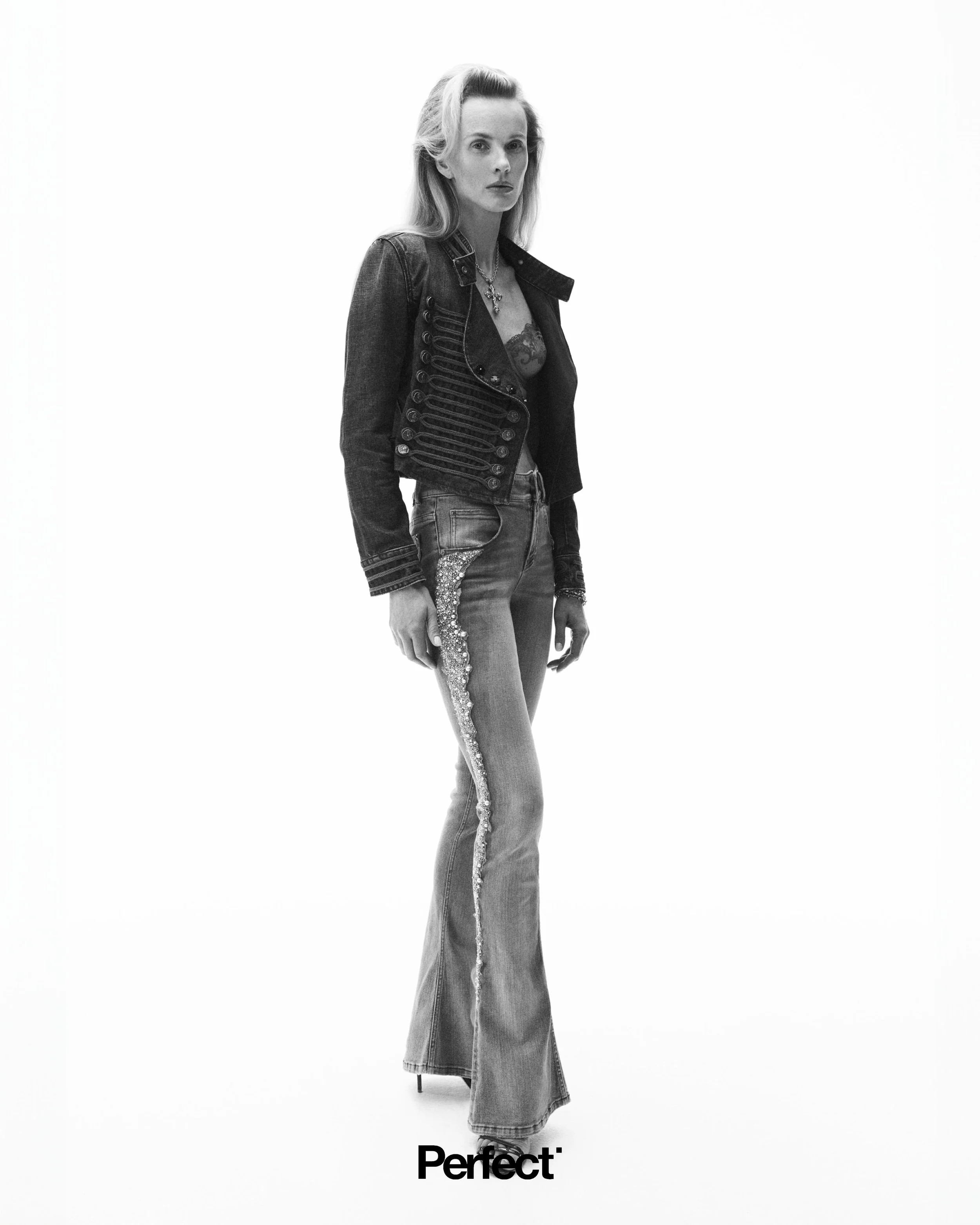
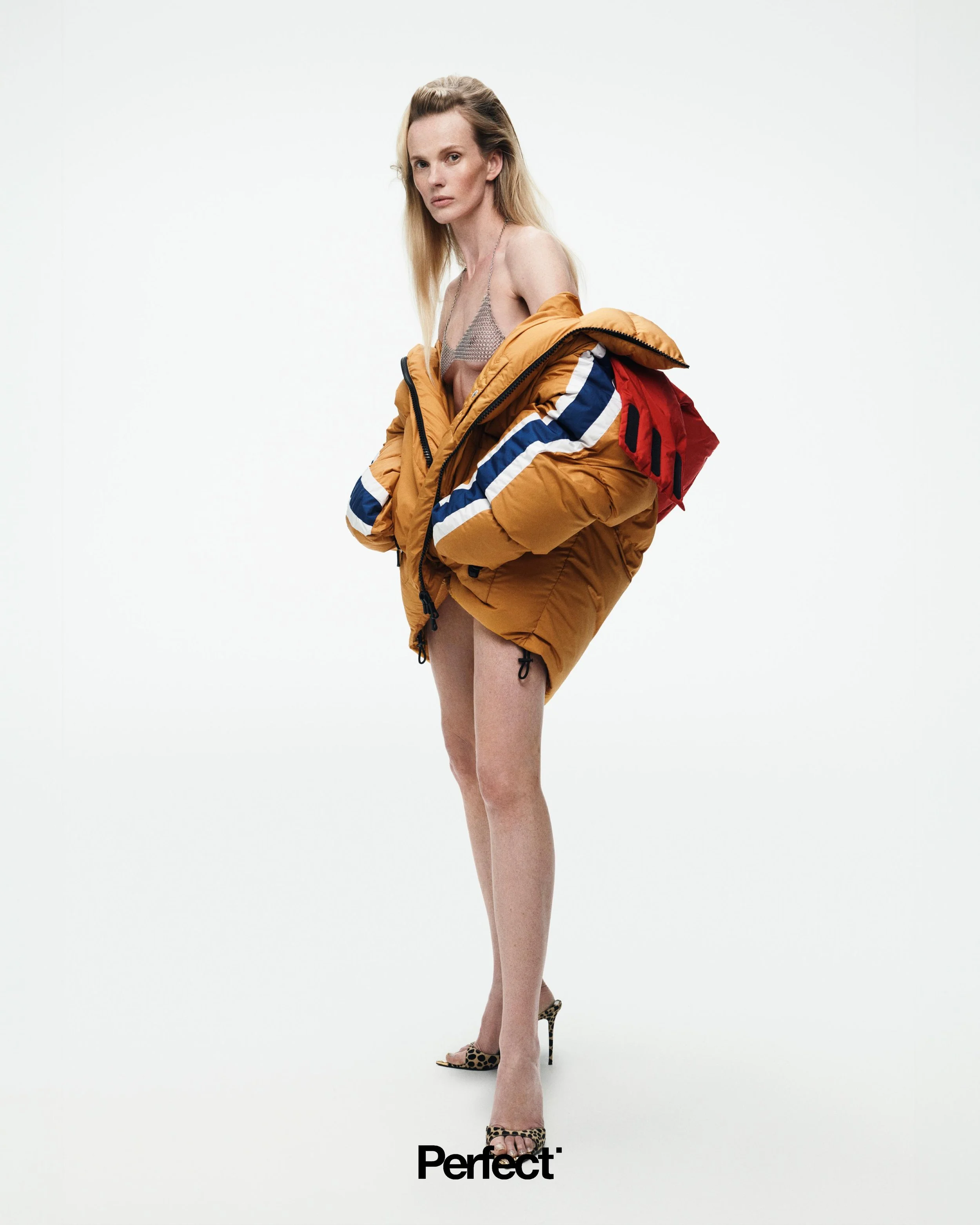
Anne V: Beyond the Label.
The legendary Russian-American model Anne V has been bestriding catwalks and campaigns like a fashion Colossus for most of this century. Here she talks longevity, versatility and the importance of committing to the moment.
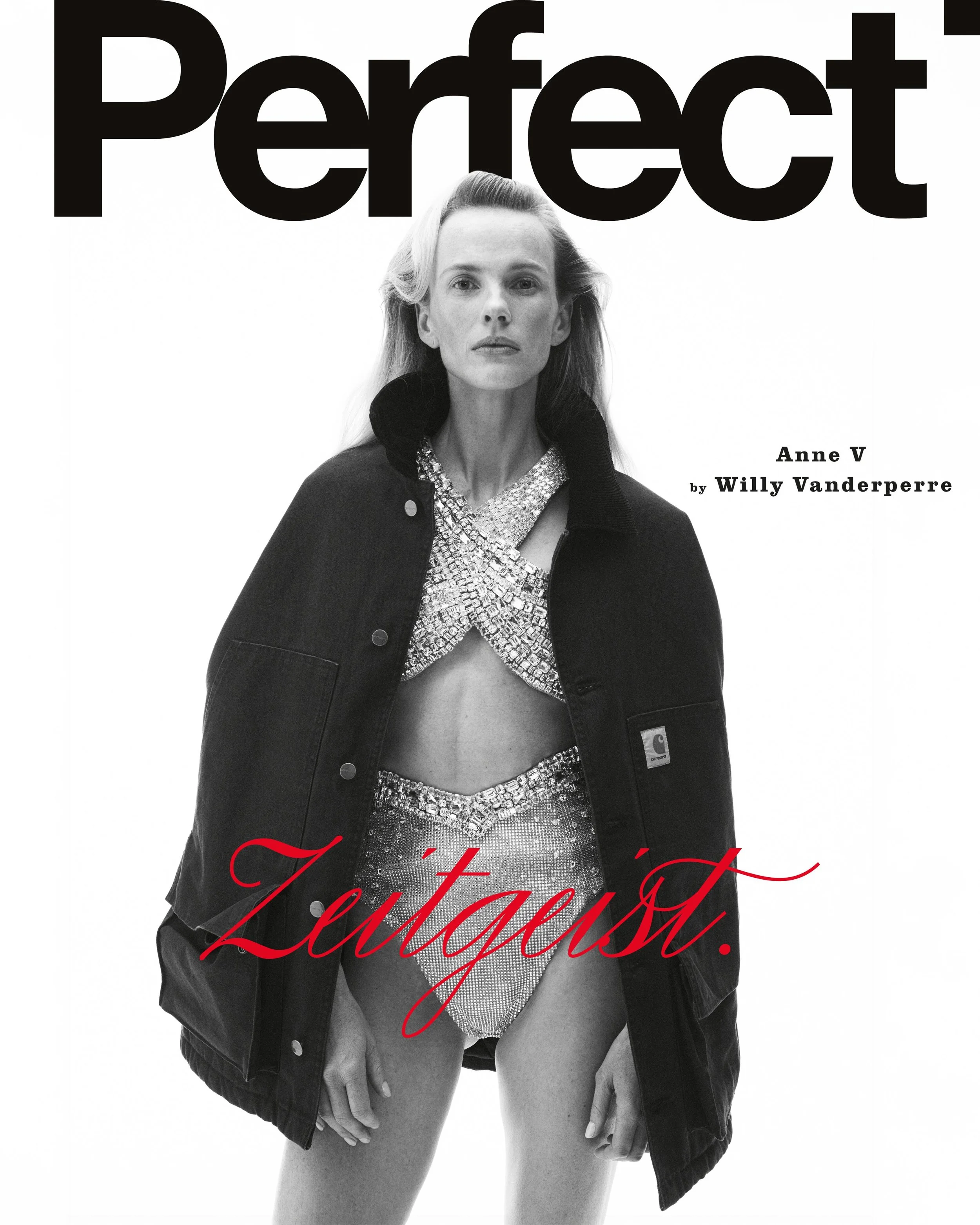
Anne V for Perfect Issue 11.
Photographer: Willy Vanderperre
Fashion Editor: Katie Grand
Writer: Byan Yambao
I met Anne V the way only fashion can introduce two people.
We first crossed paths in Biarritz at an exhibition hosted by art dealer Lucy Chadwick before a cruise show in April. Then again with Katie Grand on Rue Cambon. We stayed in touch. By haute couture three months later, Anne and I were meeting for coffee at 9.45am so we could be first in line when the flagship opened. Early bird special! Minutes later, we were sharing a dressing room, half naked, trying on the same pair of jeans and the same shearling bomber jacket. We both bought them.
Fashion has always had an addiction to labels. Anne Vyalitsyna’s greatest act of defiance was refusing to accept one.
Born in Russia, Anne landed her breakthrough at 15 with the Chanel Chance campaign by Jean-Paul Goude. It came down to Anne and another young Ukrainian model, Diana Kandyba, sharing a tiny Paris hotel room while competing for the same job. ‘I got it, and she didn’t,’ Anne says. ‘I had to go back and sleep beside her. She was so happy for me. I will never forget that.’
‘What’s yours will find you,’ Anne says. ‘What’s not yours will leave you. It taught me never to be jealous. We need to make the pie bigger, not smaller.’
From then on, Anne found herself confronting fashion’s need to categorise. Editorial or commercial. Vogue or Sports Illustrated. Prada or Victoria’s Secret.
‘I never understood why I couldn’t be a super high-fashion girl with no eyebrows and a major red lip, then go and do Victoria’s Secret,’ she says. ‘I give everything when I do one, and I give everything when I do the other. Why can’t I do both?’
The gatekeepers had already made up their minds. Boxes are easier to sell than women. Because fashion has always preferred archetypes to people.
‘Being versatile backfired on me a lot,’ she says. ‘I probably could have done more major shit if I had stayed exclusively in high fashion. It was really hard for high-fashion people to accept me at a size four or six. I was doing more commercial things when
I was heavier.’
While others saw a changing body, Katie Grand saw the same model. At Love, at Giles, at Marc Jacobs and at the Louis Vuitton shows she styled, she continued to back Anne. ‘Katie has always loved a woman,’ Anne says. ‘She loved me at every size and shape. I always felt there was one person who sees me.’
‘My thirties were really fucking hard,’ Anne says. ‘People see you doing well, but they don’t always want to hear about the hard years. I was scared to turn 40 – not because I was afraid of getting older, but because I was terrified that the same energy would continue into another decade. When you’re 20 and have no money, you can sleep on your friend’s couch. At 40, with your mother and child living with you, you are not going to fucking do that.’
Anne says those difficult years taught her something fashion rarely rewards: staying in the moment. ‘I was always lucky and grateful,’ she says. ‘But when I was younger, it was difficult to stay in the moment. You completed something enormous and immediately asked, what’s next?’ Now, she says, ‘I’m having an amazing period in my life, and I’m trying to be inside it. Not rushing past it. Not asking what’s next. Just saying thank you.’
After years of being ‘incredibly frugal’, Anne bought the jacket she wore in Matthieu Blazy’s first Métiers d’Art show for her daughter to inherit. ‘Now I look back and think, holy shit, if this moment in my career had happened a few years earlier, I wouldn’t have been able to handle it. I’m grateful I had that time with my daughter. I want her to understand: this is why I do what I do. This is why I fell in love with modelling and fashion.’ She wants her daughter to one day say, ‘This is the jacket my mom wore. I was there at the fitting.
I met Matthieu. I saw her wear it. And now my mom owns that jacket.’
That morning in July on Rue Cambon, we bought the same jacket.
Mine was for now. Anne was already imagining who would wear hers next.