Phillip Picardi is helping save the world, one libido at a time.
As Playboy’s new editor in chief, Phillip Picardi is fashioning the revamped magazine to champion erotica as an art form and promote a more enlightened take on sexual liberation in increasingly repressive times.
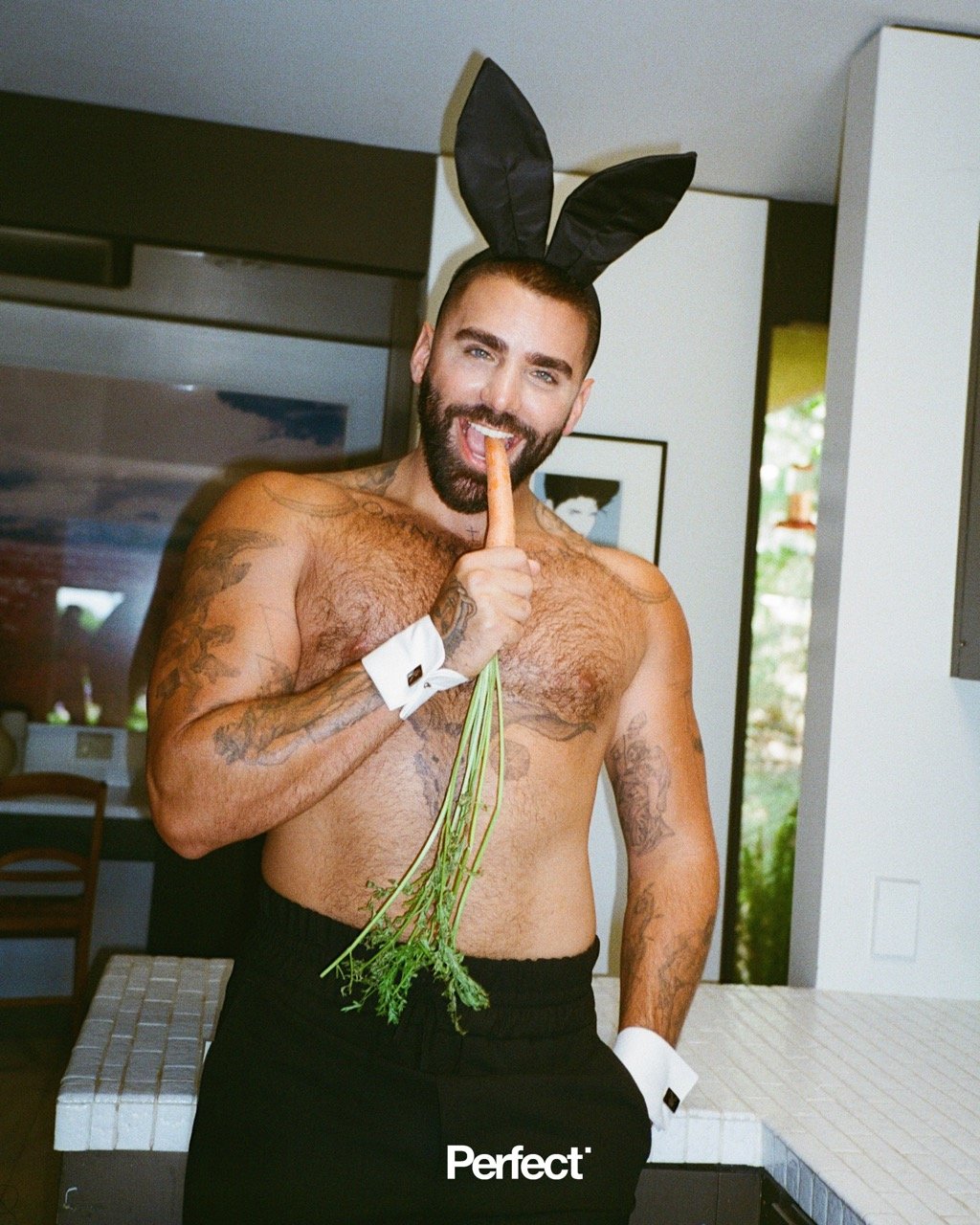
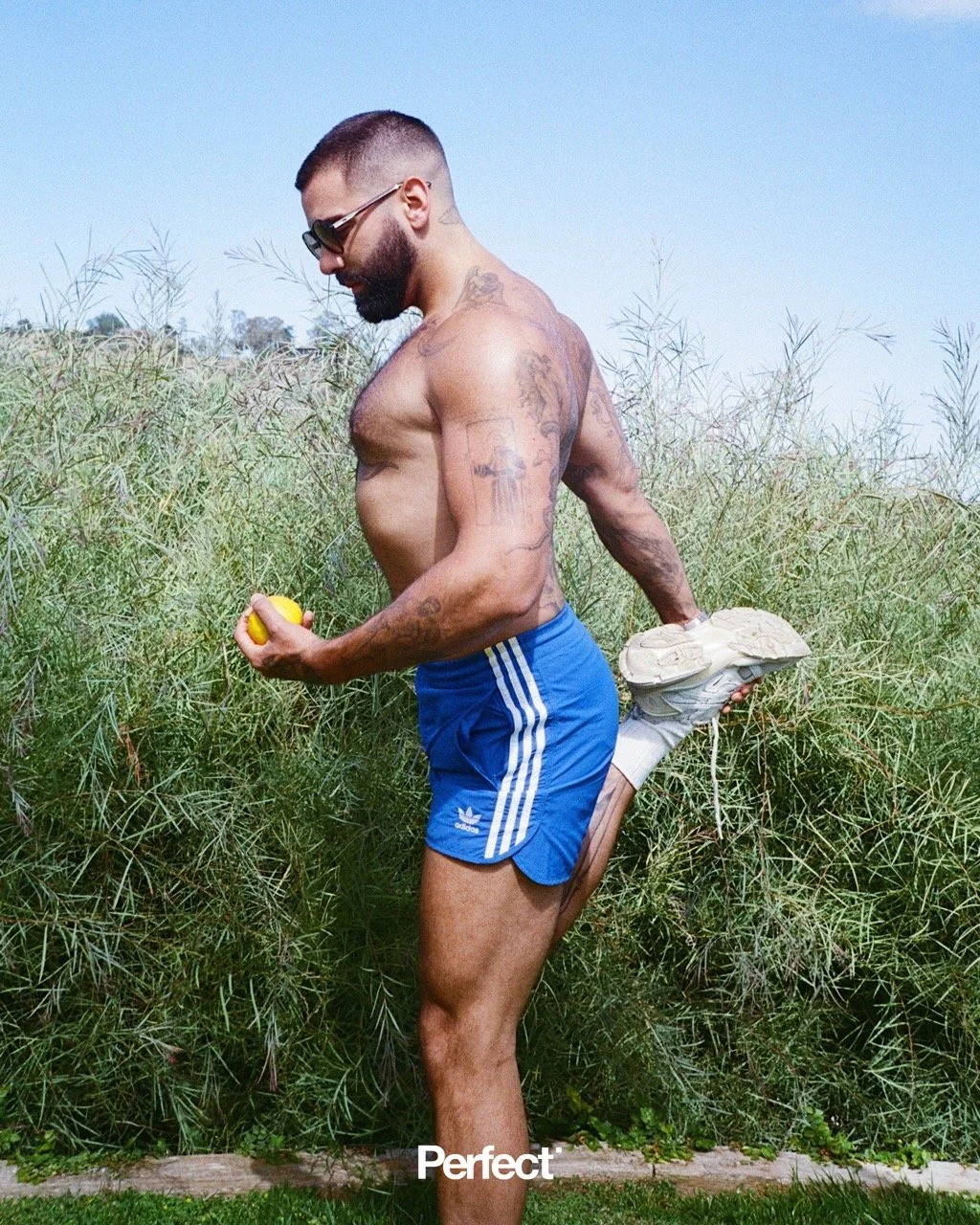
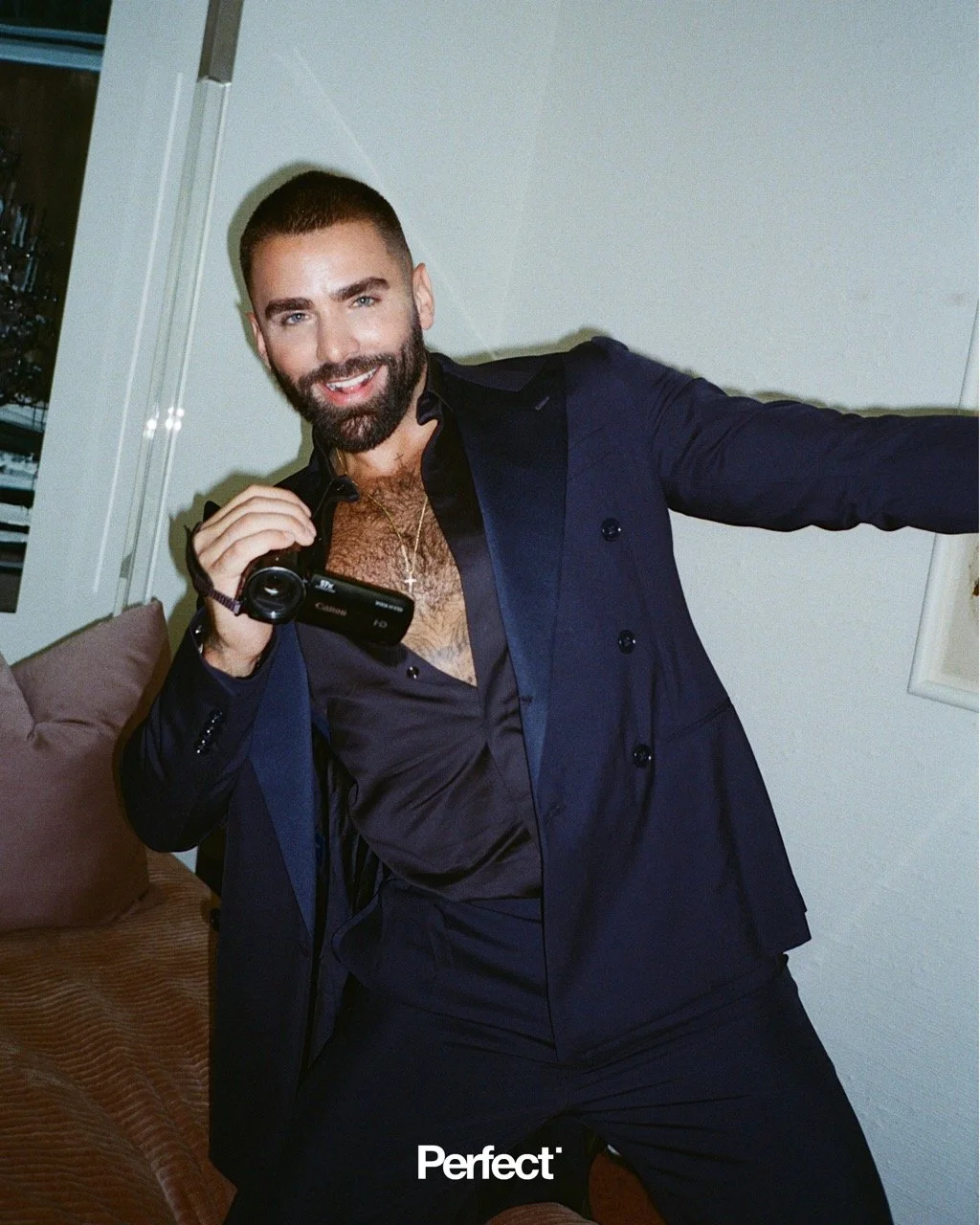
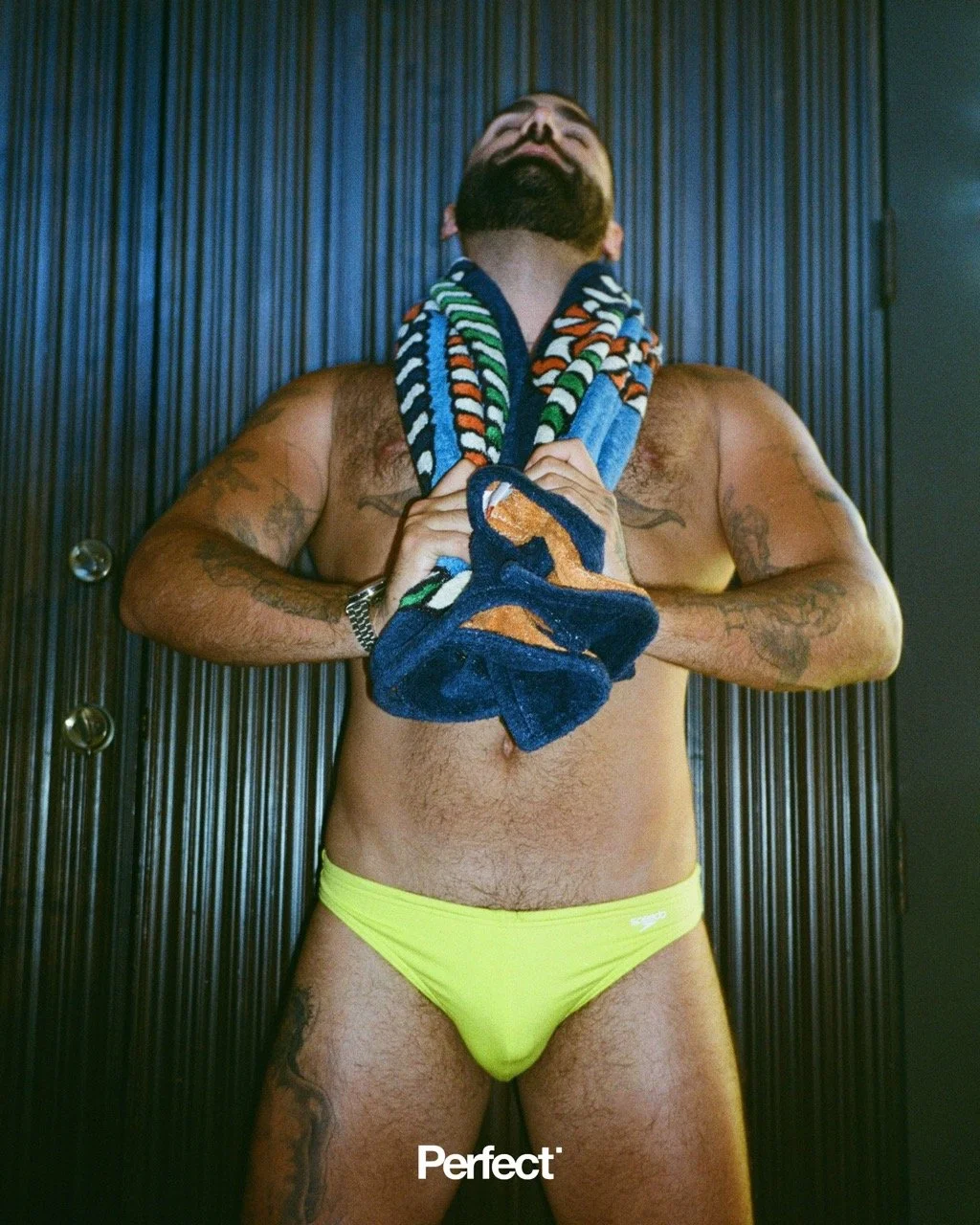
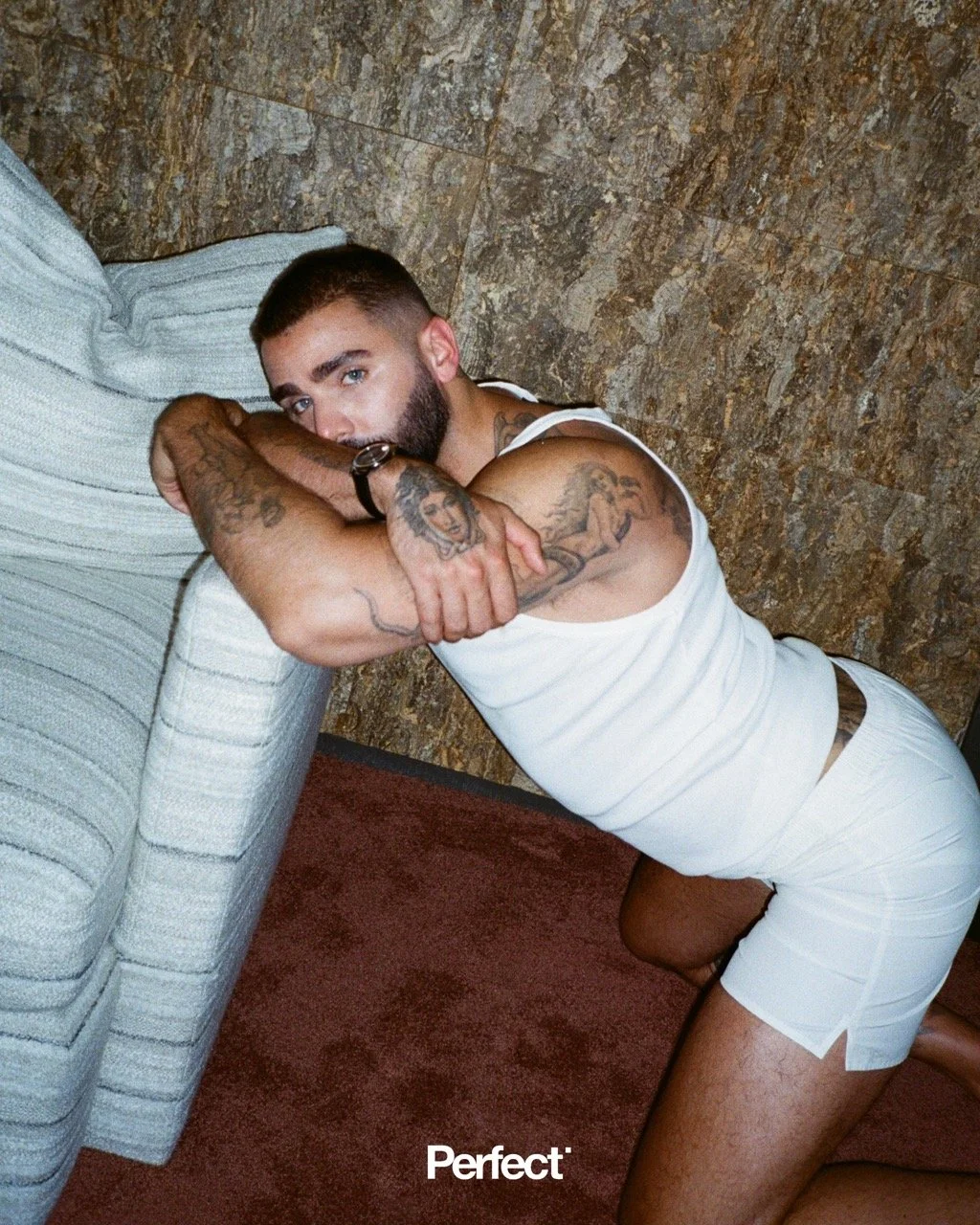
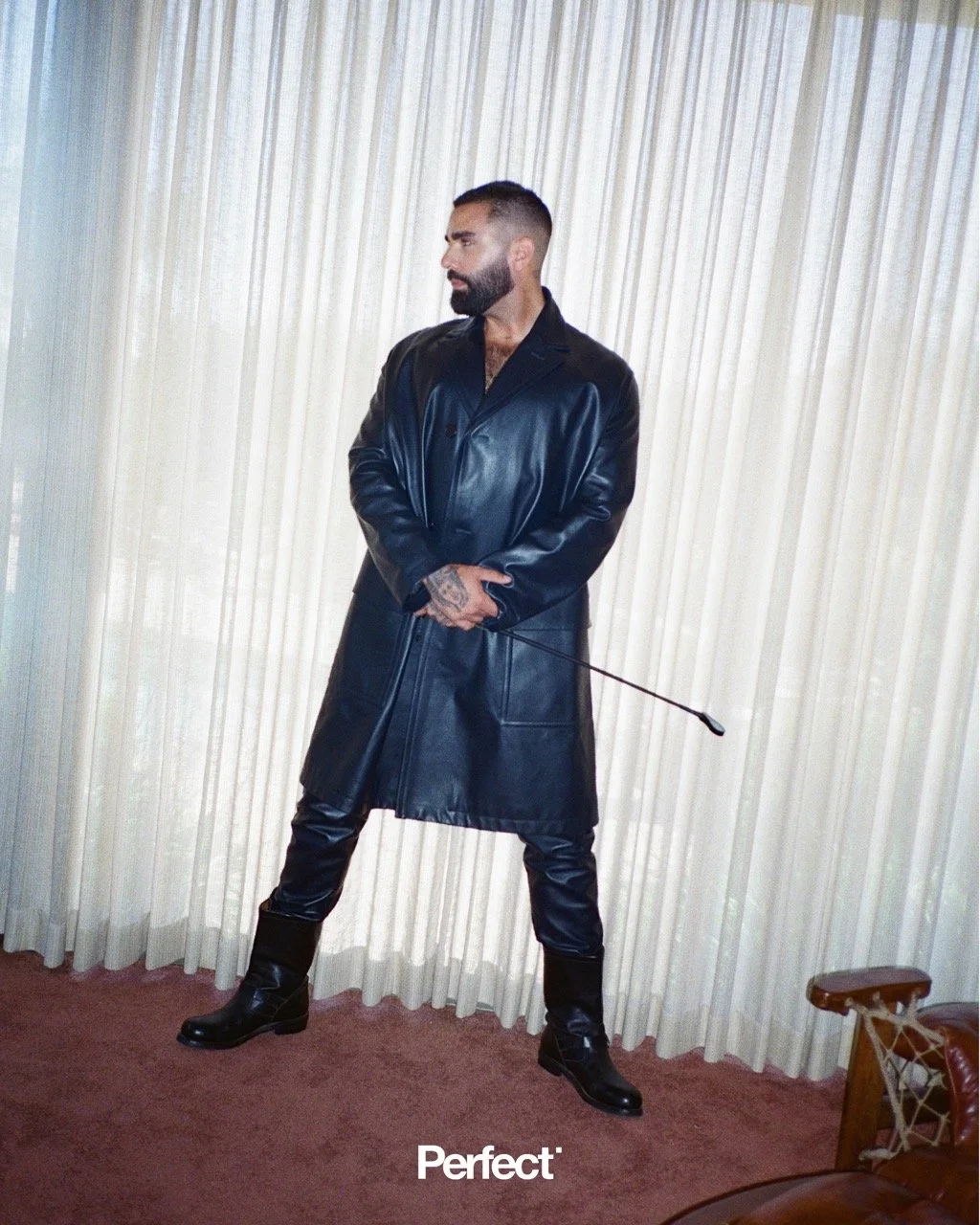
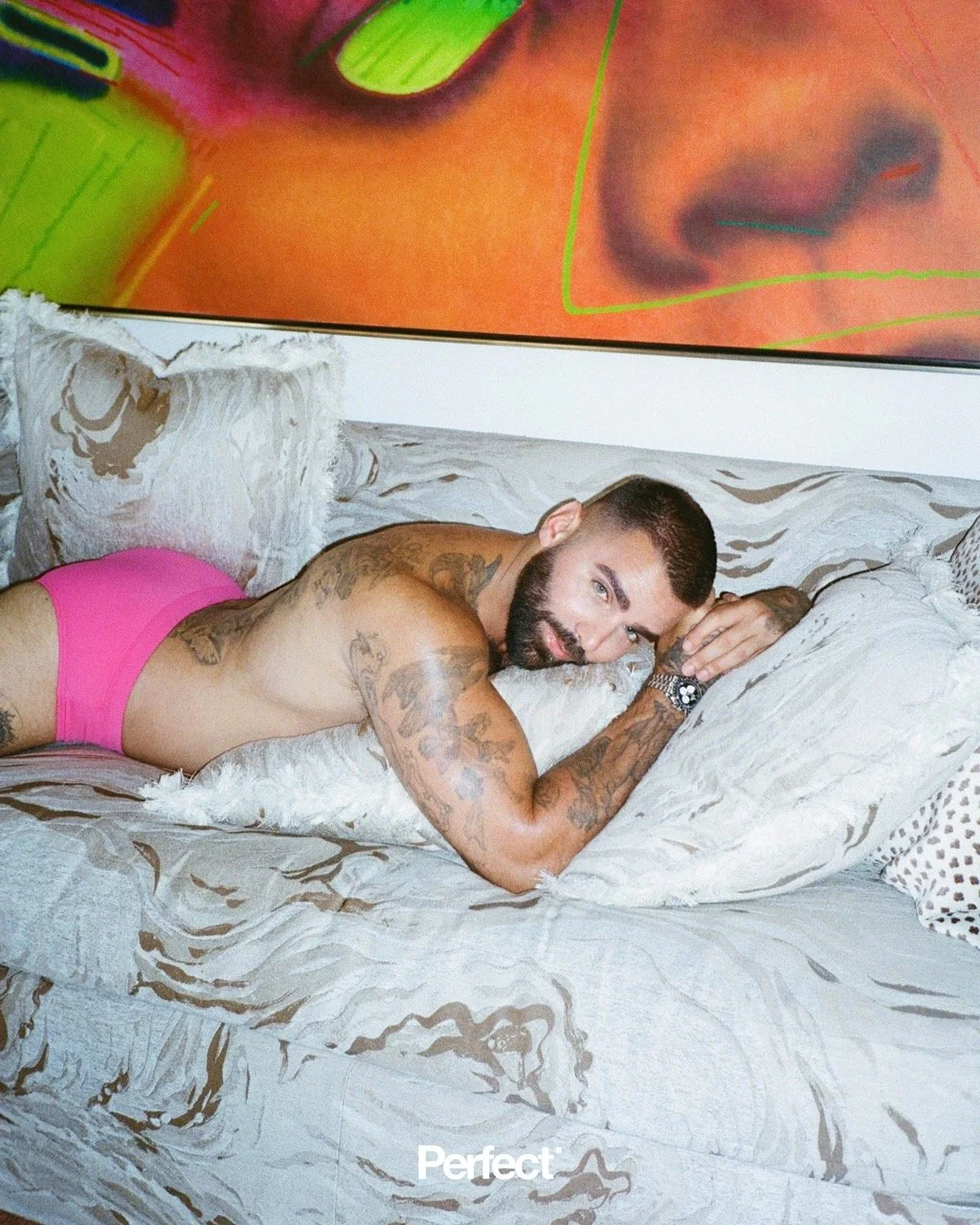
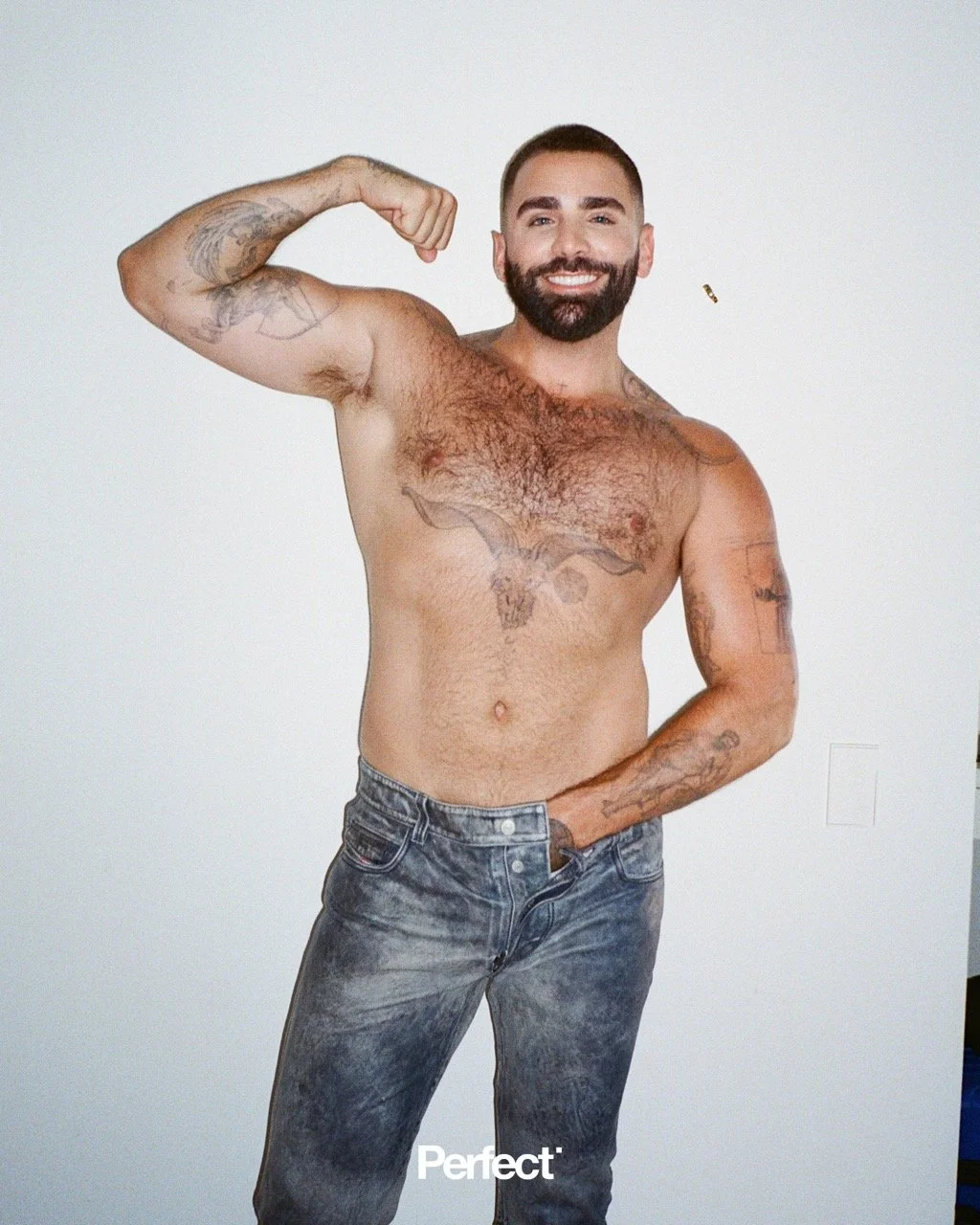
Phillip Picardi for Perfect Issue 11.
Photographer: Christopher Sherman
Fashion Editor: Simon Robins
Writer: Amber Later
Phillip Picardi is helping save the world, one libido at a time. The queer media revolutionary (former editor of Them, Teen Vogue and Out) and Harvard Divinity School graduate has recently begun his tenure as editor-in-chief of the newly relaunched Playboy, where he believes championing sexual agency, exploration and liberation can play a key role in resisting the cultural slide toward fascism. To celebrate his recent appointment, Picardi and I chatted about capturing fantasies, his vision for one of America’s most famous media brands, and his favourite thing about heterosexuality.
One of the unique challenges of Playboy’s styling is you’re working with a lot of very minimal outfits or clothing. So if you’re only showing a few garments, how do you be precise and make sure they tell a story or contribute to the environment? What is your creative approach to fashion and styling within the magazine?
I think that every time we are asking a woman to take off her clothes for Playboy, we are inviting her to be a collaborator and a decision-maker on set. That can sometimes mean that fashion is a really important instrument, because fashion can make nudity feel like not nudity. In a way, it can make nudity feel like a secondary storyline. Taylor Hale, our Miss March Playmate of the Month, really wanted vintage fashion and archival pieces and corsetry, and all of the trappings in order to eventually make her feel very comfortable showing her breasts. With Karol [G], it was different because from what I understood of her conversations with Katie [Grand], she really wanted to make sure it felt cool and fresh and modern, so there was a relaxed sensibility to a lot of the pieces that were selected. Its sex appeal was not in its hyperfemininity – it was really her body and her personality and her face doing the talking. I definitely think there are multiple avenues for expression, and I’m obviously excited to keep exploring fashion’s role – especially when it comes to some of the house codes, like the bunny costume, for example. And there’s also a lot of room for men’s fashion. We are a men’s magazine, so it’s been interesting going through the old fashion pictorials and seeing how they used to tell a men’s fashion story, with women. I’m really excited to play more in that arena.
You’re someone who is known for coming into different publications and revitalising them or giving them a new perspective. Coming into Playboy, what was your original pitch for how you wanted to re-envision one of the most recognisable names in American media?
When I got the email from Ben Kohn, the CEO, I knew instinctually it felt right, which is exciting because I have really learned to trust my gut. That doesn't mean diving in head first and not being careful. I know how to set up my guardrails and be cautious and ask the right questions now, and look at the balance sheets and all of those things. But the thing that I knew for sure was that we are dealing with an era of encroaching censorship. We are dealing with a very terrifying far right and puritanical tilt towards attitudes around sexuality and morality. We need a publication that is unafraid and unabashed in its approach towards nudity and sexuality and certainly also of women’s agency. If you look at the research around the Gen Z sex recession, which is something that we're exploring full force and wholeheartedly at Playboy, and also the male loneliness epidemic, or the general state of men, especially here in America, it just feels like there's a real utility to Playboy. Not just with the topic of sexuality as a cultural and political force, but also with helping men own their desire in a way that feels shame-free and stigma-free, but also responsible. Women have always been at the centre of Playboy’s universe. This is not a magazine that is hell-bent on hating women or mistreating women. A lot of our advice columns and profiles that we've done since the Sixties and the Seventies are teaching men how to be better lovers and how to overcome insecurities. While we may not have always been extolling the virtues of monogamy and marriage, I think Playboy has done a really good, progressive job of ensuring that men were showing up as equal partners in the bedroom.
Something I like in the new issue is the articles that talk about things happening today and connecting them back to the legacy of the publication. For example, talking about the Comstock Act and the contentious distinction throughout history of what makes something obscene or pornographic. You spoke about censorship earlier, so could you speak a bit more to how these distinctions are drawn and what they mean?
I have so many people who I love in my life who are sex workers, who are participating in and profiting off of making porn, and all the power and all my love to them always. So one thing I won’t do is pit Playboy against sex workers and people who work in the porn industry. And I also don't want to say anything to the effect of ‘well, what we do is different’ in a way that denigrates or demeans the vital work that I think a lot of sex workers do. But I would not consider Playboy a porn magazine. We’re not competing with Pornhub, right? Playboy is doing something different, which is exploring sexuality and desire through a cultural lens. That is often trending into erotica and eroticism as an art form, and desire as an art form. I think sometimes porn can feel a little hegemonic, so it’s nice to stop and look at this imagery through a different lens, through the lens of a fashion or art photographer, because I think it expands our repertoire and visual identity of what is sexy. I think it’s always good to be pushing the boundary in that way.
I like that phrase you just used, ‘desire as an art form’. Could you expand on that?
You’ll notice looking through the pictorials that there’s a ton of close-ups and things that hint at nudity but don’t go all the way. That exercise of restraint has been really sexy and naughty and feels almost hotter than the shots that are showing the full nipple or bush, and I think that’s the art form of desire. Desire still implies the yearning, or the longing, which is seduction, and it is gorgeous in and of itself, but maybe not having the full thing at the ready all of the time. Otherwise, I think desire tends to go away.
Returning to what you mentioned earlier about hegemony and sexual desire, I’m wondering how your own experience of queerness has informed your approach to this role.
When we are queer people, we are invited to receive and see or experience our sexuality as a cultural and political force, and not just as something that we do behind closed doors. That is because our identities have always been under some sort of societal microscope, whether that’s a religious one, a political one, a cultural one or some combination. Interestingly enough, I feel like masculinity is under just as much of a microscope right now. Everyone seems to be talking about it, but no one can really define it. If you can define it, it’s too narrow a definition that doesn’t really encompass what all men think about masculinity or how they experience masculinity themselves. And so I feel like it is a logical extension of my work to apply those same lenses that I’ve grown up with, but to heterosexual male desire and the heterosexual male experience.
How would you personally define what makes an image ‘sexy’?
I definitely don’t think there’s a singular definition. After working on an issue of Playboy, the only through-line about sexiness that I can really define is ‘agency’. When Hugh Hefner was creating Playboy, he wrote this magnum opus called the Playboy Philosophy – that was his dawning realisation as a grown man that there was no such thing as sexual liberation without the liberation of like-minded causes. And so freedom just became the banner of Playboy: freedom from censorship, freedom of expression, freedom of speech and freedom of sexuality.
Would you say that freedom has been a guiding theme for the journalistic work that you’ve done across your career?
When I was starting at Teen Vogue, the most important thing to me was that we created a publication that accurately represented its audience, which was teenage girls, and the same was true for Them. I wanted to counter a lot of what was happening in queer media by showing this new vanguard of what the community was doing and actually looked like in the real world, and then I tried to apply that same ethos to Out. I definitely think freedom was present in all of those things. There also felt like a sense of justice attached to all of those projects, really wanting to build a just world and believing that we could together, which was certainly an optimism that was particular to the time.
If that was a time of optimism in the last decade, what do you think is the defining atmosphere or cultural mood of today?
I do think that the defining cultural mood feels like it is torn between anger and apathy. The antidote that Playboy is seeking to create is that we want you to simply reach out and touch one another, and primarily that is by reaching out and having sex with one another. I think that actually feels quite radical at a time when we are talking about goon caves and screen addiction and a loneliness epidemic and the most polarised the Western world has ever been since World War Two. Sex can be a really good and fun place to start. The initial value proposition that we’re focused on right now is the celebration of sexuality, and that does feel pretty audacious in a really scary and fairly prudish time.
Absolutely. One thing I’ve been thinking about, if you don’t mind me sharing some of my own experience, is that as a teenager I tried to make sense of myself as a gay man and then gradually came to understand my identity as a woman. But because I was dating men before transitioning just as I do now, one funny aspect of this was going from identifying as gay to identifying as straight. In the queer community there is often a semi-ironic stigma around heterosexuality, where it's treated as sort of passé or ridiculous. But I actually found it a very affirming experience for me to reflect on the types of relationships and experiences I valued and wanted to have in the world, and to begin to understand my own relationship with heterosexuality as something that could contain a lot of beauty and meaning. So this all leads to my question, which is: as a gay man heading Playboy, what are some things that you find beautiful or that you appreciate about heterosexuality?
Oh my God, that is such a good question. First, what I will say is the greatest gift that working on Them and Out really taught me, and this is a gift that I was definitely given by the trans community, was learning that it is OK to question everything. We didn’t adopt labels like gay or lesbian or any other sexual identity to have them be the same kinds of prisons that ultimately a lot of straight people feel confined by. Certainly we are seeing a lot of men feel confined when it comes to masculinity. These are all supposed to be liberatory labels, not boxes that we put ourselves in and then get suffocated by, right? That gift of freedom to explore is something which in my adult life, really after the age of 29 to now, has changed my approach and point of view on any wide variety of things. We’re in the process of editing this story about a woman who was 38 years old and married and had never experienced an orgasm. There’s this point in her piece where she’s talking about the shame and stigma that she felt for her body for most of her life, and her feelings of being ashamed to want to be a sexual creature or wanting to own her orgasm in that way. What she realised was that she needed to give herself permission to let go. At the end of the piece she says something like, I thought exploring my sexuality was dark, and I didn’t realise until I had an orgasm that actually, yes, it would be dark, but I would see stars. There was light too. Her story about owning her sexuality reminds me of so many struggles I had coming to terms with my sexuality and attempting to erase the shame, and then eventually playing with the shame and making that a part of a fun sexual experience as a gay man who was raised Catholic. So my favourite thing about heterosexuality is that it’s really not that different from homosexuality! We’re all on journeys to make ourselves feel good, and we all need help and a guide and a nudge, and love for oneself and love for each other to get there.
Why do you think that sexuality is historically seen as such a threat to fascism? It feels like one of the first things any oppressive regime does is to target freedom of sexual expression, media that promotes sexuality, environments where people can meet and come together. Why do you think that these powerful forces view sexuality and pleasure as such threats?
Do you know who Tourmaline is?
Yes.
So, Tourmaline is one of my close friends, and we were talking about fashion and beauty when I initially went to divinity school. My thesis was going to be about sacred garments and vestments and why fashion and beauty rituals were so important to the Catholic Church and other sacred traditions throughout time.
I used to be an altar kid. I loved wearing the robe and swinging the incense.
Totally, totally. That was a foreshadowing. Well, Tourmaline said something that hit me like a ton of bricks. She was like, ‘Of course all of these things are sacred, babe. Why do you think they’re always trying to take them away from us? Why do you think there are anti-crossdressing laws? Why do you think they eBay the shit out of us at Stonewall?’ They want so badly to stifle us and make us all look the same and conform, because they understand that when we are free, we are powerful. They’re trying to take away what is powerful. If it wasn’t powerful, they wouldn’t criminalise it. And it’s the same thing with sexuality. If you’re allowed, and you have permission to receive pleasure, you’re connected to a source of power – and ultimately, fascism relies on powerlessness.