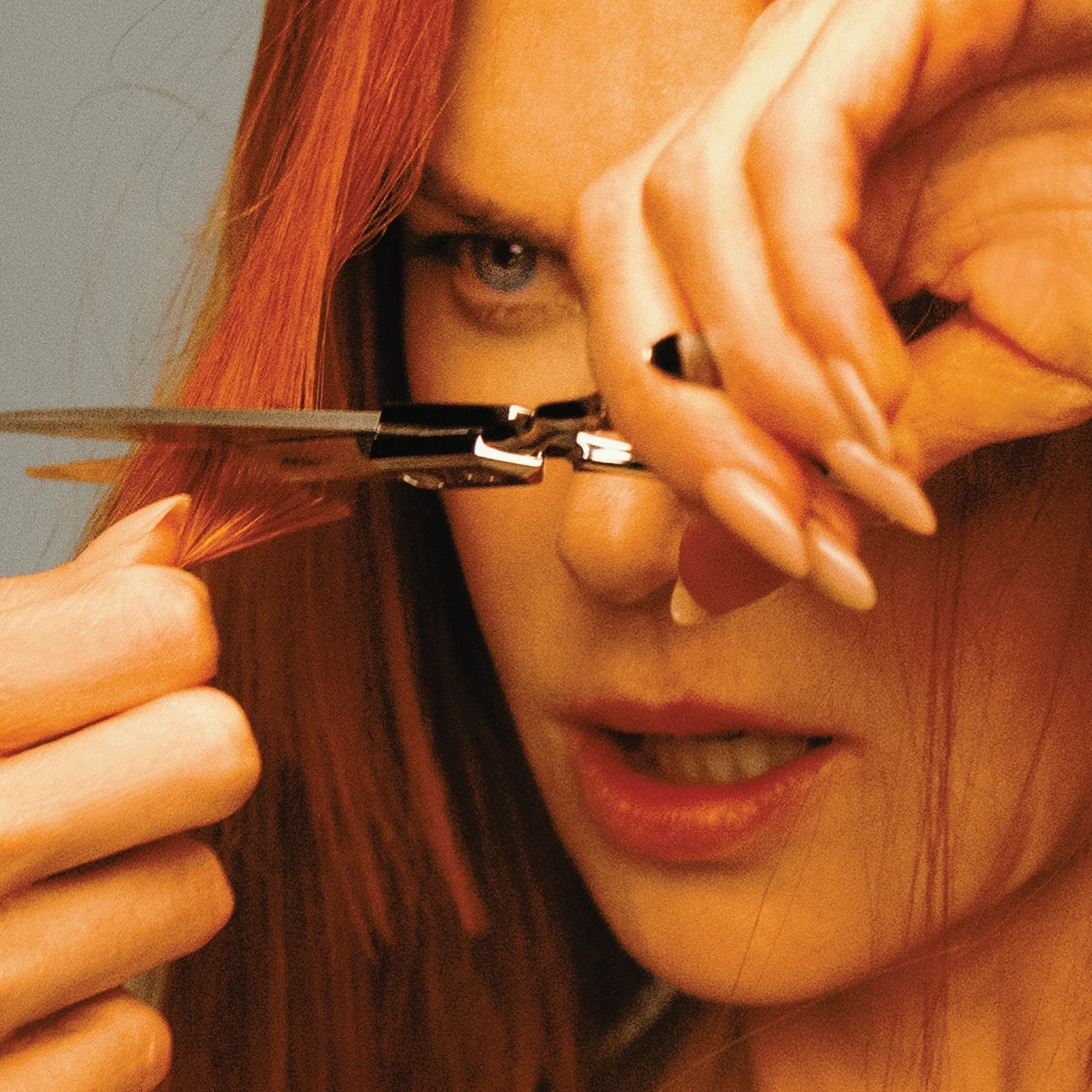
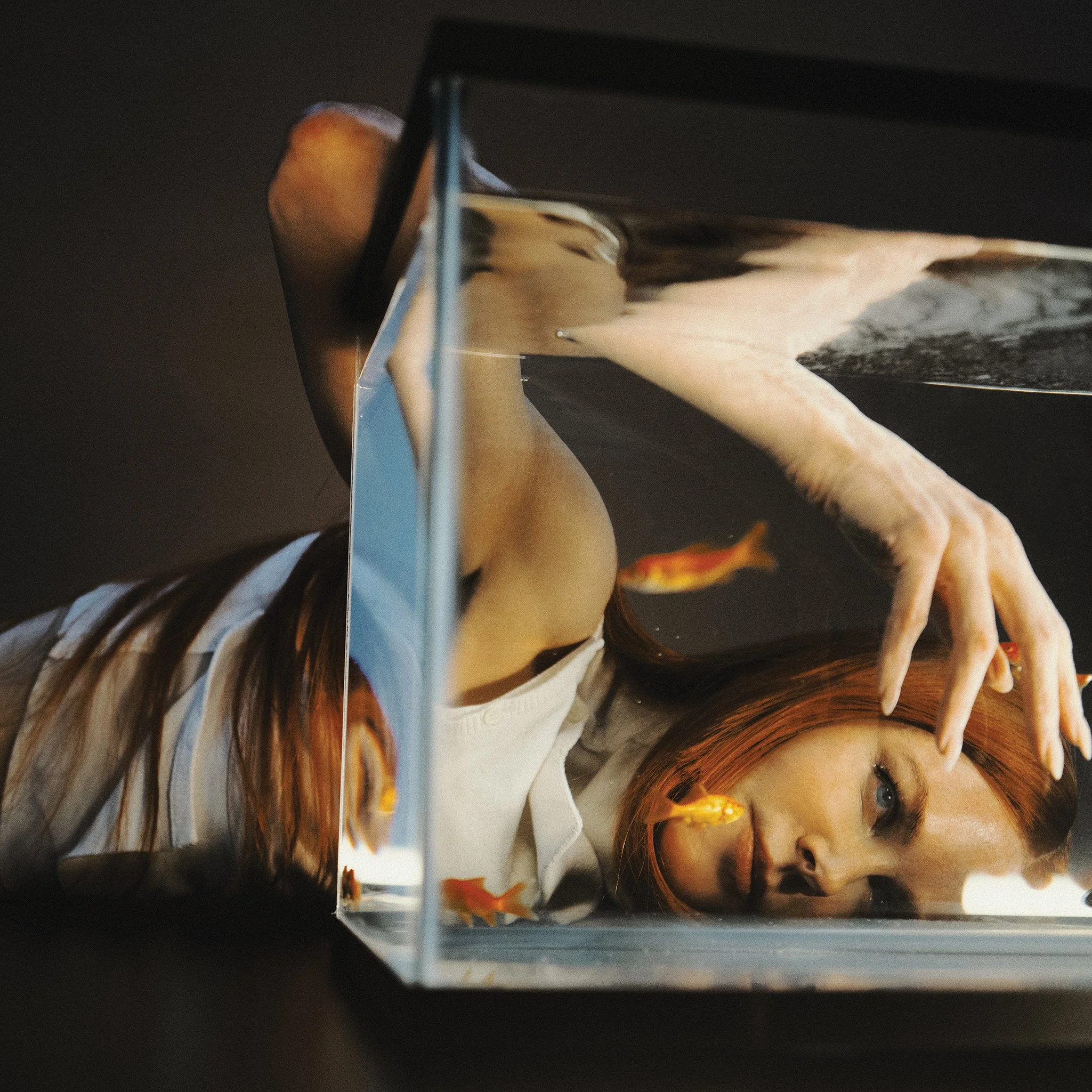
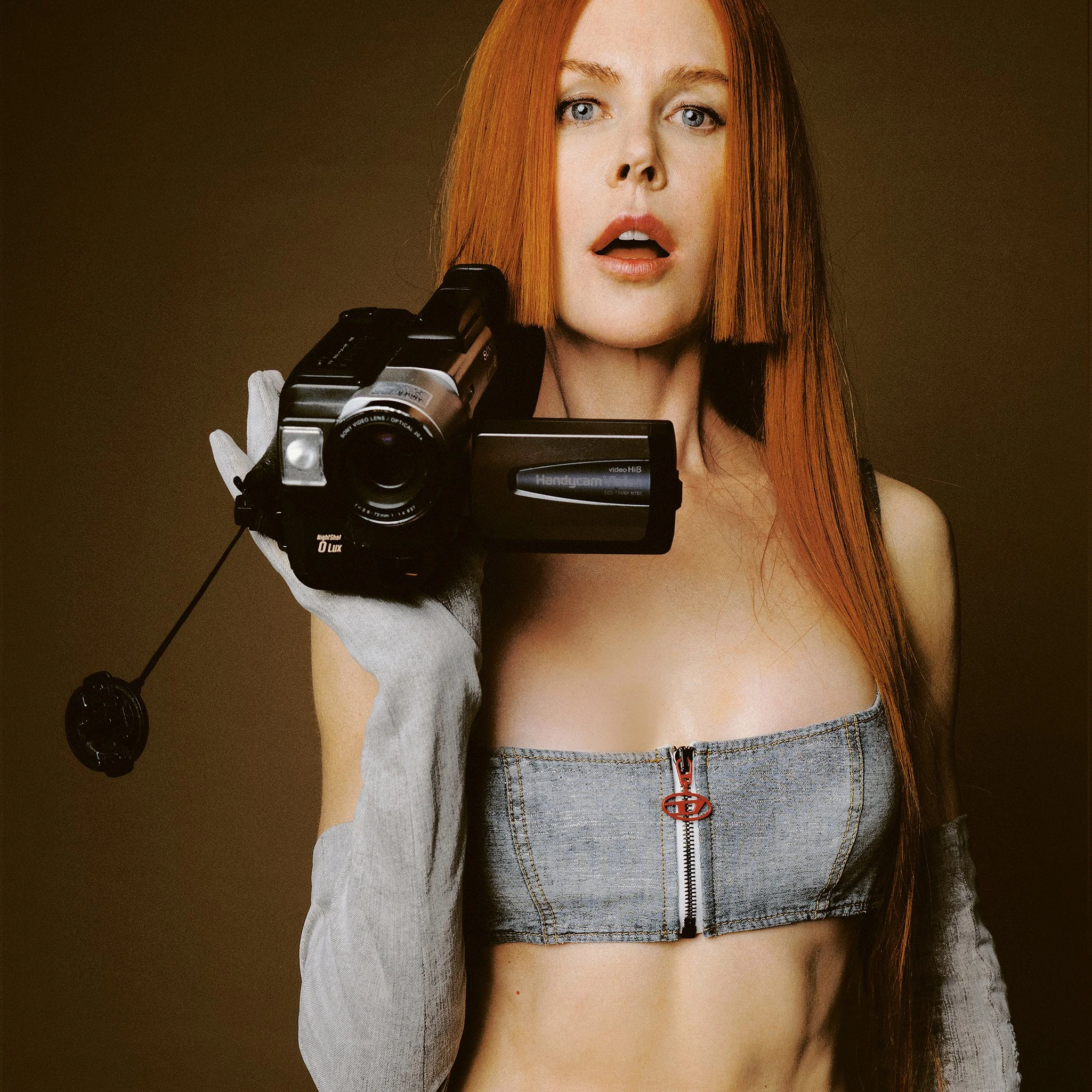
Nicole Kidman interviewed for Perfect Issue 3.
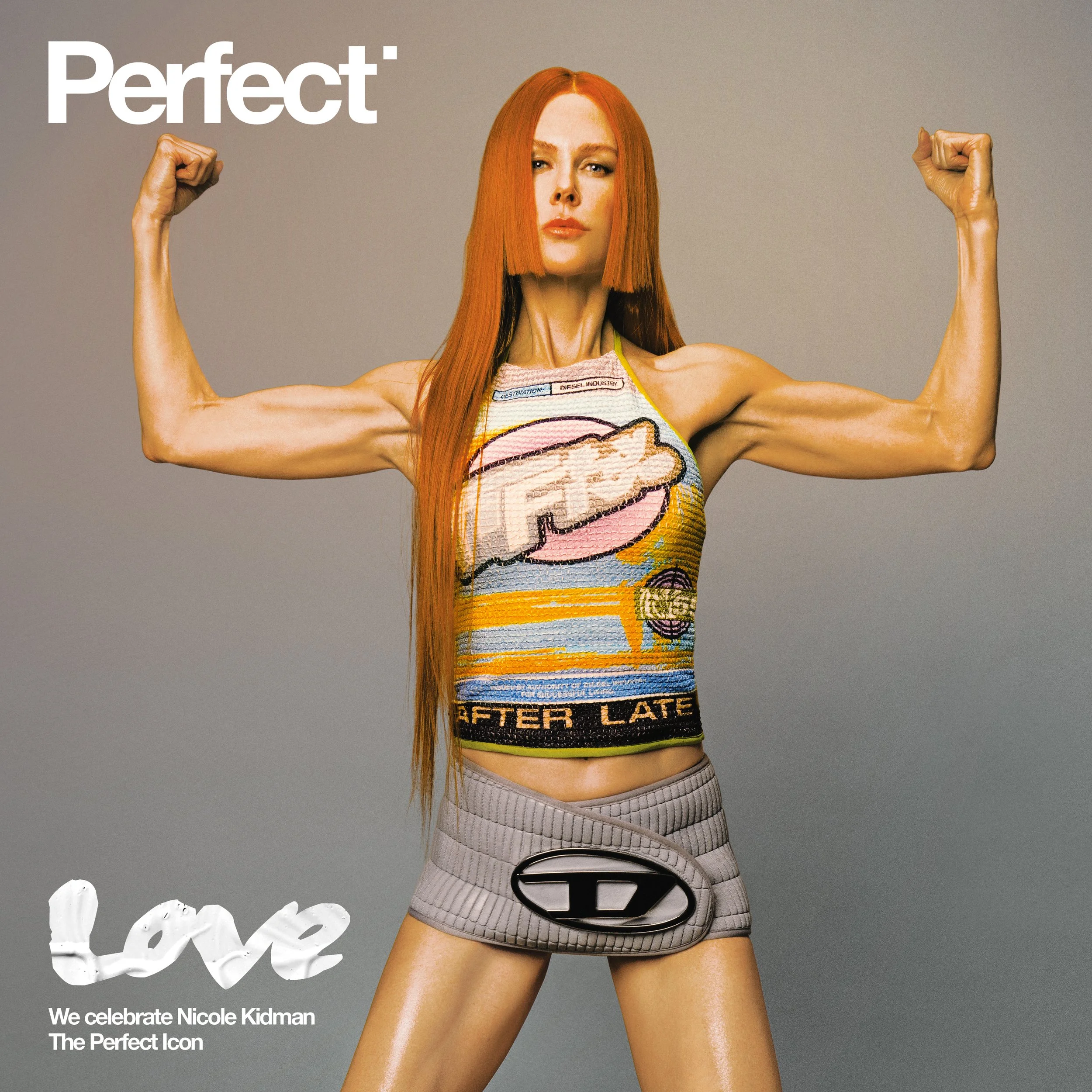
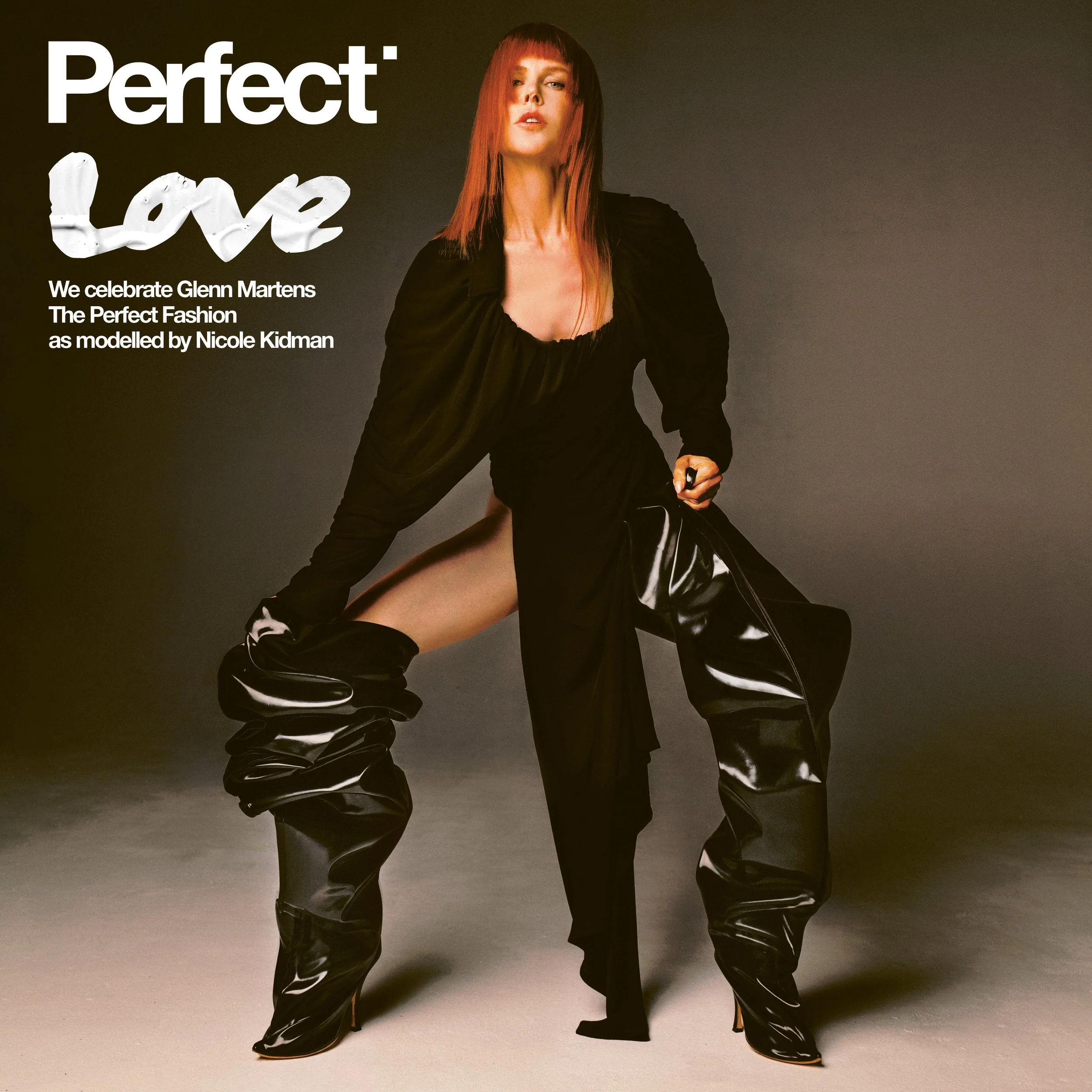
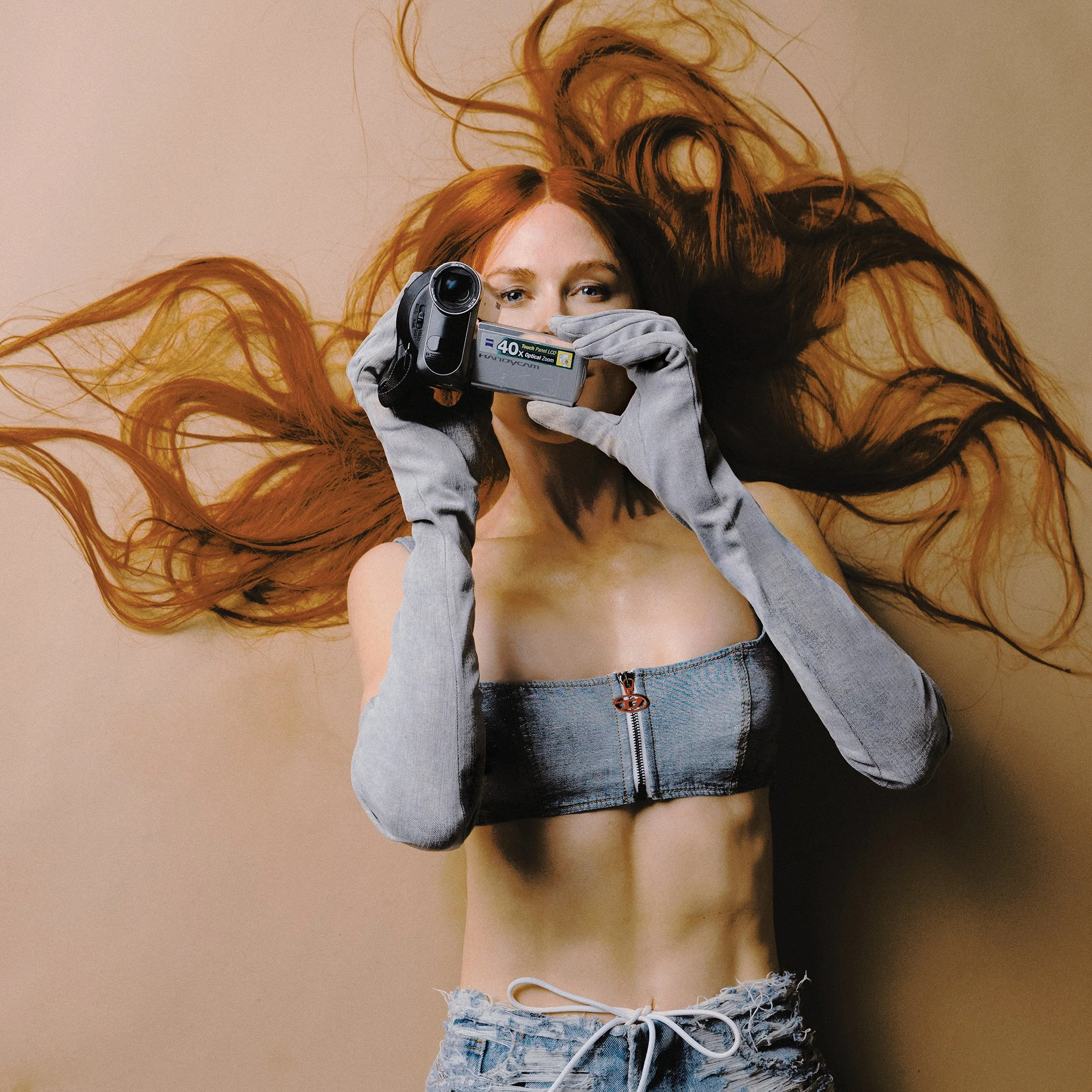
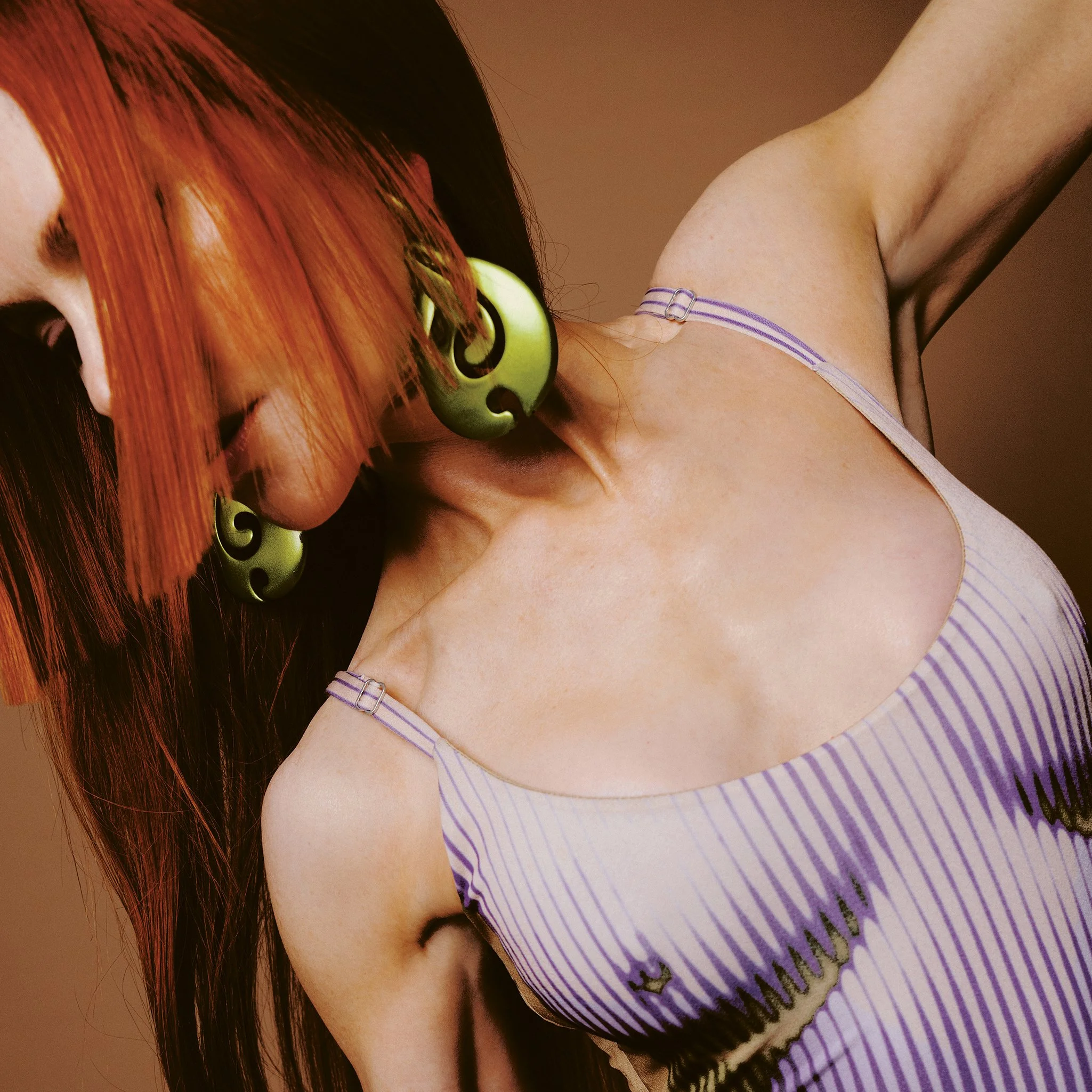
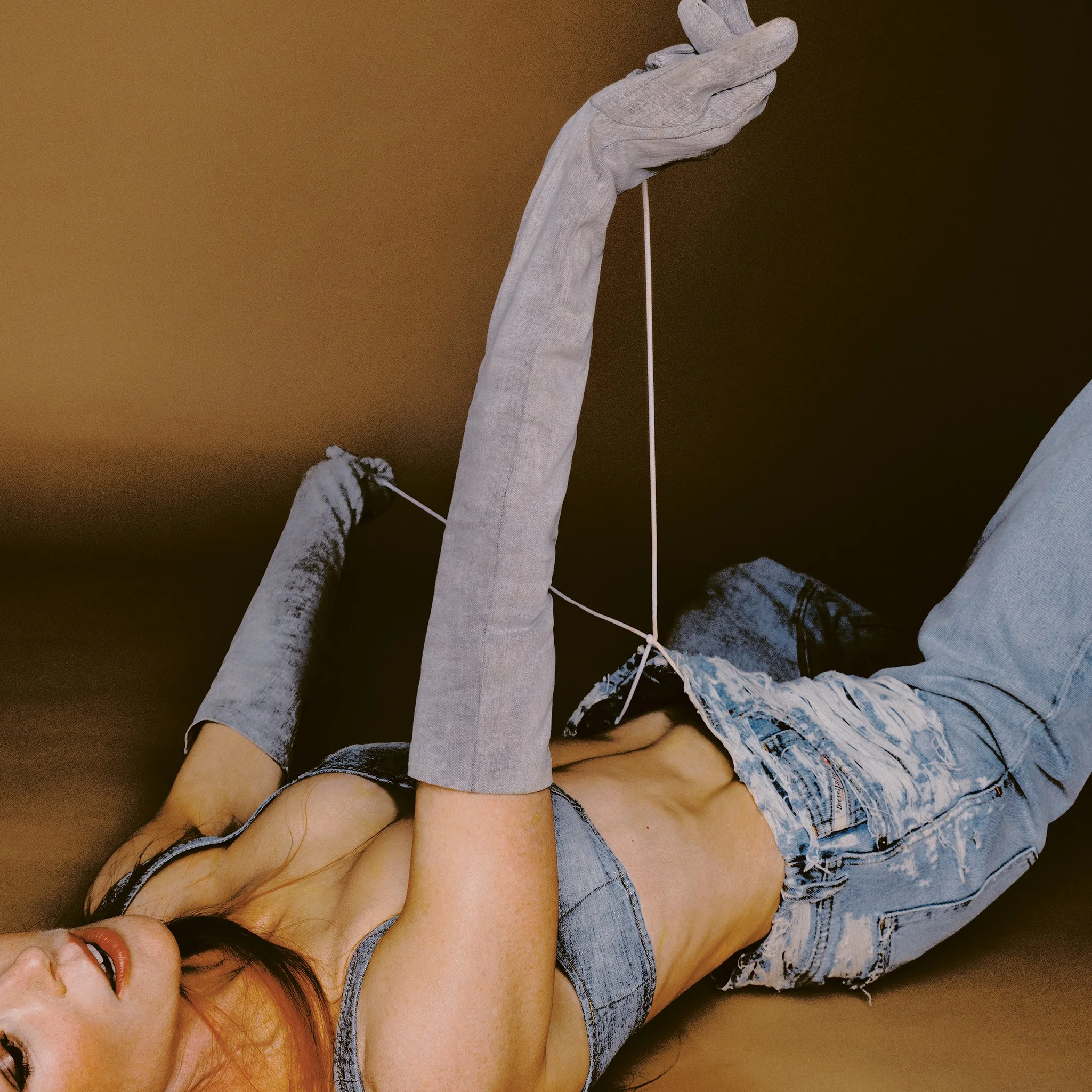
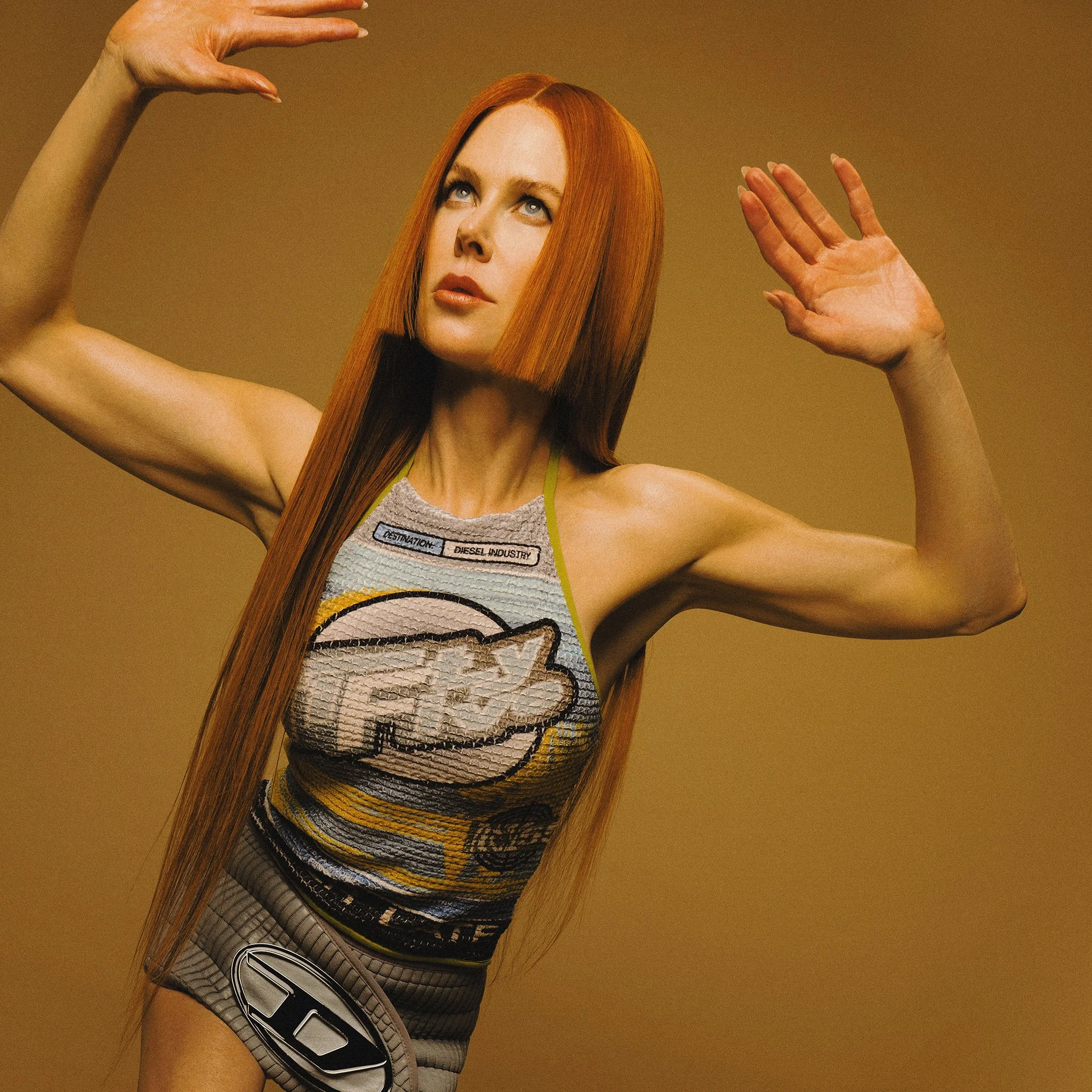
Nicole Kidman, photographed by Zhong Lin, styled by Robbie Spencer, and interviewed by Jason Campbell for Perfect Issue 3.
When Nicole Kidman made her grand debut on the runway in July – for Balenciaga haute couture, wearing a bold and voluminous metallic silver gown – it was her second Big Fashion Moment so dar this year. The first was in February, wearing the Miu Miu look for spring on the cover of Vanity Fair’s Hollywood issue. The two-piece made from cut-off pleated skirts was skimpy enough to warrant news headlines, most of which included the word ‘controversial’. Both moments serve to illustrate why photographers and stylists are as keen to enlist Kidman as filmmakers and casting agents: she applies her exorbitant flexibility as a performer with equal daring, skill, focus and enthusiasm to fashion as to acting, both being realms of make-believe. It’s this quality that makes her a Perfect Icon.
Kidman has captivated our onscreen attention for nearly four decades. The preeminent Australian actress of her generation has made more than 80 films and TV shows and has been a fixture in American life since her breakthrough role in the 1990 film Days Of Thunder. She has enjoyed Oscar, Emmy and Golden Globe wins and countless nominations, and a dramatic range that encompasses working across genres: drama, thriller, musical, action. From a highflying turn as leading lady in Days of Thunder to the ribald Satine, the cabaret courtesan in Moulin Rouge! to her transformation for The Hours, Lucille Ball in Being The Ricardos or Masha, the kooky leader of a group of Nine Perfect Strangers, Kidman’s range knows no bounds.
Connecting via Zoom from her home in Nashville, she talks about the bold creative choices she has made throughout her career, including participating in fashion editorial that pushes the boundaries.
Jason Campbell: Hi, how are you?
Nicole Kidman: Good. How are you?
I am doing well. I’m in my New York apartment, looking at the images from your Perfect shoot with Katie – they are stunning! You two also worked together on the Vanity Fair Miu Miu shoot that launched a thousand looks – that was a stroke of genius!
I was in Sydney, Australia and I came into the shoot. They had a blue Lycra jumpsuit they wanted me to wear, which was Katie’s first choice. I had worn a similar dress in black, so I was like ‘Hmm, I am not sure about this outfit.’ I began looking through the selection, and I saw the Miu Miu set on the rack. I immediately said, ‘Is this for me?!’ to Katie through Zoom. Katie said, ‘Would you like to wear that?’ and I immediately went, ‘Of course – it reminds me of my school uniform, I want to wear it now!’ I put it on, and immediately knew that was it. That’s how Katie and I work together: very spontaneous, zero thought! We just go over and decide what feels right.
Let’s take it back, back to Australia. Heaps of accolades are bestowed upon you as an actress – tell me about your formative years there that informed who you are, your creative vision, your work ethic.
I was raised with a socially conscious family. My father started out as a biochemist and became a psychologist. My mother was a nurse educator, so she was training and teaching nurses. I would go to the hospital and the science lab after school because they were both working. I saw a working mother very early on in life, and she
had a job all of my life. They had to, so they could afford a house and be able to put a down payment, so they could raise us. They were not affluent, but they were hardworking, academic parents. My mother was also involved with the feminist movement, so a huge part of my upbringing was women’s rights and the ability to advocate for yourself, as she wanted to raise girls with that mindset. That was always a part of us through a lot of discussion based in compassion, as I was privy to a lot in our family that helped raise that compassion. I was born in America, so I had already started thinking internationally, specifically when you’re born somewhere else but both your parents are Australian. I was born in Hawaii when my
father was studying there. We came home three years after I’d been born, while he got his PhD in Biochemistry, and then ended up at the Institute of Health in Washington. As we came back to Australia, being global was already imprinted on me. As soon as I turned 17, I was on a plane heading to Amsterdam, and backpacking through Europe. I grew up with a great adventurous spirit, which is very much part of Australian culture, because the minute you can go travelling on your own, you want to go see the world when you are raised on an island.
Apart from your parents being a big part of that formation, was there an additional early influence that added to that?
I was exposed to a lot of art and opera, and art galleries, being raised by intellectual academic parents. Also, I was exposed to things from an early age like contemporary dance and the symphony. My mother adored opera, while my father would take me to see [choreographer] Graeme Murphy’s shows. At eight years old, I’d be watching near-naked men dancing, or even fully naked, sitting next to my father! Culturally, it gave me a sense of awareness with this driving force to do theatre. No one in my family did that, so I had to go find a theatre group. I would go on a Saturday, sit there reading plays and studying the classics.
Was this a deliberate attempt to make you a well-rounded and educated child, or were they just following their interests and bringing you along?
It was their interests, and I was along for the ride. I watched medical films with my sister, she’d bring them home and say, ‘OK, sit here and watch this operation.’ So we’d sit while it was all explained and projected on the wall. Also, sex education was a film projected on the wall that was very medical with medical terms. I was also raised with a lot of science. We used the proper terms about body parts, so if people had nicknames for genitalia, we didn’t. We used the appropriate names. If you’re saying vagina, you’d say ‘vagina’.
Sounds like a rich, intellectual environment to be brought up in.
My mother is now 82 and people love being around her, because she’s smart with a very high IQ. She knows more than any of us about pretty much anything.
Would you say you are more like her or like your dad?
Everyone says I am more like my father, as I’m introverted. I’m married to an extrovert, so we balance each other, but I’ve come out a lot more as well. But there’s another part of Australia that I was raised with, with my mother being a seamstress. She made all our clothes, and she made our Barbie clothes, as did my grandmother. So we always had the best Barbie clothes, designs not found at the store. We'd gone to flea markets and vintage stores since I was very little. I was the one with a tutu and a leather jacket, or a 1930s slip dress got at a great price. I would add a little cardigan with it or some great Doc Martens, mixing it up. In Australia, there is a club scene that's very much like London. We would sneak out at night and go, but one of the best clubs was Stranded, which was a cross-dressing club where they would come on at midnight and perform, and this was a huge part of my hair, makeup and fashion sense. It was a highlight, going to Stranded on a Tuesday night. I was modelling when I was very young, so you’d get given a card and allowed into clubs as a model agency perk. We had Cyndi Lauper and the Thompson Twins, because a lot of it was English based, having a lot of London influence. That’s probably why I connect so well with Katie Grand. There’s something that we get from British culture, there’s a bit of a ‘turning fashion on its head’ approach that becomes a bit madcap. But it all makes sense, looks great and it’s interesting.
You haven’t traded on this currency, yet you are perennially cool. What is it in your brand DNA that floats to the top? We invoke the work here, the character acting, the method acting and the transformations. You always express that cool language without trying.
I have no effort with that. I just try to be authentic to what I want. As I always say, ‘I’m gonna do what I want to do.’ And they all know that. That’s probably why I click with photographers, as I’m not here to stamp myself on you, but rather you stamp yourself on me and for us to grow together. Let’s play – so much is based on play. I’m open, and I’ve always approached [fashion shoots] in terms of filmmaking, working with auteurs. I'm left handed, so I approach the world left-handed.
The way you build a character as an actress has been well scrutinised: your performances are studied at PhD level. When did you commit to method acting, and why?
It’s not exactly method; it adapts, because there are certain directors that don’t want that. It’s a commitment to the art form, which is important. It’s about creating the truth of the character and becoming the character. So what does that entail? Trying to find like-minded people who are going to be passionate, deeply committed and obsessive is how I love working. I like adventure. I want to see the world. And I want to be a part of the world artistically. I love the idea that there’s still so much ahead, and that’s what I focus on. I make my decisions the way a teenager would.
In what way?
Not playing out the consequences. I approach things like ‘I want to do this, I'm gonna try it’. It’s had its ups and downs as it doesn't make for consistency or a stable career; it actually makes for a really tumultuous career – which I’m into.
Well it has resulted in tremendous a filmography and television resumé, so there must be something right.
I can’t classify what’s right and wrong. When you’re talking about painting, you wouldn’t go. ‘Well, that was the right decision to paint that portrait.’ These are artistic decisions, not right and wrong decisions.
You seem to be saying that you aren’t strategically minded, yet you have a history of good decision-making based on the endurance of your work.
It’s about the decision-making not being pulled by thoughts of pleasing someone but being made from the purest place, which is the feeling of ‘I just want to go and be around these people’. You also feel engaged and interested in the story without thinking about what the final product might end up being, as that's beyond my control. That gets tricky as you get more successful. It becomes a very hard place to stay in, as people have expectations for you to deliver what is deemed as current success, but we don't know what that will be in 20 years, or how it will be viewed.
You haven't limited yourself to one genre. Your film and television resumé spans everything. Do you ever say to yourself, ‘I am THAT woman, look at what I have done?’
I go, ‘Wow, OK, it's worked out! This is kind of amazing!’ You have to live life to be able to seed an artistic life, really experiencing a life, which is intimate and deep, full of feeling. I have a huge closeness to my family and it’s a big family now that is extended, so we’re privy to a lot.
You have previously mentioned having a reclusive existence. Why do you have this distance from the Hollywood scene?
I don’t live in the centre or the hub of anything; I choose a quieter life. It’s reclusive in the sense that I’m not sharing everything worldwide, because it makes me feel uncomfortable. But I’m deeply interested in humanity, people and ideas, the act of labelling those and feeling them, because I’ve always had that highly sensitive response to things. Instead of the word ‘reclusive’, I would just say that I am protecting what’s sacred in my life and heart, because I give it all to my work and play, and that can be incredibly revealing, frightening and vulnerable, so I need protection. My children are also young, being 11 and 14.
Is there anything that you’ve completely avoided in your career?
Lee Daniels tried to get me to say the N-word in Paperboy and I wouldn’t. My acting coach for decades is African American, and she told me no. So I was like, great, I will not, and I stand by my decision. She gave me the support to confirm it.
What do you think about actors who commented or might choose to use it?
I don’t comment on it. My life is my life, and my choices mine, just as everybody’s choices are theirs. I'm not here to judge people.
How has fashion expressed who you are as a creative? Tell me about your creative position and how you collaborate with fashion as expression?
I was fortunate to be in London, doing Eyes Wide Shut, when fashion was extending into Europe for actresses. I had access to Galliano, Karl Lagerfeld. I would stand in their studios and try on couture, having it moulded to my body. I also tried on hats in Galliano’s Paris studio, and slip dresses that he would make. I loved being around these extraordinary artists. I remember being in Karl’s home lying on his pool in a slip dress and him photographing, as well as making new dresses fitted to my body, personally pinning them to me. And Nicholas Ghesquière creating my wedding dress. It was so couture. I had such reverence for it, and just happened to be the shape, being born into a body that they could design dresses on, being five-foot-eleven. I wanted to be Marilyn Monroe; instead I was this long-limbed gawky teen. And suddenly I saw that they wanted to put dresses on me and fit them to me – it was a wow moment.
Thanks to your days of experimenting and clubbing, expression through style was not foreign to you.
You would find an antique blazer and style it with a pair of knickers, wearing a thigh-high boot you’d found in the flea market. I like experimentation. I’d wear a top hat and a piece of silk that sort of just sits there with bare feet or a tiny sandal. I love that! I’ll let you strike my hair and put a wig on and all your eyelashes and make-up on me, that’s what I grew up with. Being 14 and modelling in Australia had that influence on me.
Has that left you with confidence of knowing your own style?
My style is malleable, depending on my state. Which is why in a photo shoot, I experiment with everything. People always ask, ‘Is there anything she doesn't like, or colour that she doesn’t want?’ I always say, ‘Nope, I like everything.’ Then they’ll ask me ‘Well, what's on your rider?’ and I'll reply, ‘Some water.’ I am not into over the top requests, I just want to get in there and do the work.
There's also a real precision in that work and the power of style in expression.
I love photography. So when you look at Irving Penn and his wife Lisa, those images are just beautiful. Also, looking at old Chanel images, I yearn for that feeling looking back at what was happening in the 1930s and how those beaded flapper dresses are perfect to wear. I have many flapper dresses, and I have the dresses that Galliano was designing at the time. They were 1920s-inspired, so you have a silk slip dress with a beautifully beaded detail, which feels almost like wearing nothing. I have vintage dresses from the 1910s – the lace is disintegrating so I’m always having to get it restored, but I absolutely love it.
Is there a fashion memory from your acting career that is impressionable?
Moulin Rouge! initially I was told I will do all of this dancing in a boned corset – an authentic, old-school corset – and I just thought, ‘OK, we are gonna have to adjust just a bit.’ For the film The Others, I went to Spain with Sonia [Grande], this wonderful costume designer. The dresses were exquisite, extremely beautiful Prada-esque 1940s dresses, and I was in heaven. And the film Australia, the costumes were gorgeous, beautiful equestrian wear. Also, playing Lucille Ball. There was the way she dresses on the show as Lucy – we had all those dresses that were so beautifully made, but there was also her masculine side where she wore just the pants, the shirt, smoking a cigarette. I mean, that was Lucille and that’s how she dressed, which changed her life. Now I’m doing a [TV] show called Expats with Lulu Wang, a fantastic Chinese-American director. The character [I play] is very fragile, so everything is extremely simple – no accessories or jewellery, because of what she’s going through emotionally. We say that she feels almost transparent.
Where is The Expats set? I know it comes out later this year.
In Hong Kong, and [the story] starts in 1986. The costume design is so different for each character, but mine is very simple, with some Asian influence, because she has been an expat for years.
You’ve been a Goodwill Ambassador for UN Women for 16 years. How has that shaped you and your career?
I’ve seen a lot. I’ve travelled all over Eastern Europe, to Haiti and around the world, seeing war crimes and women who are the victims. I do a lot of fundraising for women’s cancer. My mother had breast cancer when I was 17 and she was 45. So it was pre-menopausal, and it shattered our family. She’s 82 now, but it was not a good prognosis. So that’s been a massive part of my shaping, and then my giving back. Also acts of domestic abuse, violence against women that I’ve seen as I travelled – I’ve been privy to those stories that are important to tell the world.
Is this an area where you’d like to…
Do more? Yes. I always want to do more. I’ve been taught to take care of the world, but also take care of your family. So this is why I close myself at times, because my nature is to get out there and save the world rather than myself. My daughters need me here right now.